



Mounted Horse Sculpture
A mounted horse sculpture captures motion and majesty in metal, wood, or stone, bringing dynamic animal form and classical presence into a room.
Mounted Horse Sculpture
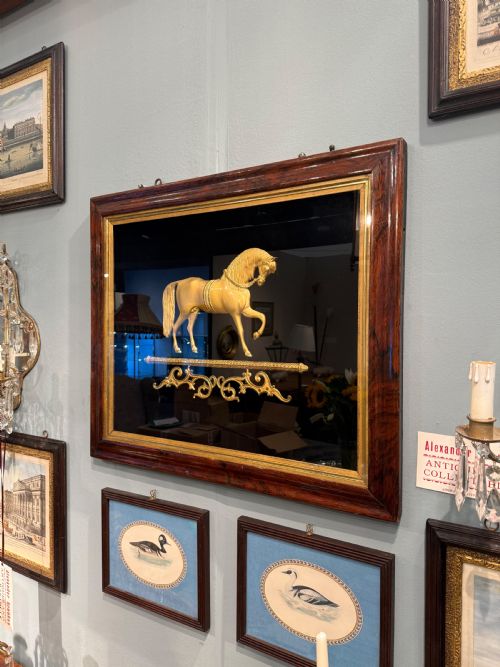
A mounted horse sculpture encompasses diverse representations of equines fixed upon a base, plinth, or wall bracket. These pieces range from grand tour souvenirs and animalier bronzes to folk art wooden figures and carousel remnants.
The versions most commonly met here span the nineteenth and twentieth centuries, utilising materials from cast iron to carved timber. They appear as standalone figures, wall-mounted heads, or detailed historical scenes upon marble plinths.
Examples in this category reflect varied traditions, including French country aesthetics, Renaissance revival styles, and English rocking horse designs. Each object displays the specific craftsmanship of its era, whether rustic folk carving or refined foundry work.
How they were made
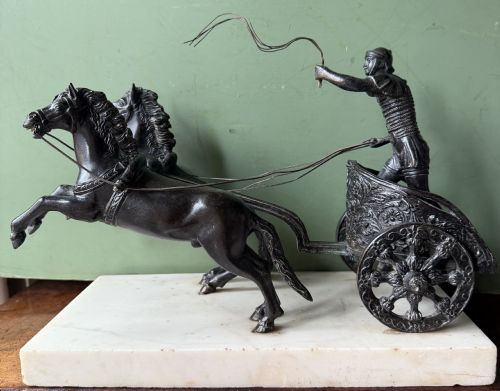
Metal sculptures rely on traditional casting techniques, particularly bronze and cast iron, often finished with patination and mounted upon marble bases. These methods allow for fine anatomical detail in figures like charioteers, huntsmen, and historical monarchs.
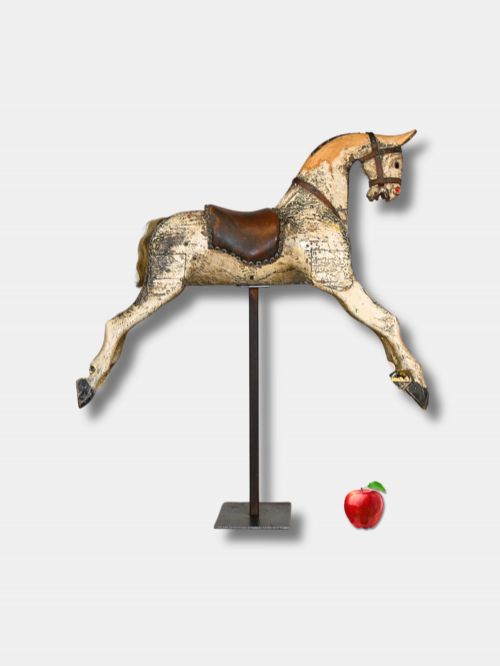
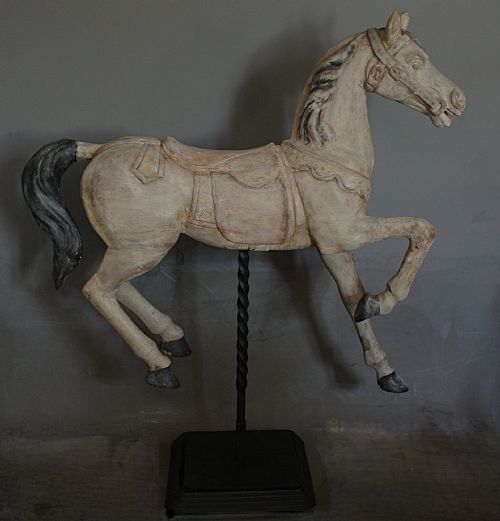
Wooden pieces involve hand-carving and shaping, sometimes enhanced with paint or leather components as seen in rocking horses and fairground figures. Artisans shape natural timber and branches to accentuate the dynamic lines of the animal form.
Mounted Horse Sculpture Retail Price Guide 2026
Typical asking prices for mounted horse sculpture among the pieces listed under this phrase on Sellingantiques today, from the lower quarter to the upper quarter. They describe what is for sale here now, not the wider market.
Listings feature items from the nineteenth and twentieth centuries, utilising materials like bronze, wood, cast iron, and marble.
What varies in quality
Quality rests in the anatomical precision of the horse and the integrity of the mount, whether a stepped marble plinth or an iron wall bracket. Finer works demonstrate careful attention to musculature, posture, and expression.
The choice and preservation of materials dictate the enduring character of each piece. Original patination, sound structural joinery, and authentic period mountings distinguish superior examples from simpler utilitarian objects.
G .J. Lines·Isidore Bonheur·Francois I
The Mounted Horse Sculpture Glossary
- Animalier
- A nineteenth-century artistic movement focusing on the realistic depiction of animals. Sculptors in this tradition prioritize accurate anatomy and lifelike movement.
- Grand Tour
- A cultural journey undertaken by nineteenth-century elites who acquired souvenirs such as small bronze studies. These souvenir bronzes are typically mounted on marble plinths.
- Plinth
- A heavy base supporting a statue or sculpture. Marble and stone variations provide stability and visual elevation for metal figures.
- Patina
- The surface sheen or coloration developed through age and wear on bronze and metal. A rich patina indicates undisturbed historical character.
Mounted Horse Sculpture: Frequently Asked Questions
What is a mounted horse sculpture?
A mounted horse sculpture is a three-dimensional representation of an equine figure attached to a base, plinth, or wall bracket. These works include cast metal figures, carved wooden carousel animals, and architectural brackets.
Materials range from bronze and cast iron to wood and marble. They reflect decorative traditions spanning the nineteenth and twentieth centuries.
How were these sculptures displayed originally?
Many bronze and marble pieces functioned as desk ornaments, cabinet display items, or mantelpiece decorations in nineteenth-century interiors. Grand tour souvenirs were typically showcased on tabletops to signal an owner's travels and cultural education.
Other formats, such as cast iron heads and wooden branches, served utilitarian roles as wall brackets or architectural elements. Carousel and fairground figures were integrated into larger entertainment structures before finding domestic placement.
How do I care for a bronze sculpture?
Bronze figures require minimal intervention, needing only gentle dusting with a soft, dry cloth to prevent particulate accumulation. Avoid chemical cleaners and polishes, which can strip the historical patina from the metal surface.
Maintain stable indoor humidity and temperature to protect any accompanying marble plinths or wooden mounts. Harsh sunlight and moisture fluctuations can damage underlying adhesives or organic materials.
How can I tell a nineteenth-century piece apart?
Nineteenth-century works often display specific casting methods, such as sand casting or lost-wax techniques, combined with heavy materials like rouge marble or patinated bronze. Stylistic markers include neoclassical influences, animalier realism, and hand-forged iron construction.
Examine the mounting hardware and wear patterns on the base for signs of age. Period pieces typically exhibit natural oxidation and construction details consistent with historical manufacturing practices.