
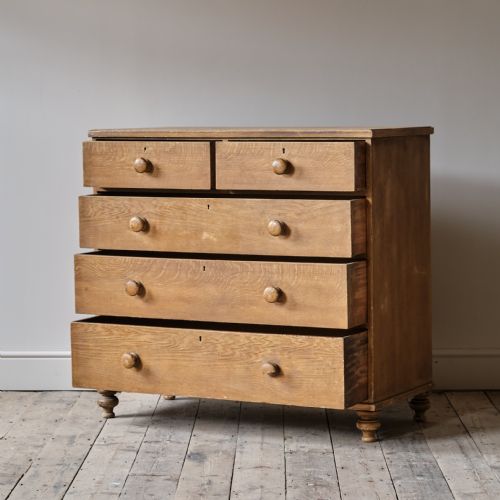
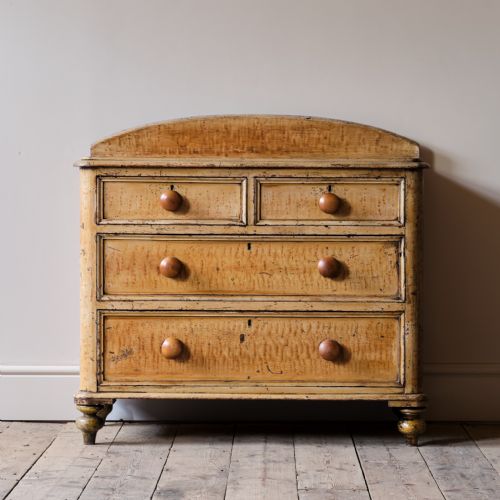
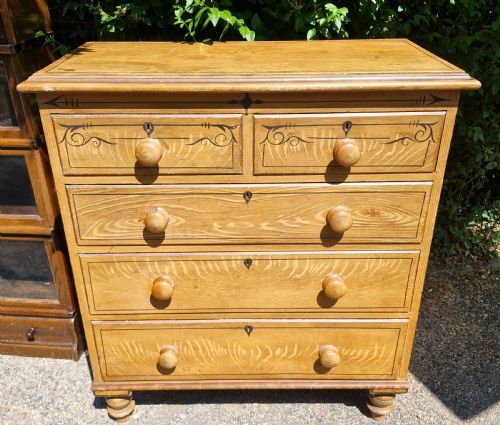
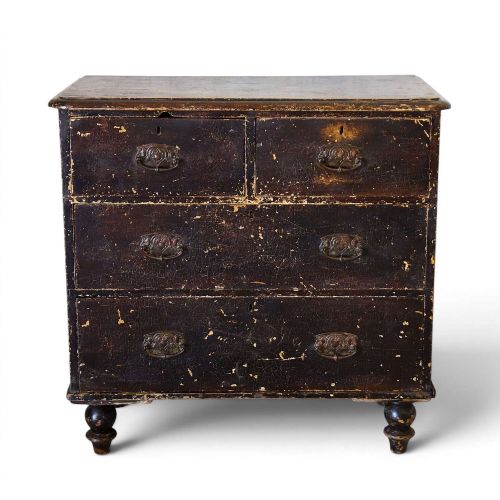
Victorian Painted Pine Chest
A victorian painted pine chest brings honest utility and surface character to a room, offering practical storage disguised in layers of historical colour.

Victorian Painted Pine Chest
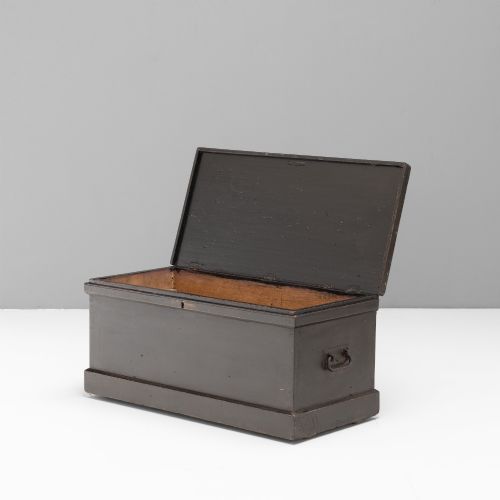
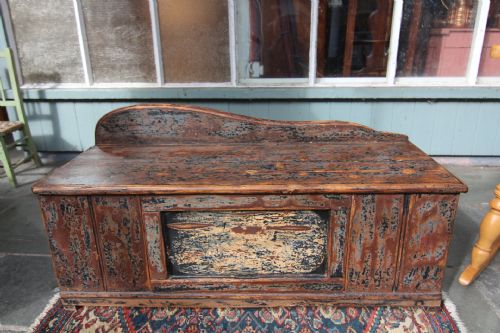
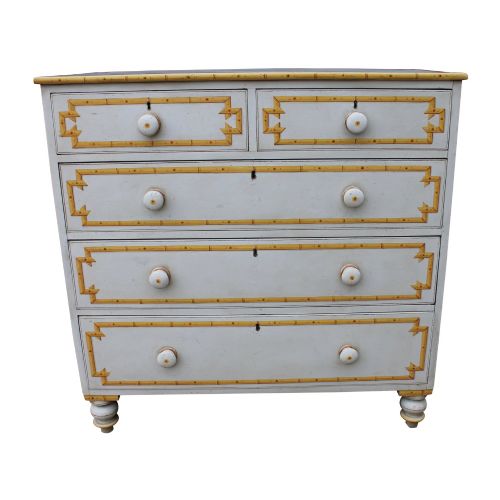
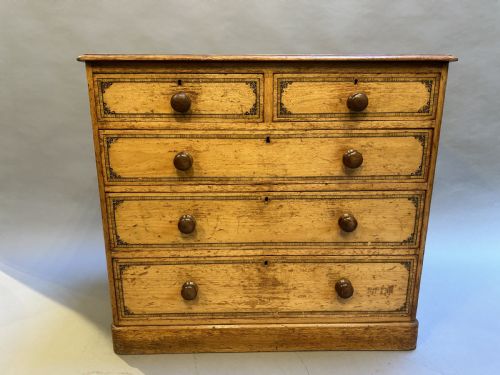
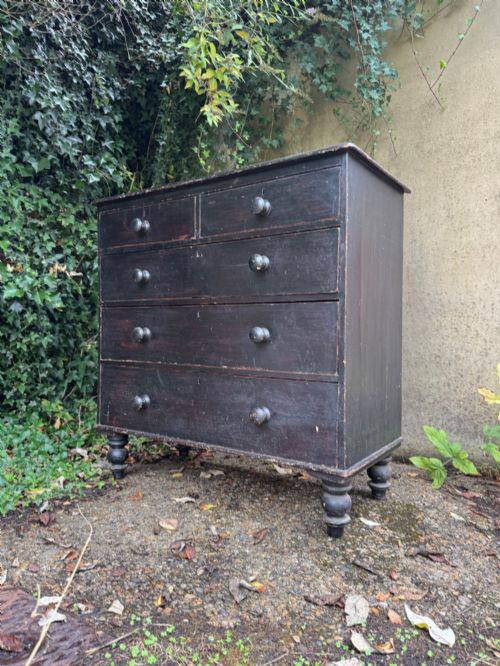
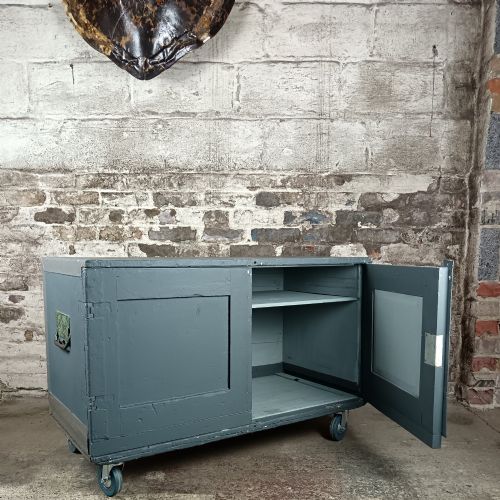
A victorian painted pine chest typically presents as a sturdy chest of drawers, blanket box, or trunk originating from the nineteenth century. These utilitarian pieces range from modest country workshop builds to more finished domestic furniture, often surviving with their early or original surface treatments intact.
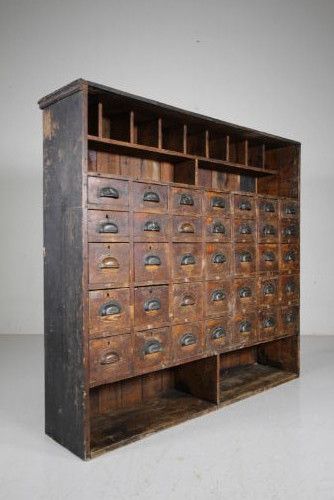
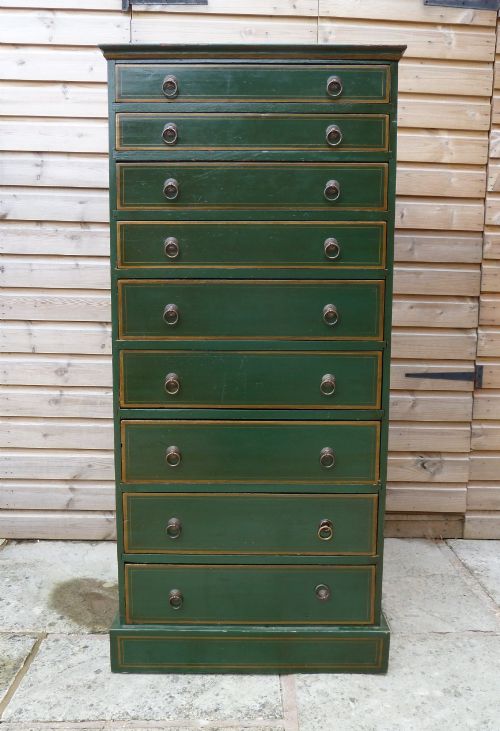
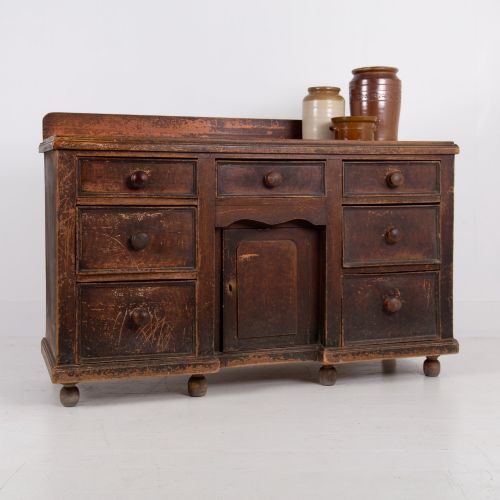
Buyers encounter various configurations, including standard two-over-two or two-over-three drawer arrangements, alongside larger banks of drawers and housekeeper cupboards. The construction reflects the practical needs of nineteenth-century households, workshops, and provincial homes across Britain and Europe.
Materials and technique
Makers constructed these carcasses entirely from solid pine, utilising dovetail joints for drawer construction and panel-and-frame techniques for lids and sides. Iron, brass, and metal hardware such as drop handles, lock escutcheons, and hinges completed the functional build.
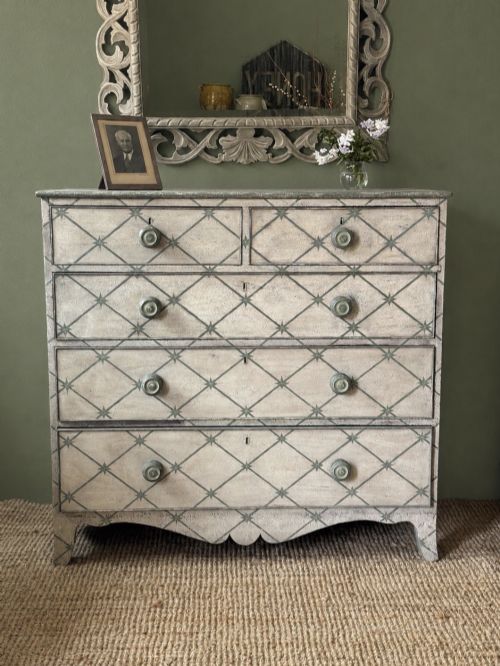
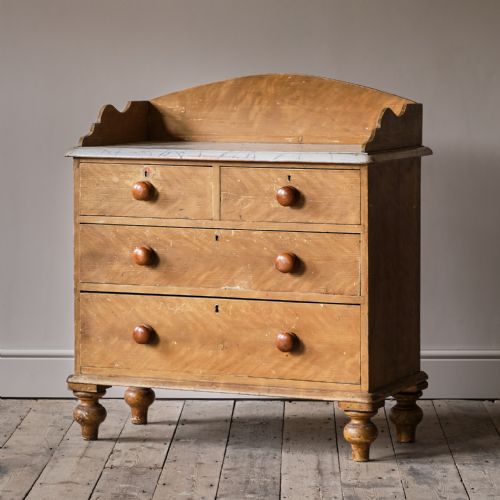
Surface decoration involved applying various pigments directly to the wood, sometimes employing scumbling techniques to simulate finer timbers or stencilling patterns onto the base coat. Original painted finishes often survive beneath subsequent layers, recording decades of domestic maintenance.
The documented forms range from compact two-over-two drawer chests to massive multi-drawer Hungarian shop fittings and campaign trunks.
Assessing quality
Quality rests primarily in the integrity of the original painted surface and the proportion of the piece. Untouched pigment with honest patination commands greater interest than later, heavy-handed overpainting that obscures the underlying timber texture.
Structural soundness also dictates standing, with well-joined drawers, original backboards, and retained hardware elevating an example above heavily altered pieces. The subtlety of the decorative paint, whether flat colour, scumble, or stencilling, separates standard utility items from more considered vernacular work.
Heal & Sons
The Victorian Painted Pine Chest Glossary
- Scumble
- A translucent glaze applied over a lighter base colour and manipulated with combs or rags to imitate the grain of richer woods. This technique was widely utilised on nineteenth-century pine furniture to achieve a decorative finish.
- Campaign
- A style of portable furniture designed for transport, typically featuring recessed brass handles and corner brackets. These pieces were built for officers and travellers requiring robust dismantling storage.
- Dovetail
- A joint formed by interlocking wedge-shaped fingers, prized for its exceptional tensile strength. It is commonly found at the corners of nineteenth-century drawer boxes.
- Escutcheon
- A protective metal plate surrounding a keyhole. Brass or iron variants often help date a piece by their manufacturing style.
Victorian Painted Pine Chest: Frequently Asked Questions
Are these chests suitable for daily bedroom use?
These pieces were originally built for domestic storage and function reliably for clothing and linens today. The drawers slide directly on wooden runners, which benefit from occasional waxing to maintain smooth operation.
Humidity and temperature fluctuations in modern homes should be kept moderate to prevent the pine from warping or the paint from flaking. Lining the drawers with acid-free tissue protects delicate fabrics from raw interior wood.
How can I tell if the paint is original?
Original paint typically shows consistent wear patterns, minor bumps, and fine craquelure accumulated over more than a century of use. Close inspection under magnification often reveals dust particles trapped genuinely within the drying oil layers.
Later repainting usually hides the underlying wood grain entirely and lacks the subtle tonal variation found in period surfaces. Traces of earlier colours may also appear around hinges and drawer edges during detailed examination.
What does scumbled pine mean?
Scumbling involves dragging a darker translucent glaze across a pale painted base to mimic the appearance of expensive hardwoods like oak or mahogany. It was a popular nineteenth-century method for upgrading plain pine furniture.
This technique produced varied, mottled patterns that give the surface considerable depth and visual texture. Scumbled finishes are frequently encountered on vernacular chests and cupboards from the period.