






Victorian Painted Metal Tray
These Victorian painted metal tray examples span robust cast iron umbrella stands to fine toleware serving tables, offering both utility and vibrant handpainted artistry for the home.
Victorian Painted Metal Tray
A Victorian painted metal tray encompasses both portable serving pieces and large decorative tray tables, often rendered in toleware or sheet iron. These items emerge from nineteenth-century workshops, spanning the Victorian and Regency periods, alongside related umbrella and stick stands in heavy cast iron.
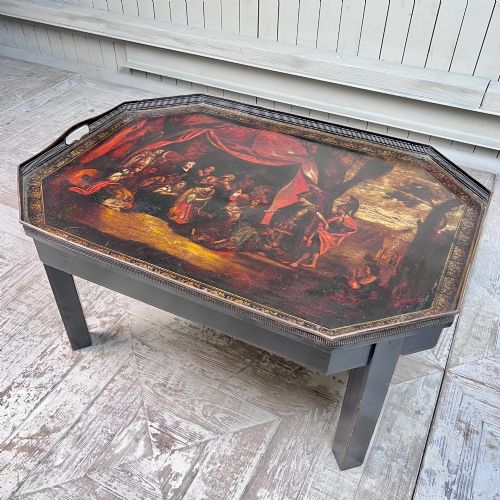
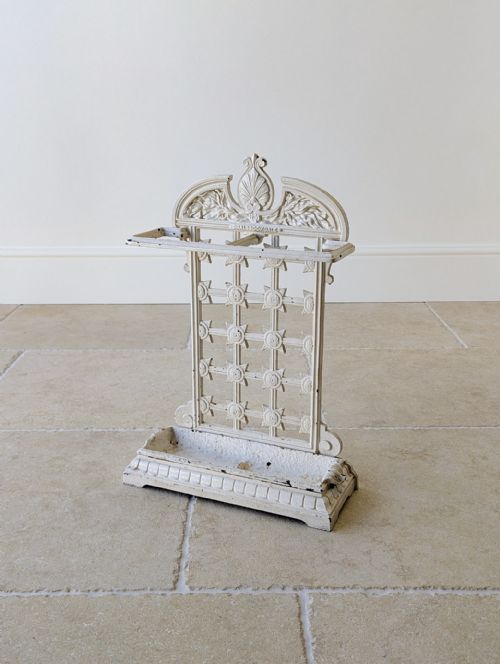
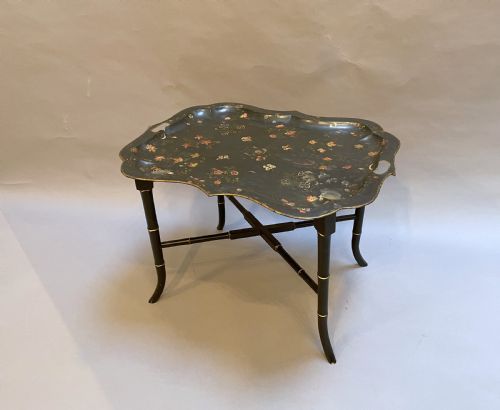
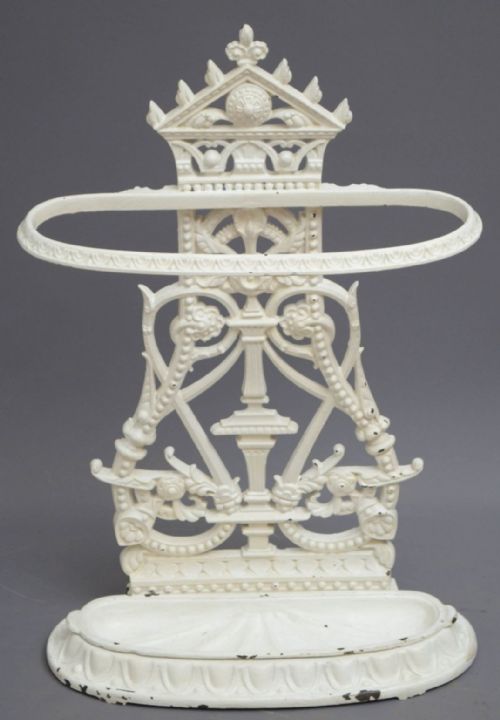
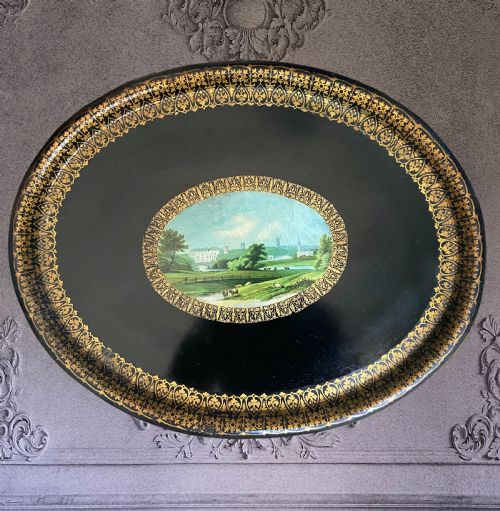
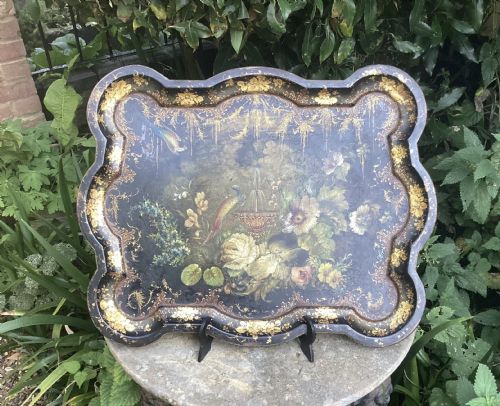
The objects on this page appear in various forms, from octagonal and oval serving dishes to faux bamboo stick stands and coffee tables mounted on frames. Makers applied oil paint and lacquer over metal bases, sometimes embellishing the surfaces with intricate historical scenes or gilt details.
Buyers encountering a Victorian painted metal tray will find pieces ranging from utilitarian hallway stands to grand French Napoleon III oval trays. The selection balances functional hall furniture with decorative tabletop accessories typical of the nineteenth century.
Materials and construction methods
Makers formed these items using sheet iron, cast iron, and sometimes papier-mâché, shaping them into trays, dishes, and umbrella stands. Cast iron pieces required sand-casting to achieve the rigid structural forms needed for heavy walking sticks and umbrellas.
Surface decoration relied on skilled handpainting, oil paint, and lacquer applied over prepared metal grounds. Artisans frequently added gilt embellishments to highlight borders, foliage, and figurative compositions, sealing the work to protect the underlying metal.
Some trays depict dramatic historical narratives like Esther accusing Haman, turning your afternoon tea service into an unexpected biblical drama.
Assessing quality and execution
Quality in these pieces rests primarily on the crispness of the metal casting and the fineness of the handpainted details. Superior trays feature intricate figurative work or detailed gilding, whereas simpler items rely on plain painted finishes.
The integrity of the original paint surface dictates much of the desirability, with untouched historical patination holding greater visual appeal than heavy modern repainting. Structural soundness in cast iron stands also separates robust workshop output from damaged examples.
Coalbrookdale·H. Meeson·Pontypool
The Victorian Painted Metal Tray Glossary
- Toleware
- Painted or lacquered sheet metalware, highly popular in the eighteenth and nineteenth centuries for domestic objects like trays and coal scuttles. The term derives from the French phrase for painted sheet iron.
- Tôle Peinte
- French term meaning painted tinplate or sheet metal, often used interchangeably with toleware. These items feature decorative painted surfaces executed in oils.
- Papier-mâché
- A composite material consisting of paper pieces or pulp, sometimes reinforced with fabric, bound with glue or resin and moulded. It served as a lightweight alternative to metal for trays and small dishes.
- Gilt
- Covered thinly with gold leaf or gold paint to add metallic brilliance. Artisans utilised this technique to accent borders and highlight motifs on trays.
Victorian Painted Metal Tray: Frequently Asked Questions
How were Victorian painted metal trays used?
These trays served primarily for serving food and beverages, or simply as decorative tabletop centrepieces within nineteenth-century drawing rooms.
Larger versions were eventually mounted onto stands to function as occasional tables, while related cast iron pieces kept hallways tidy by holding walking sticks and umbrellas.
How do I clean a painted metal tray?
Dust the surface gently with a soft, dry cloth to prevent scratching the aged paint or lacquer layer. Avoid using water, detergents, or chemical solvents, which can lift the historical oil paint and expose the bare metal underneath.
Are these trays suitable for daily use?
Most antique painted trays are best reserved for display or light decorative service due to the fragile nature of nineteenth-century handpainting. Placing hot items or liquids directly on the surface risks damaging the original lacquer and gilt work.
What is the difference between toleware and cast iron stands?
Toleware refers to lightweight painted sheet metal used for portable trays and decorative dishes designed for tabletops. Cast iron stands are heavy, rigid furnishings built specifically to support umbrellas and walking sticks in entrance halls.