
Victorian Padded Footstool
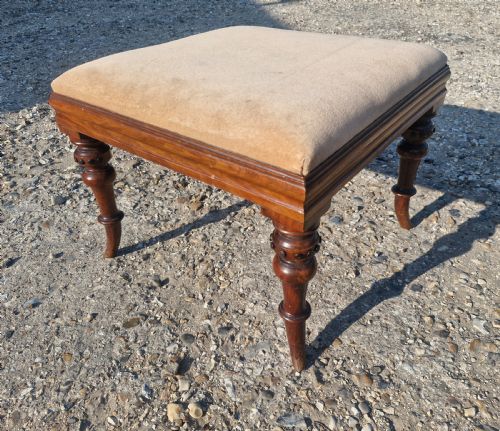
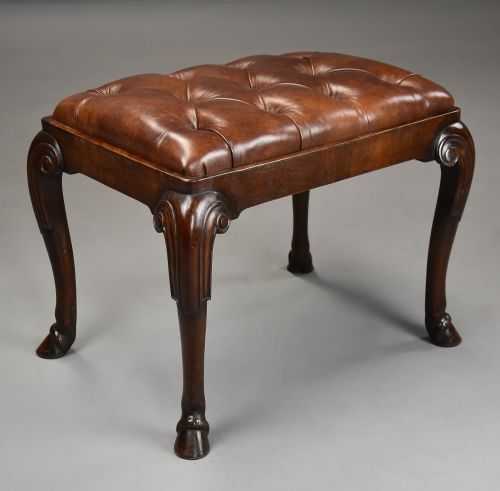
A victorian padded footstool brings low seating and needlework textiles into a room, shaped by revival styles and heavy timber frames.
Victorian Padded Footstool
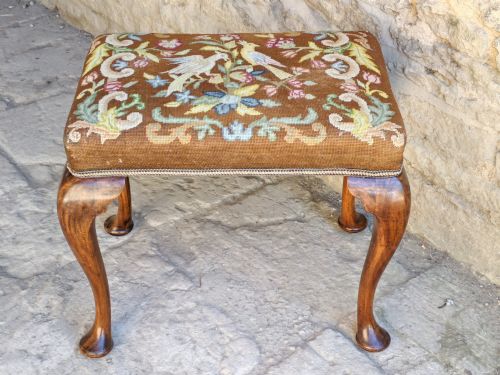
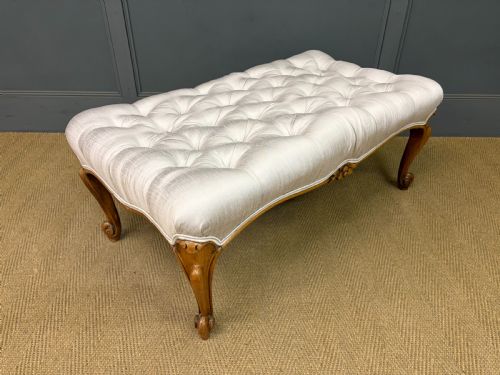
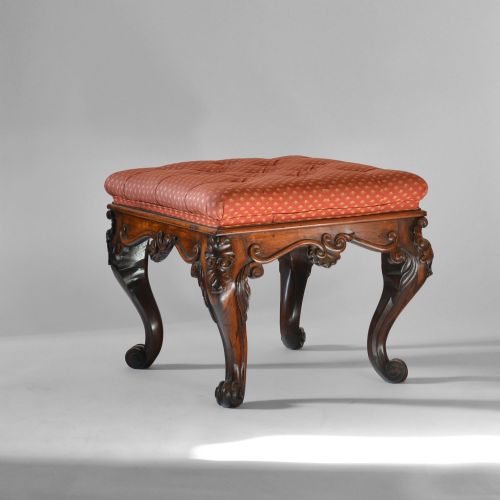
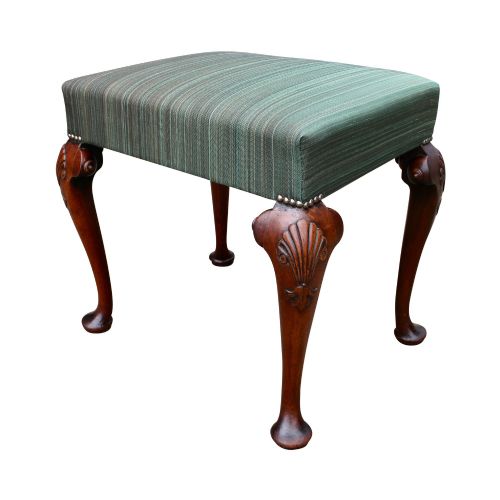
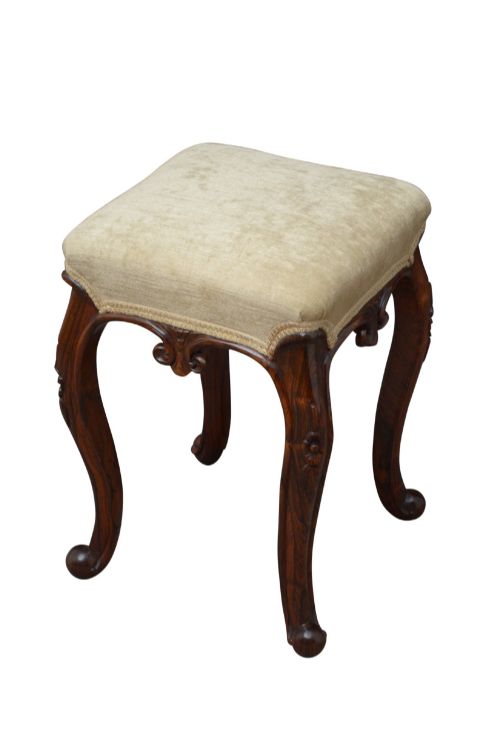
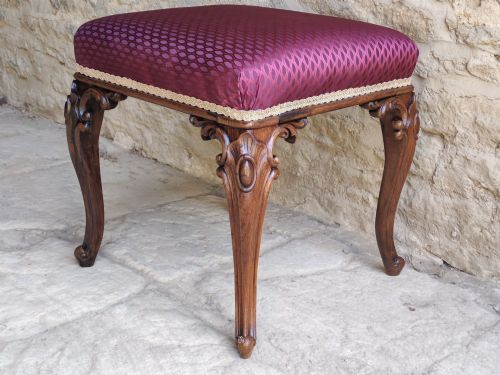
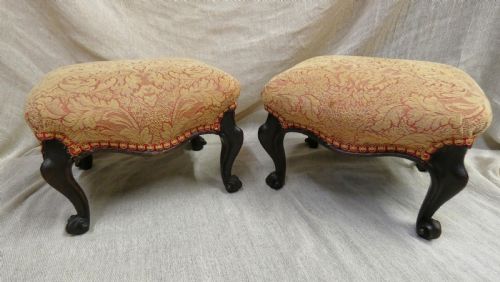
A victorian padded footstool appears in various timber forms across the nineteenth century, including low footstools, dressing table stools and larger ottomans. These pieces emerge from periods spanning the middle decades of the Victorian era up to nineteen hundred, reflecting diverse revival designs.
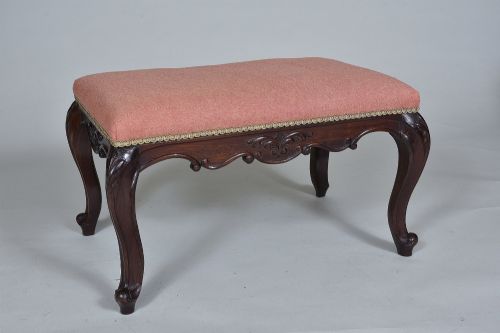
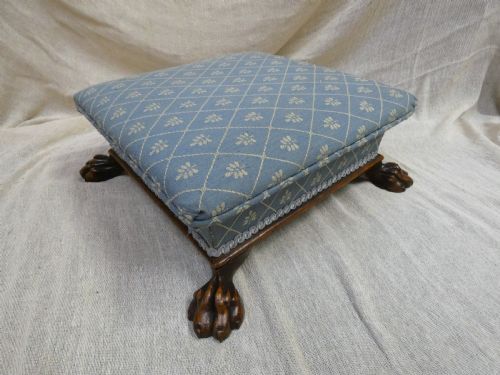
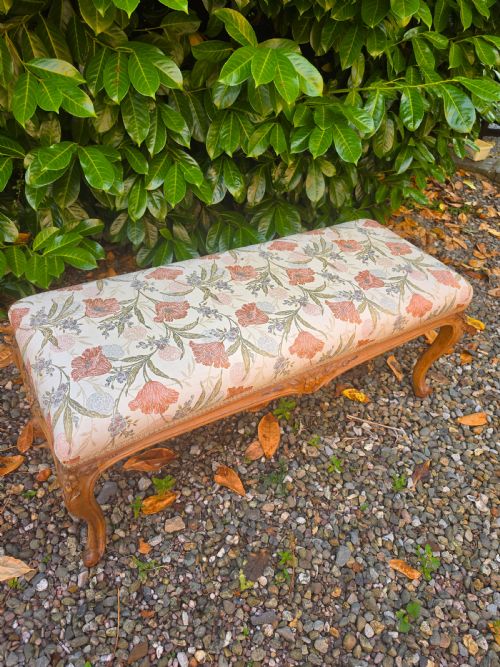
Makers construct these items as footstools, ottomans and window seats, often incorporating cabriole legs, brass castors or turned supports. The inventory shows domestic seating originating from English workshops alongside Scottish Baronial and Anglo-Indian variants.
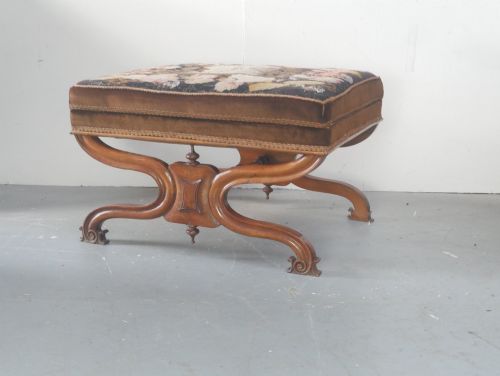
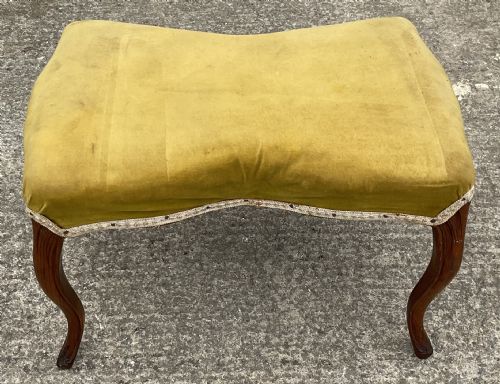
Buyers frequently encounter walnut and mahogany frames paired with newly applied upholstery, needlework, velvet or leather coverings. Certain examples serve specialised domestic functions, such as metamorphic gout stools designed for leg elevation.
Materials and Technique
Craftsmen shape the structural frames of these stools from dense hardwoods like mahogany, walnut and rosewood, occasionally utilising goncalo alves wood, burr maple, beech or giltwood. Joinery relies on traditional carpentry methods to support the weight placed upon low seating forms.
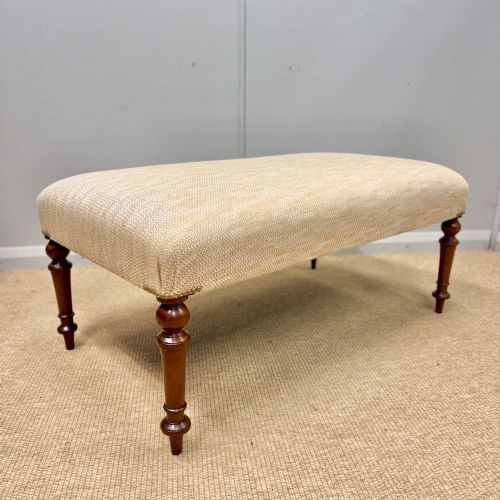
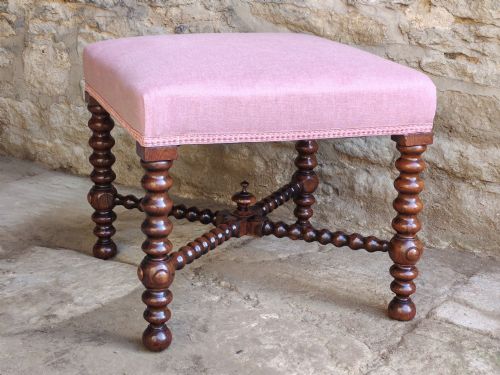
Upholstered surfaces combine internal padding with exterior textiles, featuring velvet, tapestry, needlework, leather and standard fabric. Details such as carved wooden cabriole legs, twisted rope supports, bobbin turnings and brass castors finish the lower sections of the furniture.
A rocking footstool lets tired feet gently sway while the rest of the room stays completely still.
Construction and Finish
Quality separates through the selection of timber and the depth of carving on the wooden frame, where dense walnut and figured rosewood command greater attention than stained beech. Original structural integrity and well-defined carving details distinguish superior examples from simpler utilitarian items.
The standard of upholstery materials and the fidelity of revival styles, whether Queen Anne, Rococo or Louis XV, influence the overall character. Pieces retaining original fabric or featuring hand-dyed leather and precise needlepoint display distinct craftsmanship compared to plain modern recovering.
The Victorian Padded Footstool Glossary
- Cabriole leg
- A furniture support that curves outward at the knee and tapers inward toward the foot, often ending in a scroll or pad. This shape appears frequently on mid-nineteenth-century walnut and mahogany stools.
- Gout stool
- An adjustable or rocking footstool engineered to elevate the legs of a person suffering from joint pain. These specialist pieces often incorporate mechanical adjustments.
- Needlepoint
- A form of counted thread embroidery stitched onto canvas to create durable decorative covers for seat tops. Many nineteenth-century footstools utilise this textile technique.
- Ottoman
- A low, upholstered seat or footstool lacking arms or a back, sometimes built with internal storage space. Larger examples function as centre pieces in domestic rooms.
- Bobbin leg
- A turned wooden furniture support shaped to resemble a series of bobbins or spools stacked end to end. This turning style occurs on mid-nineteenth-century pieces.
Victorian Padded Footstool: Frequently Asked Questions
How are these footstools dated?
Dating relies on timber choices, leg profiles and upholstery methods recorded across the nineteenth century. Specific styles like Victorian Rococo Revival or Queen Anne Revival help narrow down the period of manufacture.
Evidence from nineteenth-century pieces points to stylistic shifts in turning and carving from the eighteen-fifties through to nineteen hundred. Examining the secondary woods and construction marks clarifies the age further.
What is a gout stool?
A gout stool is an adjustable or rocking support designed to elevate and rest sore limbs. Nineteenth-century examples often feature mechanical tilting mechanisms.
These pieces allowed users to alter the angle of the padded surface for comfort. They remain collectable examples of nineteenth-century ergonomic domestic furniture.
Were these stools always upholstered?
Most surviving examples feature padded tops covered in textile, leather or needlework. The framing beneath provides a rigid base for internal stuffing and fabric layers.
Some pieces retain original fabric while others receive new upholstery during restoration. The variety spans simple plain covers to intricate hand-stitched tapestry.
Where were these placed in a home?
Victorian footstools and ottomans stood beside firesides, in dressing rooms and beneath window seats. Larger ottomans often occupied the centre of a room as flexible seating.
Smaller footstools paired directly with armchairs and fireside seating arrangements. Dressing table stools served bedroom spaces alongside matching tables.