
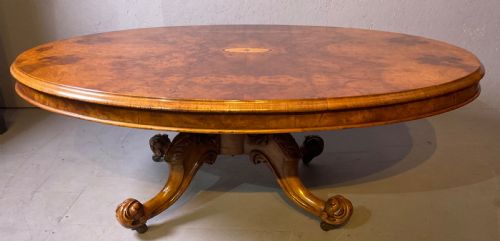
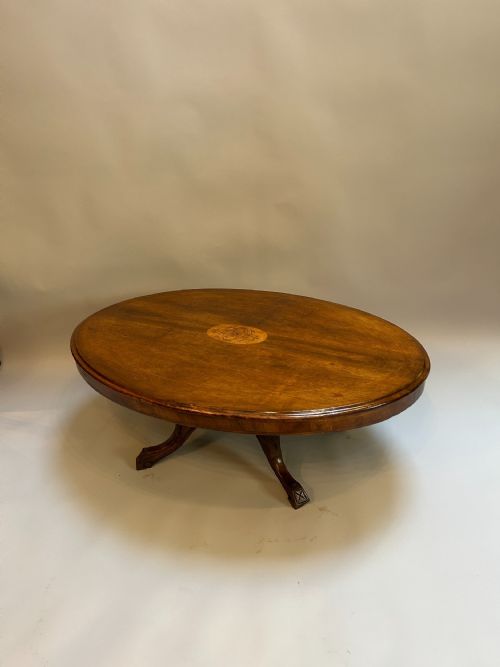


Victorian Oval Low Table
A victorian oval low table brings warmth and proportion to a sitting room, offering a low surface with distinctive nineteenth-century character.
Victorian Oval Low Table
When you search for a victorian oval low table, you encounter nineteenth-century pieces adapted into coffee tables, alongside occasional stools and footstools shaped with curved edges. These items date from the period spanning the mid to late nineteenth century, including specific decades such as eighteen-sixty, eighteen-seventy, and eighteen-eighty.
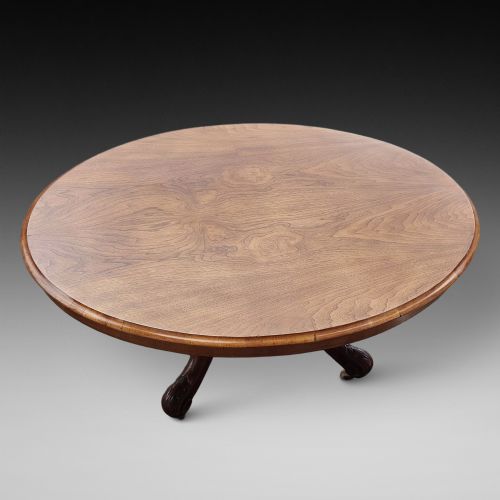
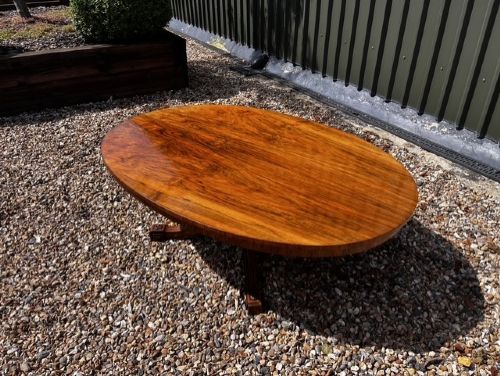
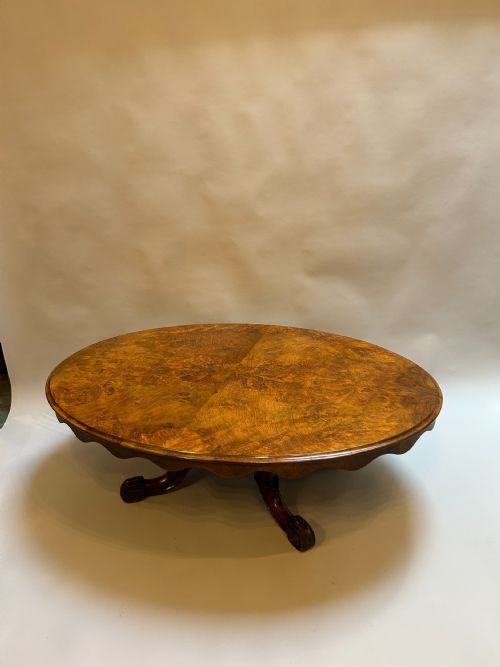
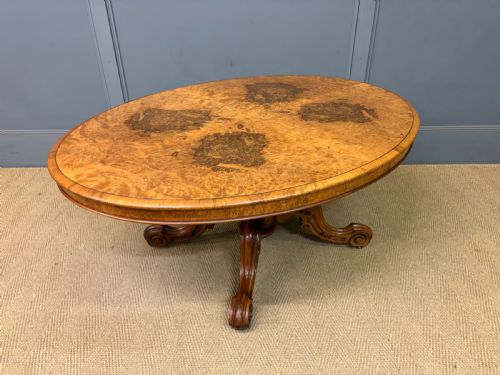
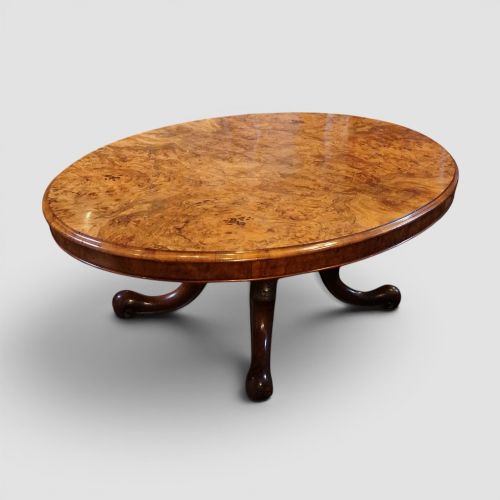
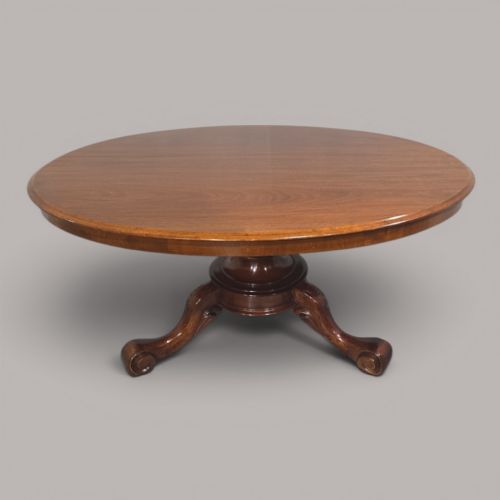
The pieces appearing on this page present distinct nineteenth-century origins, predominantly taking the form of low coffee tables and oval stools. Makers of the era shaped these items from timber, frequently employing an oval top supported by carved bases or tripod structures.
Materials and construction
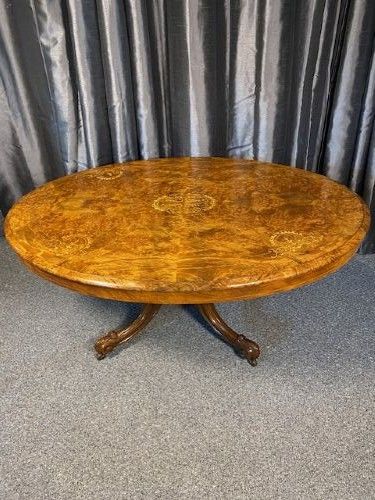
Cabinet makers utilised walnut, burr walnut, mahogany, satinwood, and other hardwoods to construct these tables and stools. Surfaces often feature detailed wood inlay, boxwood inlay, and marquetry inlay, demonstrating the decorative techniques of the Victorian period.
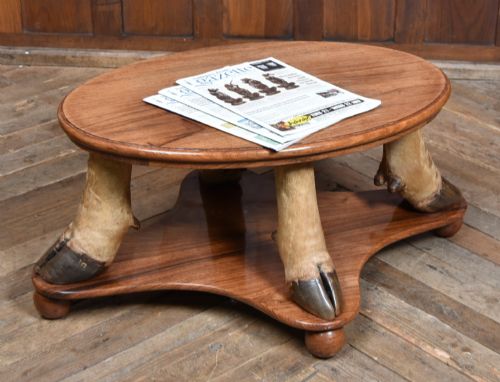
Structural elements combine hand-carved wooden bases with timber tops, while some examples pair period wooden tops with modern cast iron tripod bases. Specialised pieces even incorporate taxidermy hooves into their framework.
Listings feature items from the Victorian period, specifically referencing the eighteen-sixties, seventies, and eighties, alongside Victorian Revival styles.
Distinctions in quality
Quality rests in the selection of timber veneers, such as richly figured burr walnut, and the precision of the marquetry and boxwood inlay across the oval surface. Finer examples display meticulous hand-carved detail on the wooden bases rather than plain turnings.
The reputation of the workshop also marks a division, with documented London makers producing works of superior structural joinery and decorative refinement compared to lesser-known cabinet makers.
Holland and Sons Of London·Edwards and Roberts of London
The Victorian Oval Low Table Glossary
- Burr walnut
- A highly figured timber veneer harvested from walnut tree growths, prized for its swirling grain patterns on table tops.
- Marquetry inlay
- Decorative patterns formed by fitting contrasting pieces of wood veneer into a prepared surface, commonly seen on Victorian tables.
- Tripod base
- A three-legged support structure beneath a table top, utilised in both period wood configurations and modern iron adaptations.
- Taxidermy hooves
- Animal hoof elements incorporated into nineteenth-century furniture frames, creating unusual novelty pieces.
- Boxwood inlay
- Fine lines or motifs of pale boxwood set into darker surrounding timber for linear contrast.
Victorian Oval Low Table: Frequently Asked Questions
How are these tables used today?
These tables function primarily as coffee tables in contemporary sitting rooms, providing a low surface for daily use.
Their compact oval shape allows them to fit comfortably in front of sofas without crowding the floor space.
Are all these tables from the Victorian period?
The pieces originate from the nineteenth century, encompassing items made during the Victorian era and the subsequent Victorian Revival style.
Construction details and timber choices reflect the prevailing aesthetic of those decades.
What woods appear most often?
Walnut and burr walnut dominate the selection, accompanied by mahogany, satinwood, and general hardwoods.
Inlay work frequently utilises lighter timbers such as boxwood to create contrasting decorative borders.
Do any tables feature unusual materials?
A small number of pieces incorporate taxidermy hooves into their structural design, reflecting nineteenth-century curiosities.
Other examples combine period wooden tops with replacement metal tripod bases.