




Victorian Outdoor Boot Scraper
These robust victorian outdoor boot scraper pieces cleared mud from heavy boots at townhouse doorsteps across the centuries.
Victorian Outdoor Boot Scraper
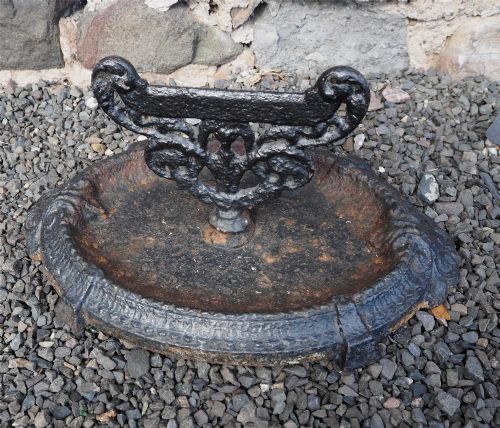
A victorian outdoor boot scraper stands outside a doorway to remove mud and dirt from footwear before entering the house. Most examples on this page date from the Victorian period, though earlier Regency and Georgian designs also appear alongside later nineteenth-century pieces.
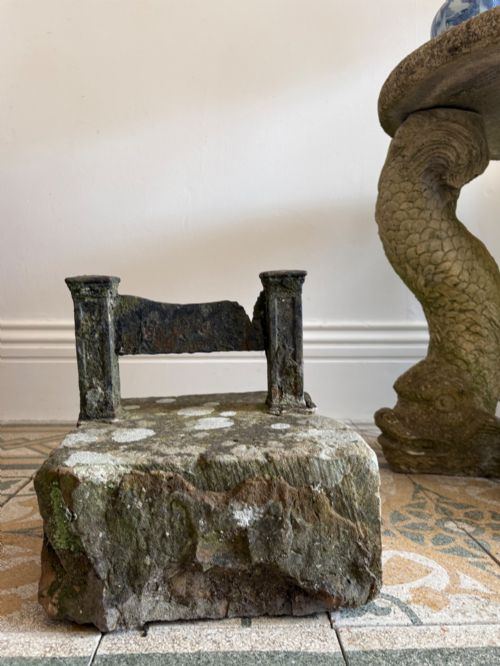
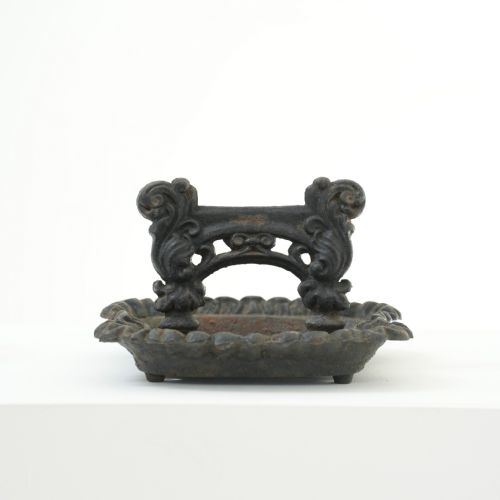
The standard form combines a horizontal metal blade for scraping soles with integrated vertical loops or pulls for steadying the foot. Many are standalone iron units, while others are inset directly into hewn stone blocks for domestic placement.
How they were made
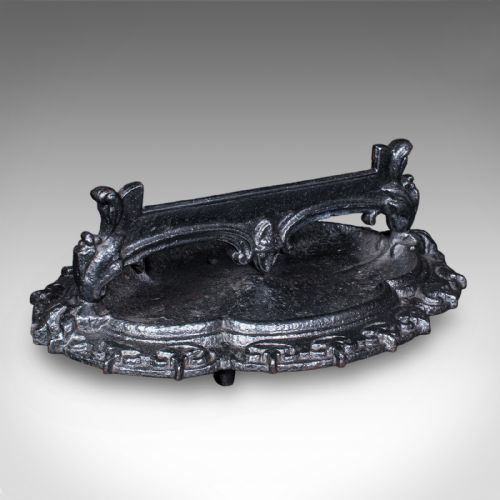
Foundries produced these items primarily in cast iron, pouring molten metal into sand moulds to create robust blades and decorative frames. This material suited the functional demands of daily outdoor use in all weather conditions.
Certain pieces incorporate hewn stone blocks, anchoring the heavy iron scrapers firmly in place at the entrance of townhouses and country houses alike.
These stout iron sentinels spent centuries waiting outside in the rain just to be kicked by muddy boots.
What varies in quality
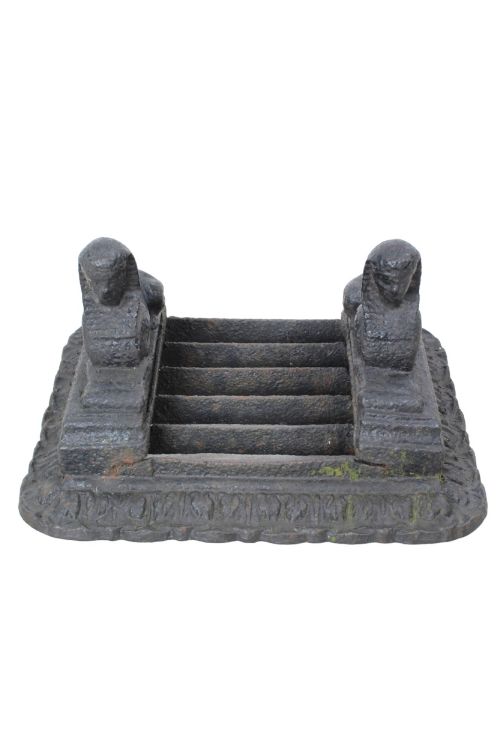
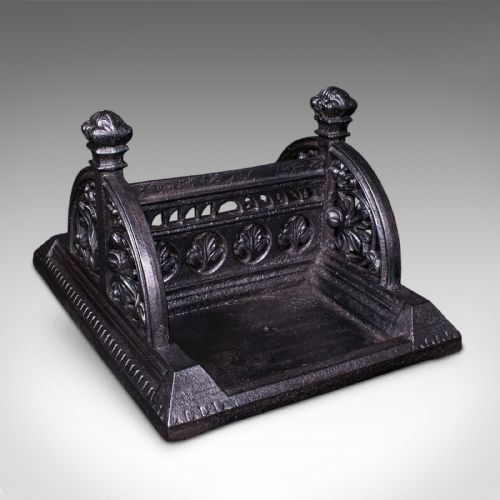
The distinction between standard utility items and finer examples lies in the decorative detail of the ironwork and the presence of architectural revival styles such as Gothic Revival or Egyptian Revival. Elaborate Coalbrookdale castings or matched pairs demonstrate superior foundry work compared to plain domestic scrapers.
Weight and proportion also define the standard, with large country house or London townhouse variants offering a more substantial presence than smaller oval footscrapers.
Coalbrookdale
The Victorian Outdoor Boot Scraper Glossary
- Boot scraper
- A metal blade mounted near a doorway designed to scrape mud from the soles of boots. They were essential domestic fixtures before paved streets and modern tarmac.
- Shoe pull
- An attached vertical loop or handle that allowed a person to steady themselves while scraping their footwear. These often formed an integral part of the cast iron frame.
- Cast iron
- An iron-carbon alloy poured into a mould to form solid objects. It provided the durability and weight required for heavy-duty outdoor cleaning.
- Gothic Revival
- An architectural and decorative style drawing inspiration from medieval design. Pieces in this style feature pointed arches and ecclesiastical motifs.
- Coalbrookdale
- A famous English ironfoundry known for producing high-quality decorative cast ironwork during the nineteenth century. Marked pieces from this source are particularly sought after by collectors.
Victorian Outdoor Boot Scraper: Frequently Asked Questions
Where were boot scrapers placed?
They sat immediately outside the front entrance of townhouses and country houses, often fixed directly beside the doorway or embedded in stone steps.
Positioning them outside ensured that mud and street dirt remained on the doorstep rather than entering the hallway.
How do I clean an iron scraper?
Gently brush away loose dirt and surface dust using a dry bristle brush without harsh chemical cleaners.
Applying a light coat of specialist wax or oil helps protect the cast iron from moisture while preserving the aged metal finish.
Are pairs harder to find?
Matched pairs intended for large country house entrances appear less frequently than single doorway scrapers.
Their survival as a complete set reflects grander architectural settings where symmetry at the main entrance was essential.
How can I tell the period?
Stylistic clues such as Gothic Revival or Egyptian Revival motifs point toward specific nineteenth-century decades.
Simpler forms can span from the Georgian era through the late Victorian period, relying on casting characteristics and mounting methods for dating.