
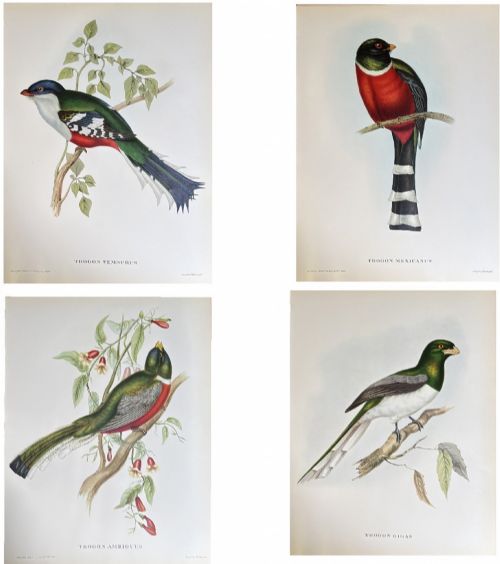
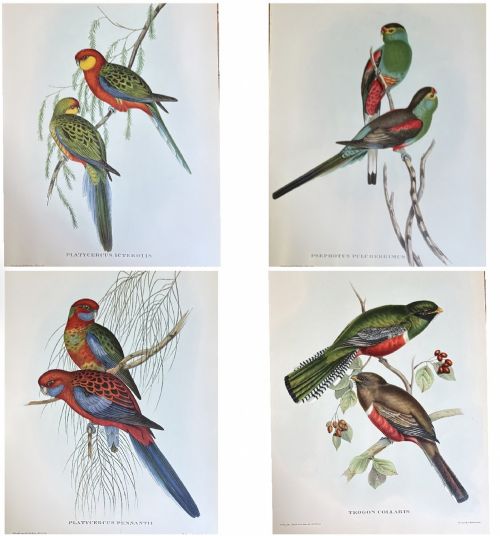
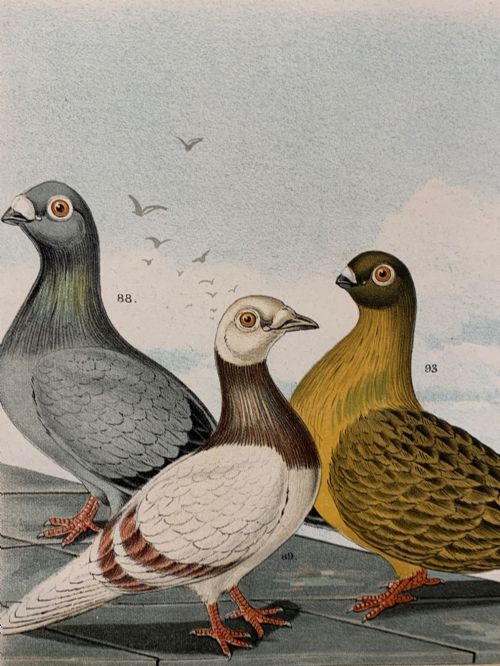
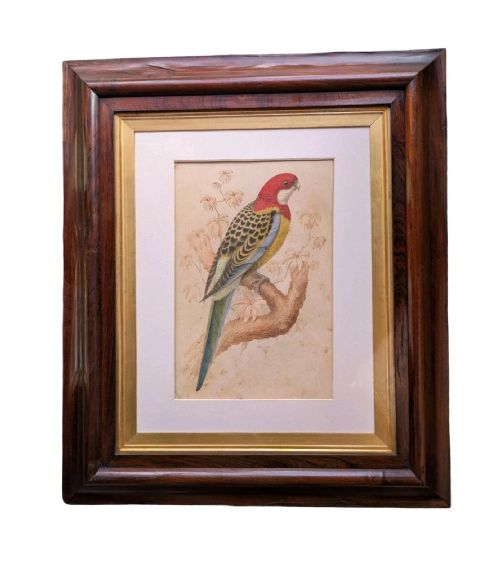
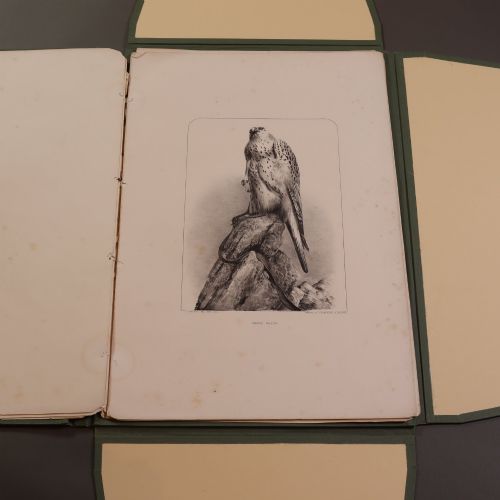


Victorian Ornithological Illustration
These Victorian ornithological illustration pieces capture avian subjects with meticulous precision, offering a refined scientific study for framing in a home.
Victorian Ornithological Illustration
Victorian ornithological illustration brings detailed avian studies into domestic spaces through framed prints, engravings, and original watercolours.
Buyers frequently encounter hand-coloured lithographs alongside framed paintings, often grouping birds in sets such as ducks or tropical species.
These works span the nineteenth century and incorporate British naturalism styles, capturing individual species with exact anatomical detail.
Materials and methods
Artisans applied watercolour and ink directly onto paper, frequently enhancing prints with careful hand-colouring.
Framed pieces often utilise wood and gold leaf, complemented by giltwood mounts to present the works securely.
Parrots, ducks, finches, and macaws gaze out from these walls, proving nineteenth-century birds had plenty to say.
Assessing the work
Precision in the line work and vibrancy of the pigment distinguish finer watercolours from standard printed plates.
The sophistication of the framing, such as ebonised surrounds with deep gilt mounts, elevates the presentation of the artwork.
John Hancock·Harry Bright·William Swainson·Edward Lear
The Victorian Ornithological Illustration Glossary
- Lithography
- A planographic printing process used to produce detailed multi-coloured bird plates from limestone blocks. This technique allowed publishers to issue accurate scientific illustrations in large quantities.
- Engraving
- A method of cutting lines into a metal plate to hold ink for printing fine lines. These plates yielded sharp outlines before hand-colouring was applied.
- Watercolour
- A paint consisting of pigment suspended in a water-based solution, utilised for original studies on paper. Artists relied on its translucent qualities to render feather textures accurately.
- Giltwood
- Wood carved and coated with gold leaf or gold paint to create a lustrous frame finish. Such framing enhances the visual depth of nineteenth-century wall art.
Victorian Ornithological Illustration: Frequently Asked Questions
How should I hang these prints?
Keep these works out of direct sunlight to preserve the delicate watercolours and tinted inks on the paper.
Grouping sets together on a wall maintains the balanced arrangement intended by the original series.
Are these works hand-coloured?
Many nineteenth-century plates received washes of watercolour by hand after the initial printing process finished.
This meticulous touch gave each published sheet a distinct artistic finish.
What frames are typical?
Original pieces frequently appear in ebonised wood frames accompanied by deep giltwood mounts.
These dark surrounds and gold accents frame the avian subjects effectively.
How do I identify the period?
Examine the paper stock, the printing method, and any accompanying signatures or publishing dates noted on the sheet.
Stylistic conventions of nineteenth-century naturalism also offer clear chronological indicators.