
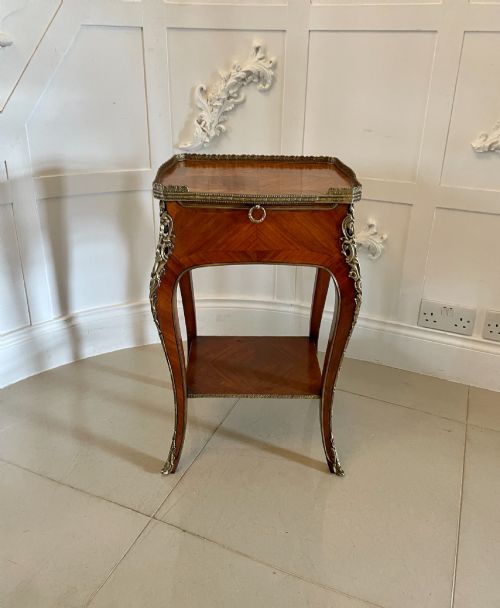


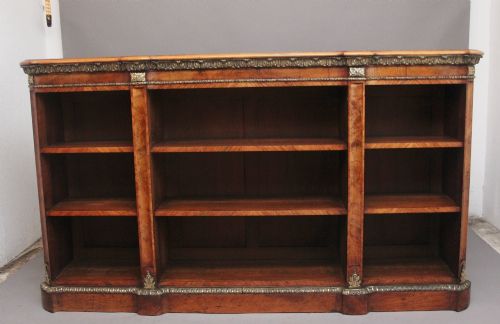
Victorian Ormolu Mounted Cabinet
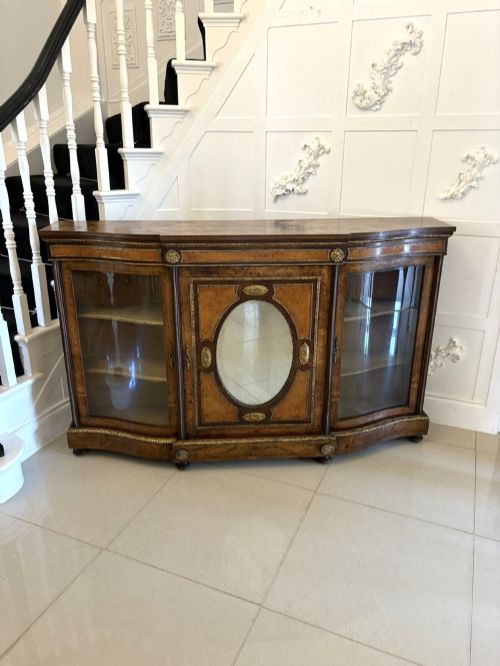
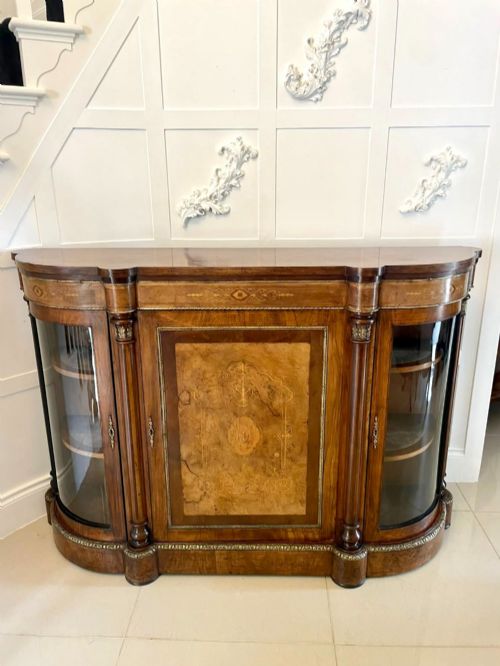
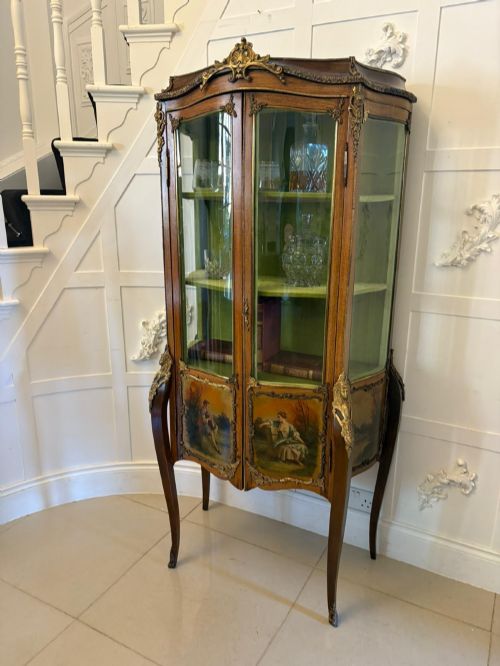
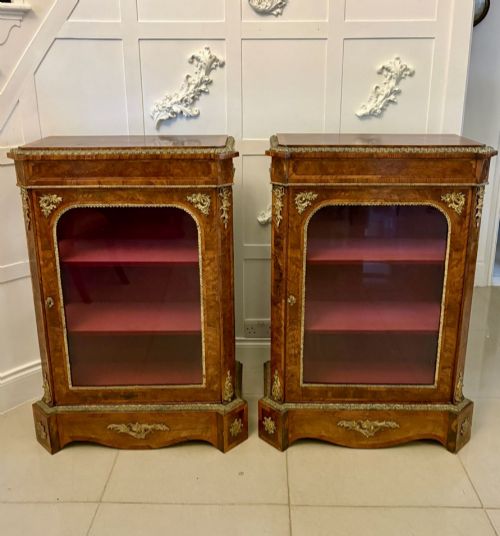
A victorian ormolu mounted cabinet brings a grand, polished focal point to a room with its rich wood grains and gleaming gilt bronze details.
Victorian Ormolu Mounted Cabinet
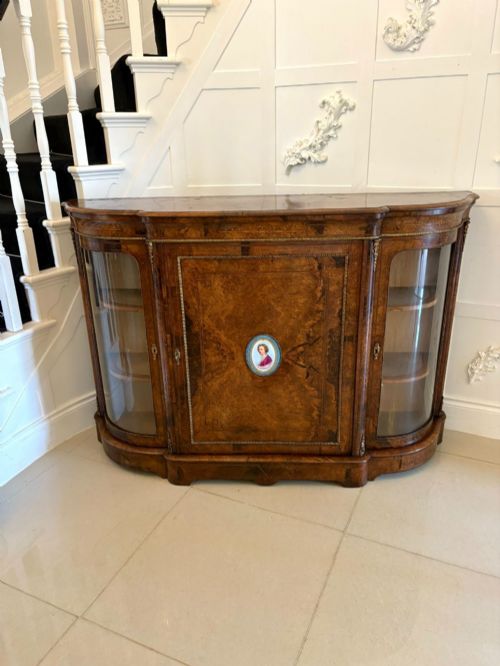
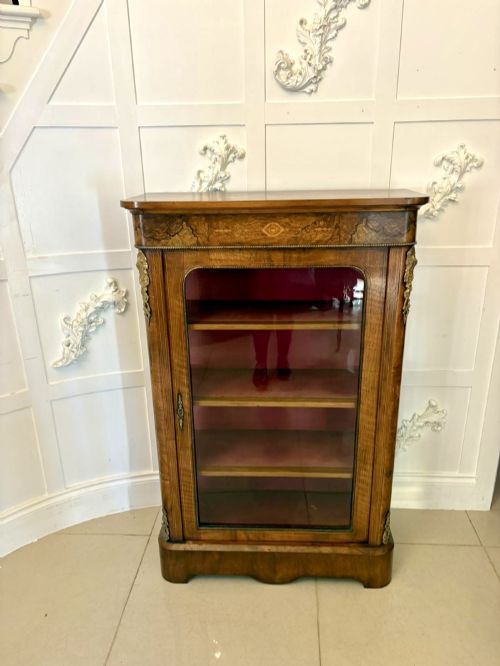
When searching for a victorian ormolu mounted cabinet, collectors encounter a range of forms designed for formal nineteenth-century reception rooms. These pieces include low credenzas, glazed pier cabinets, and serpentine display pieces created during the reign of Queen Victoria and influenced by French revival styles.
The version most commonly met on this page is the burr walnut credenza or pier cabinet, often inlaid with floral marquetry and accented with gilt bronze mounts. These items served both as display spaces for porcelain and as substantial architectural units anchoring a drawing room wall.
Originating largely from British workshops and drawing heavily upon French Napoleon III and Louis XV aesthetics, these cabinets combine domestic utility with continental display ambitions. Makers adapted continental motifs to suit Victorian interiors, producing disciplined proportions alongside exuberant curved fronts.
How They Were Made
Cabinet makers utilised dense native and exotic timbers such as walnut, rosewood, kingwood, and ebonised wood as a foundational base for intricate marquetry and banding. Veneers were carefully selected for their rich figuring, particularly burr walnut, which provided swirling grain patterns across large flat surfaces and curved doors.
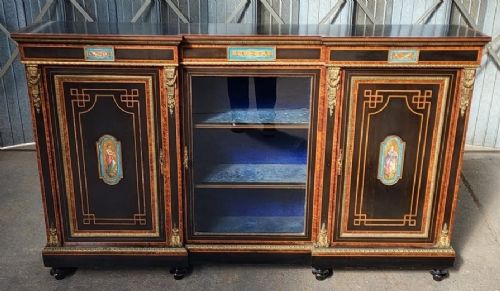
Gilt bronze ormolu mounts were cast and chased by hand to frame panels, corners, and door edges, providing a bright metallic contrast to the dark timber. These decorative elements were secured with brass screws, often complementing inlaid porcelain plaques and mirrored glass panels set within the doors.
Materials recur across multiple forms, combining burr walnut, ebonised wood, and porcelain with cast ormolu mounts.
What Varies in Quality
Quality reveals itself in the depth and precision of the marquetry and the crispness of the cast ormolu mounts. Finer examples display meticulous hand-chasing on the bronze details and complex, multi-timber floral inlay that remains tightly fitted into the surrounding veneer without gaps or shrinkage.
Construction methods and secondary woods also mark the tier of a piece, with superior cabinets utilising solid mahogany or oak carcases beneath choice veneers. The weight and thickness of the marble tops, where fitted, and the integration of original mirrored backs further distinguish standard production from exhibition pieces.
Johnstone And Jeanes·Gillows·Maison Gagneau·Blake London
The Victorian Ormolu Mounted Cabinet Glossary
- Ormolu
- Gilt bronze mounts used to decorate furniture frames and corners. The technique involves applying a gold amalgam to bronze before heating.
- Credenza
- A low cabinet or sideboard, typically featuring central doors flanked by curved glass display sections. These pieces dominated formal Victorian dining and drawing rooms.
- Marquetry
- Decorative veneer patterns formed from different coloured woods, ivory, or metal. Craftsmen assemble these pictorial designs like puzzles before applying them to the carcase.
- Pier Cabinet
- A narrow freestanding cabinet designed to fit against the wall space between windows. They usually feature a single glazed door protecting books or porcelain.
Victorian Ormolu Mounted Cabinet: Frequently Asked Questions
Where were these cabinets placed originally?
These pieces occupied prominent positions in Victorian drawing rooms and formal reception spaces, often placed against walls between tall windows or beneath large mirrors.
Their surfaces provided a stage for displaying decorative porcelain vases, clocks, and bronzes while offering enclosed storage for household treasures.
How do I care for burr walnut and ormolu?
Maintenance requires keeping the timber and gilt bronze away from direct sunlight and extreme temperature fluctuations to prevent veneer cracking.
Applying a traditional beeswax polish occasionally nourishes the walnut grain, while dry dusting preserves the delicate finish of the metal mounts.
Are porcelain plaques original to these cabinets?
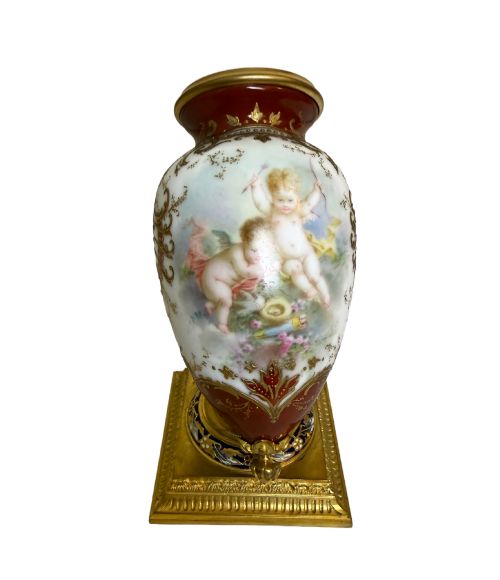
Many fine Victorian pieces incorporate hand-painted ceramic plaques, often in imitation of Sevres factory styles, set directly into the wooden doors or friezes.
These plaques were integrated during initial construction to complement the gilt bronze mounts and add rich colour to the dark timber.