




Victorian Orientalist Oil Painting
A Victorian Orientalist oil painting brings the atmosphere of the Near East and North Africa into a room through rich pigments and careful portraiture.
Victorian Orientalist Oil Painting
When someone searches for a victorian orientalist oil painting, they are looking at nineteenth-century works depicting subjects from Persian, Arab, and Indian cultures. These pieces range from portraits of gentlemen to historical scenes executed in fine art styles.
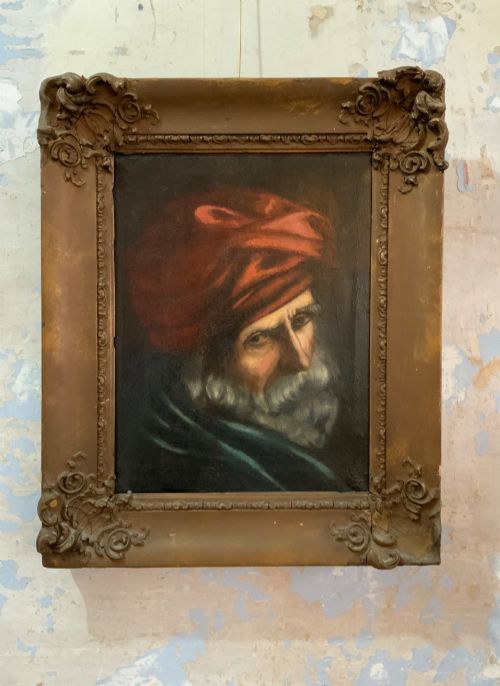
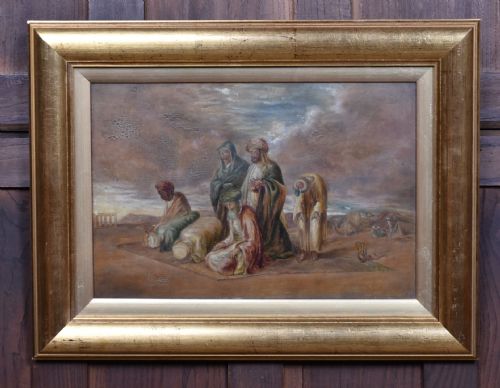
On this page, the pieces most frequently seen are oil paintings on canvas or board, often housed in decorative giltwood frames. The subjects include named figures such as Maharaja Sir Duleep Singh alongside anonymous gentlemen and regional studies.
How they were made
Artists applied oil paint to stretched canvas, wooden panels, or prepared boards, building up rich tones and intricate details. Many works are signed by the painter, while others are attributed to known academics or later followers.
Surviving works are typically set within period frames made of wood, gesso, and giltwood that complement the deep pigments of the oil medium.
Materials recorded across the inventory include oil paint, canvas, gesso, and wood panels.
What varies in quality
Quality rests in the handling of the subject, particularly the precision found in facial expressions and traditional attire. Works by listed artists or attributed hands show a surer command of portraiture than anonymous studio pieces.
The condition of the original support, whether canvas or board, and the preservation of the painted surface together determine the visual impact of the work.
Frederick Goodall RA·William James Muller·R.A Bartlett·Abraham Cooper RA·Richard Wilson·K. Schubert
The Victorian Orientalist Oil Painting Glossary
- Oil on canvas
- Pigments suspended in a drying oil applied to a woven fabric support stretched over a wooden frame. This is the primary medium for most nineteenth-century fine art.
- Oil on board
- Pigments applied to a rigid wooden or composition board rather than fabric. It offers a stable surface often used for smaller or panel paintings.
- Giltwood
- Wood carved and covered with a thin layer of gold leaf or gilt powder. These frames give Victorian works their characteristic decorative border.
- Attribution
- The assignment of a work to a particular artist based on style, signature comparison, or historical documentation. It indicates strong stylistic links to a named hand.
Victorian Orientalist Oil Painting: Frequently Asked Questions
What is a victorian orientalist oil painting?
It is a nineteenth-century artwork depicting Middle Eastern, North African, or South Asian subjects, executed in oil on canvas or board. These works often portray local figures, rulers, or genre scenes.
Such paintings reflect the period's fascination with Eastern cultures, combining academic painting techniques with dramatic lighting and detailed costume study.
How do I hang and light an oil painting?
Hang the painting away from direct sunlight and damp walls to protect both the oil pigments and the wooden support. A stable indoor climate prevents the canvas or board from warping.
Use dedicated picture lights with low heat output to illuminate the canvas without damaging the delicate varnish and paint layers over time.
How can I tell the period of the painting?
Examine the stretcher bars, canvas weave, and framing materials for nineteenth-century characteristics. Handwritten inscriptions or artist signatures on the reverse often provide clues to the exact date.
Compare the artistic style, clothing, and painting technique with documented works from the same decade to confirm the era of production.
Are these paintings signed by the artist?
Some works feature visible signatures or monograms applied by the painter, while others remain unsigned or carry later attribution notes. Signatures can sometimes be found tucked into the lower corners of the composition.
Attributed works rely on stylistic analysis and historical records rather than a direct signature to connect them to a known academic painter.