



Victorian Oriental Vase
A victorian oriental vase brings together nineteenth-century British taste and eastern craftsmanship, offering distinct decorative forms for the home.
Victorian Oriental Vase
When searching for a victorian oriental vase, a buyer encounters a diverse mix of ceramic and bronze vessels originating from China and Japan alongside British interpretations. The selections on this page predominantly date from the nineteenth century, encompassing styles such as Meiji, Qing, Chinese Export, and Chinoiserie.
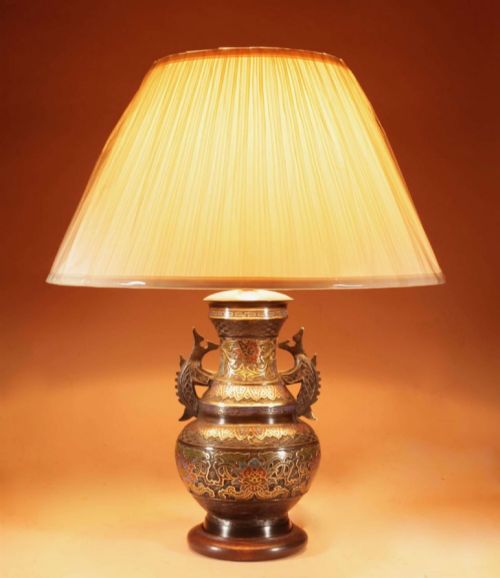
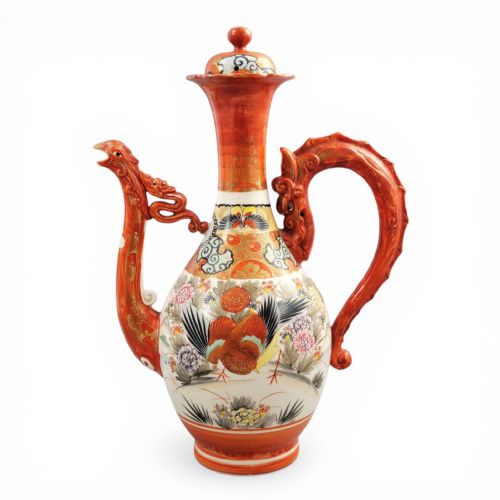
The physical objects range widely from large floor urns, baluster vases, and double gourd vessels to specialised forms like Gu ritual vessels, Hu vases, and decorative ewers. Many of these pieces were subsequently adapted into table lamps or paired with ormolu mounts during the period.
Materials and Techniques
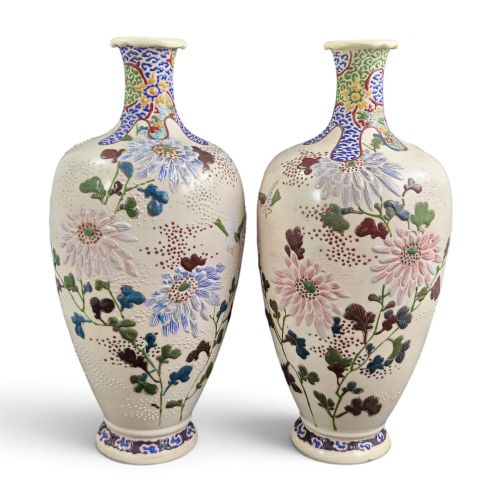
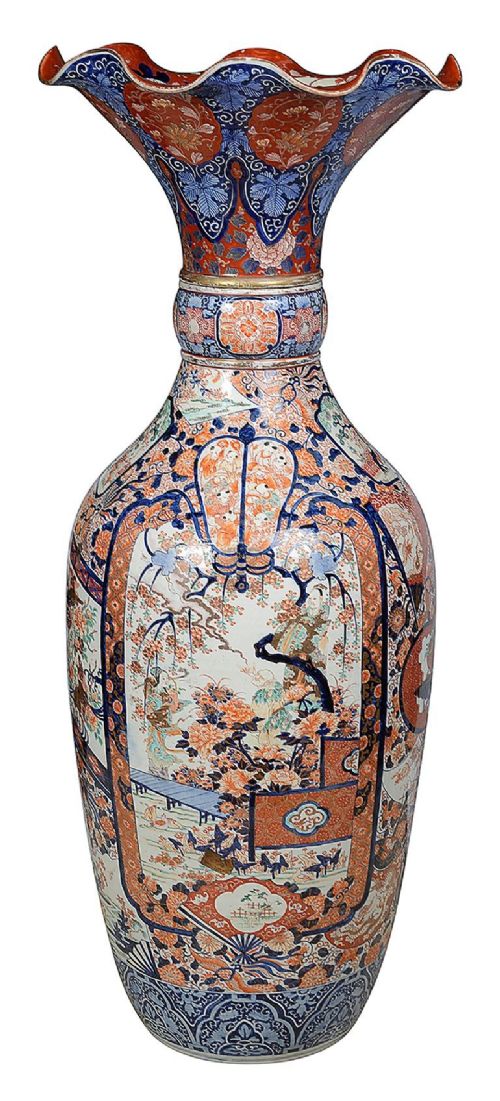
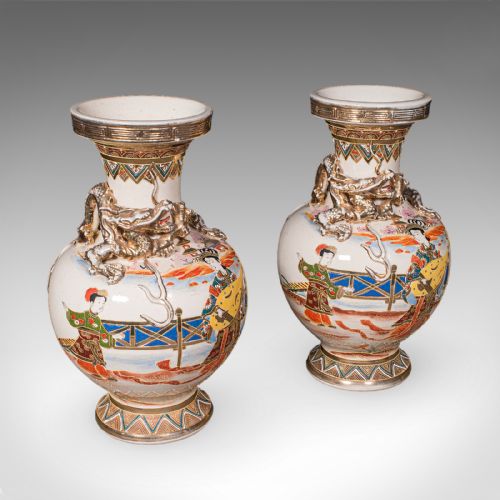
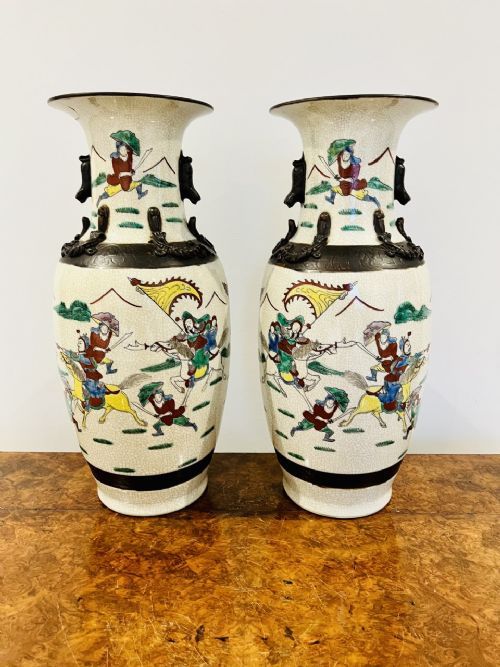
Makers utilised high-fired porcelain and earthenware as the foundational bodies for painted surfaces, applying enamels, underglaze blue, and cracked glazes. Japanese Satsuma, Imari, and Kutani wares demonstrate detailed hand-painted scenes, sometimes enhanced with gold leaf.
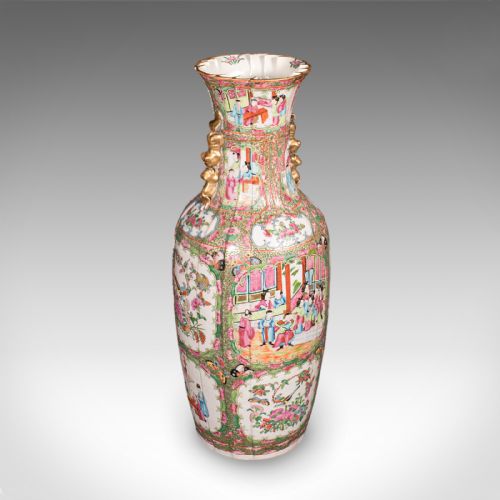
Bronze vessels incorporate intricate casting and champlevé enamel techniques, yielding textured ritual forms and decorative urns. Selected pieces integrate supplementary materials, including lacquer over black paint on porcelain or ormolu mounts fitted to Cantonese porcelain.
Several bronze vases double as ritual vessels, proving that nineteenth-century dinner parties required a degree of ancient ceremony.
Judging Quality
Quality rests upon the crispness of the hand-painting, the precision of the bronze casting, and the preservation of delicate enamel and gilt details. Superior examples exhibit balanced proportions, refined facial expressions in figurative scenes, and intact glazes without heavy wear.
The distinction between standard decorative items and finer works often lies in the depth of the palette and the complexity of the motifs, such as intricate samurai scenes or multi-layered floral designs on porcelain.
Kinkozan·Thomas Allen·Wedgwood
The Victorian Oriental Vase Glossary
- Imari
- A type of Japanese porcelain decorated in underglaze blue, iron red, and gold. These pieces typically display rich floral and geometric patterns.
- Satsuma
- An earthenware pottery from Japan featuring a crackle glaze and ornate polychrome enamel decoration. It frequently incorporates gilding depicting figures and landscapes.
- Cloisonné
- A metalwork technique where enamel paste is applied within compartments delineated by thin metal wire strips. The vessel is subsequently fired and polished smooth.
- Baluster
- A vertical architectural form characterised by a swelling lower body tapering to a narrow neck. Many ceramic vases adopt this distinct silhouette.
- Champlevé
- An enamelling method where troughs or cells are carved directly into the surface of a bronze object to hold coloured enamel. The metal is then fired and finished.
Victorian Oriental Vase: Frequently Asked Questions
What defines a victorian oriental vase?
These pieces represent nineteenth-century European appreciation for Asian ceramics and metalwork, imported directly or manufactured locally in an orientalist style.
They combine traditional eastern forms like baluster vases and altar vessels with Victorian decorative preferences, occasionally including later lamp conversions.
How were these vases used originally?
Wealthy Victorian households displayed large floor and mantel vases as prominent focal points in drawing rooms and parlors. Smaller posy and stem vases held cut flowers, while ritual vessels served purely decorative functions.
Many examples were later rewired as table lamps to suit modern domestic lighting needs.
How do I distinguish Satsuma from Imari ware?
Satsuma ware utilises an earthenware body with a characteristic creamy, cracked glaze decorated with dense enamel and gold leaf. Imari ware employs a hard porcelain body painted predominantly in rich cobalt blue, iron red, and gold.
Satsuma frequently depicts figurative Japanese scenes, whereas Imari tends towards complex floral and geometric arrangements.
How should I care for antique ceramic and bronze vases?
Dust porcelain and earthenware gently with a dry, soft cloth, avoiding harsh chemical cleaners that can damage fragile enamel or gilt highlights. Bronze pieces require minimal intervention, benefiting only from occasional light dusting to preserve their natural patina.
Positioning them away from direct sunlight protects the painted pigments from fading over time.