


Victorian Oil Floor Lamp
These Victorian oil floor lamps stand as tall, adjustable columns of brass and copper, built to illuminate period rooms with presence and utility.
Victorian Oil Floor Lamp
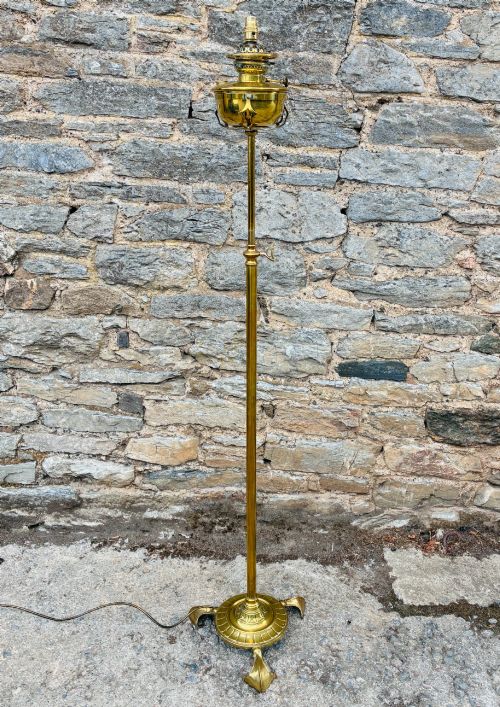
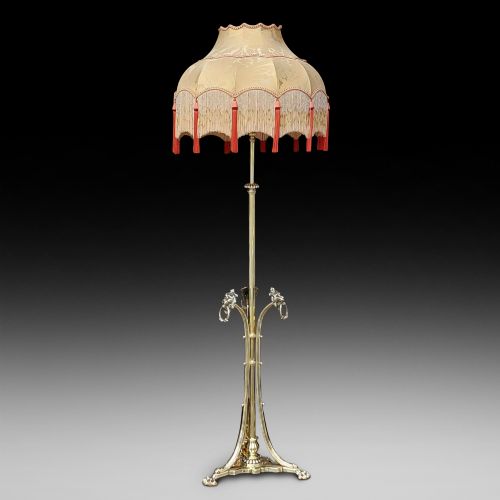
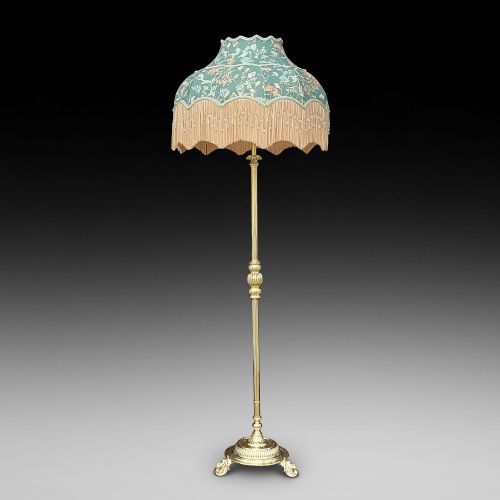
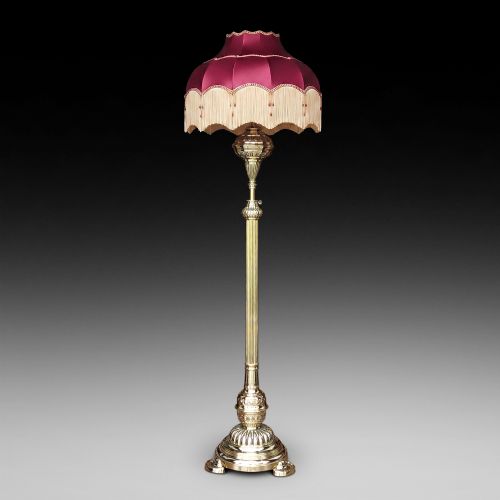
A victorian oil floor lamp is a tall interior lighting standard designed during the nineteenth century to burn oil for illumination before most homes relied on electricity. These pieces appear frequently in polished brass, often combined with copper, marble, or bronze, and stand upon heavy, stable bases.
Most examples found on this page incorporate adjustable or telescopic shafts, allowing the height of the burner or shade to move up and down according to need. Many of these stands retain their original character while others have been adapted for electric light over the course of their long histories.
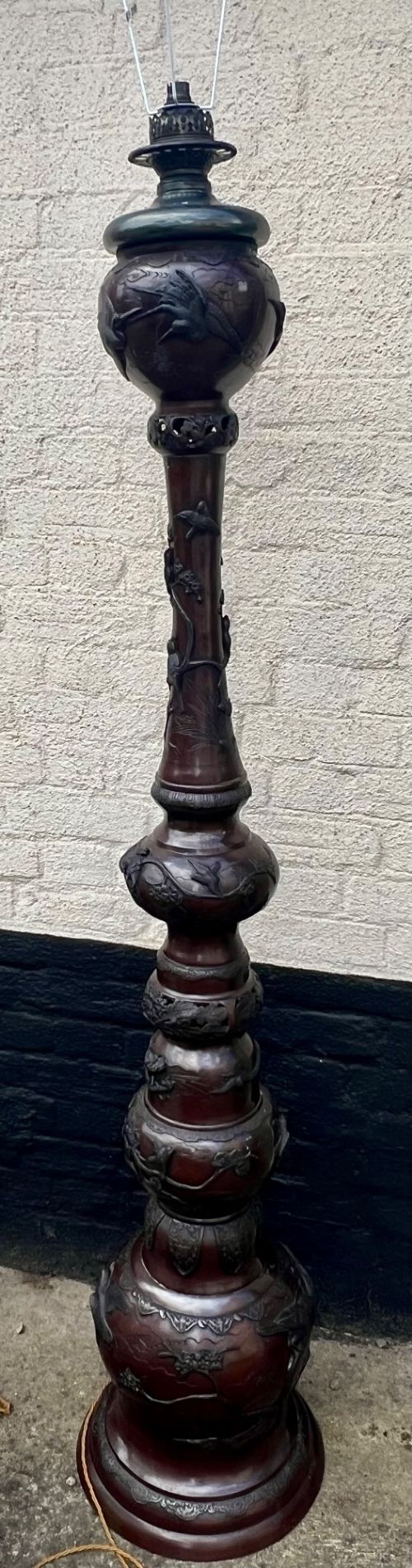
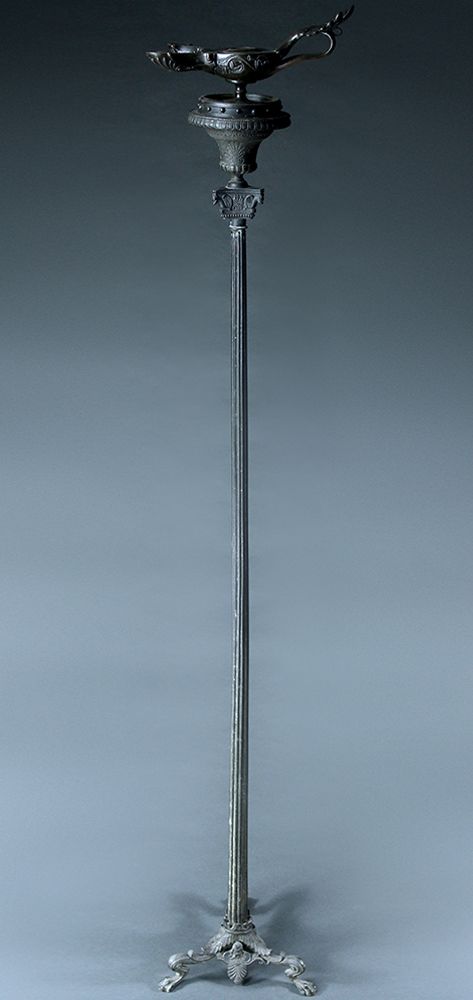
The decorative vocabulary spans straightforward Victorian utility through to the distinctive motifs of the Arts and Crafts movement, Japanese Meiji period influences, and early Art Nouveau styling. Forms range from severe, functional brass columns to elaborate works featuring carved padouk teak or Grand Tour classical references.
How they were made
Makers constructed these floor standards primarily from heavy brass and copper, employing casting, spinning, and hand-hammering techniques to shape the metal tubes and reservoirs. Telescopic mechanisms relied on precise internal sliding tubes and screw keys to hold the upper standard securely at the chosen height.
Decorative elements often combined patinated bronze or cast brass with contrasting materials such as marble bases, cranberry glass founts, and silk or fabric shades. Structural integrity demanded substantial weight at the base to counterbalance the extended height of the lamp when fully raised.
One exceptional Victorian standard manages to combine heavy brass engineering with exotic Anglo-Burmese padouk teak wood carving.
What varies in quality
The distinction between ordinary production and superior work lies in the heft of the metal, the precision of the telescopic mechanism, and the distinction of the maker. Heavier gauge brass and solid construction ensure that the standard remains steady at full extension without wobbling.
Design ambition separates basic utility pieces from exceptional examples, particularly where workshops applied considered artistic direction from the Arts and Crafts movement or utilised specialist materials like padouk teak. Marked work by established makers carries greater documentary interest than unbranded commercial production.
Hinks of B'ham·Messenger·W A S Benson
The Victorian Oil Floor Lamp Glossary
- Telescopic
- Describing a standard composed of sliding concentric metal tubes that allow the overall height of the lamp to adjust. This engineering enabled users to direct light downwards from various elevations.
- Fount
- The reservoir container that held the lamp oil beneath the burner assembly. These were frequently formed from glass, brass, or copper.
- Standard
- The central vertical shaft or column of a floor lamp supporting the burner or light fitting above. It typically terminates in a weighted foot or tripod base.
- Grand Tour
- A nineteenth-century cultural journey through Europe that inspired decorative arts incorporating classical architectural motifs and archaeological bronze casts. Such pieces reflect classical antiquity adapted for Victorian interiors.
- Arts and Crafts
- A design movement emphasising honest construction, visible hand-working of materials, and a reaction against mass-produced industrial ornamentation. Objects from this tradition feature simplified, robust forms.
Victorian Oil Floor Lamp: Frequently Asked Questions
How do I adjust the height on these lamps?
Most pieces feature a telescopic brass mechanism secured by a thumbscrew or friction collar near the upper section of the shaft. Loosening this fastener allows the inner tube to slide gently up or down to the desired position before retightening.
Forcing a stuck mechanism can damage the internal metalwork, so gentle persuasion and appropriate cleaning are recommended if the sliding action feels stiff after decades of rest.
Were these lamps converted to electricity?
A substantial proportion of surviving nineteenth-century examples have been adapted to accept modern electrical wiring and lamp holders. This process typically involves running a cord down through the hollow interior or securing it neatly along the exterior shaft.
Such conversions allow these historic standards to serve safely in contemporary rooms while preserving their original brass and copper appearance.
What materials were used for the bases?
Makers relied heavily on cast brass and heavy iron weights concealed beneath metal housings to provide the necessary stability for tall standards. Some examples incorporate marble or patinated bronze to add decorative weight and presence.
The considerable mass at the floor level prevents the tall lamps from tipping over when the telescopic arm is fully extended.
How do I distinguish Arts and Crafts examples?
Arts and Crafts pieces tend to display simpler, more utilitarian lines with visible construction details such as hand-hammered copper surfaces and minimal classical ornamentation. They prioritize honest materials and functional integrity over fussy Victorian decoration.
Makers working in this tradition often utilised unlacquered brass and copper that developed deep patinas over time through exposure to the air.