


Hinks Brass Lamp
A hinks brass lamp brings Victorian engineering into the room, pairing solid metalwork with functional design.
Hinks Brass Lamp
When you search for a hinks brass lamp, you find 19th Century and Victorian lighting spanning oil lamps, floor standards, and table lamps. These pieces originate from England, often carrying the distinct maker stamp of Hinks of Birmingham.
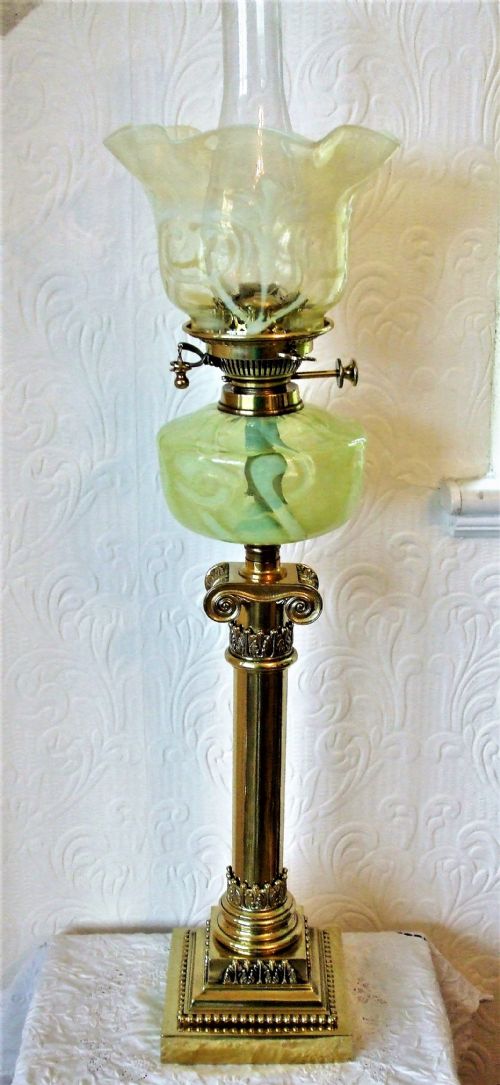
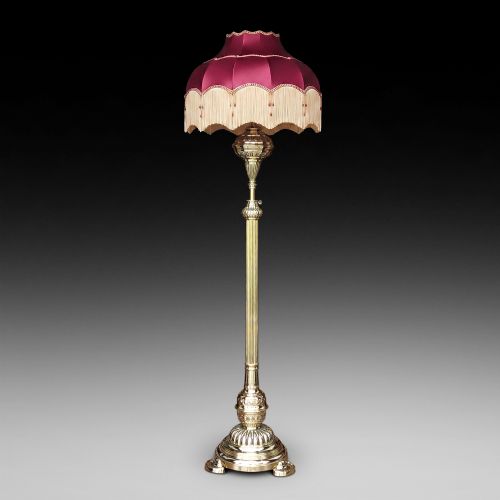
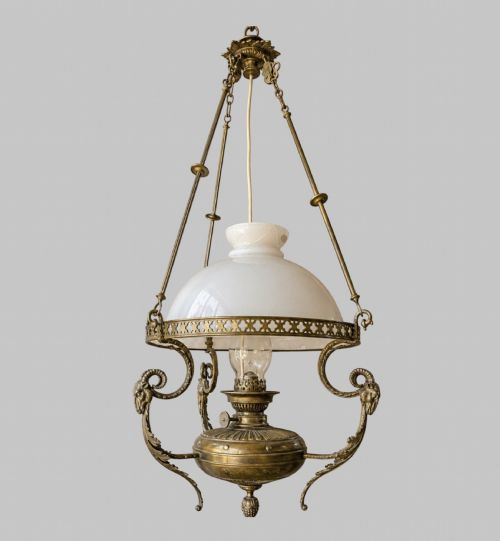
The most common form on this page is the Corinthian column table lamp, usually rendered in heavy brass with stepped square bases. Alongside these are extending standard lamps, wall-mounted brackets, and hanging paraffin lamps.
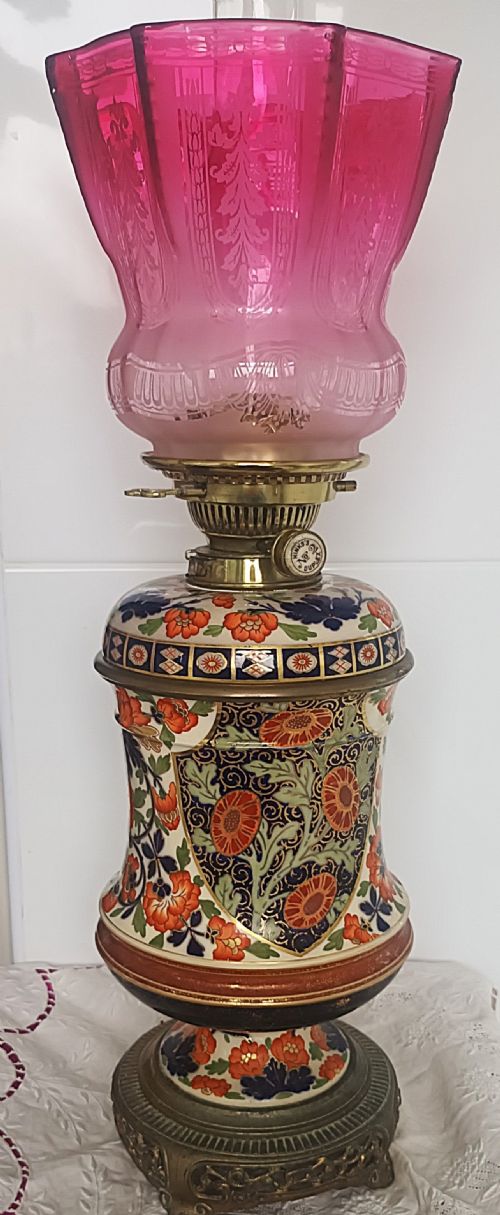
Many examples combine brass bodies with contrasting materials like opaline glass, cut glass, ceramic fonts, or bronze details. Some pieces retain their original oil burners, while others have been converted for modern electrical use.
How they were made
Makers utilised cast brass for capitals, columns, and heavy weighted bases to ensure stability, particularly on tall floor standards and column lamps. Details like acanthus leaves on Corinthian capitals demonstrate precise metal casting.
Fonts and reservoirs were frequently formed from opaline glass, cut glass, or glazed ceramics such as Taylor Tunnicliff bodies, mounted directly into the metal framework. Burner mechanisms, notably the Hinks duplex system, required careful engineering of brass and wick components.
Listings combine brass with glass, opaline glass, ceramic, and silver plate across Victorian and nineteenth-century pieces.
What varies in quality
The weight of the casting and the crispness of the chasing on the Corinthian capitals separate standard production from monumental pieces. Heavier gauge brass and deeply articulated foliage indicate superior workshop output.
The integration of secondary materials defines the scale of the piece, particularly where cut glass fonts or hand-painted opaline glass reservoirs meet the metal mount. Retaining signed burner mechanisms adds to the integrity of the object.
Hinks and Sons·Taylor Tunnicliff·Joseph Hinks
The Hinks Brass Lamp Glossary
- Corinthian column
- A classical architectural column style featuring ornate capitals decorated with acanthus leaves, frequently utilised for Victorian table and floor lamps.
- Duplex burner
- A double-wick burner system patented and utilised by Hinks to provide a brighter flame and stronger light output.
- Opaline glass
- A pale, translucent milk glass often tinted in soft shades, used to form decorative reservoirs on nineteenth-century lighting.
- Standard lamp
- A tall floor-standing lamp designed to illuminate a room from a vertical post, sometimes built with an extending mechanism.
- Font
- The oil reservoir portion of a lamp, sitting atop the column or base and constructed from glass, ceramic, or metal.
Hinks Brass Lamp: Frequently Asked Questions
Are these lamps still fitted for oil?
Many surviving examples retain their original oil burners and reservoirs from the Victorian period, preserving the mechanical parts invented by the firm.
At the same time, numerous pieces on the market have been successfully converted to electricity for modern interior use.
How do I identify a Hinks lamp?
Authentic pieces usually bear maker marks stamped directly onto the metal burner mechanisms, winding knobs, or the heavy brass collars.
Stylistic markers include the heavy Corinthian column design and mechanical extending brass standards typical of Birmingham production.
What periods do these lamps date from?
The lighting listed spans the nineteenth century into the very early twentieth century, aligning with the height of Victorian and late Victorian manufacturing.
Dates cluster heavily around the late Victorian era and the decades leading up to nineteen hundred.
Can floor standards be adjusted for height?
Several standard lamps feature extending brass mechanisms that allow the overall height of the column to be raised or lowered.
This functional engineering was built into heavy floor standards to accommodate different room settings.