


Victorian Occasional Side Chair
These victorian occasional side chair designs offer compact, movable seating shaped by nineteenth-century tastes in mahogany, walnut, and turned wood.
Victorian Occasional Side Chair
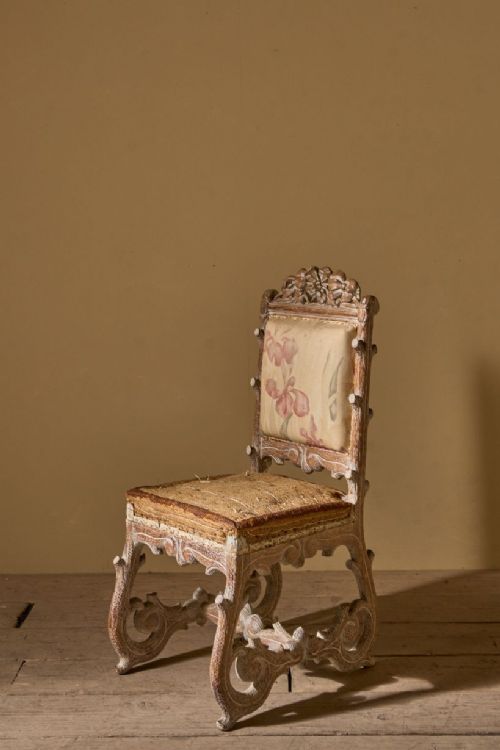
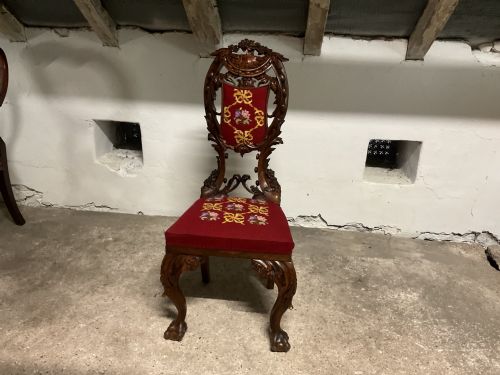
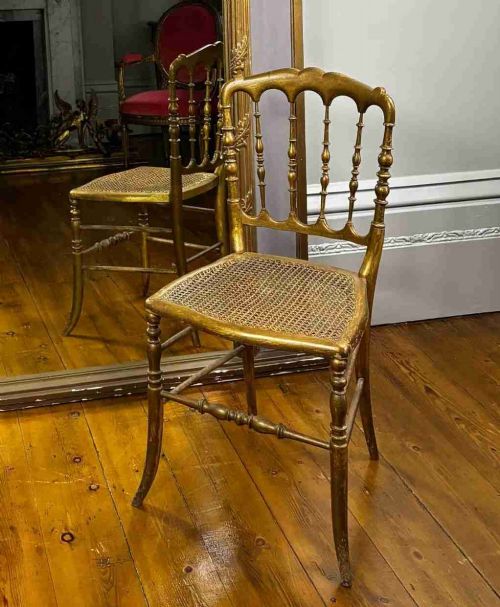
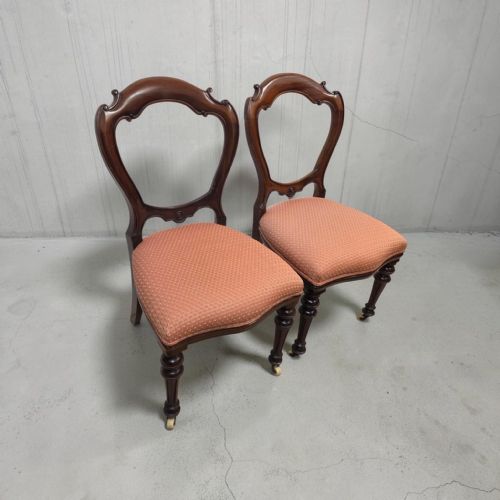
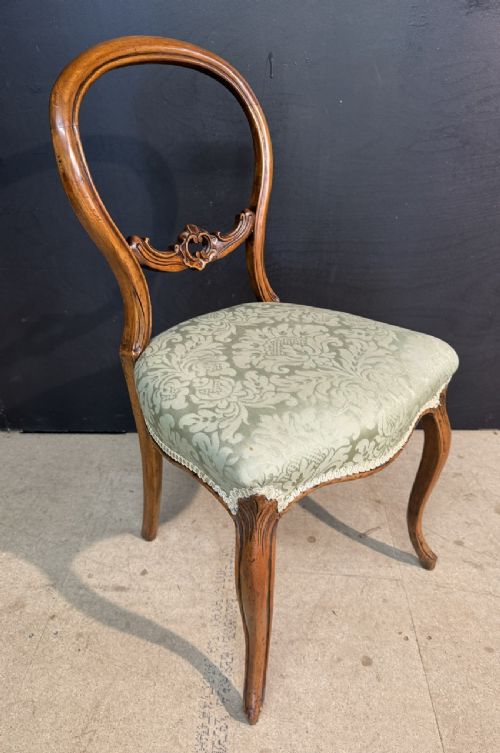
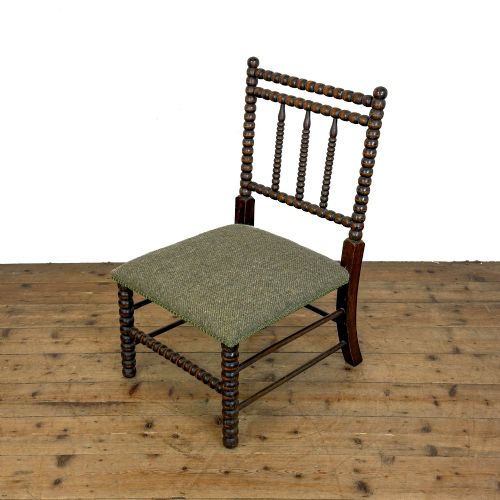
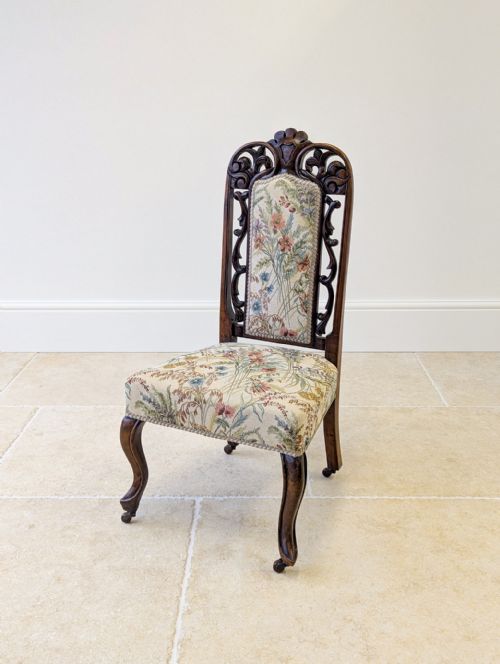
A victorian occasional side chair serves as a light, easily moved seat designed for parlours, bedrooms, and reception halls rather than permanent dining tables. These pieces take many forms, including balloon back frames, pierced splat backs, and low nursing chairs intended for fireside use.
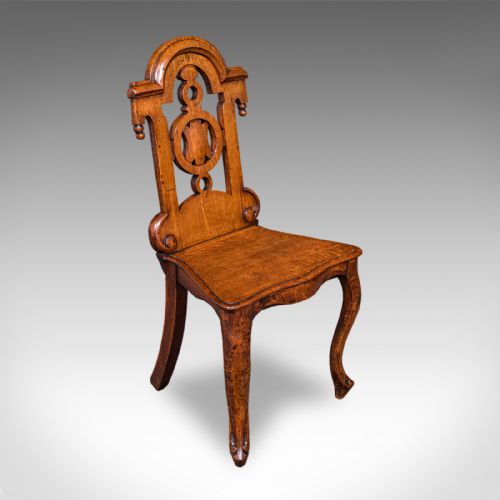
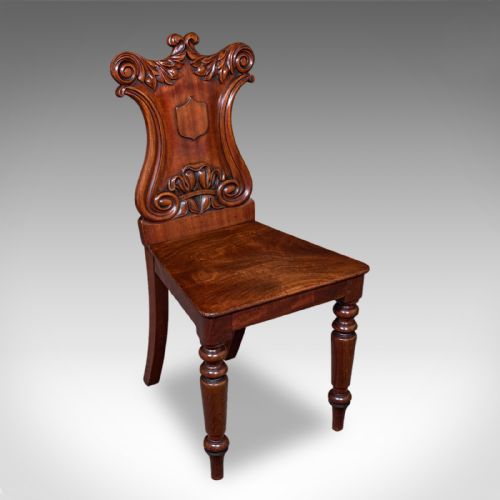
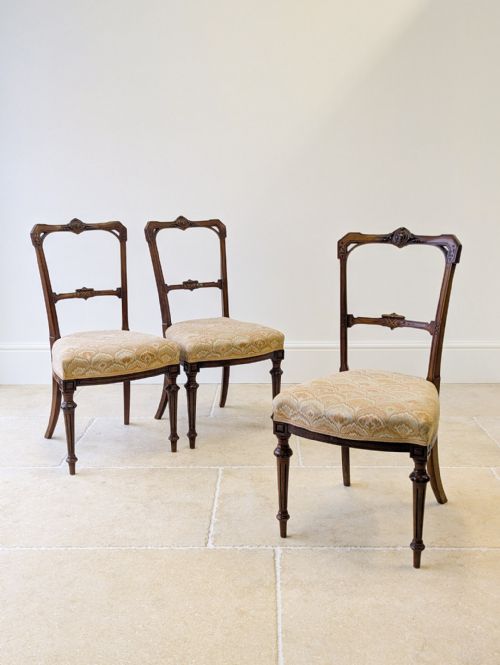
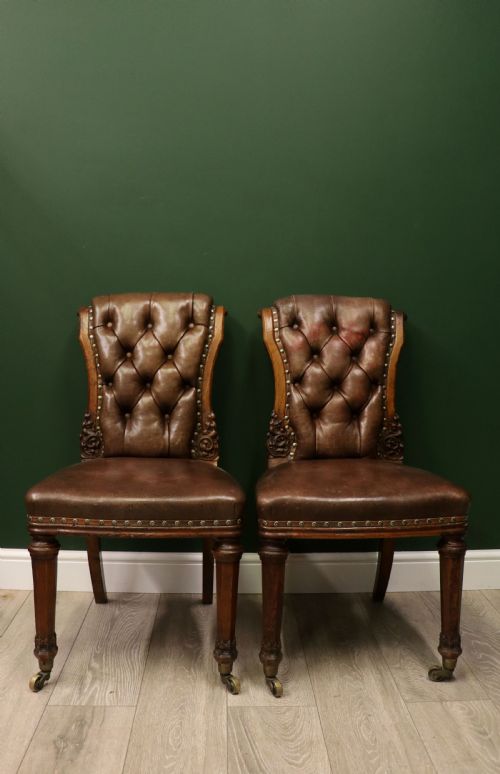
The materials and styles span from mid-century mahogany and walnut pieces to late-century Aesthetic Movement and French-influenced designs. Walnut salon chairs and mahogany side chairs appear frequently alongside oak hall chairs and decorative papier mache examples.
How they were made
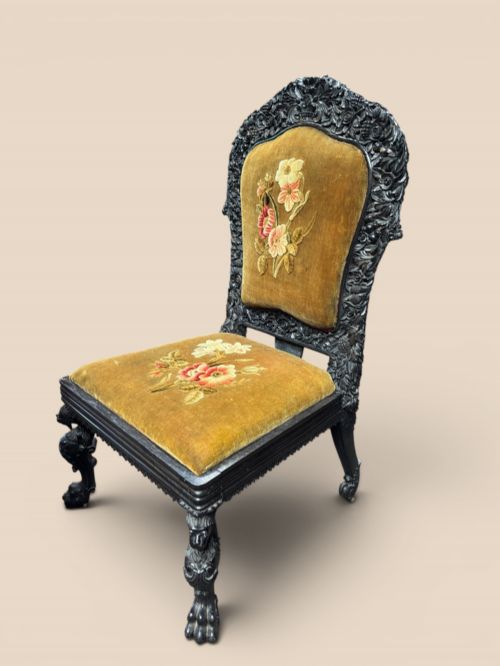
Makers used dense timbers like mahogany, walnut, and oak for structural frames, shaping them with turned legs, cabriole supports, and carved details. Some versions utilise ebonised finishes, gilt highlights, or inlaid elements to achieve decorative contrast.
Upholstery methods varied from caned seats and exposed wooden panels to padded pads covered in velvet, leather, and woven fabric. Brass castors often appeared on front legs of bedroom and nursing chairs to allow smooth movement across carpets.
Some chairs rolled into bedrooms on tiny brass castors so they could glide gracefully across heavy Victorian carpets.
What varies in quality
The distinction between standard and finer examples rests on the crispness of the wood carving, the selection of figured veneers, and the structural integrity of the frame joints. Elaborate pierced splats, mother-of-pearl inlay, and gilded details separate standard production chairs from exceptional salon pieces.
Proportion and balance dictate the presence of accomplished craftsmanship, where subtle curves in balloon backs and cabriole legs flow naturally. Chairs retaining original turnings, matching sets, and intact decorative schemes command greater appreciation among collectors.
Collier and Plucknett·E W Godwin
The Victorian Occasional Side Chair Glossary
- Balloon back
- A rounded, oval-shaped wooden chair back curving outward to resemble a balloon, popular during the mid-nineteenth century.
- Cabriole leg
- A furniture leg that curves outward at the knee and inward at the ankle, ending in a plain or carved foot.
- Pierced splat
- The vertical wooden strip down the centre of a chair back that has been pierced or cut through to create a decorative pattern.
- Ebonised
- Wood treated with a dark finish to imitate the appearance of solid ebony.
- Nursing chair
- A low-seated upholstered chair originally designed for women feeding infants or tending fires.
Victorian Occasional Side Chair: Frequently Asked Questions
Where were these chairs used?
These chairs were positioned in bedrooms, drawing rooms, and halls rather than assigned to a permanent dining table.
Their lightweight construction allowed servants or residents to move them about the house as guests arrived or as the room's function shifted.
How do I spot an earlier chair?
Earlier nineteenth-century examples often rely on solid mahogany or rosewood with restrained carved details and simpler turned legs.
Later Victorian versions introduce lighter woods, ebonised finishes, and more eclectic styles influenced by the Aesthetic Movement.
Are these chairs comfortable?
Comfort depends entirely on the specific form, with low nursing chairs and padded bedroom seats offering softer support.
Side chairs and hall chairs were built primarily for upright posture during formal gatherings rather than long periods of lounging.
How should I live with them?
These pieces fit well as accent seating in corners, dressing rooms, or alongside desks where full-sized armchairs take up too much space.
Keeping them away from direct heat sources helps preserve the old timber and prevents the glue joints from drying out.