







Victorian Occasional Shelf
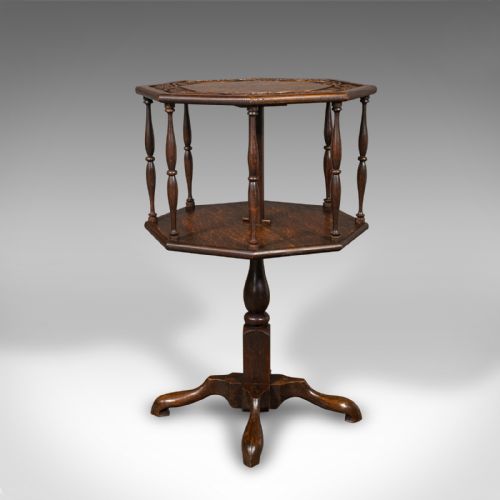
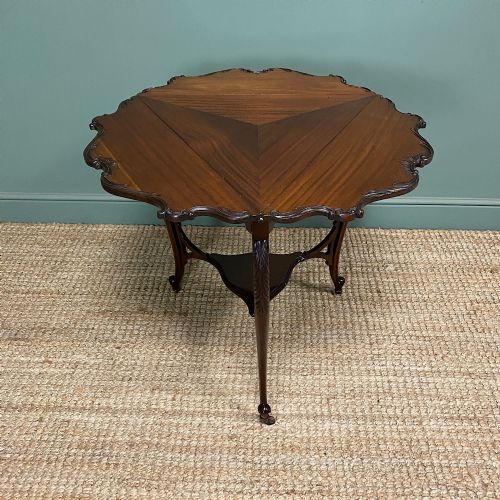
A victorian occasional shelf provides a neat surface and display space, combining practicality with period character for any room.
Victorian Occasional Shelf
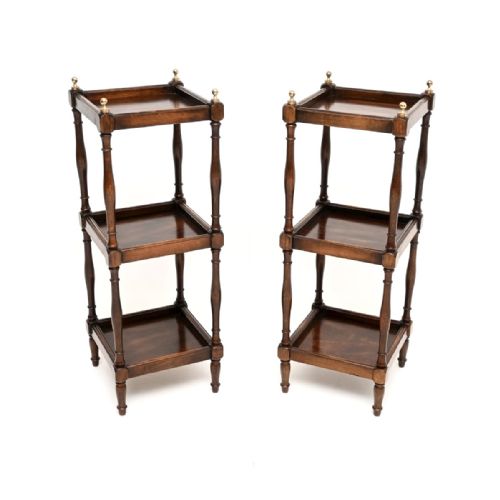
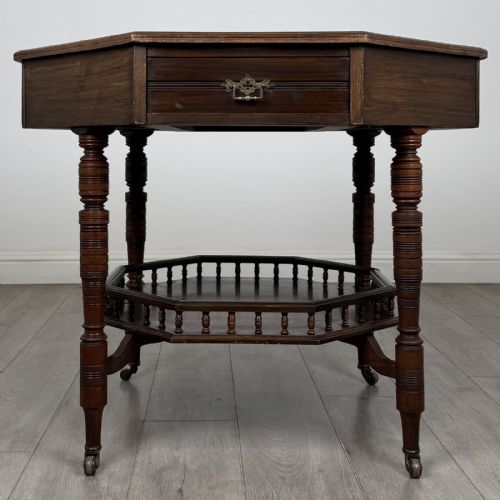
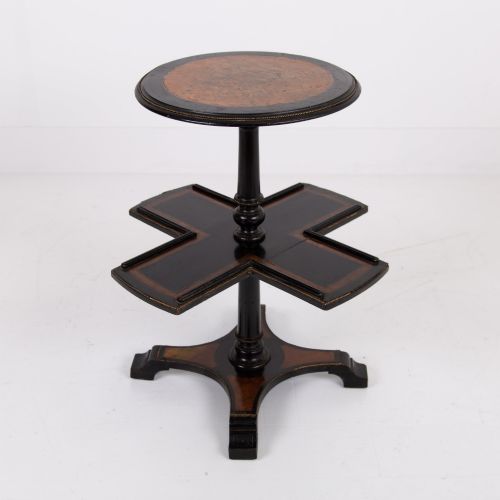
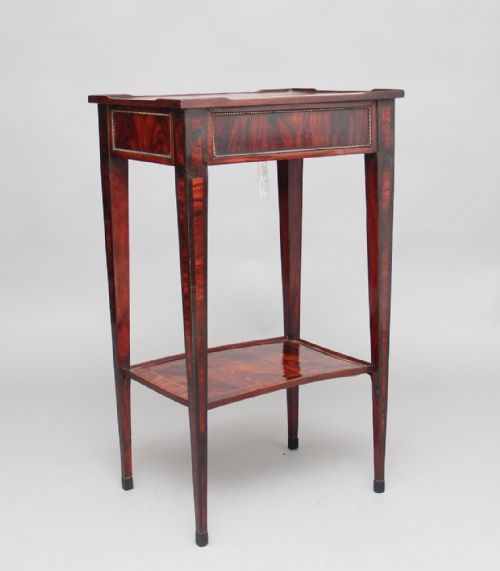
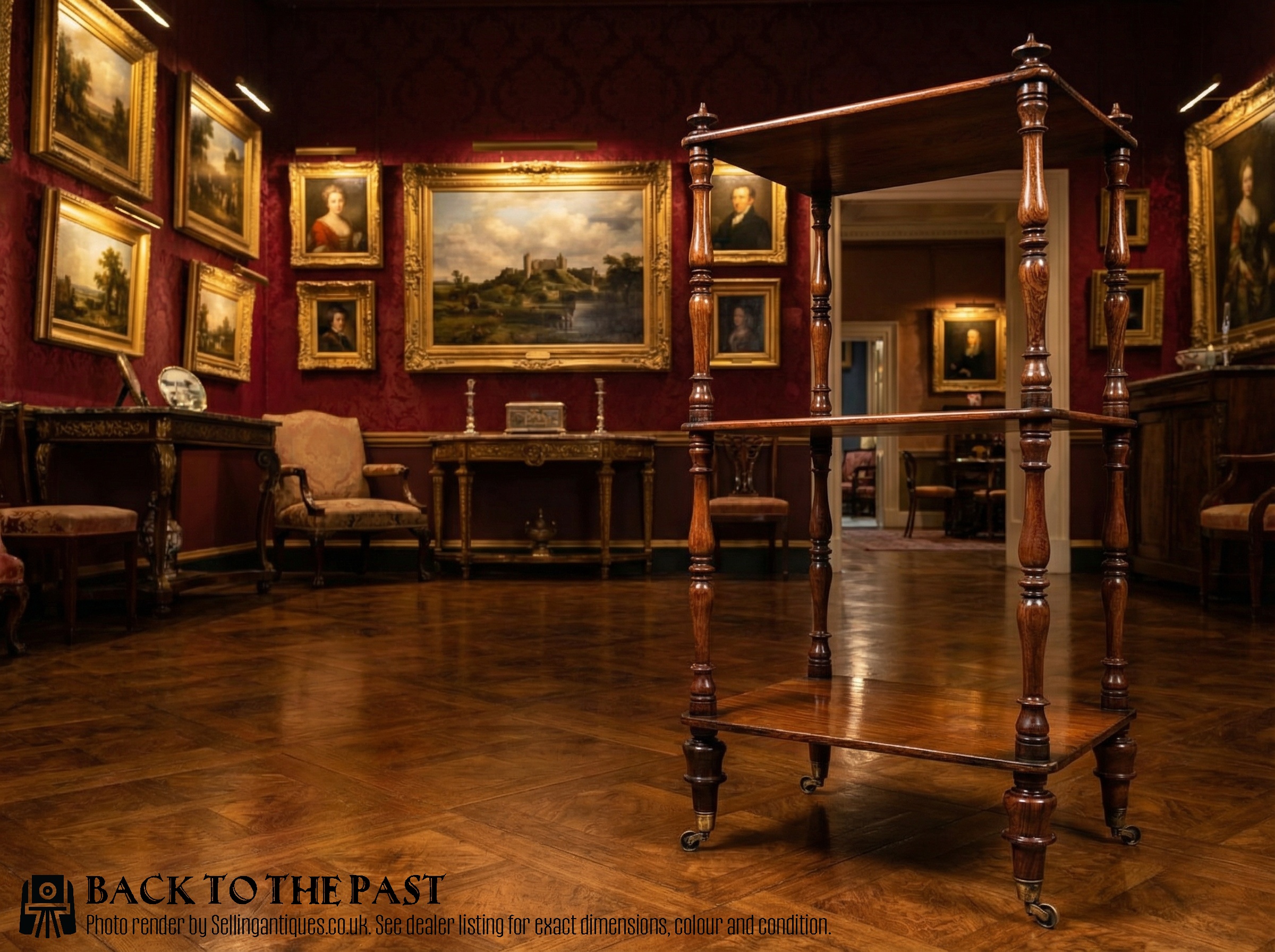
A victorian occasional shelf encompasses compact tables, etageres, and multi-tiered whatnots designed for flexible placement around the home. These pieces provide practical surface space and secondary ledges for books or display, matching the versatile domestic needs of the nineteenth century.
The selection on this page leans heavily towards walnut, mahogany, and rosewood forms, alongside lighter bamboo and oak variations. Buyers most frequently encounter multi-tiered tables and side pieces reflecting Victorian, Arts and Crafts, and Aesthetic Movement design preferences.
Materials and construction
Cabinetmakers utilised dense timbers such as walnut, mahogany, and rosewood, often enhancing surfaces with burr walnut veneers, boxwood stringing, and marquetry inlays. These traditional hardwoods provided the structural integrity needed for slender legs and stacked tiers.
Alternative materials include bamboo frames paired with leather panels, ebonised finishes, and carved oak, reflecting diverse stylistic influences from French Rococo Revival to Anglo-Japanese designs.
Victorian Occasional Shelf Retail Price Guide 2026
Typical asking prices for victorian occasional shelf among the pieces listed under this phrase on Sellingantiques today, from the lower quarter to the upper quarter. They describe what is for sale here now, not the wider market.
Some tables incorporate hidden stationery drawers for secret Victorian correspondence.
Factors of quality
Quality rests upon the selection of timbers, the crispness of inlay work, and the structural stability of multi-tiered joints. Finer pieces demonstrate precise boxwood stringing, choice burr veneers, and meticulous turning on upright supports.
Simpler constructions rely on straightforward mahogany or oak finishes without complex marquetry. The depth of hand-carving and the integration of functional elements like drawers distinguish workshop output.
Liberty & Co.·E.W Godwin
The Victorian Occasional Shelf Glossary
- Etagere
- A set of open shelves for displaying small objects. This multi-tiered form became popular during the nineteenth century for parlour rooms.
- Whatnot
- A piece of furniture consisting of shelves for books or ornaments. These tiered stands often incorporated drawers or lower cabinets.
- Marquetry
- Decorative veneer patterns applied to wood surfaces. Craftsmen used contrasting timbers to create floral or geometric designs.
- Canterbury
- A low stand with partitions for sheet music or books. Surviving examples frequently combine this storage feature with upper display shelves.
Victorian Occasional Shelf: Frequently Asked Questions
Where should I place a victorians shelf?
These pieces suit corners, hallways, and living spaces where a compact surface is useful. Their multi-tiered design allows for displaying small items without occupying excessive floor space.
They pair well with traditional and eclectic interiors alike. Ensure the piece sits away from direct heat sources to protect nineteenth-century wood finishes.
How do I care for walnut furniture?
Dust regularly with a soft, dry cloth to prevent surface build-up. Avoid chemical polishes that can damage aged timber and historic varnish layers.
Keep the wood away from direct sunlight and damp environments to prevent warping. Occasional application of suitable wax helps maintain the lustre of the grain.
What is an etagere?
An etagere is an open-shelved display unit designed for ornaments and small treasures. Victorian homes used them extensively in reception rooms to showcase collections.
They vary from corner designs to freestanding multitiered tables. The open structure provides visibility from multiple angles.
How can I identify bamboo furniture?
Victorian bamboo pieces utilise natural cane stems assembled with pins and secured joints. Makers often incorporated decorative panels of lacquer, leather, or decoupage.
These items reflect late nineteenth-century interest in Japanese design aesthetics. They require gentle handling due to the organic nature of the cane.