


Victorian Occasional Furniture
Victorian occasional furniture brings compact utility and decorative variety to a room, offering everything from card tables to work tables in rich timbers.
Victorian Occasional Furniture
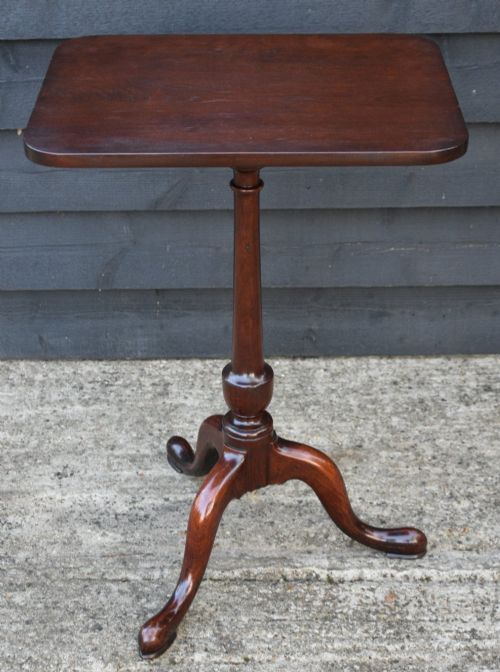
Victorian occasional furniture encompasses small, movable tables and stands designed for specific tasks around the home. Buyers encounter numerous forms, including side tables, centre tables, Sutherland tables, and work tables.
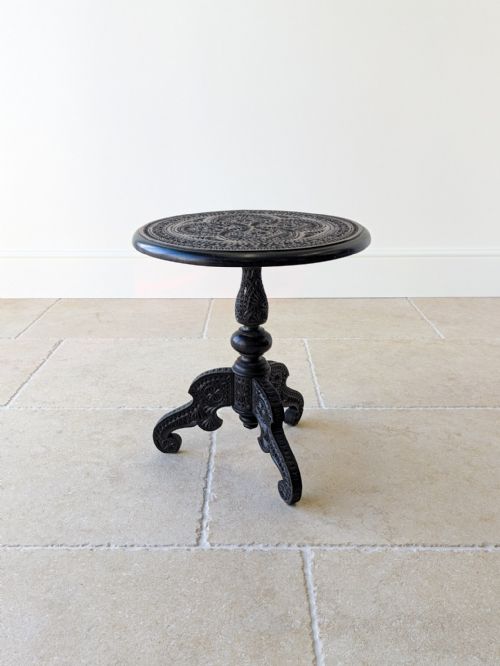
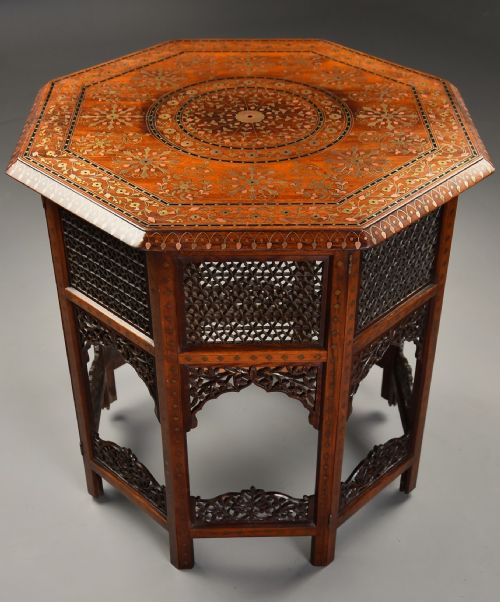
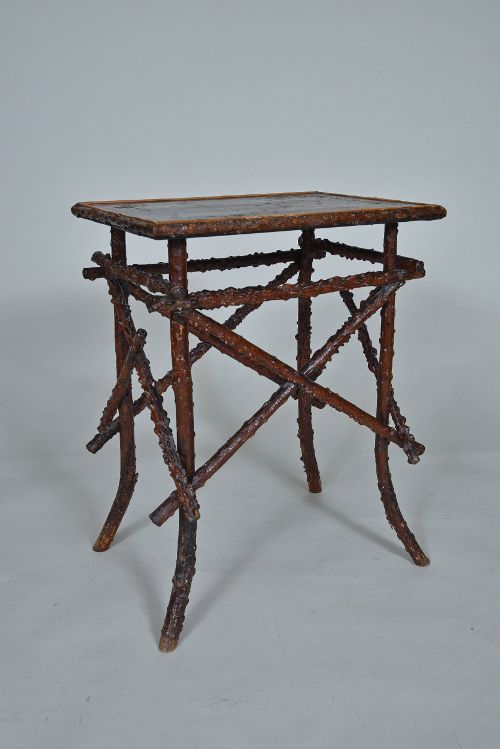
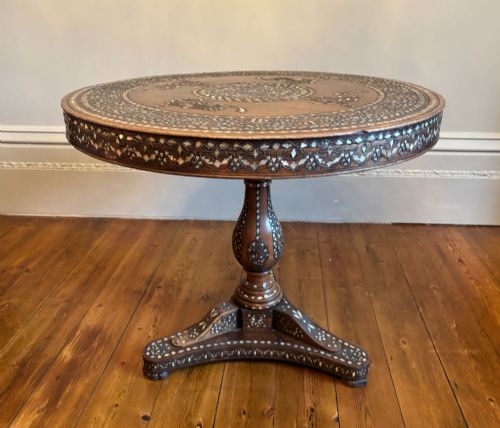
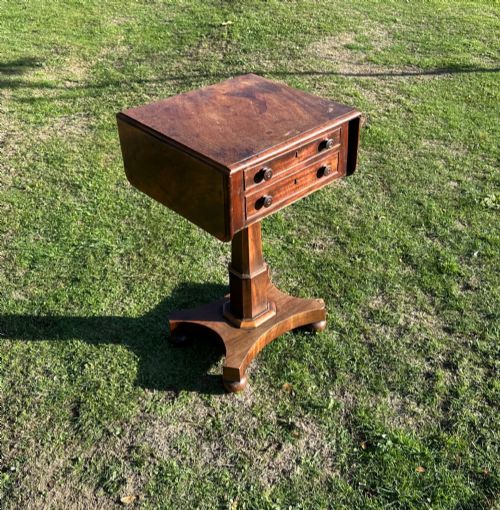
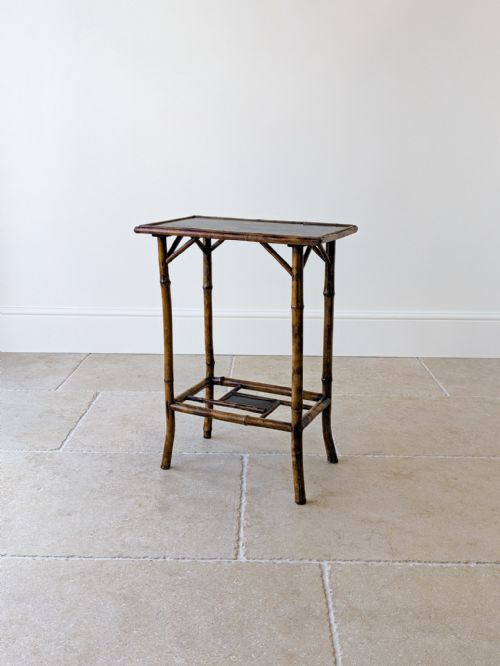
The selection ranges from walnut card tables and rosewood drop-leaf pieces to exotic imports like Burmese teak tables and Anglo-Indian octagonal stands. Lighter occasional pieces such as bamboo and simulated bamboo gipsy tables also appear frequently.
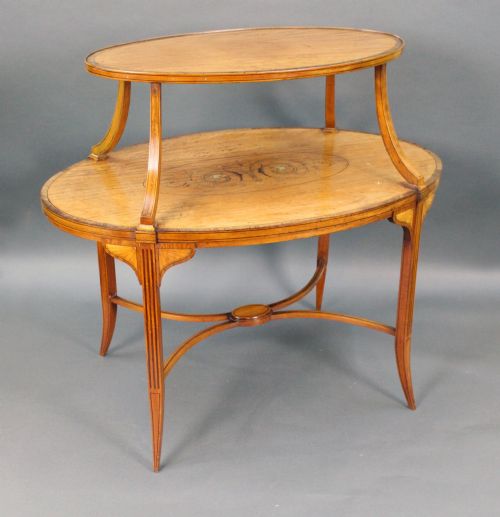
Makers utilised diverse global styles, producing Louis XV Revival kingwood pieces, Sheraton Revival satinwood étagères, and Dutch marquetry wine tables alongside standard domestic forms.
How they were made
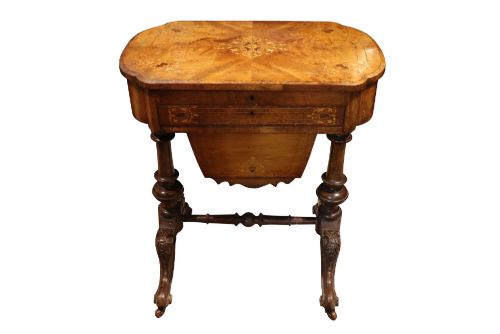
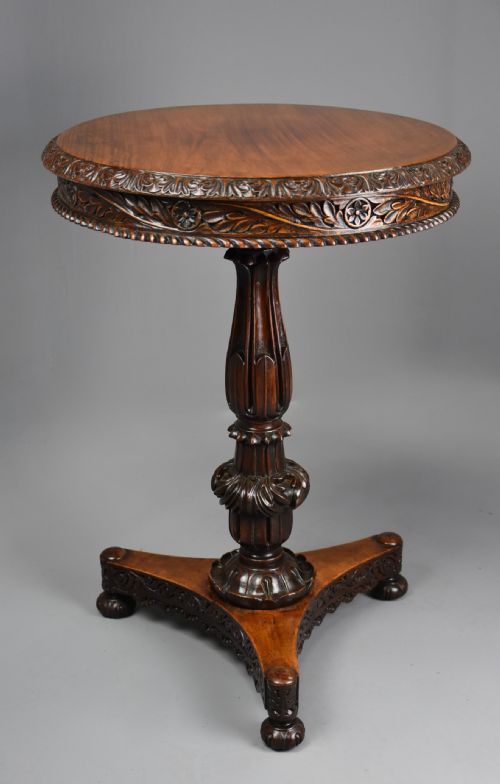
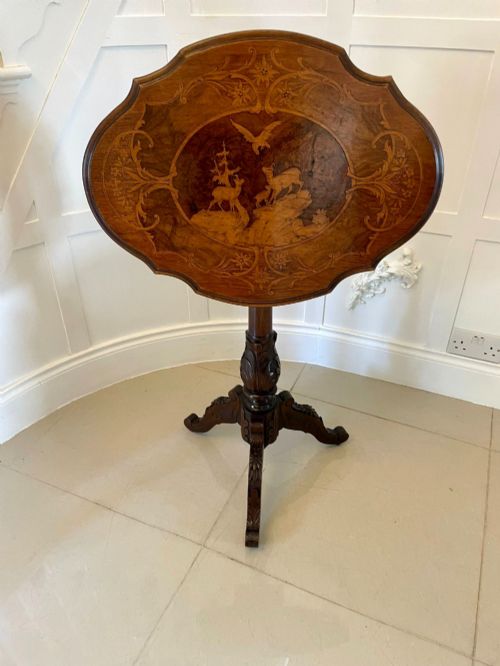
Cabinet makers relied heavily on dense hardwoods such as walnut, mahogany, rosewood, and satinwood, often applying burr walnut veneers or kingwood to prominent surfaces. Decorative enrichment involved marquetry inlay, parquetry, bone decoration, and ormolu mounts.
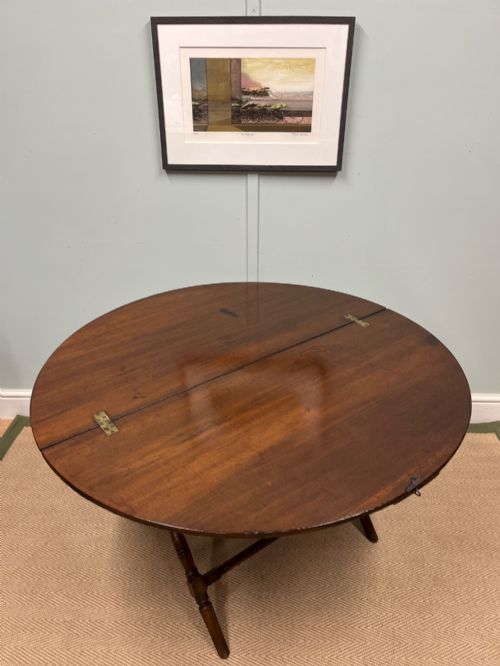
Structural variety includes folding actions for card and Sutherland tables, drop leaves, tier arrangements, and sophisticated mechanisms for work tables and metamorphic pieces. Turned wooden supports, carved pedestals, and bamboo or simulated bamboo frames provided the underlying architecture.
Victorian Occasional Furniture Retail Price Guide 2026
Typical asking prices for victorian occasional furniture among the pieces listed under this phrase on Sellingantiques today, from the lower quarter to the upper quarter. They describe what is for sale here now, not the wider market.
Styles span from standard Victorian and Gothic Revival to Anglo-Indian, Louis XV Revival, Sheraton Revival, and Regency.
What varies in quality
The refinement of the timber selection and the precision of the inlay set superior examples apart from standard production. Finely figured burr walnut veneers and intricate marquetry demonstrate greater workshop skill than plain surfaces.
Hardware and mechanisms indicate the tier of manufacture, with substantial brass mounts, complex folding actions, and sophisticated interior fittings marking out pieces produced by notable firms.
James Shoolbred
The Victorian Occasional Furniture Glossary
- Sutherland table
- A narrow drop-leaf table with deep leaves supported by swinging gate legs. It folds flat for compact storage against a wall.
- Canterbury
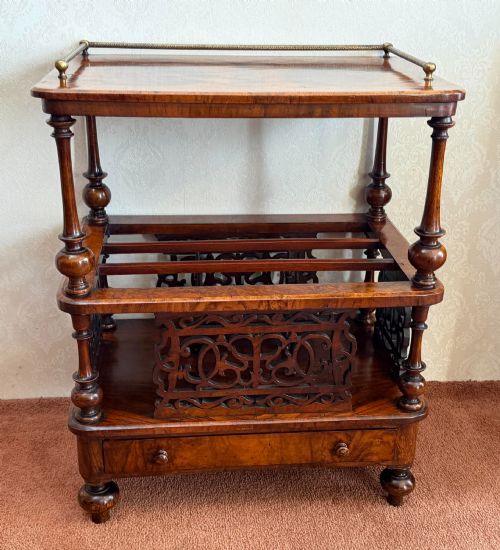
- A low multi-section stand designed to hold sheet music, magazines, or books, often combined with a small occasional table top. It rests on castors.
- Étagère
- A tiered set of open shelves used for displaying small decorative objects. Late examples often incorporate Sheraton Revival satinwood decoration.
- Marquetry
- Decorative woodwork where pieces of contrasting veneer are assembled to form pictorial or geometric patterns. It appears frequently on tabletops.
Victorian Occasional Furniture: Frequently Asked Questions
What is Victorian occasional furniture?
Victorian occasional furniture comprises small, movable tables and stands built for specific domestic tasks. These pieces include side tables, card tables, work tables, and plant stands designed to be moved easily around a room.
Cabinet makers produced them in large numbers to suit changing interior fashions, utilising various timbers and global influences.
How were Sutherland tables used?
Sutherland tables served as versatile tea or occasional tables that saved space when not in use. Their deep drop leaves folded down almost flat.
Owners could place them against a wall and raise the leaves quickly when guests arrived for tea or card games.
What is a work table?
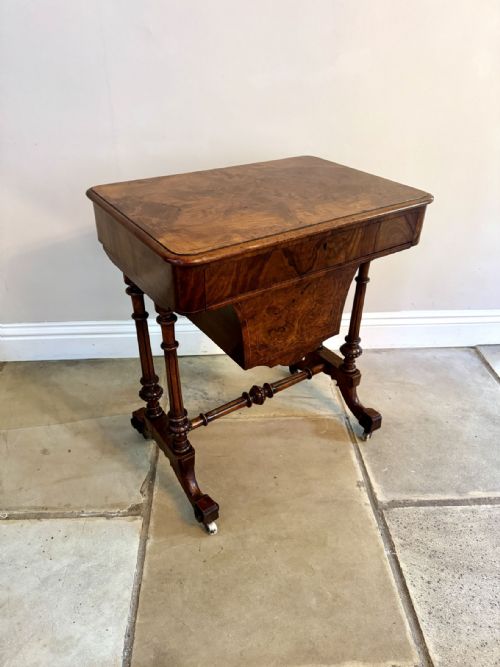
A work table provided a dedicated space for needlework, sewing, and small crafts. They typically featured fitted interior compartments or an attached bag for textiles.
Victorian ladies kept them in parlours to store threads, needles, and ongoing handiwork projects neatly out of sight.
What are gipsy tables?
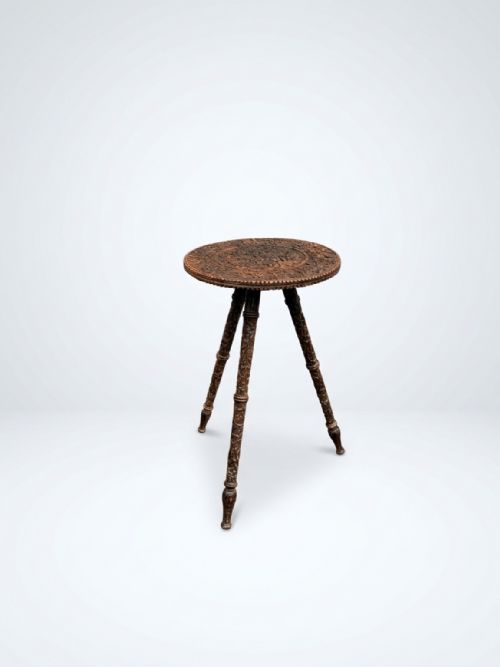
Gipsy tables are lightweight occasional tables with three wooden or bamboo legs, often draped with a fabric cloth or velvet cover. They gained popularity during the late nineteenth century.
Their simple construction allowed households to introduce fashionable draped surfaces into sitting rooms without heavy carpentry.