
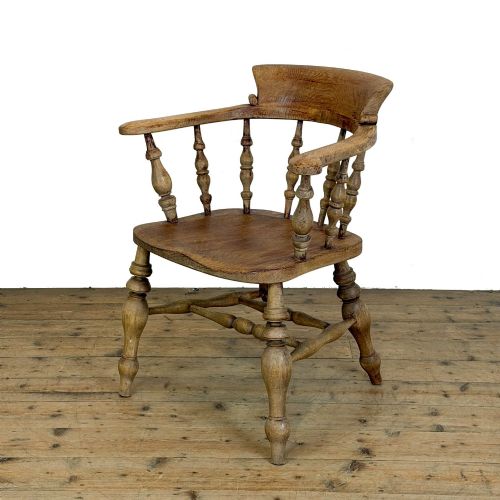
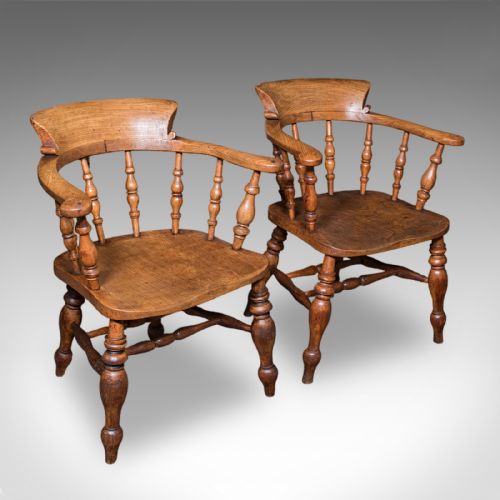


Victorian Oak Tub Armchair
A victorian oak tub armchair brings sturdy nineteenth-century timber and curved enclosing backs straight to a study or desk.
Victorian Oak Tub Armchair
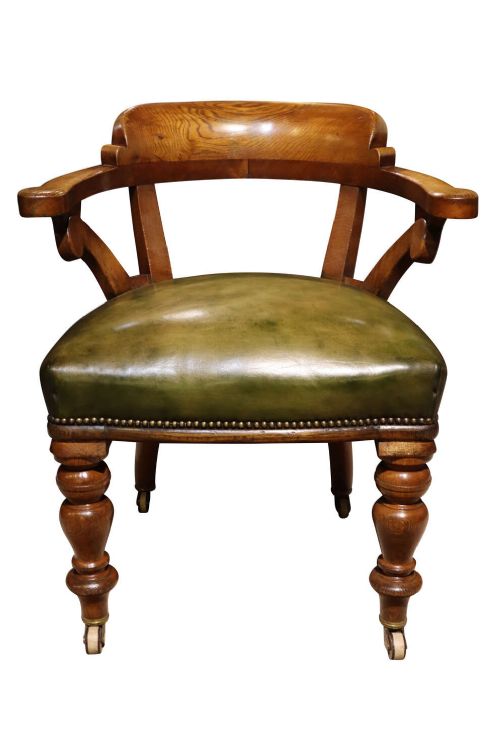
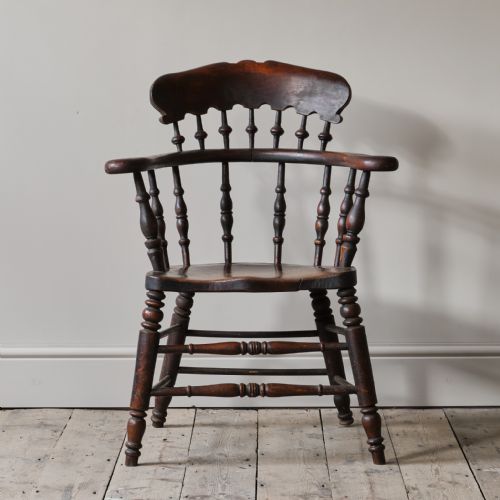
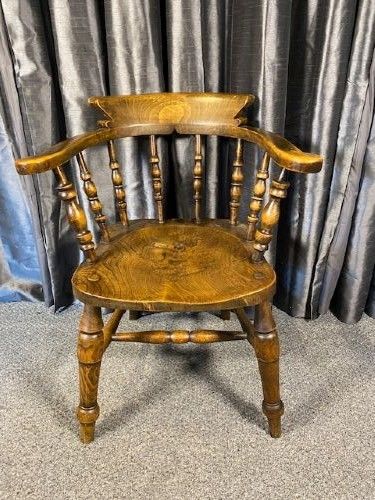
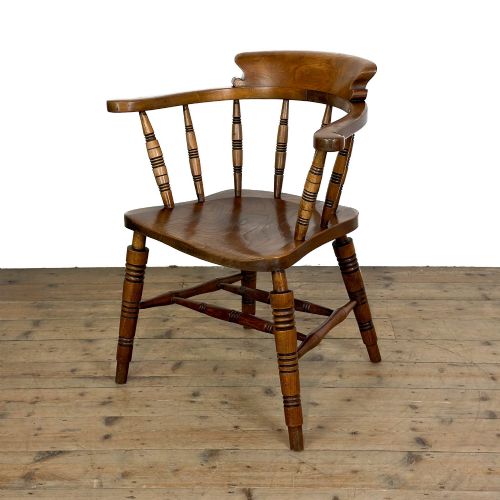
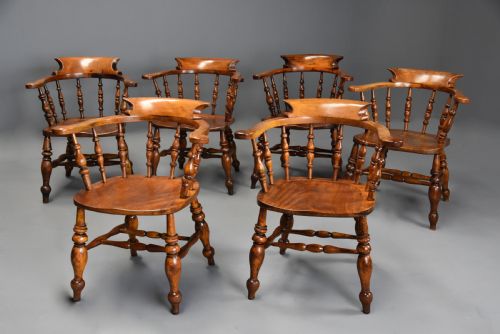
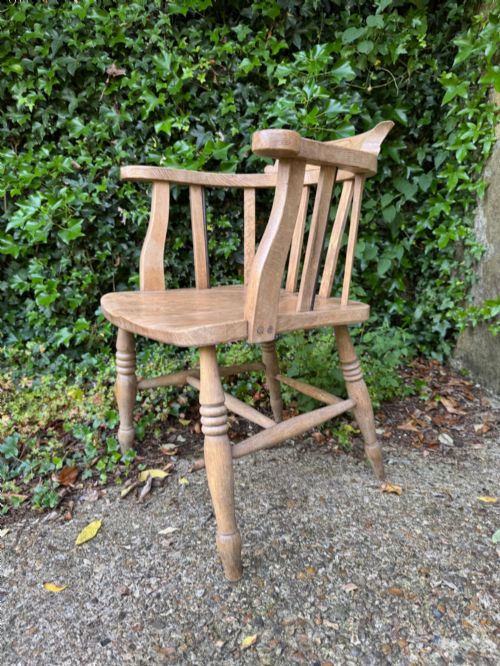
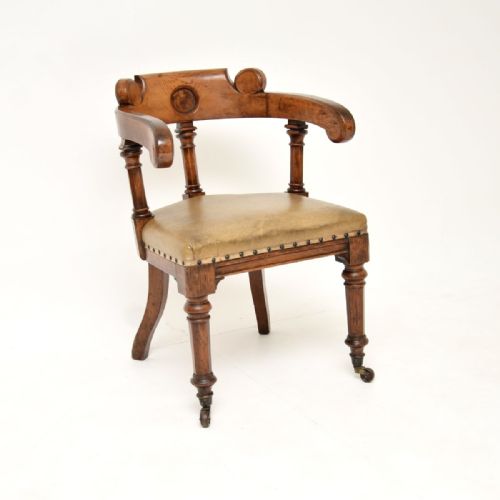
When you search for a victorian oak tub armchair, you are looking at nineteenth-century seating built with a continuous curved backrest that wraps around the sitter. The examples you meet on this page span the 1850s to the early 20th century, frequently appearing as captain's chairs, smoker's bows, and library chairs.
The form bridges domestic comfort and practical work, often serving at a desk or in a library. These chairs combine heavy timber frames with low, rounded profiles designed to support the arms and back during long hours of sitting.
Most pieces seen here originate from the Victorian era, though related Edwardian examples also appear. They range from plain country house seating to more formal library chairs fitted with leather pads.
How they were made
Cabinet makers built these chairs using solid oak, frequently paired with secondary timbers like elm, beech, and ash for spindles and seats. Frames relied on traditional joinery, turning, and steam-bending to shape the distinctive curved tub and bow backs.
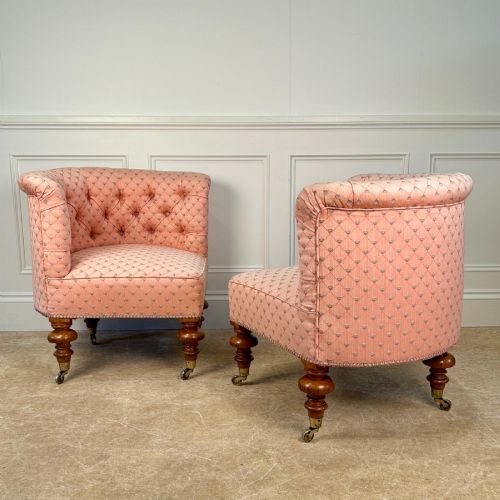
Many versions incorporated upholstered elements, adding leather or fabric pads to the round seats and backs. Brass studs and decorative carvings occasionally accented the woodwork, particularly on Gothic Revival and library pieces.
Materials recorded on this page include oak, elm, beech, ash, leather, and brass, spanning the 19th century and the Edwardian period.
What varies in quality
The distinction between ordinary utility seating and finer library chairs rests in the selection of timber and the ambition of the design. Golden oak, rich grain patterns, and substantial proportions separate better workshop output from standard production.
Refinement in the turning of spindles, the execution of carved details, and the integration of show wood frames dictate the standing of individual pieces. Selection of quality leather and careful upholstery work further elevate the finished chair.
The Victorian Oak Tub Armchair Glossary
- Tub armchair
- A chair with a continuous curved back and armrests forming a single enclosed barrel shape. This design offers a supportive, enveloping seat often used at desks.
- Smoker's bow
- A low wooden armchair with a rounded spindle back, closely related to Windsor chair forms. These chairs typically feature a saddle-shaped solid seat.
- Captain's chair
- A sturdy, low-backed wooden armchair designed for office or domestic desk use. They frequently appear in oak with turned supports.
- Gothic Revival
- A design style drawing on medieval architectural motifs, visible in pointed arches and structural carving. Pieces in this manner display heavier ornamentation than plain country furniture.
- Show wood
- Unupholstered timber left visible on the frame of a chair to display the grain and construction. It highlights the quality of the oak used by the maker.
Victorian Oak Tub Armchair: Frequently Asked Questions
Were these chairs originally meant for desks?
Many of these chairs served in studies, offices, and libraries where a sturdy and supportive seat was required for writing. Their low profiles allowed them to slide easily beneath nineteenth-century desk heights.
Others originated as general seating for country houses or smoking rooms. Their versatile dimensions make them practical for modern desk use today.
How can I tell the period of an oak tub armchair?
Dating relies on observing construction methods, timber selection, and stylistic cues such as Gothic Revival ornament or simpler vernacular turning. The materials span mid-nineteenth-century oak and elm through to later Edwardian production.
Comparing the turning of the legs and the profile of the tub back helps distinguish 1850s examples from pieces made toward the end of the century.
Are these chairs comfortable for daily use?
The curved wooden backs and shaped seats provide natural support for reading or working at a table. Many examples also feature padded leather inserts that add softness to the seat.
Their solid construction and ergonomic nineteenth-century proportions make them well suited to modern seating needs.