


Victorian Oak Silver Chest
A victorian oak silver chest combines robust timber and heavy metal hardware to protect valuable household plate during travel or storage.
Victorian Oak Silver Chest
A victorian oak silver chest is a sturdy storage trunk built to house precious metal tableware safely within large households. These pieces appear principally as heavy timber boxes strengthened by iron or metal straps, designed to withstand the rigours of domestic service and transit. Buyers searching for a victorian oak silver chest will encounter examples from the nineteenth century featuring lift lids, strong corner brackets, and carry handles.
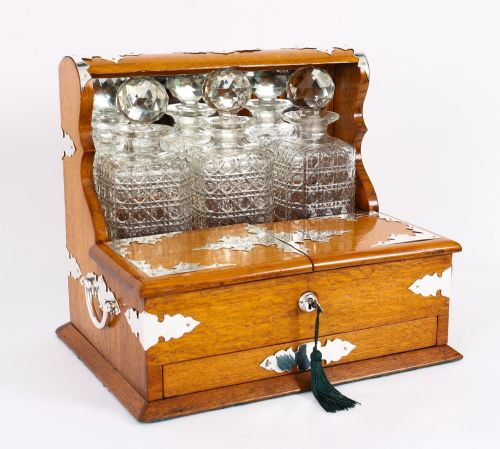
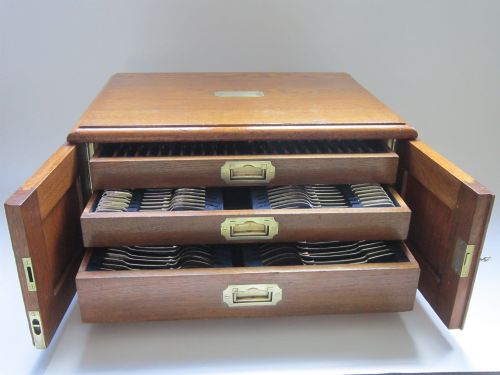
Many variants survive with internal divisions or fitted trays intended to organise specific items such as cutlery canteens or decanter sets. The scale ranges from compact travel chests to large country house boxes built to hold substantial quantities of plate. While the primary material is oak, listings also include related silver storage forms like tantalus boxes and cutlery canteens from the same periods.
Materials and Construction
These chests rely on dense oak carcasses joined to withstand heavy loads and frequent movement. Workshops reinforced the timber frames with iron, steel, or brass bands and corner plates, secured by substantial screws or rivets to prevent splitting during transport. Heavy drop handles fitted to the sides allowed multiple servants to lift the loaded trunk.
Interiors often preserve original fabric linings such as velvet, alongside fitted wooden trays designed to cradle individual pieces of silver. Exterior surfaces display natural grain variations, sometimes showing a lighter blonde finish or the deeper tones associated with older golden oak.
Some chests retain faded shipping destination labels from grand railway journeys across Victorian Britain.
Assessing Quality
Quality rests in the weight of the hardware, the integrity of the timber joints, and the survival of internal fittings. Superior chests display heavy, hand-forged iron or brass strapping integrated cleanly into the oak body, rather than purely decorative additions. The presence of maker stamps, retailer plaques, or original fitted trays elevates an example above standard utility trunks.
The degree of preservation in the interior lining and the smooth operation of original locks and hinges mark the difference between everyday storage boxes and pieces intended for display in prominent rooms. Robust construction without replacement boards ensures the chest maintains its structural integrity.
Elkington
The Victorian Oak Silver Chest Glossary
- Silver chest
- A heavy timber trunk lined and fitted to store domestic silver plate securely. These boxes protected valuable tableware from tarnish and theft during transit.
- Iron-bound
- A method of construction where iron or steel straps reinforce the exterior corners and seams of a wooden chest. This metalwork provided crucial strength for heavy travel trunks.
- Tantalus
- A locking drink cabinet that holds decanters securely while displaying the contents to view. These devices prevented unauthorized access to spirits in the dining room.
- Campaign trunk
- Portable furniture built for travel, featuring recessed handles and robust exterior bracing. Such pieces served officers and travellers throughout the nineteenth century.
- Fiddle pattern
- A traditional cutlery design featuring a stem that flares near the base in the shape of a fiddle. This style appears frequently in nineteenth-century canteens.
Victorian Oak Silver Chest: Frequently Asked Questions
What were silver chests used for?
Silver chests served as secure storage and transport containers for valuable household tableware and plate. Wealthy households relied on them to keep heavy cutlery sets and service items protected from damage and theft.
Servants used the robust trunks to move silver between town and country residences or safely store it within the butler's pantry.
How do I date a victorian oak silver chest?
Dating relies on examining the construction methods, hardware styles, and any accompanying maker marks or retailer plaques. Nineteenth-century examples often feature hand-hammered iron strapping and dovetail joints characteristic of the period.
Later Victorian and Edwardian pieces may display machine-rolled metal bands and different interior hardware layouts, helping to narrow the era of manufacture.
Can I use a silver chest as a coffee table?
The flat top and robust construction of these chests make them suitable for alternative roles in modern interiors. Their sturdy oak surfaces support everyday items while offering concealed storage space inside.
Placing a heavy chest in a living room provides practical storage for blankets or books while retaining its historical character.
What is the difference between a silver chest and a steamer trunk?
A silver chest is specifically built from thick oak and heavy metal banding to bear the intense weight of dense metal tableware. Steamer trunks were generally lighter travel luggage designed for passenger ships and varied in material.
While both date from the nineteenth century, silver chests prioritise structural load-bearing and internal compartmentalisation for plate over general clothing storage.