







Victorian Oak Rocker
A victorian oak rocker brings the solid utility of nineteenth-century domestic seating into a room with gentle, rhythmic movement.
Victorian Oak Rocker
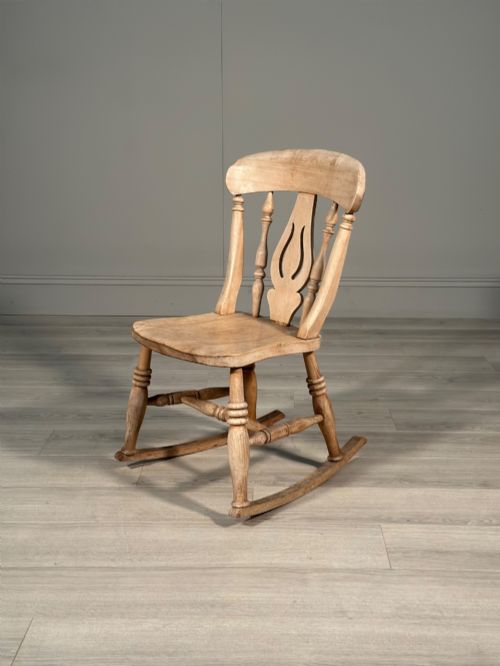
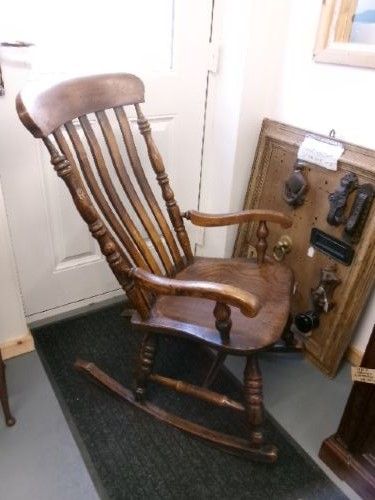
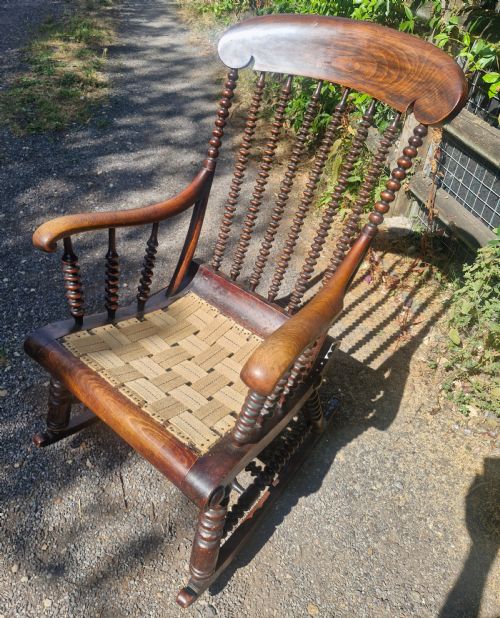
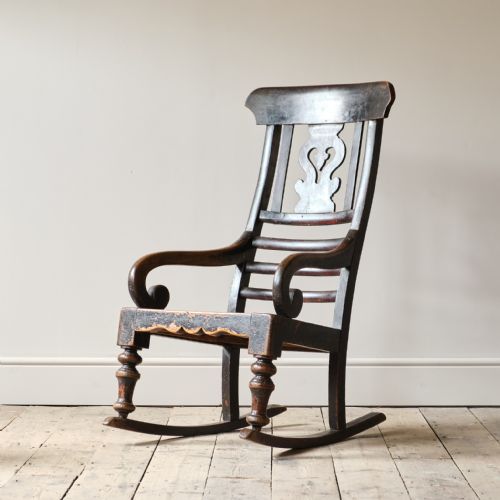
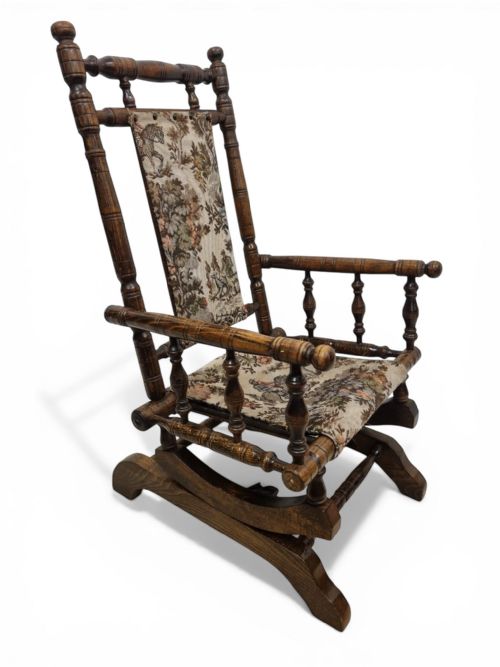
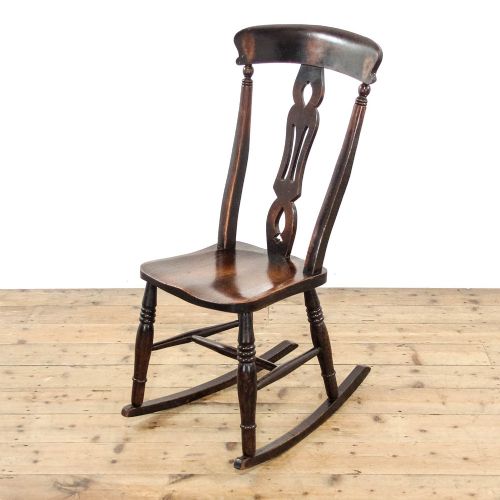
When you search for a victorian oak rocker, you encounter seating built for comfort by nineteenth-century vernacular makers, alongside occasional oak baby cradles and children's chairs designed for the hearth. These pieces range from robust farmhouse seating to refined Windsor forms and bobbin-framed designs.
The selection on this page relies heavily on English and Scottish country traditions, showing the sturdy construction methods typical of rural workshops. Alongside oak, makers frequently incorporated elm, beech, and ash into the frames, creating practical furniture intended for daily family life.
How they were made
Makers built these frames using solid hardwoods like oak, elm, and beech, selecting timber for its grain and resilience under motion. Joinery relied on traditional pegged mortise and tenon joints or turned spindle construction to withstand the constant stress of rocking.
Surfaces frequently feature moulded panels, turned bobbin framing, or steam-bent wooden components characteristic of Windsor seating. Where seating surfaces required padding, workshops utilised leather, cane, or tapestry upholstery over solid wood bases.
Victorian Oak Rocker Retail Price Guide 2026
Typical asking prices for victorian oak rocker among the pieces listed under this phrase on Sellingantiques today, from the lower quarter to the upper quarter. They describe what is for sale here now, not the wider market.
Several of these nineteenth-century rockers double as nurseries for infants, proving that even a Victorian baby wanted to nod off to sleep with a gentle sway.
What varies in quality
The distinction between standard utility seating and finer workshop production lies in the handling of the timber and the complexity of the turning. Better examples display carefully balanced proportions, well-defined spindle work, and integrated grain patterns that have aged evenly.
Structural integrity depends on the original tightness of the joints and the survival of the curved rocking runners beneath. Pieces that retain their original wooden surfaces without excessive timber replacement hold greater integrity than heavily restored alternatives.
The Victorian Oak Rocker Glossary
- Vernacular
- Furniture made by local craftsmen following regional traditions rather than high-style metropolitan designs. These pieces prioritise practical function and local materials.
- Windsor
- A chair style featuring a solid wooden seat into which the legs and back spindles are directly bored and wedged. This construction provides robust support through interlocking wooden components.
- Bobbin
- A turned furniture decoration resembling a series of wooden spools or reels joined end to end. It is typical of nineteenth-century vernacular and Arts and Crafts framing.
- Spindle
- A slender, rounded piece of turned wood used to form supportive backs or rails. Multiple spindles distribute weight evenly across the backrest.
- Cradle
- A rocking bed for infants designed with curved runners similar to those on adult seating. These objects share the same timber construction and joinery techniques as full-sized rocking chairs.
Victorian Oak Rocker: Frequently Asked Questions
Are these chairs comfortable for daily use?
Many of these rockers provide supportive seating through high wooden backs or contoured wooden seats designed to fit the body.
Adding a loose cushion can increase comfort during long periods of sitting by the hearth.
How do I care for nineteenth-century oak?
Keep the timber away from direct heat sources and sudden temperature shifts to prevent the wood from splitting or warping.
Apply a traditional beeswax polish occasionally to nourish the grain and maintain a soft natural sheen.
How can I tell the age of a rocking chair?
Examine the timber surfaces, tool marks, and construction methods to understand the period of manufacture.
Nineteenth-century pieces often show hand-turned components and traditional joinery rather than modern mechanical fastenings.