

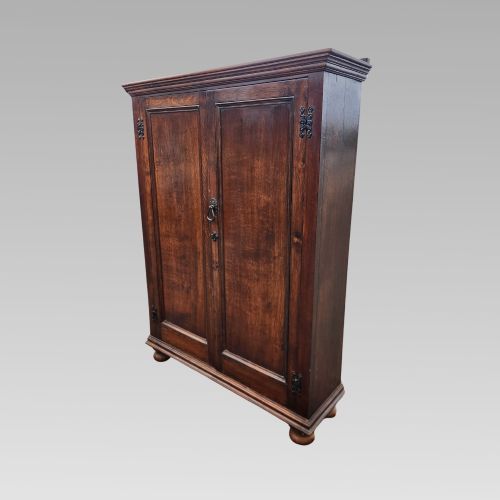
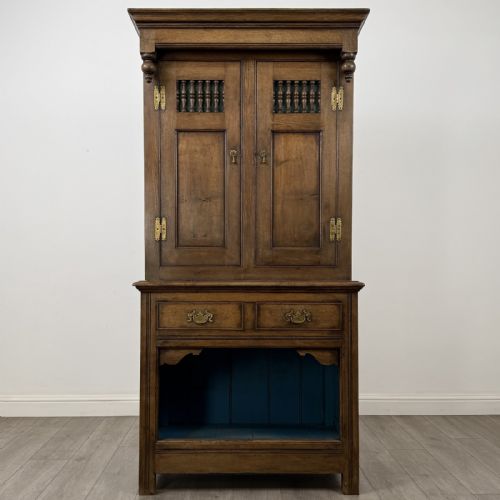
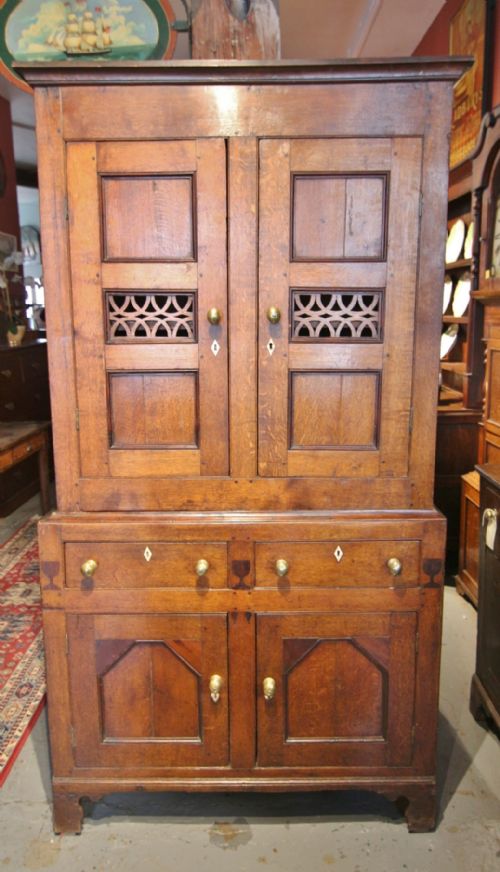
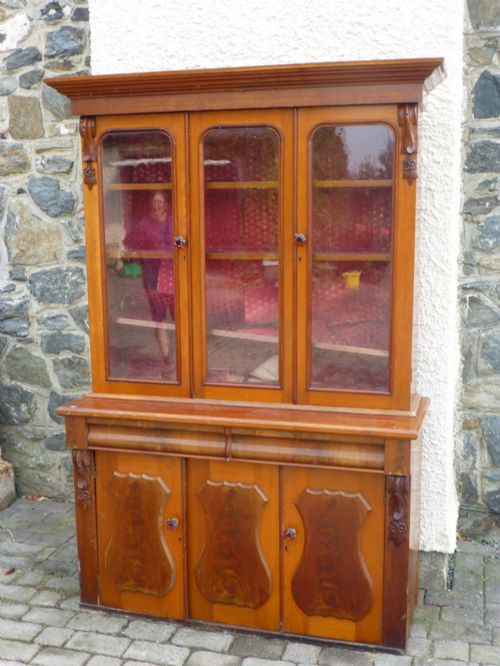
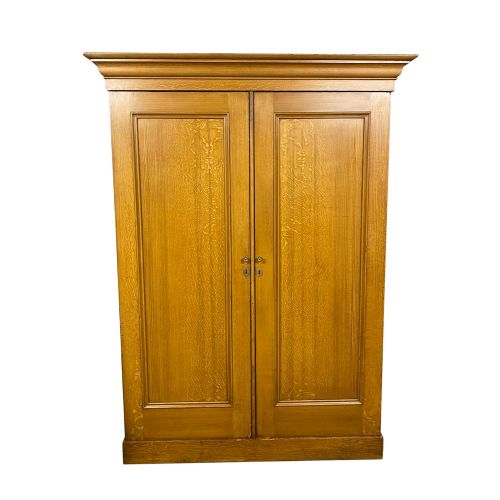
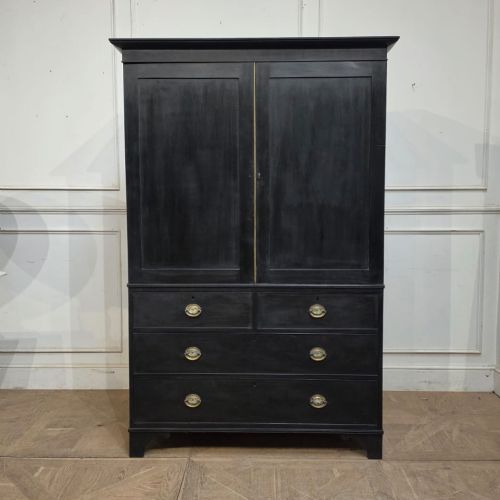


Victorian Oak Press Cupboard
These substantial victorian oak press cupboard designs offer enduring utility and deep character, built for storing linens and garments with architectural presence.
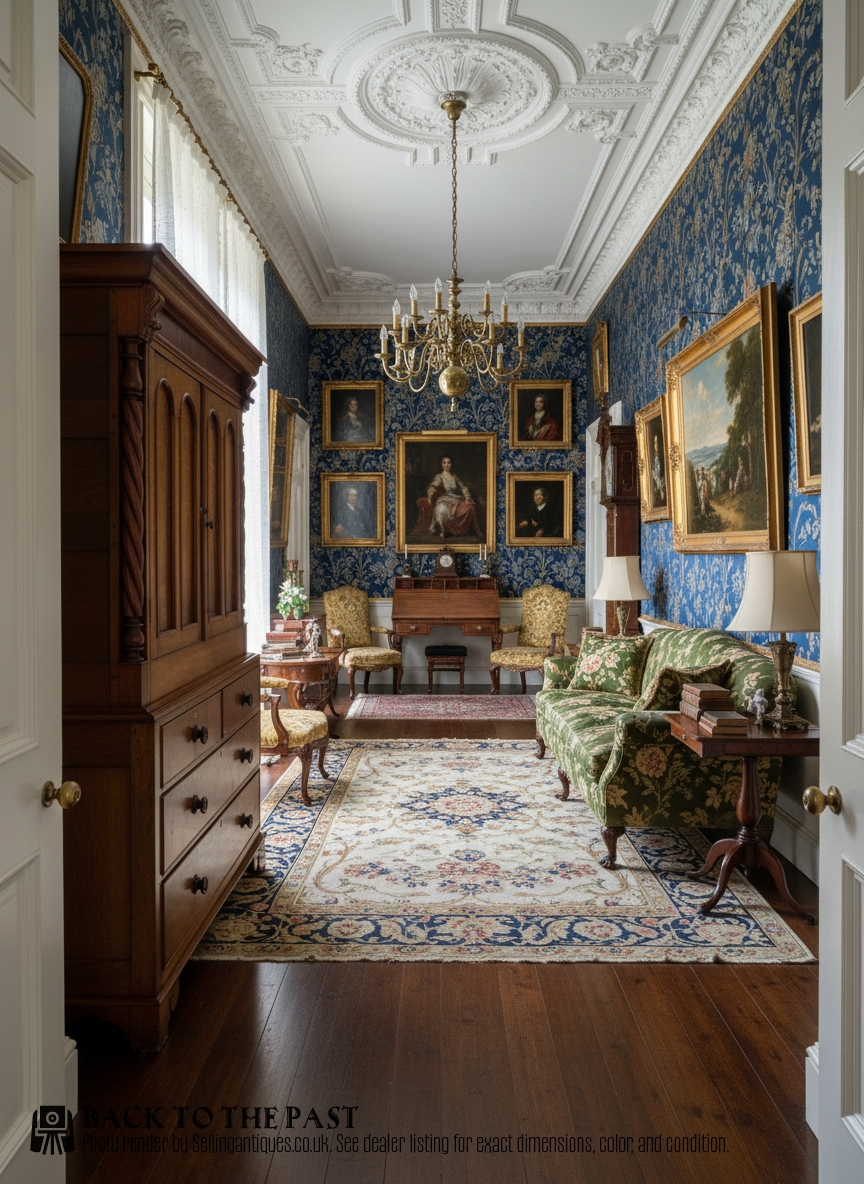
Victorian Oak Press Cupboard
A victorian oak press cupboard combines functional storage with robust timber construction, frequently seen in forms such as linen presses, wardrobes, and court cupboards. These pieces reflect the sturdy domestic requirements of the nineteenth century, often presenting as tall, substantial units designed to house household textiles or attire.
On this page, you are most likely to encounter nineteenth century examples in solid oak, occasionally featuring regional vernacular characteristics from Wales or revival styles like Gothic Revival and Jacobean Revival. These items range from simpler compact storage chests to heavily carved architectural cupboards with upper press sections.
Materials and construction methods
Makers relied primarily on solid oak, frequently paired with secondary timbers like pine and mahogany, alongside decorative accents in pollard oak, brass, and iron hardware. Construction involved traditional panel-and-frame joinery to accommodate the natural movement of large timber boards over time.
Surface treatments varied from waxed natural grain and ebonised finishes to scumble paintwork imitating richer timbers. Carved detailing, panel moulding, and occasional glass glazing or inlay work defined the aesthetic execution of these robust storage pieces.
Victorian Oak Press Cupboard Retail Price Guide 2026
Typical asking prices for victorian oak press cupboard among the pieces listed under this phrase on Sellingantiques today, from the lower quarter to the upper quarter. They describe what is for sale here now, not the wider market.
The documented styles span Victorian, Gothic Revival, Jacobean Revival, and regional Welsh vernacular forms.
What separates fine examples from ordinary ones
The distinction in quality rests upon the selection of timber figures, particularly the use of striking pollard oak or dense, well-grained standard oak. Superior craftsmanship is evident in crisp, deeply undercut hand-carving and well-proportioned architectural cornices rather than superficial embellishment.
Internal arrangement and structural integrity also dictate worth, with original sliding trays, uncompromised drawer linings, and sound panel construction marking out superior pieces. Original hardware, such as brass handles and iron locks, preserves the historical integrity of the better examples.
The Victorian Oak Press Cupboard Glossary
- Press cupboard
- A large storage unit traditionally used for pressing and storing linen, typically featuring an upper section enclosed by doors with internal shelves or sliding trays above a base of drawers.
- Deuddarn
- A traditional Welsh two-tier cupboard featuring enclosed upper and lower compartments, commonly constructed in local oak during the nineteenth century.
- Scumble paint
- A decorative surface finish applied with glazes or combs to imitate the rich grain patterns of more expensive woods like oak or pollard oak.
- Court cupboard
- An antique cabinet style with an indented upper stage supported by pillars, frequently decorated with carved panels and mouldings.
- Compactum
- A fitted wardrobe designed to maximise internal storage capacity through a combination of hanging space, drawers, and shelving within a single unit.
Victorian Oak Press Cupboard: Frequently Asked Questions
How do I use a press cupboard today?
These cupboards serve effectively as primary wardrobe storage or linen towers in bedrooms and hallways. Their internal shelves and hanging spaces adapt well to modern clothing and household textile organisation.
Ensure the room humidity remains stable to protect aged timber joints and prevent the oak panels from binding during seasonal shifts.
What is the difference between a press cupboard and a wardrobe?
A press cupboard traditionally incorporates sliding trays or shelves behind its upper doors, originally designed for flat-folded linens rather than garments on hangers. Wardrobes focus primarily on vertical hanging space enclosed by full-length doors.
Many transitional nineteenth-century examples combine both functions within a single compactum format.
How do I identify a Welsh vernacular piece?
Welsh vernacular furniture often displays robust, straightforward construction utilising local regional timber stocks, sometimes incorporating distinct proportions and idiosyncratic panel carvings. Items such as deuddarns and bread and cheese cupboards exhibit these specific local design traditions.
Look for regional construction traits, such as distinct drawer linings and characteristic mouldings typical of nineteenth-century Welsh workshops.