



Victorian Oak Library Cabinet
A victorian oak library cabinet brings sturdy architectural presence and heavy timber character to a room.
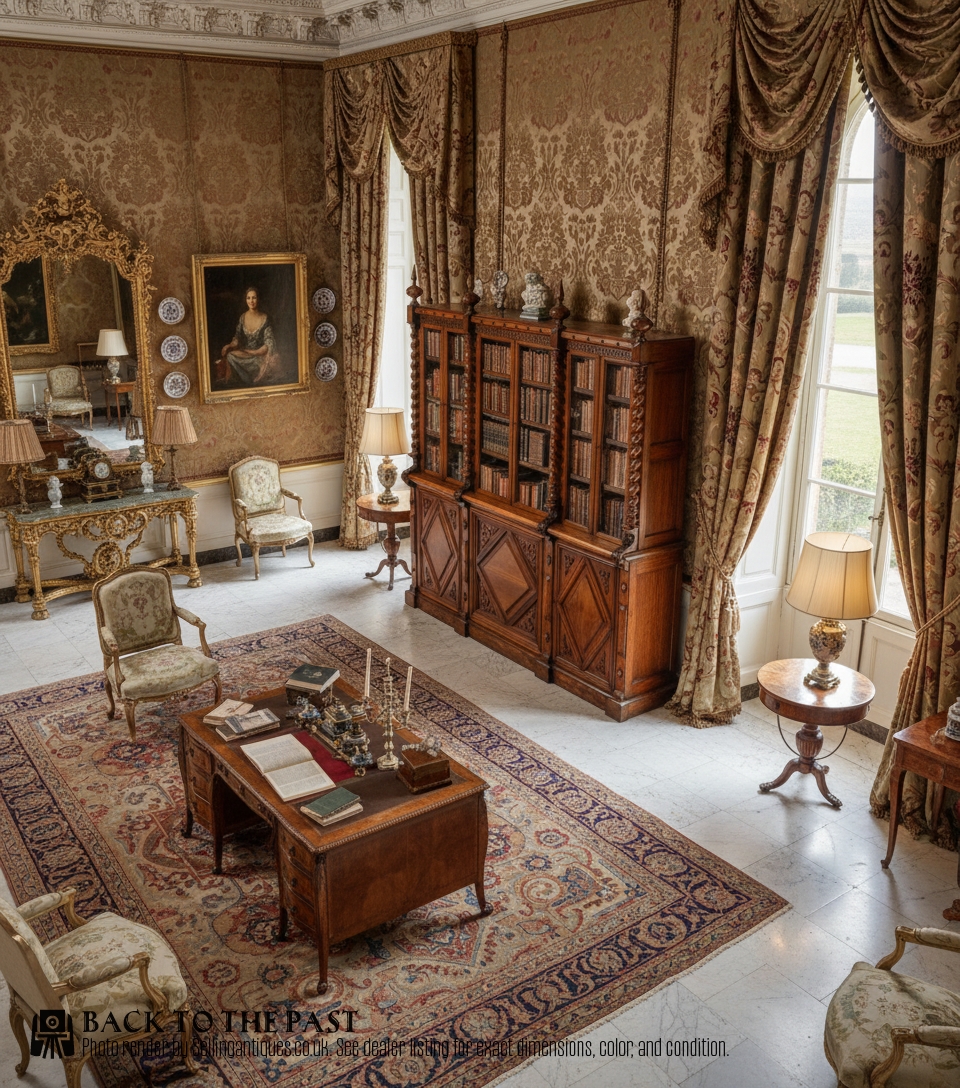
Victorian Oak Library Cabinet
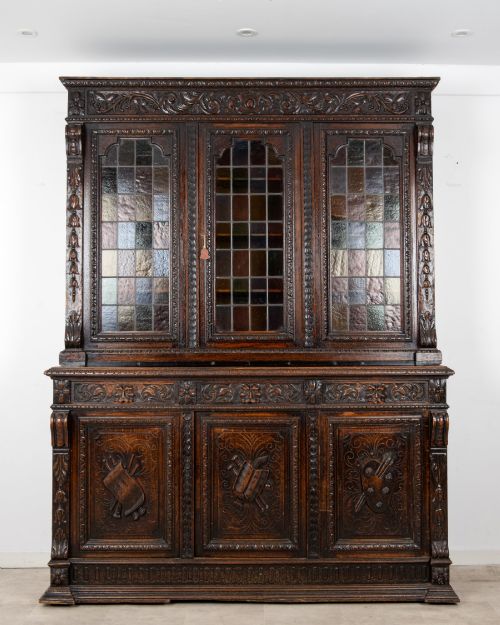
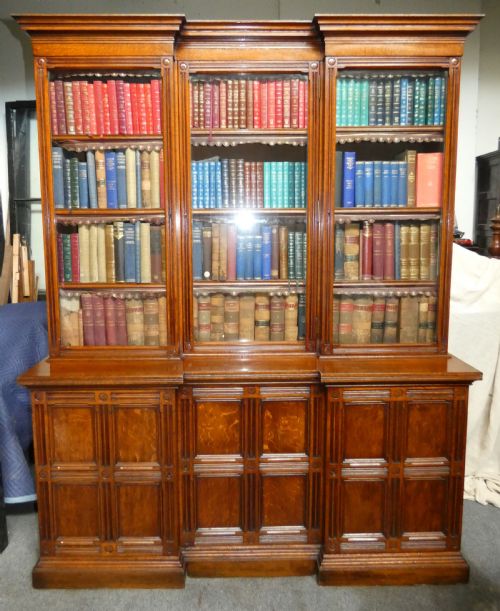
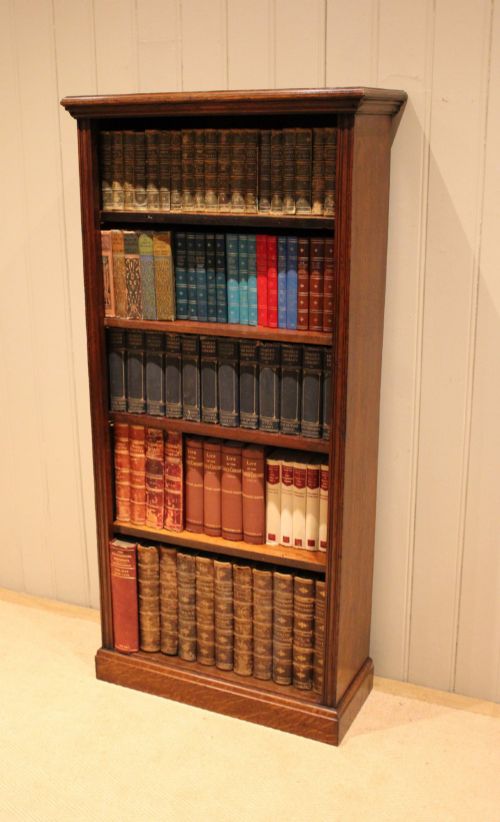
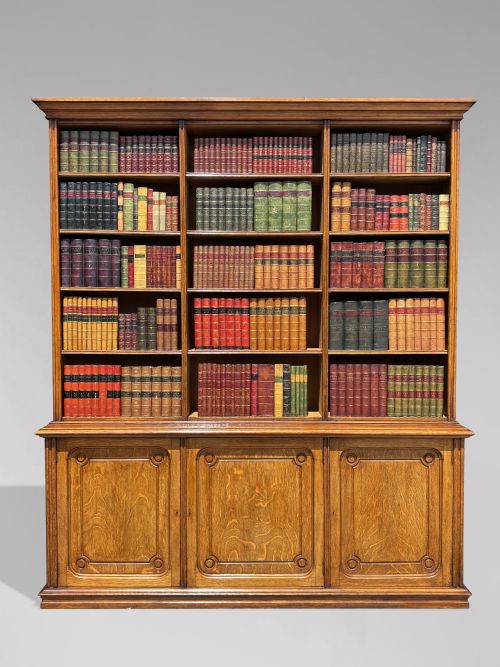
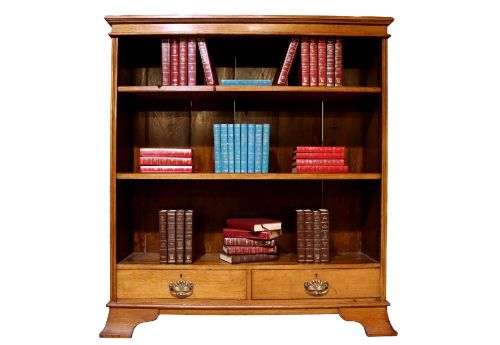
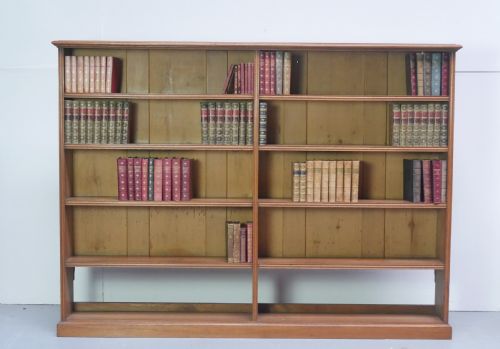
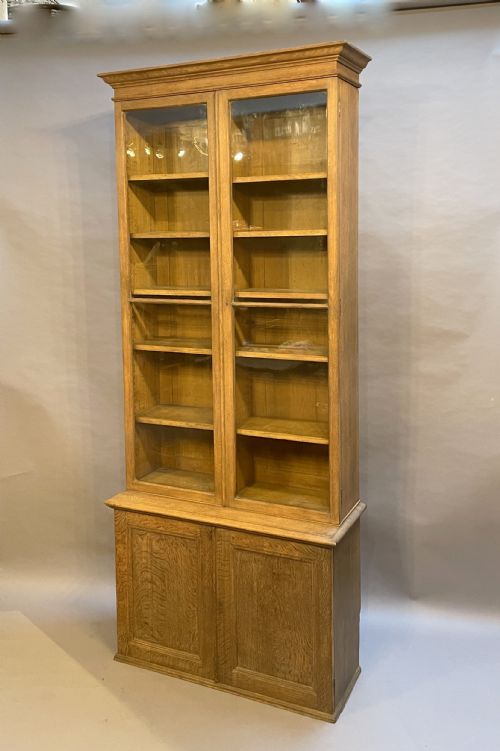
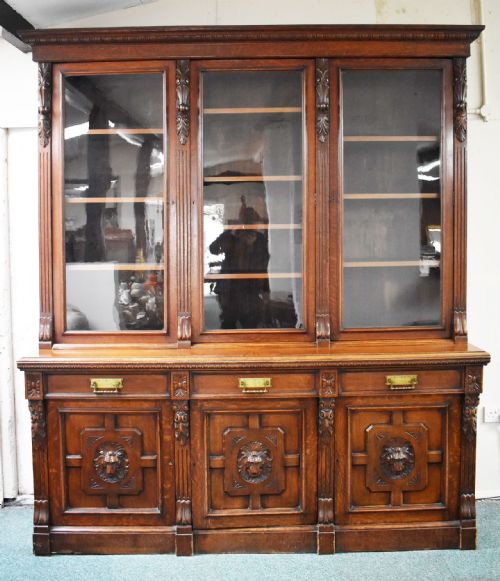
A victorian oak library cabinet bridges the domestic and the scholarly, designed to house heavy volumes in private studies and country houses. These pieces appear as large breakfront bookcases, tall open shelving units, and glazed display cabinets.
The material palette centres firmly on sturdy English and Scottish oak, sometimes selected for its striking pollard grain. Makers drew upon Gothic Revival, architectural, and country house styles to build these substantial storage pieces.
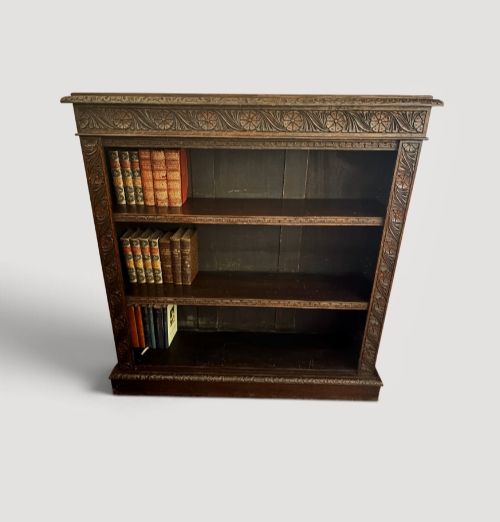
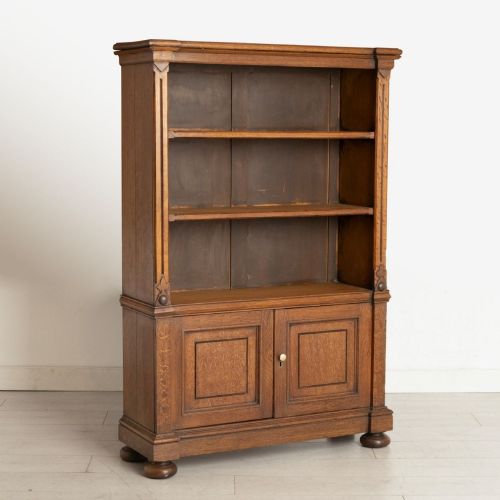
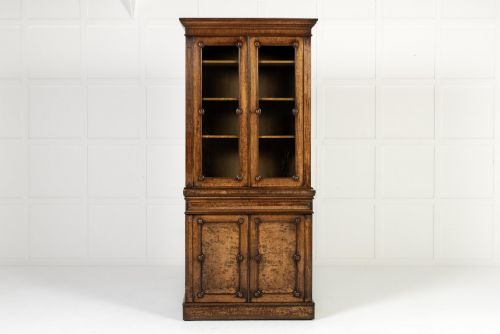
Open front configurations predominate among the items gathered here, alongside glazed door cabinets fitted with adjustable shelves. These forms reflect the practical demands of nineteenth-century book collection and display.
Materials and Construction
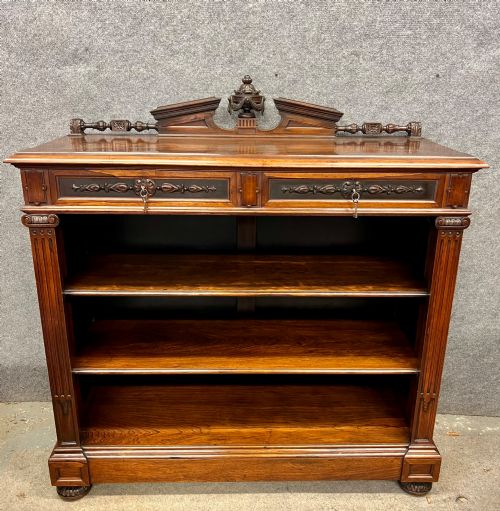
Cabinet makers utilised solid oak and pollard oak veneers over stable pine or oak carcases to build these heavy storage units. Brass fittings, leaded glass panels, and delicate wood inlay frequently complemented the dark timber framework.
Structural joinery relied upon panel and frame construction to accommodate the natural movement of large oak boards. Carvers applied intricate foliate motifs, linenfold panels, and architectural pilasters directly into the solid timber.
Listings feature extensive nineteenth-century oak furniture, ranging from simple open shelving to monumental architectural cabinets with leaded glass.
Assessing Craftsmanship and Proportion
Quality rests upon the depth and crispness of the carved ornamentation, distinguishing spirited hand-cut detailing from mechanical mass production. Heavier architectural proportions and well-figured pollard oak grain elevate certain examples above standard utility pieces.
The integrity of the internal fittings, such as functional brass ratchets for adjustable shelving and smoothly operating door mechanisms, separates superior workshop output from simpler vernacular items.
Howard & Sons·Benjamin Taylor & Sons·Richard Bridgens
The Victorian Oak Library Cabinet Glossary
- Breakfront
- A cabinet design where the central section projects forward from the flanking wings. This classical arrangement creates visual depth and breaks up long horizontal lines.
- Pollard Oak
- Timber taken from trees that were pollarded, resulting in highly clustered, swirling growth rings. This figured wood was prized for decorative drawer fronts and panel inserts.
- Gothic Revival
- An architectural and decorative style drawing inspiration from medieval forms. Pieces often feature pointed arches, tracery, and stiff-leaf carving.
- Folio Cabinet
- A low storage unit specifically dimensioned to hold large paper portfolios, maps, and unbound plates. These items feature wide, shallow shelving spaces.
- Adjustable Shelving
- Internal shelving supported by moveable pegs, brass studs, or notched ratchets. This system allowed libraries to accommodate books of varying heights.
Victorian Oak Library Cabinet: Frequently Asked Questions
How do I care for solid oak furniture?
Keep the timber away from direct heat sources and sudden humidity shifts to prevent the wood from splitting. Feed the surface periodically with traditional beeswax to maintain the natural sheen.
Avoid modern silicon polishes that build up a hazy film over the carved details. Gentle dusting with a soft, dry cloth is sufficient for daily maintenance.
Were these cabinets meant for homes?
These large storage units were built primarily for country houses, rectories, and the private studies of wealthy industrialists. They served as both working book repositories and grand reception room furnishings.
As domestic spaces evolved, these pieces moved from formal libraries into general living rooms and studies. Their robust construction ensured they could withstand generations of heavy academic use.
How do I identify a Gothic Revival piece?
Look for pointed arch motifs, trefoil piercings, and heavy chamfered edges carved directly into the timber frame. These design elements mimic medieval ecclesiastical architecture translated into domestic furniture.
Makers often combined these architectural shapes with dark stained finishes and hammered brass hardware. The overall effect emphasises vertical lines and structural mass.
Can shelves be adjusted easily?
Many nineteenth-century bookcases feature wooden peg supports or vertical brass rack strips inset into the interior sides. These systems allowed owners to alter shelf heights for octavo and folio volumes.
When inspecting a cabinet, check that the original ratchets or peg holes remain intact to ensure full adjustability. Fixed shelves do occur, particularly in simpler vernacular workshops.