




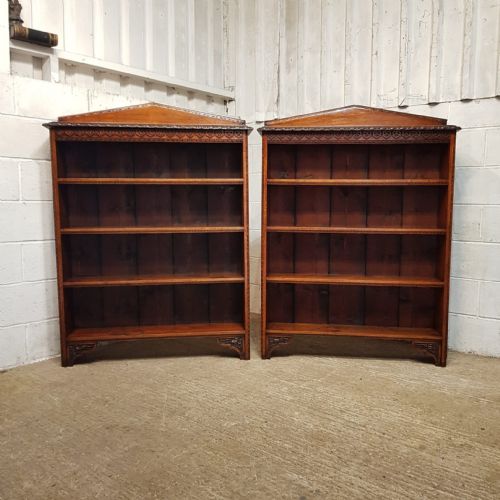
Victorian Oak Library Bookcase
When you want a substantial piece for your books, a victorian oak library bookcase brings period presence and heavy timber construction into a room.
Victorian Oak Library Bookcase
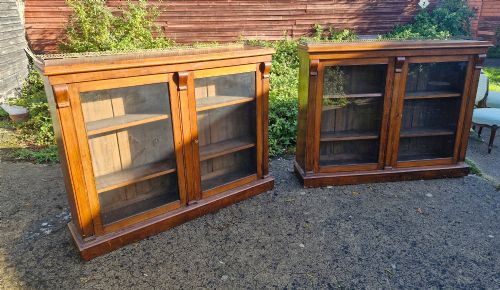
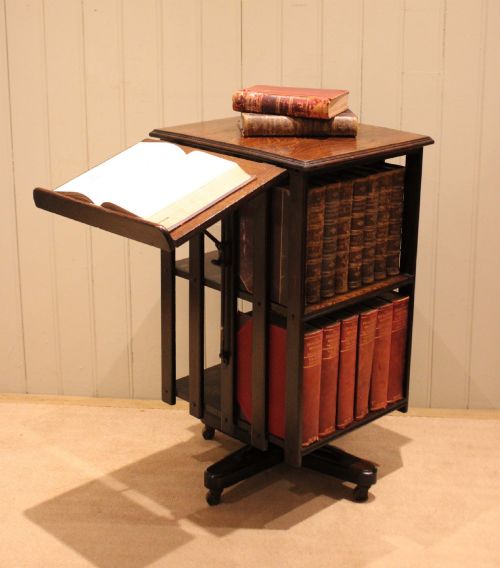
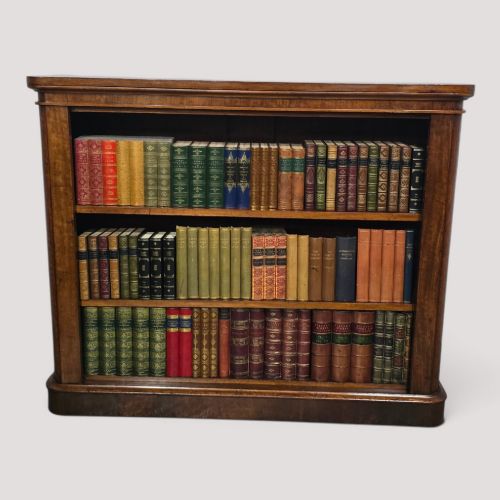
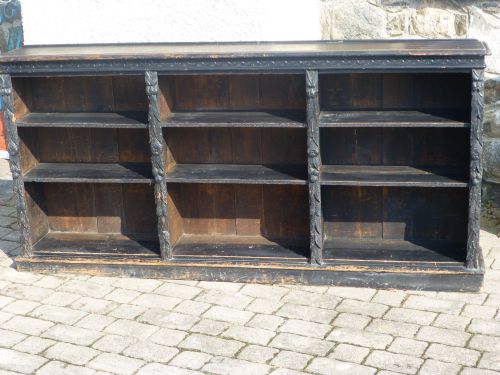
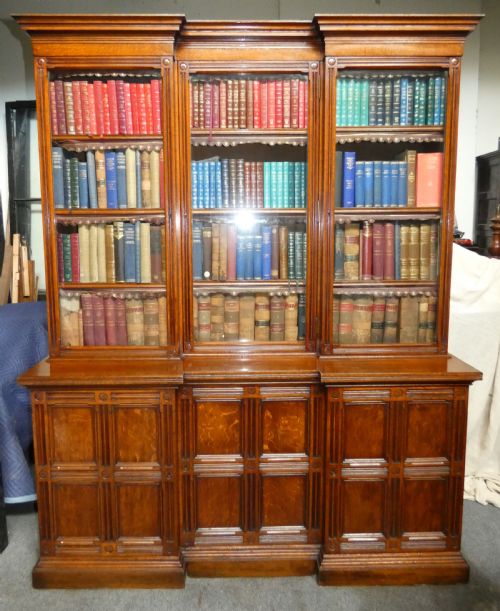
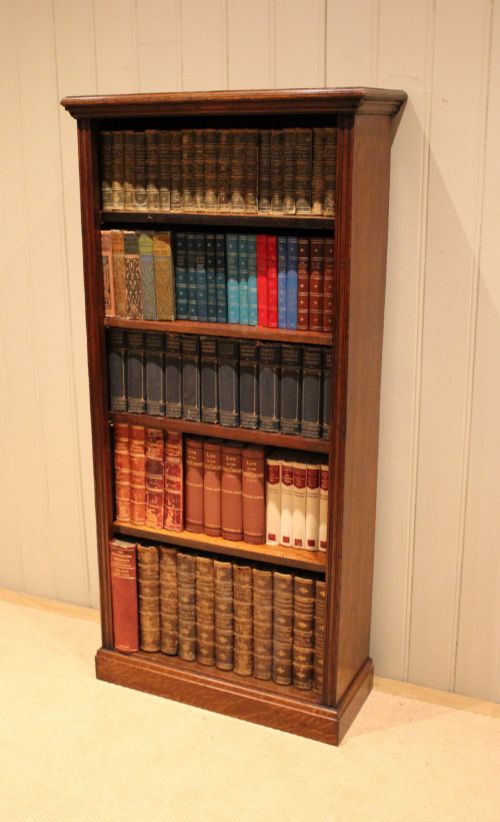
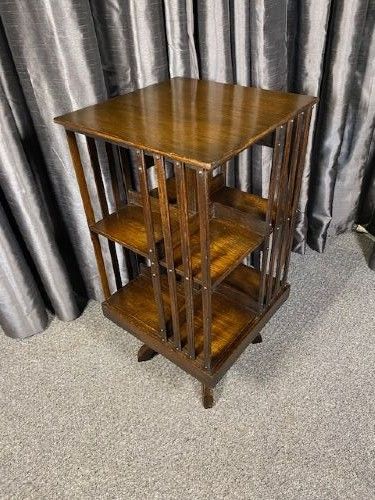
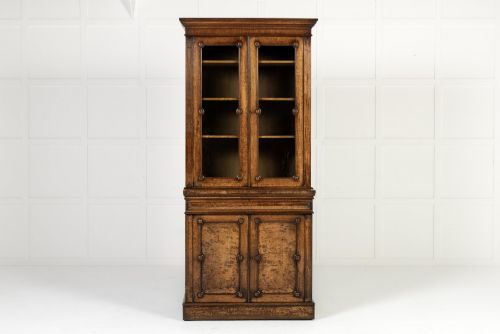
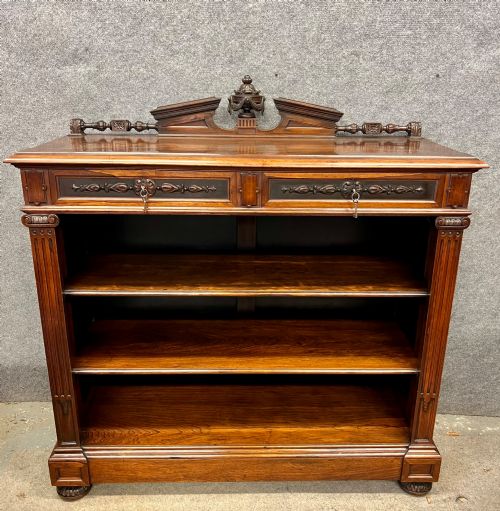
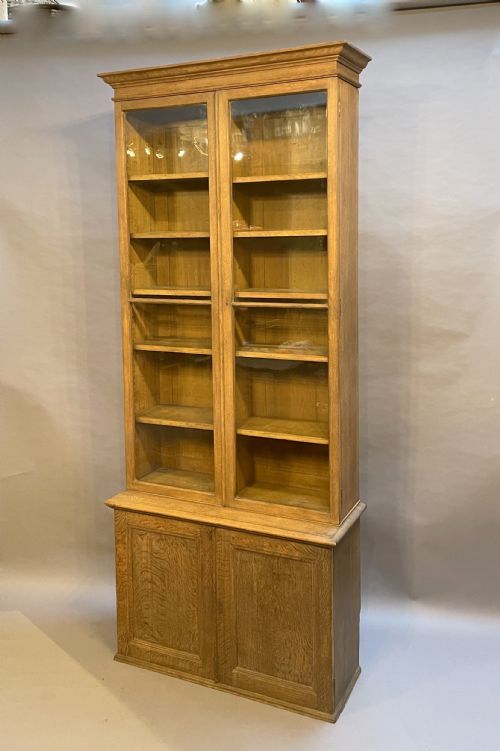
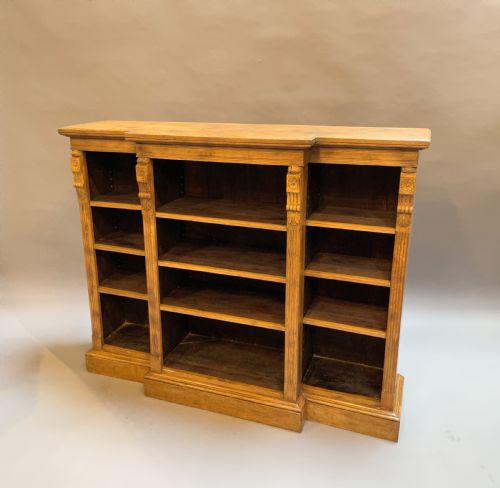
A victorian oak library bookcase is a heavy, architectural storage piece designed to hold large private collections in country houses and town residences. The most common format on this page is the open-front shelf unit, though glazed cabinet versions and revolving desk-height models also appear frequently. These pieces date principally from the nineteenth century, spanning various revivals from Gothic to Aesthetic Movement styles.
The proportions are generally substantial, ranging from low dwarf cases to monumental multi-door breakfront examples that fill entire walls. Many incorporate adjustable shelving systems, allowing owners to alter the internal layout to accommodate varying volumes. Originating largely from English and Scottish workshops, these heavy pieces were built to anchor domestic libraries and studies.
How They Were Made
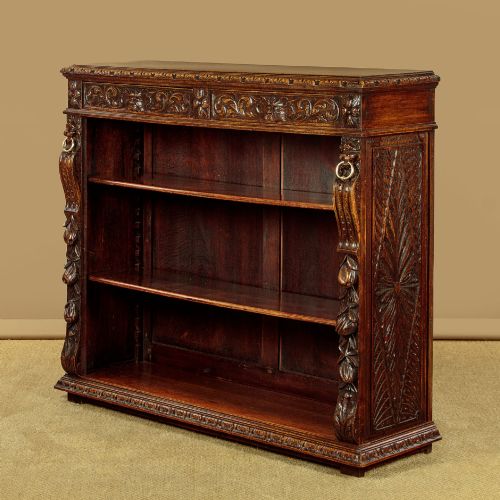
Construction relies heavily on solid oak and pollard oak timber, often selected for strong grain patterns or golden tones. Carvers utilised hand tools to execute deep mouldings, Renaissance motifs, and specific details like green man masks or ivy foliage.
Secondary materials such as brass fittings, iron hardware, and leaded or plain glass panels frequently complete the glazed doors and revolving mechanisms. Cabinetmakers built these items in modular sections or single tall carcasses designed to withstand heavy book weight without sagging.
Victorian Oak Library Bookcase Retail Price Guide 2026
Typical asking prices for victorian oak library bookcase among the pieces listed under this phrase on Sellingantiques today, from the lower quarter to the upper quarter. They describe what is for sale here now, not the wider market.
Materials recorded across the inventory include solid oak, pollard oak, walnut, brass, iron, plain glass, stained glass, and lead.
What Varies in Quality
The distinction between standard examples and top-tier pieces lies in the depth of the carving and the selection of timber figures, such as pollard oak or golden oak. Monumental breakfront forms with complex architectural pediments and multiple doors represent the upper end of the scale.
Finishing details, including the precision of the adjustable shelf mechanisms and the integration of stylistic movements like Gothic Revival or Aesthetic design, separate ordinary utility furniture from exceptional commission pieces.
Howard And Sons
The Victorian Oak Library Bookcase Glossary
- Breakfront
- A cabinet design where the central section projects forward from the flanking wings. This configuration creates architectural depth on large library walls.
- Pollard Oak
- Timber taken from trees that have been pollarded, producing a dense, highly figured grain pattern. Cabinetmakers used this decorative veneer for dramatic visual impact on high-end pieces.
- Gothic Revival
- A nineteenth-century design style inspired by medieval architecture. Pieces show pointed arches, tracery, and heavy carved ornamentation.
- Adjustable Shelves
- Shelving supported by movable pins or ratchet strips within the interior sides. This system allows the owner to change shelf heights for different book sizes.
- Revolving Bookcase
- A small, square tier of shelves mounted on a rotating floor or table base. It provides access to multiple volumes within arm's reach.
Victorian Oak Library Bookcase: Frequently Asked Questions
Are the shelves adjustable?
Many examples on this page include adjustable shelving systems supported by internal wooden slots, brass studs, or metal ratchets. This practical feature allowed nineteenth-century owners to modify shelf heights for folios and smaller octavos alike.
Fixed shelves do occur, but adjustable variants predominate in working library furniture.
How do I identify Gothic Revival styles?
Gothic Revival pieces display architectural motifs drawn from medieval buildings, including pointed arches, quatrefoils, and heavy linenfold or carved foliage panels. These details give the oak casework a solemn, ecclesiastical character.
Such ornamentation is often paired with dark patination and substantial brass or iron hardware.
Where were these bookcases used?
These pieces were originally commissioned for the libraries, studies, and drawing rooms of large country houses and urban residences. Their solid timber construction was intended to support heavy collections of leather-bound volumes.
Today, they function well in contemporary domestic spaces as prominent display and storage furniture.