
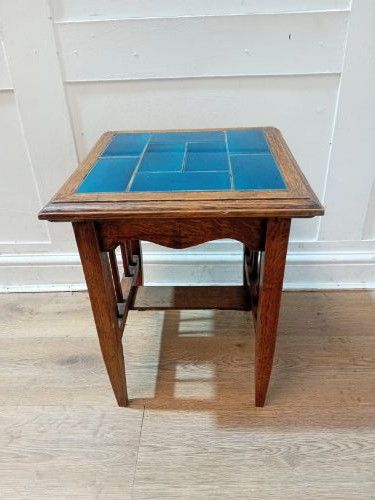
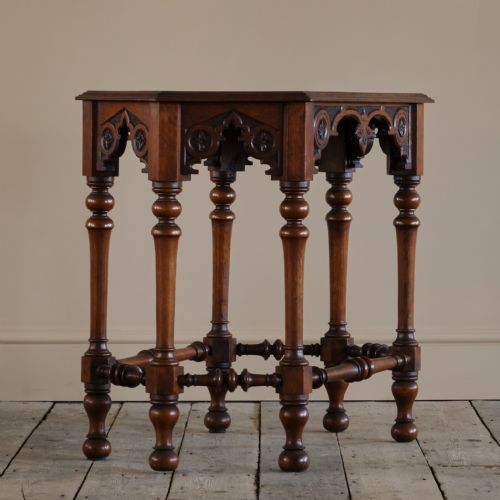


Victorian Oak Lamp Stand
A victorian oak lamp stand is a sturdy, characterful piece of nineteenth-century furniture that holds a light and anchors a room.
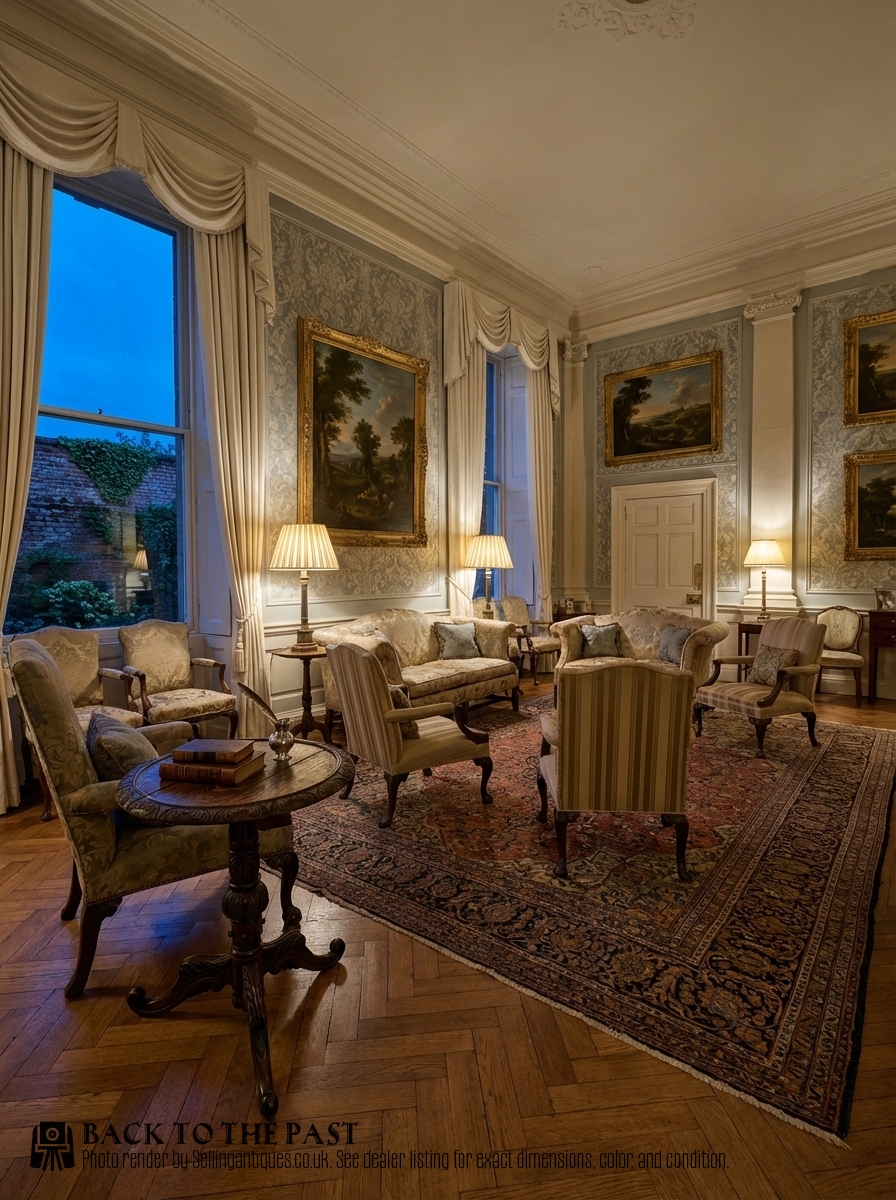
Victorian Oak Lamp Stand
When searching for a victorian oak lamp stand, you are looking at nineteenth-century occasional and side tables built to support heavy lighting in domestic settings. These practical pieces come from periods spanning the mid-nineteenth century through to the early twentieth century.
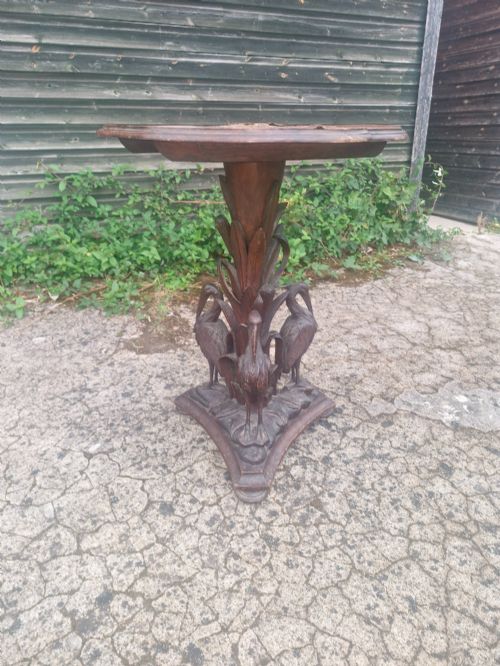
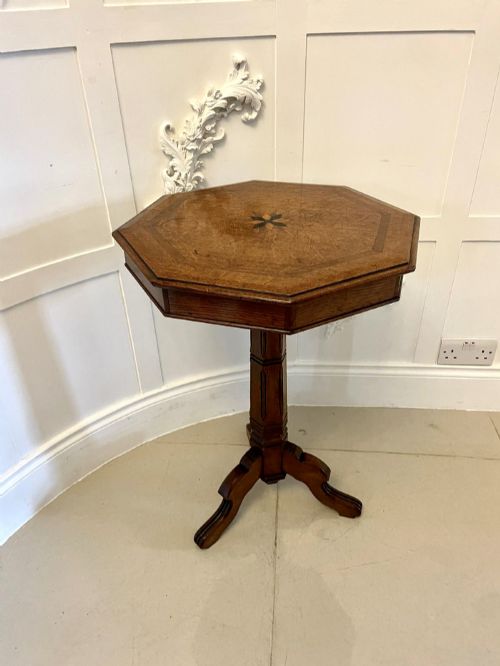
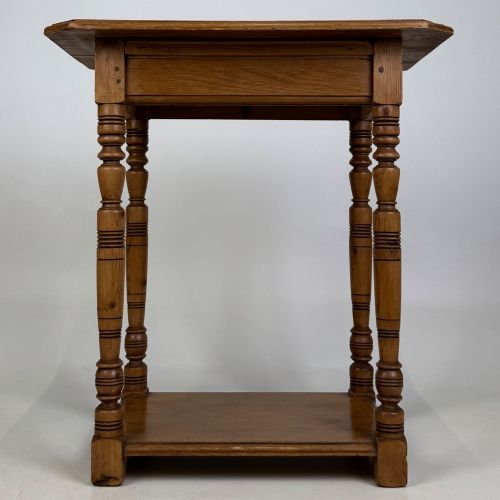
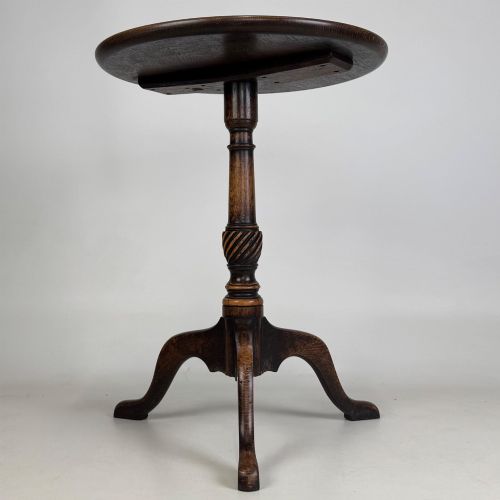
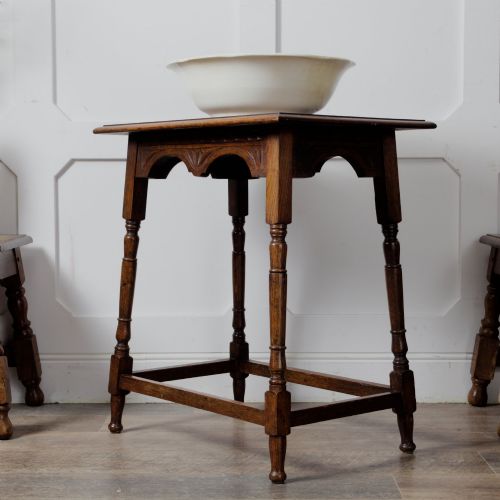
You will most frequently meet solid oak examples bearing the marks of Victorian, Arts and Crafts, and Gothic Revival styles. These tables often appear in side and occasional forms, sometimes featuring carved decoration or turned supports.
The material gives these items a distinct grain and weight that sets them apart from lighter occasional furniture. Their utilitarian origins mean they were built for daily use in libraries, parlours, and hallways.
How they were made
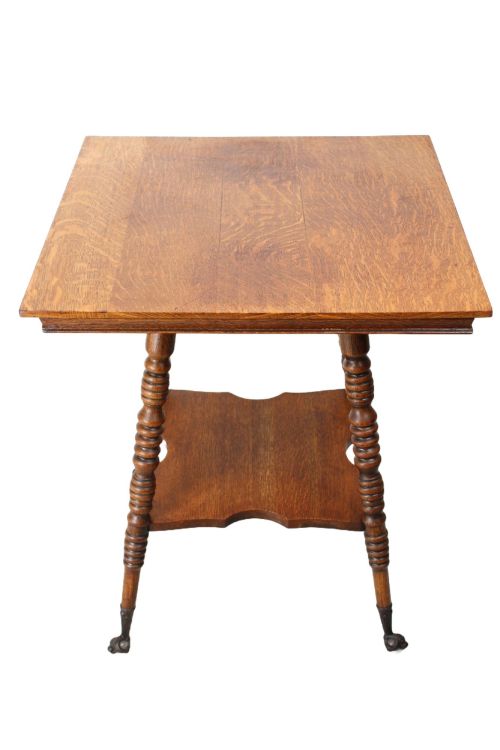
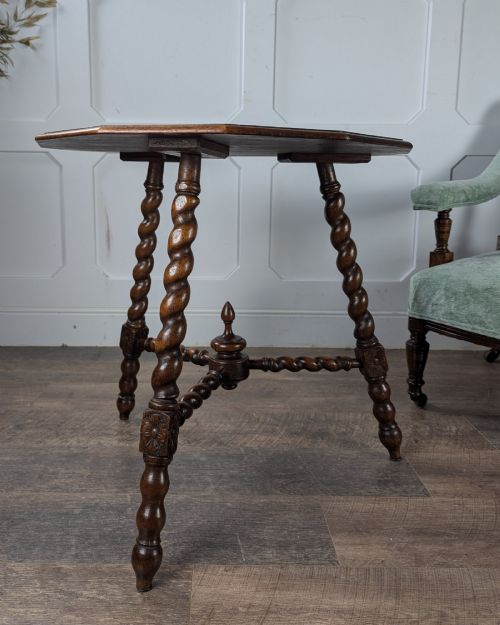
Makers utilised solid oak alongside brass fittings, ceramic tiles, and occasional marble or onyx inserts to create durable surfaces. Woodworkers turned timber into barley twist legs and carved detailed motifs into the friezes and edges.
Construction techniques combine traditional joinery with period detailing such as ebonised wood highlights and inlaid patterns. These methods ensured the stands could bear the considerable weight of period lighting fixtures without losing stability.
Listings feature oak, brass, ceramic tile, and walnut, spanning the nineteenth century through to nineteen twenty.
What varies in quality
The standard of carving and the selection of timber distinguish finer examples from standard workshop production. Dense, well-figured oak with crisp, deep relief work on the legs and aprons marks out superior pieces.
The integration of specialist materials, such as original Derbyshire Fossil marble or ceramic tile inserts, elevates an item beyond a simple utility table. The precision of the turning on barley twist supports also indicates the skill of the maker.
William Birch·Leonard Wyburd·Liberty and Co
The Victorian Oak Lamp Stand Glossary
- Barley twist
- A spiral turning technique resembling a twisted rope, commonly found on table legs and supports during the Victorian period. This decorative form added movement and visual weight to sturdy timber furniture.
- Arts and Crafts
- A design movement prioritising traditional craftsmanship and simple forms over mass production, frequently associated with oak furniture from the late nineteenth century. It emerged as a reaction against industrial manufacturing methods.
- Gothic Revival
- An architectural and decorative style drawing on medieval ecclesiastical motifs, featuring pointed arches, heavy carving, and sombre oak timbers. Pieces in this style often display robust construction and serious proportions.
- Occasional table
- A small, movable table designed for a specific, transient use in a room, such as holding a lamp or a book. These versatile items filled corners and spaces beside seating throughout the home.
Victorian Oak Lamp Stand: Frequently Asked Questions
What is a victorian oak lamp stand used for?
These tables were originally designed to hold heavy oil lamps, reading lights, or decorative objects in nineteenth-century reception rooms and libraries. Their sturdy construction provided a reliable surface that could safely support upright lighting.
Today, they serve the same practical purpose beside armchairs and sofas while adding period character to a modern interior. Their compact footprints make them versatile for placing in corners or narrow spaces.
How do I date a victorian oak lamp stand?
Dating relies on observing the stylistic cues, construction methods, and materials recorded across the piece. Victorian examples often incorporate Gothic revival or Jacobean revival influences through heavy carving and dark oak.
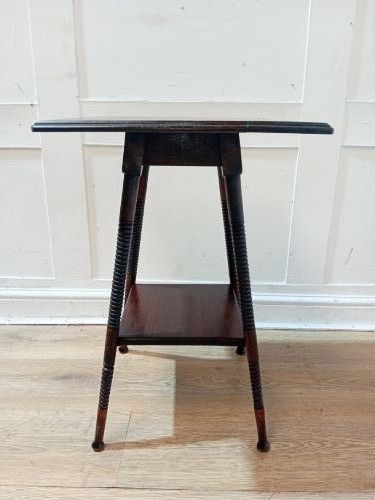
Later pieces from the turn of the century frequently display Arts and Crafts simplicity or Japanese aesthetic movement details. Examining the grain, the type of secondary wood, and any incorporated tiles or marble helps narrow the decade of origin.
Are these tables made of solid oak?
Many examples on record are constructed from solid oak or dark oak, providing the necessary weight and durability for furniture meant to hold lamps. This timber choice gives them their characteristic dense grain and deep colour.
Some variants incorporate stained hardwood, walnut, or ebonised wood details alongside the primary oak structure. The presence of solid timber ensures the stands remain stable and balanced.
What styles can I expect to find?
The selection encompasses several nineteenth and early twentieth-century design movements, with Victorian and Arts and Crafts being prominent. You will also encounter Gothic Revival, Chippendale Revival, and Aesthetic Movement influences.
These diverse styles bring different decorative elements, from barley twist legs and carved panels to inlaid surfaces and marble tops. Each style reflects the changing tastes of domestic interior decoration across the decades.