

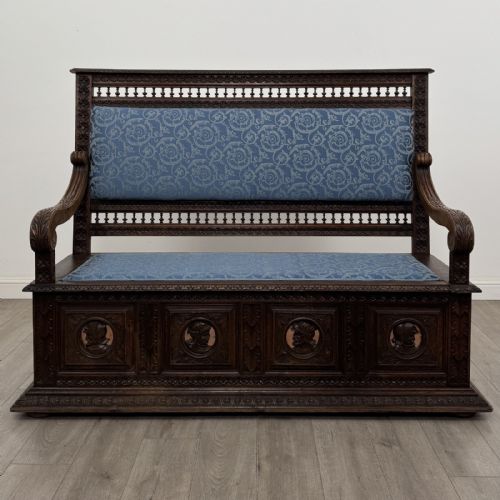
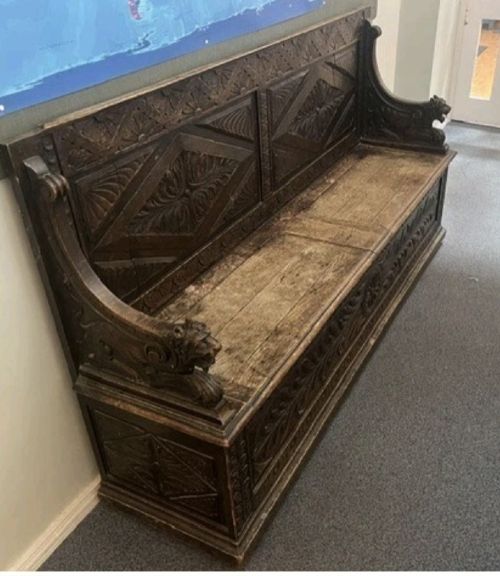
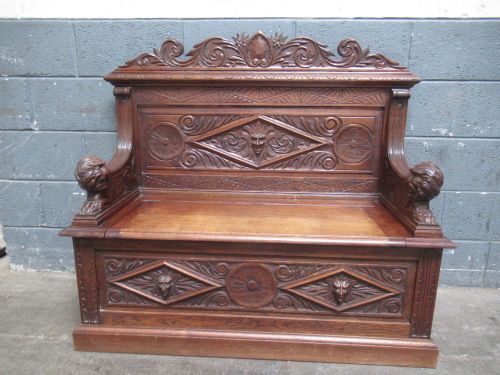
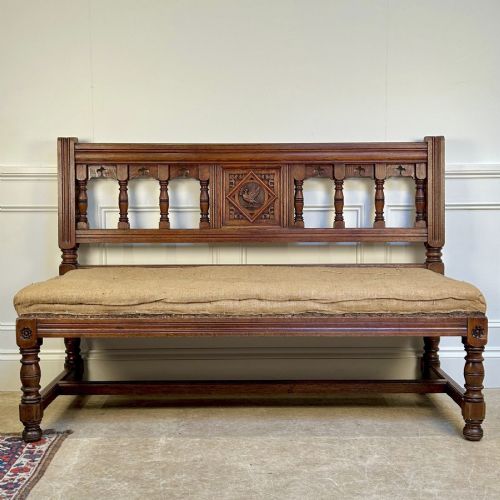
Victorian Oak Hall Settle
When you search for a victorian oak hall settle, you seek a substantial piece of entrance furniture defined by heavy timber and functional storage.
Victorian Oak Hall Settle
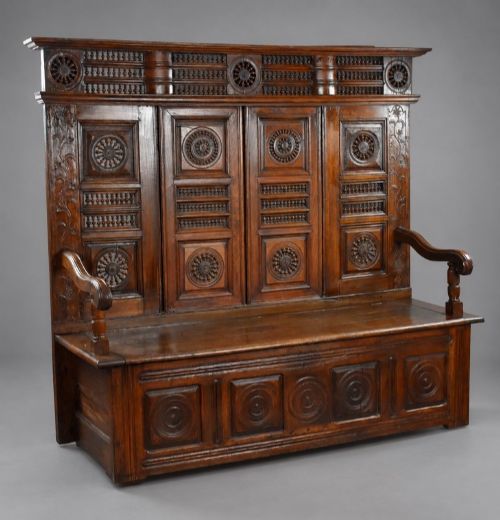
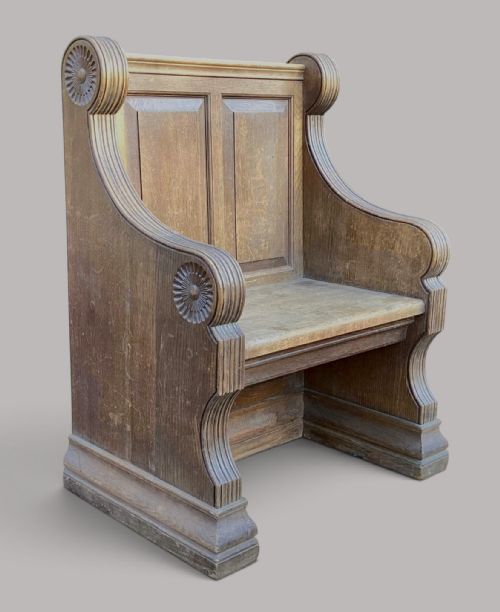
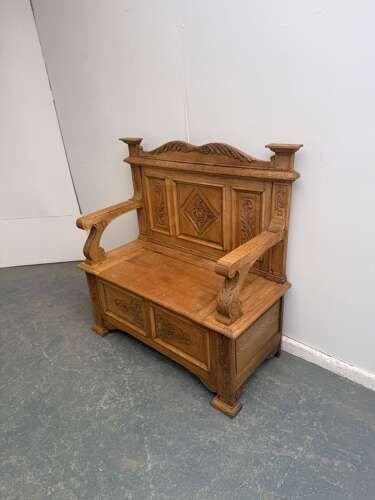
A victorian oak hall settle serves as an imposing piece of entrance furniture designed for hallways and reception rooms. These items combine seating with integrated storage compartments, offering lift-up seats or box bases.
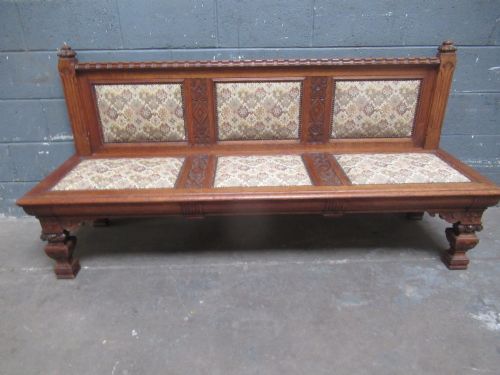
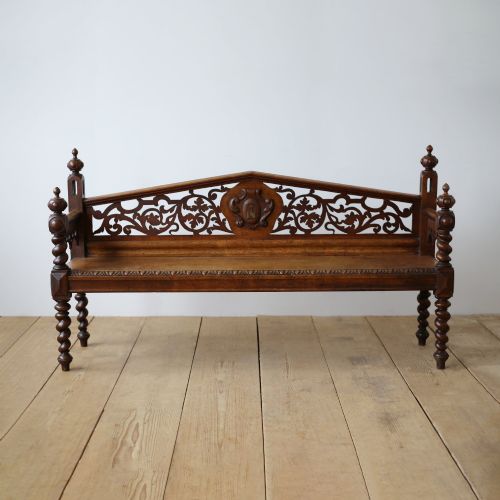
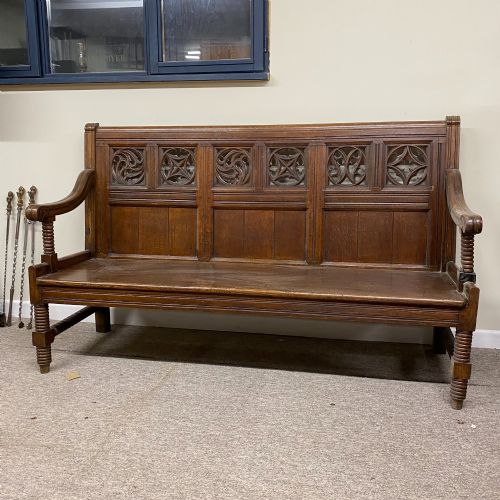
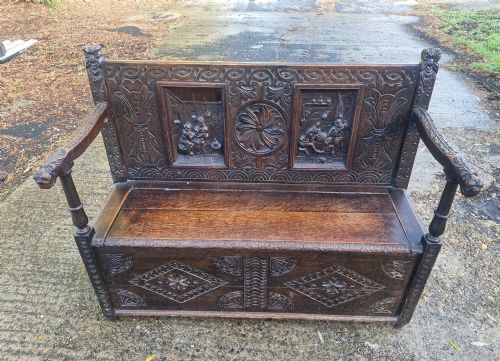
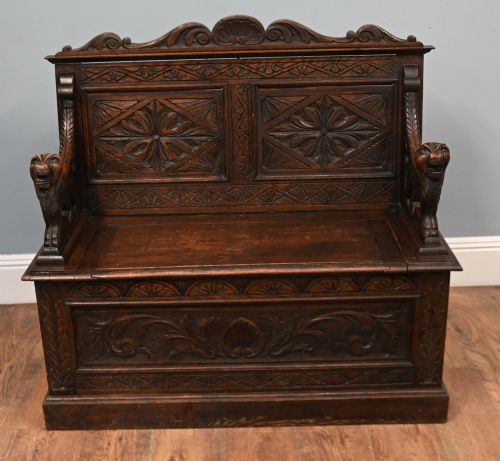
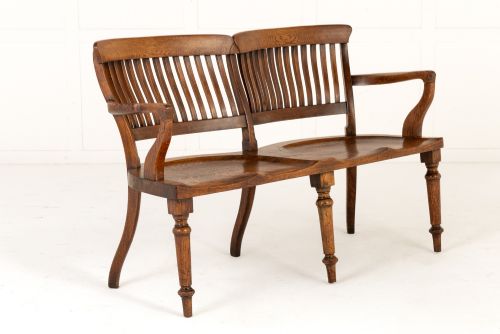
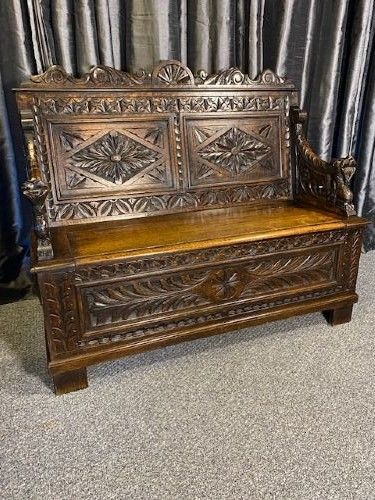
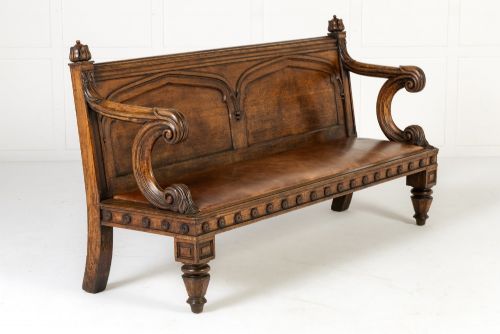
The pieces appearing on this page span the nineteenth century and incorporate revival styles such as Gothic, Jacobean, and Renaissance. Most examples present high panelled backs, carved ornamentation, and solid timber construction.
Makers utilised architectural forms, high backs, and hinged storage lids to create practical seating for grand and modest hallways alike. Such furniture anchors an entrance space with historical presence and utility.
Materials and construction
Solid oak provides the primary structural foundation for these settles, frequently enhanced by secondary woods like pine or occasional walnut and burr elm elements. Craftsmen employed traditional joinery techniques, combining panelled construction with pegged joints and heavy framing.
Decoration relied heavily on deep hand carving, producing relief panels, linenfold motifs, and figural carvings such as Green Man faces. Metal hardware including brass handles, iron hinges, and occasional mounts added functional durability to the heavy timber frames.
Victorian Oak Hall Settle Retail Price Guide 2026
Typical asking prices for victorian oak hall settle among the pieces listed under this phrase on Sellingantiques today, from the lower quarter to the upper quarter. They describe what is for sale here now, not the wider market.
Listings feature oak as the dominant material alongside fabric, brass, leather, iron, walnut, and metal across the nineteenth century.
Evaluating the standard of workmanship
Quality rests upon the crispness of the hand carving and the selection of the timber grain. Finer examples display deeply undercut relief work and well-figured oak boards that show minimal warping across large panels.
Structural integrity differentiates simpler utility pieces from high-end cabinet work. Superior settles exhibit tight joinery, original hardware, and carefully balanced proportions in their high backs and storage boxes.
GIllows·James Shoolbred & Co.·Hampton & Son's
The Victorian Oak Hall Settle Glossary
- Settle
- A wooden bench with high backs, solid arms, and a closed base often used for storage. This form kept draughts away from people sitting in cold hallways.
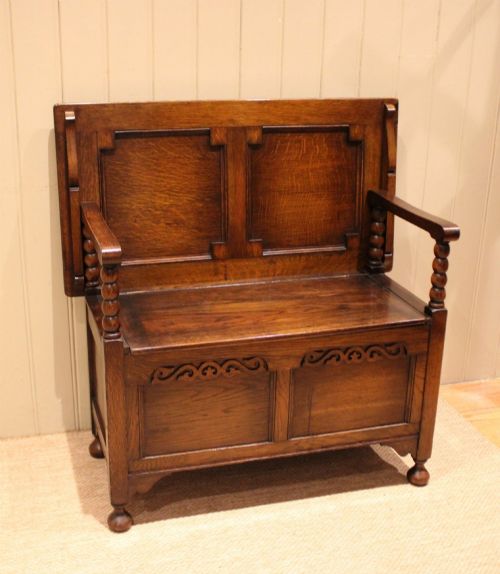
- Monks Bench
- A convertible piece of furniture featuring a hinged back that folded down to form a table top. These items doubled as seating and table surfaces in period interiors.
- Green Man
- A sculptural architectural ornament depicting a human face emerging from or entwined with foliage and vines. This motif symbolised rebirth and appeared frequently on nineteenth-century revival woodwork.
- Box Settle
- A bench fitted with a compartment beneath the seat accessed via a lift-up lid. The enclosed space provided practical storage for boots, blankets, and outerwear.
- Revival Style
- An artistic movement that revived historical design idioms such as Gothic, Jacobean, and Renaissance forms. Cabinetmakers reinterpreted these earlier aesthetics to suit Victorian tastes.
Victorian Oak Hall Settle: Frequently Asked Questions
What is a hall settle used for?
A hall settle provided seating and storage for outerwear within entranceways and grand corridors.
The enclosed compartment beneath the seat held items like boots and heavy cloaks.
How do I identify a Victorian settle?
Victorian examples typically feature heavy oak construction, high panelled backs, and revival ornamentation such as Gothic tracery or carved foliage.
Lift-up seat lids and architectural proportions further characterise pieces from this period.
Are these benches comfortable to sit on?
These settles were built for formal entrances and brief seating rather than lounging.
Their upright wooden backs and solid seats encourage an erect posture.
What wood was used?
Oak is the predominant timber found in these pieces, valued for its strength and grain.
Secondary woods like pine and walnut occasionally appear in internal or structural components.