




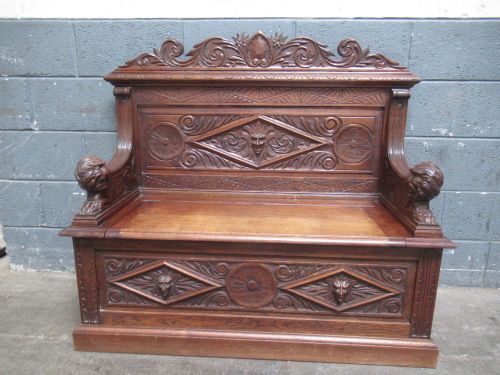
Victorian Oak Hall Bench
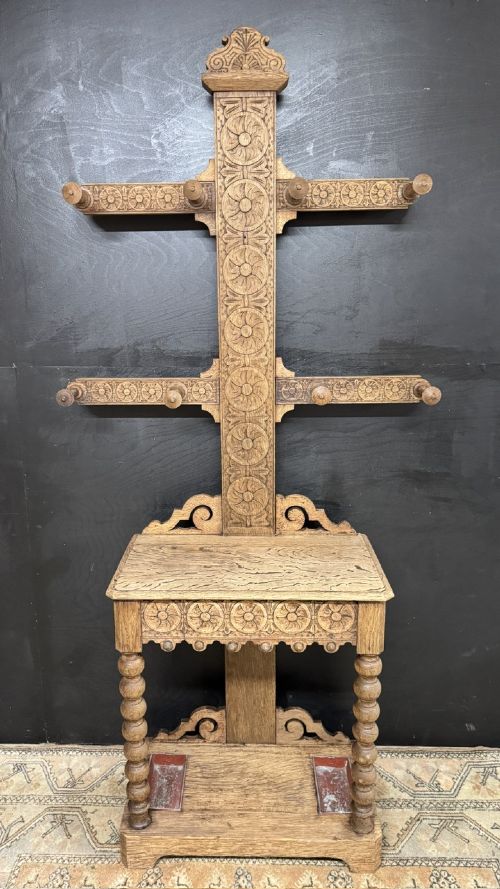
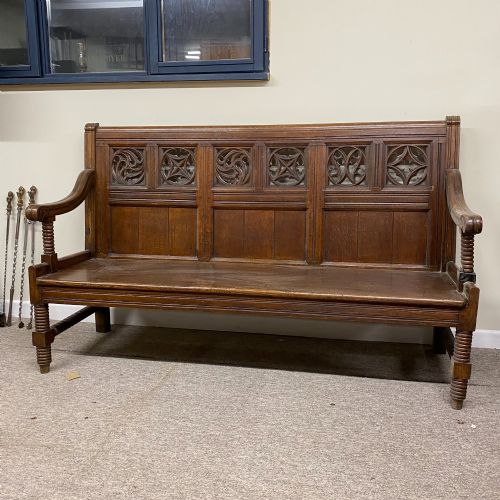
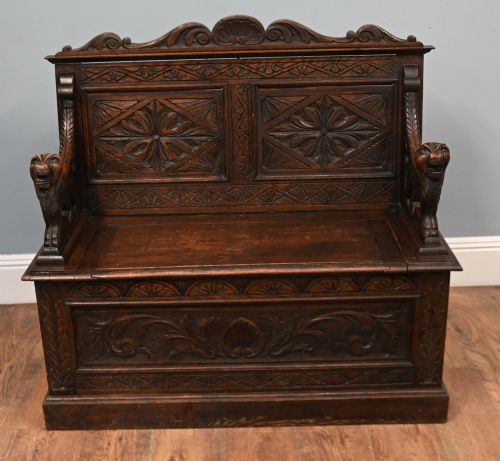
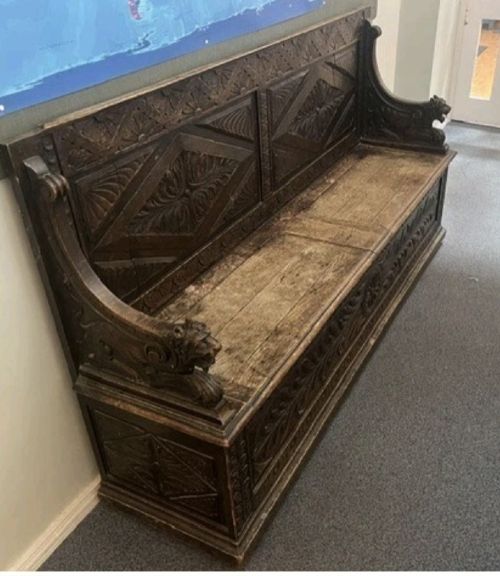
When choosing a victorian oak hall bench, you secure a practical entrance seat that combines robust timber construction with period decorative carving.
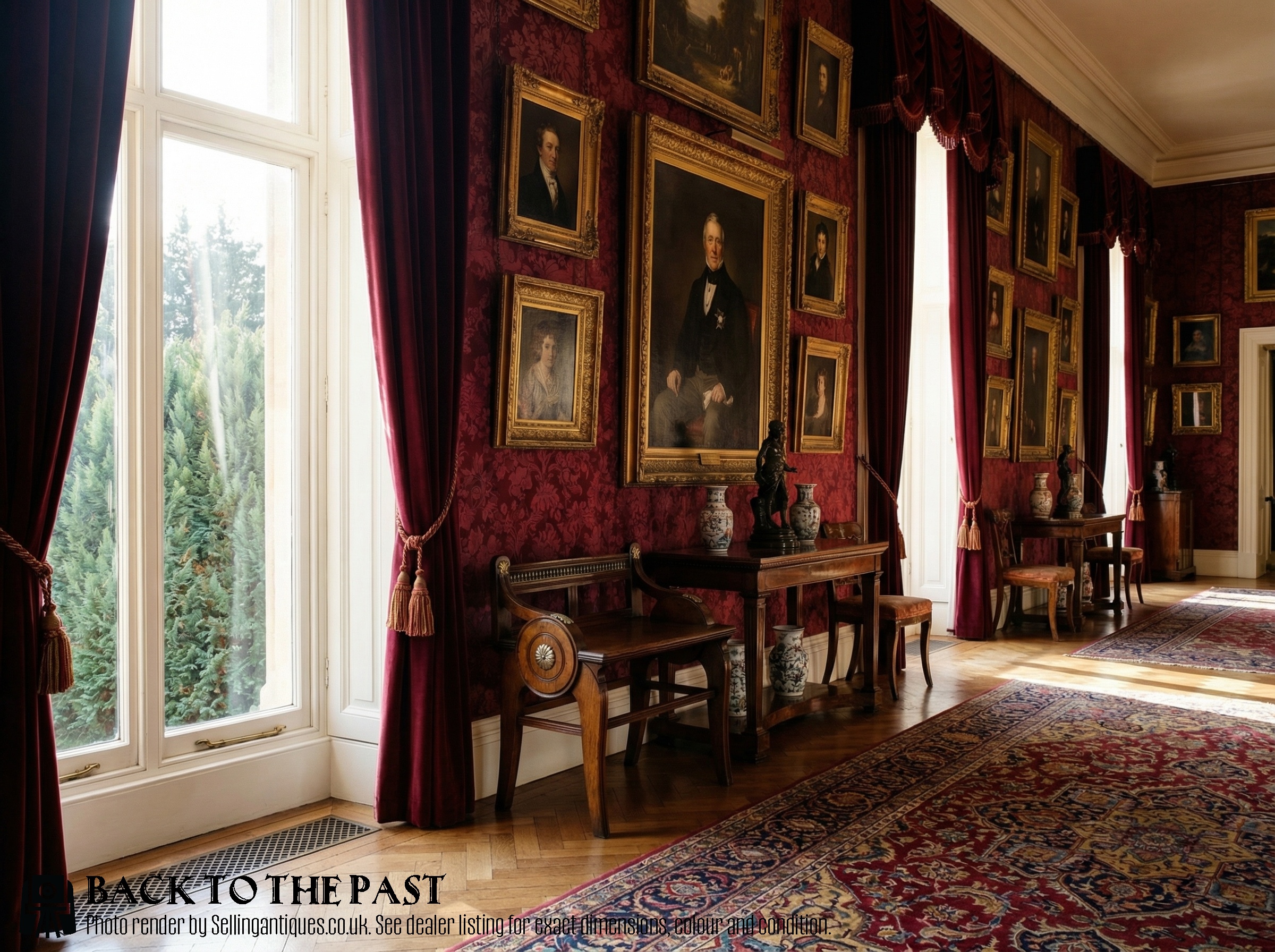
Victorian Oak Hall Bench
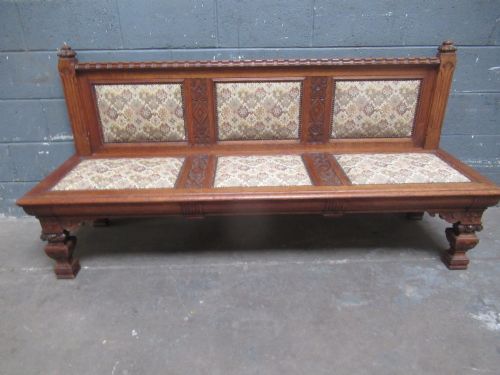
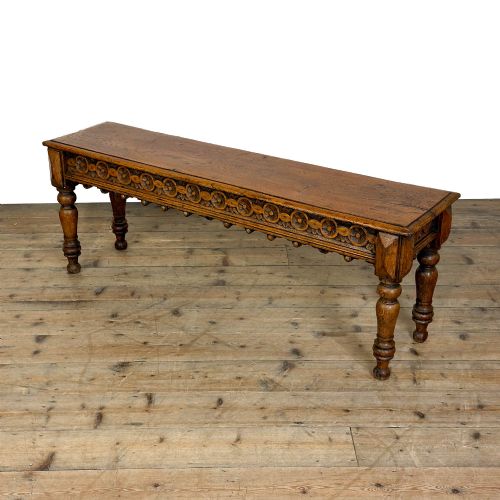
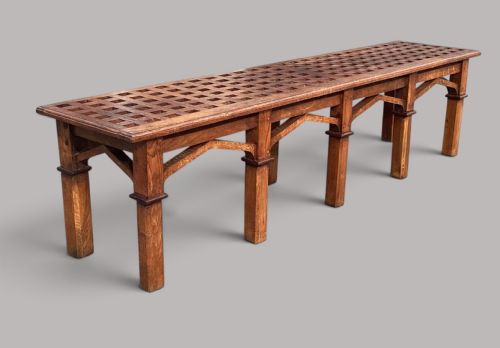
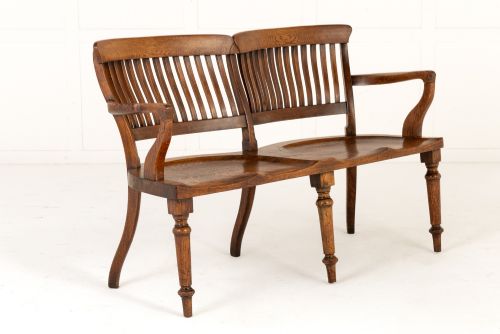
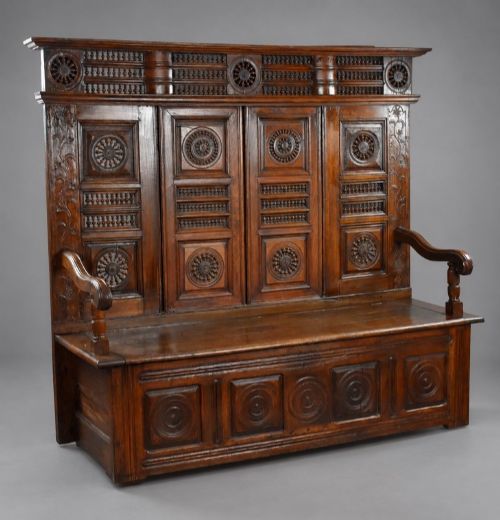
A victorian oak hall bench serves as a functional entranceway seat, often incorporating storage compartments beneath hinged lids or within box settle formats. These pieces appear frequently alongside architectural settles, monks benches, and low window seats designed for narrow corridors.
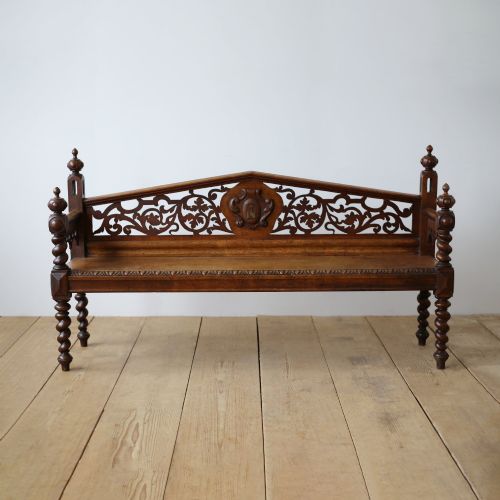
Makers and makers' workshops produced designs influenced by Gothic Revival and Renaissance Revival movements, integrating panelled backs and armrests into domestic furniture. Regional variations such as Welsh country pieces and Scottish baronial designs provide distinctive regional traits within the standard forms.
Materials and Construction Methods
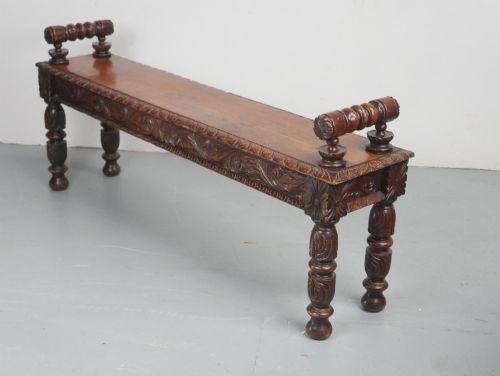
Solid timber forms the primary structure of these items, utilising oak complemented occasionally by secondary woods such as elm for seats. Artisans applied carved surface ornamentation, panel framing, and joinery techniques typical of late nineteenth-century cabinet making.
Hardware details incorporate brass hinges, iron brackets, and occasionally mounted fittings to secure structural elements and storage lids. Upholstered variants introduce leather, fabric, hessian, and velvet to pad the seating areas.
Victorian Oak Hall Bench Retail Price Guide 2026
Typical asking prices for victorian oak hall bench among the pieces listed under this phrase on Sellingantiques today, from the lower quarter to the upper quarter. They describe what is for sale here now, not the wider market.
Several pieces feature carved Green Man faces glaring out from the hallway woodwork to deter unwanted visitors.
Assessing Build Standard and Design
The sophistication of the carved relief work distinguishes standard production items from master-carved examples, particularly where complex motifs like Green Man masks appear. Crisp detailing in the timber panels and well-proportioned architectural framing elevate the presence of individual benches.
Originality of the timber finish, integrity of hinged storage compartments, and survival of authentic metal mounts dictate the preservation status of surviving examples.
GIllows·James Shoolbred & Co.
The Victorian Oak Hall Bench Glossary
- Settle
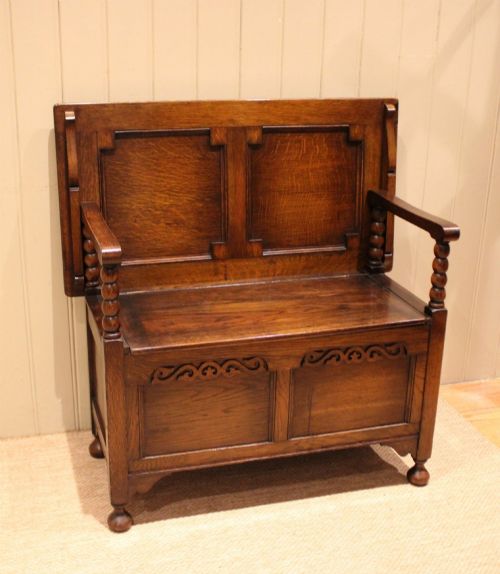
- A wooden bench with a high panelled back, solid arms, and often a hinged box seat below. This form kept draughts away from people sitting in unheated hallways.
- Monks Bench
- A convertible piece of furniture featuring a pivoting back that folds down onto the arms to form a table surface. It combines seating and surface utility in compact spaces.
- Gothic Revival
- An architectural and decorative style that draws inspiration from medieval design. Pieces often display pointed arches, tracery, and heavy mouldings.
- Box Settle
- A seat fitted with a concealed storage compartment beneath the bench board. The integrated box provided a practical place for boots and blankets in domestic entryways.
- Bobbin Leg
- A turned furniture support shaped to resemble a string of wooden bobbins or spools. This decorative turning method appeared frequently on seventeenth-century pieces and later revival furniture.
Victorian Oak Hall Bench: Frequently Asked Questions
What is a monks bench?
A monks bench is a dual-purpose item featuring a backrest that tilts downwards to transform the seat into a small table. This clever adaptation made the form useful in limited entrance spaces.
Such items retained popularity through the nineteenth century as part of the Gothic Revival interest in vernacular domestic history.
How do I use a hall bench today?
A hall bench provides practical seating near an entrance door for putting on shoes, while lift-up seats offer concealed storage for daily accessories. They anchor narrow hallways and reception rooms by adding both a surface and architectural weight.
Placement against a clear wall allows the panelled back and decorative carving to remain visible.
How can I tell the period?
Dating relies on examining the timber patina, joinery methods, and stylistic cues such as Gothic arches or Renaissance Revival strapwork. Late nineteenth-century pieces often display deeper, machine-assisted or hand-finished carving compared to earlier simpler forms.
Hardware types like brass hinges and iron brackets also offer clues to the manufacturing decade.
Are these benches comfortable?
Traditional examples feature solid wooden seats designed for temporary use rather than long lounging. Some variations include upholstered pads covered in leather, velvet, or fabric to soften the seat.
Loose cushions can be added easily without altering the underlying antique woodwork.