
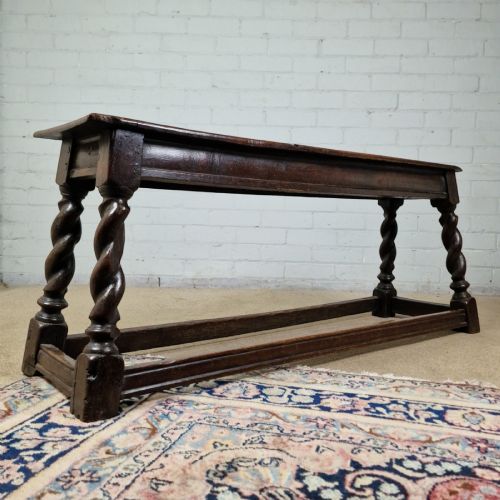
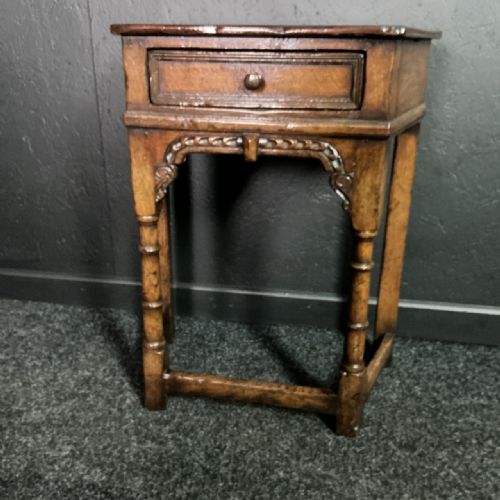
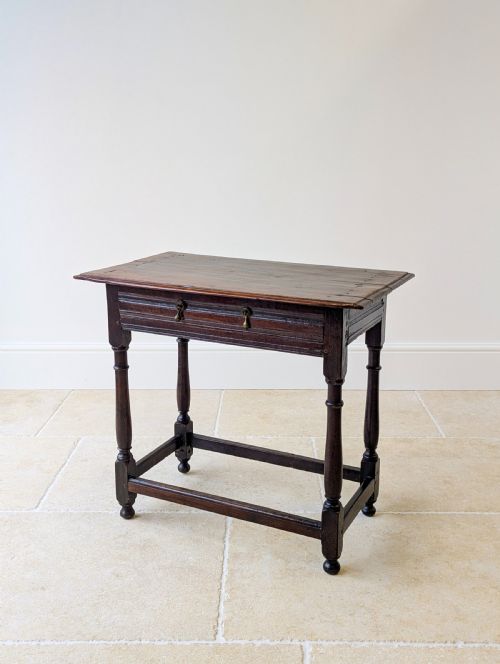
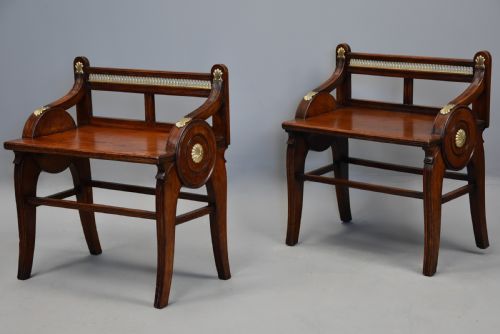

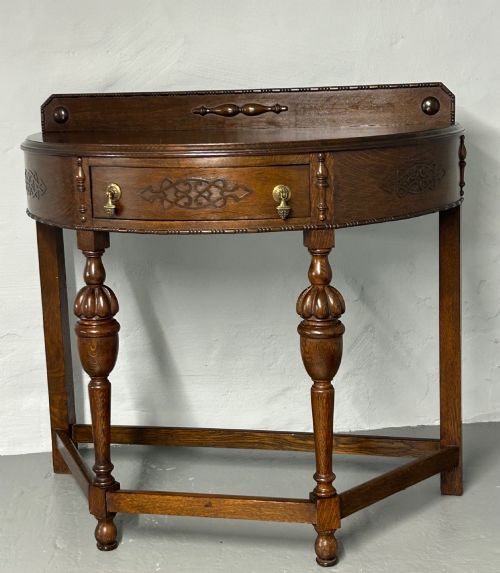


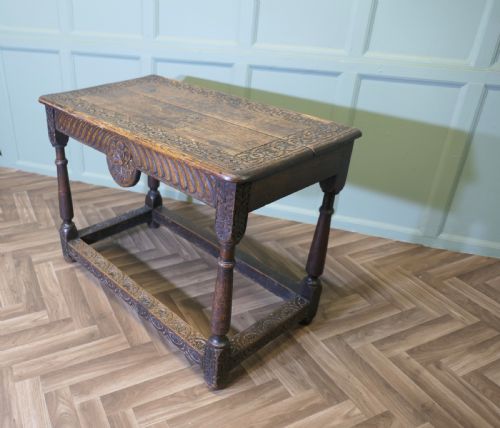


Carved Oak Hall Stool
A carved oak hall stool is a sturdy seat designed for a passage or entryway, combining practical function with robust historic craftsmanship.
Carved Oak Hall Stool
A carved oak hall stool sits at the intersection of seating and architectural woodwork, serving as a functional perch in a hallway or landing. When buyers search for a carved oak hall stool, they encounter a range of forms spanning from the seventeenth century through the Victorian era and the nineteen-twenties.
The pieces appearing on this page include long benches, window seats, joint stools, and side chairs fashioned in styles from Jacobean Revival to Gothic Revival and Arts and Crafts. Earlier examples show the plain construction of seventeenth-century joinery, while later Victorian interpretations lean heavily into revivalist ornamentation.
Regional variations also emerge within the selection, alongside collaborative seating forms that share materials with side tables and occasional tables. Buyers are most likely to meet nineteenth-century Gothic and Victorian interpretations alongside robust seventeenth-century specimens.
Markers of quality
Quality rests in the crispness of the hand-carving and the integrity of the timber selection, where dense grain and rich surface patination elevate a piece. Superior examples display thoughtful proportions and deep, deliberate chisel work rather than shallow, mechanical stamping.
Construction methods also dictate standard, with tight joints and original timber components representing the upper tier of the range. Lesser pieces suffer from excessive later alterations, replaced stretchers, or scrubbed surfaces that have lost their historical character.
Several seventeenth-century occupants likely polished these very oak seats simply by sitting down in heavy wool breeches.
James Shoolbred & Co.
The Carved Oak Hall Stool Glossary
- Joint stool
- A sturdy wooden seat constructed with mortise and tenon joints rather than turned legs held by glue. These pieces date predominantly from the seventeenth century and served various household functions.
- Lowboy
- A small side table featuring one or more rows of drawers beneath the top surface. They appear frequently in seventeenth-century oak inventories.
- Sgabello
- An Italian Renaissance wooden chair featuring a carved solid back and trestle supports instead of four legs. They occasionally surface in nineteenth-century collections.
- Strapwork
- A decorative carving style consisting of flat, interwoven bands that resemble leather straps. This motif defines much of the Jacobean and revivalist ornament.
- Scrubs
- Unpolished or deeply cleaned wooden surfaces that retain a pale, matte finish. This term describes pieces stripped of heavy dark varnishes.
Carved Oak Hall Stool: Frequently Asked Questions
Where did people put these stools?
These seats belonged in entryways, long galleries, and hallways where visitors waited or household members removed outdoor boots.
Their narrow profiles allowed them to sit flush against passage walls without obstructing movement through the home.
How do I spot a fake seventeenth-century piece?
Authentic early pieces display tool marks left by hand adzes and saws, alongside timber shrinkage that matches centuries of age.
Repairs and alterations should look honest and correspond to the period of use rather than attempting to deceive.
Can I use an antique hall bench daily?
Solid oak construction makes these benches remarkably durable for regular seating in modern hallways.
Placing them away from direct heat sources protects the old timber from drying out and splitting.
What is the difference between a bench and a stool?
Stools provide compact seating for single occupants, while benches offer longer platforms designed for multiple people.
Both forms share similar leg turnings and carved aprons when produced within the same stylistic period.