
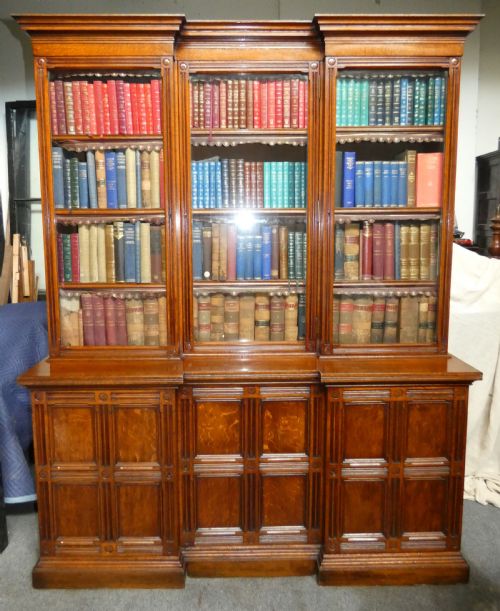
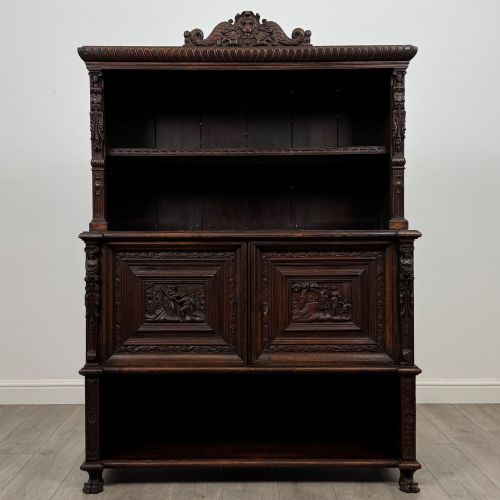
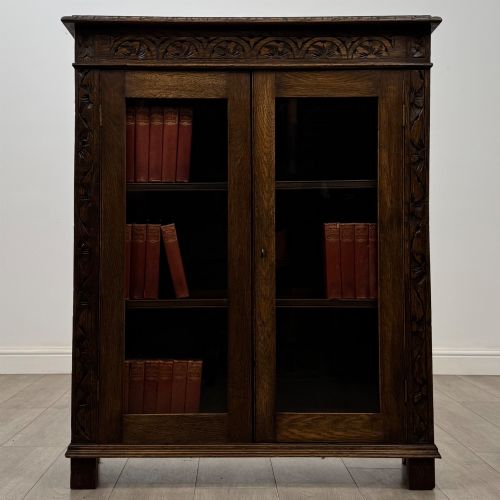
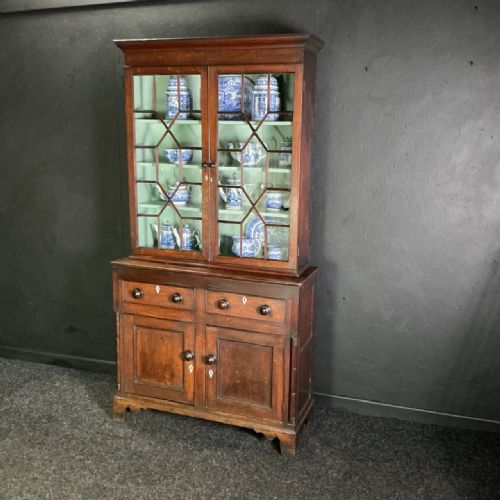


Victorian Oak Display Cupboard
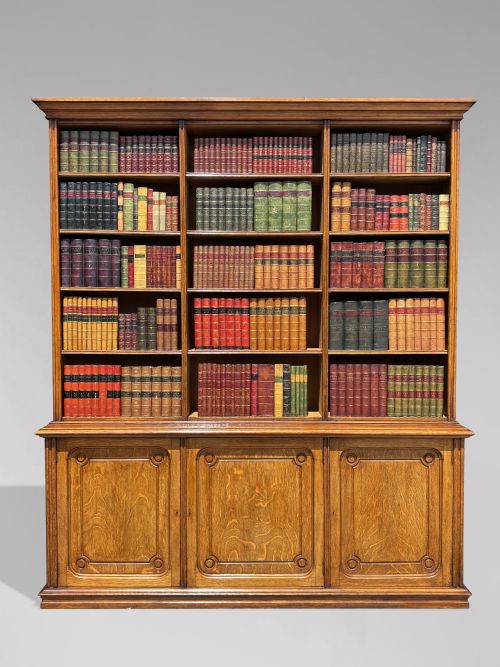
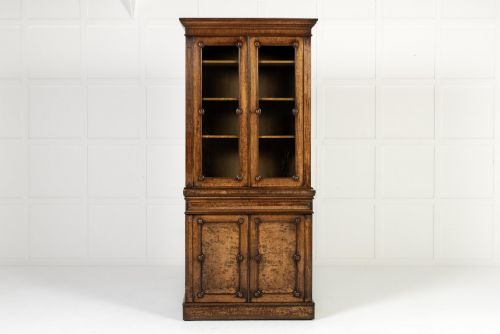
A victorian oak display cupboard brings substantial presence and rich timber grain to a room, storing books and collections behind glass panels.
Victorian Oak Display Cupboard
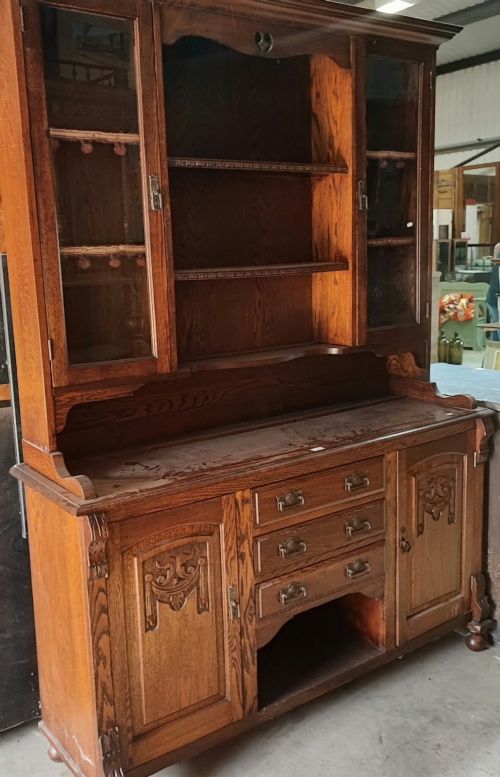
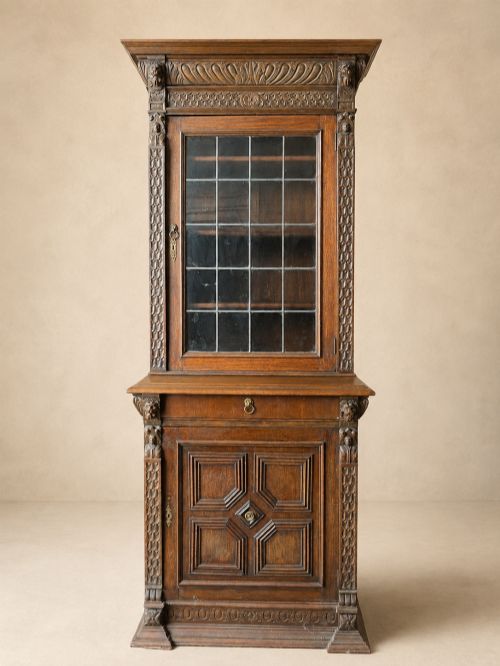
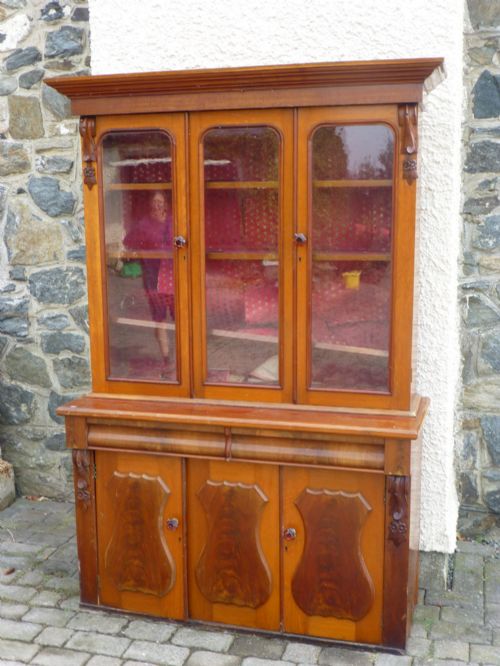
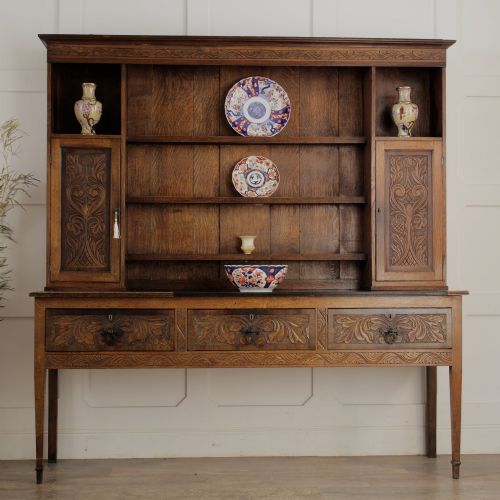
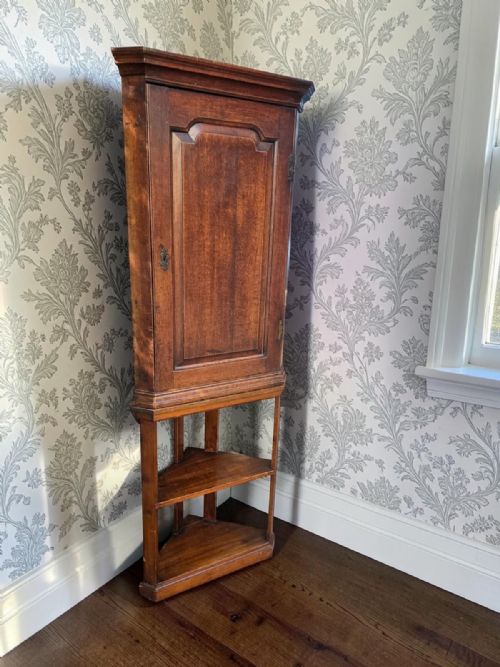
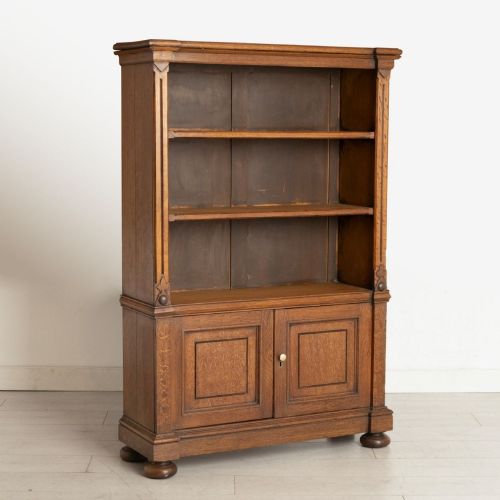
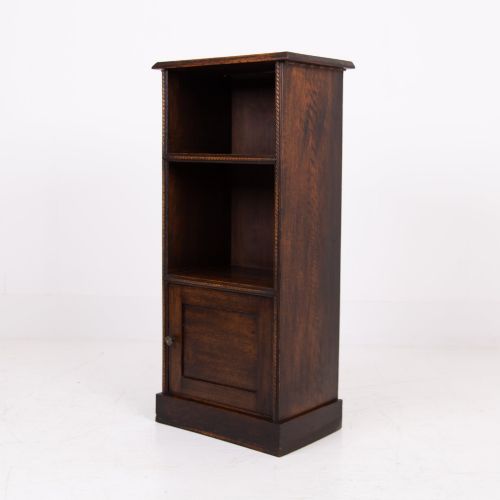
A victorian oak display cupboard spans robust library bookcases, glazed corner cabinets and carved storage units originating through the nineteenth century. Buyers encounter tall library formats alongside smaller wall cabinets and dresser bases fitted with glass doors.
The selection draws on styles ranging from Gothic Revival and Aesthetic Movement to English Country and Jacobean Revival. Pieces frequently combine shelving with enclosed lower cupboards, using timber frames designed to showcase books and ornamental objects.
How They Were Made
Cabinet makers utilised solid oak and pollard oak, often pairing the timber with glass, brass hardware and lead details. Interior shelving was frequently built to be adjustable, resting on timber supports within the main carcass.
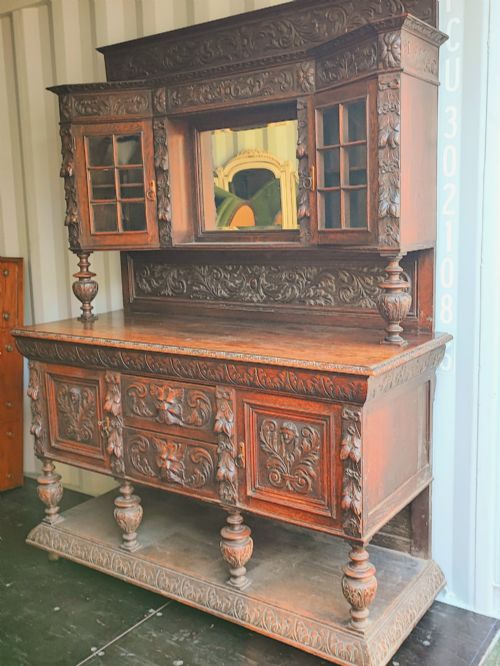
Carving forms a central technique, with workshops applying detailed relief work, green man motifs and Renaissance or Gothic ornamentation directly to the dense wood. Joinery relied on traditional framing methods to support heavy glazed doors and substantial drawer bases.
Styles include Gothic Revival, Jacobean Revival, French Provincial and the Aesthetic Movement.
What Varies in Quality
The standard of a victorian oak display cupboard rests upon the depth of the timber carving and the selection of figured grain, such as pollard oak. Finer examples display crisp relief work and well-proportioned cornices rather than flat, machine-cut decoration.
Construction integrity distinguishes the output of standard workshops from notable firms. Superior pieces maintain alignment in heavy glazed doors, utilise quality brass fittings and show careful internal timber selection for shelves and backboards.
Howard & Sons·John Moyr Smith·Manoah Rhodes & Sons Ltd
The Victorian Oak Display Cupboard Glossary
- Pollard oak
- Timber taken from trees that have been pollarded, producing a highly figured grain with characteristic swirls and knots. This decorative wood was favoured for distinct panels on high-status cabinets.
- Green man
- A sculptural motif depicting a human face entwined with foliage, vines or branches. It appears frequently in carved nineteenth-century woodwork.
- Breakfront
- A cabinet design where the central section projects forward from the side sections. This layout adds architectural depth to large bookcases and sideboards.
- Creedence cabinet
- A medieval-style side table or small cupboard traditionally used for holding items before inspection. Nineteenth-century revivals adapted the form for domestic display.
- Pier cabinet
- A narrow cabinet designed to fit against the wall space between windows. These pieces often feature glazed doors and compact proportions.
Victorian Oak Display Cupboard: Frequently Asked Questions
How do I identify a Victorian oak display cupboard?
Look for dense oak timbers, nineteenth-century construction methods, and characteristic stylistic details such as Gothic tracery or Aesthetic Movement lines. Glazed doors and carved panels are typical of the period.
Examine the interior for adjustable shelving tracks and traditional joinery marks on the backboards to confirm the age and origin of the cabinet.
Were these cupboards used for books or display?
They served both purposes, often combining glazed upper shelving for library volumes with enclosed lower cupboards for general storage. Many formats were built specifically as library bookcases.
Smaller corner cabinets and wall-mounted units were generally dedicated to displaying ceramics, glassware and ornamental collections.
How do I care for antique oak furniture?
Maintain a stable room temperature away from direct heat sources and strong sunlight to prevent the timber from splitting or warping. Dust regularly with a dry cloth and apply occasional appropriate wax.
Ensure heavy glass doors are supported correctly and avoid overloading adjustable shelves to preserve the original structural joinery.