
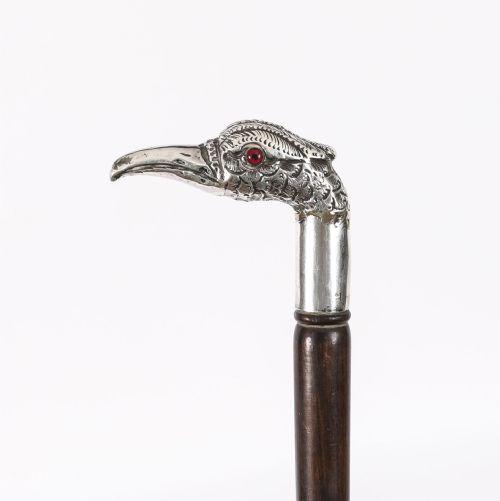


Victorian Novelty Walking Stick
A victorian novelty walking stick combines gentlemanly support with hidden utility, animal carving, or mechanical surprise.
Victorian Novelty Walking Stick
A victorian novelty walking stick is a functional cane that incorporates animal heads, secret compartments, or mechanical gadgets. When searching for this phrase, buyers encounter items produced during the nineteenth century and the Edwardian era.
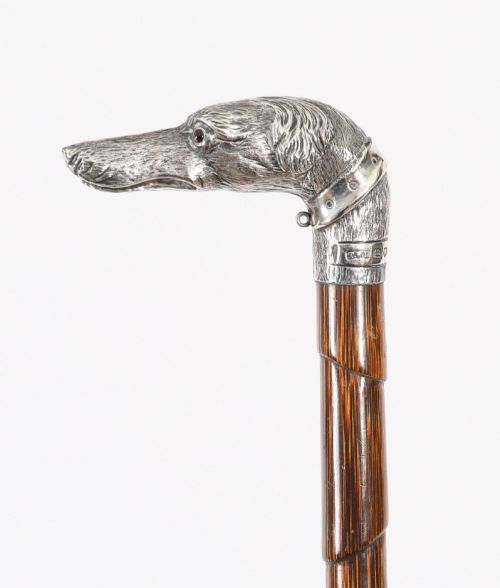
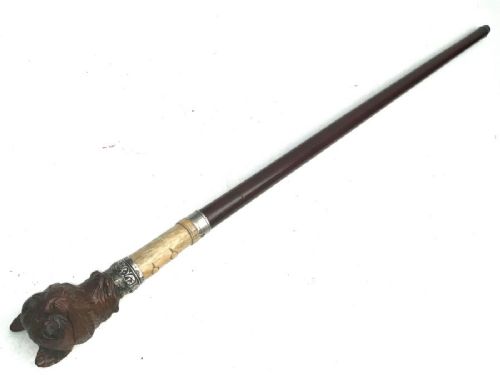
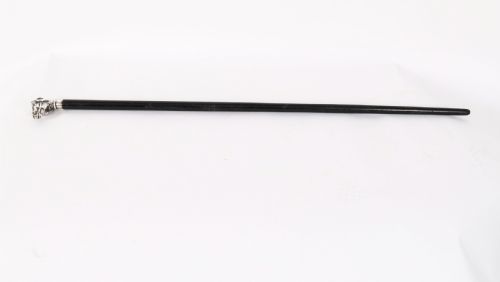
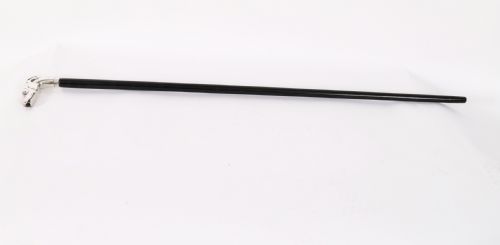
The common forms include silver-mounted animal handles like greyhounds, horses, boars, and bears, alongside functional gadgets such as swords, corkscrews, snuff boxes, watches, telescopes, and musical instruments.
Originating largely from British, French, and Black Forest workshops, these pieces reflect the Victorian appetite for witty ornamentation and disguised utility in everyday gentlemanly accessories.
Materials and construction methods
Makers utilised dense timbers such as hardwood, snakewood, malacca, and bamboo for the shafts, pairing them with handles carved from fruitwood, horn, bone, and ivory.
Metalwork played a central role, with silver mounts adorning animal heads and brass components securing internal mechanisms like hidden blades, corkscrews, watches, and folding telescopes.
Carving and articulation required precise hand craftsmanship, particularly in Black Forest animal studies and mechanical mouths or opening jaws operated by hidden levers.
Recorded forms range from simple swagger sticks to complex walking sticks containing musical flutes, watches, and corkscrews.
What separates the fine examples from standard pieces
Quality rests upon the execution of the carving and the precision of any integrated mechanism. Superior pieces display lifelike anatomical detail in animal handles and smooth operation in hidden gadgets like snuff boxes or watch movements.
The choice of materials dictates the standing of the piece, with hallmarked silver mounts, exotic hardwoods, and integrated instruments such as operational opera glasses or flutes representing higher ambition than plain turned shafts.
The Victorian Novelty Walking Stick Glossary
- Gadget cane
- A walking stick housing a concealed tool, weapon, or instrument such as a sword, corkscrew, or telescope.
- Black Forest
- A regional style of wood carving originating from Germany and Switzerland, noted for realistic animal sculptures like bears and dogs.
- Pommel
- The knob or handle at the top of a walking stick, often shaped as an animal head, clenched fist, or domed cap.
- Swagger stick
- A short, light cane traditionally carried by military officers as a mark of authority rather than for physical support.
- Snakewood
- A heavily mottled, dense tropical hardwood utilised for durable and decorative walking stick shafts.
Victorian Novelty Walking Stick: Frequently Asked Questions
What is a novelty walking stick?
A novelty walking stick is a nineteenth-century cane that includes sculptural handles, animals, or hidden practical functions.
These pieces were carried by gentlemen for fashion and amusement rather than physical support.
How do sword sticks work?
Sword sticks conceal a metal blade inside the wooden shaft, secured by a friction fit or a simple locking mechanism at the collar.
They allowed Victorian gentlemen to travel with hidden personal protection.
What animals appear on handles?
Carved and silver handles frequently depict dogs like greyhounds, Alsatians, and hounds, alongside boars, horses, bears, and rabbits.
These representations draw upon British sporting traditions and Black Forest carving styles.
How do you date these canes?
Dating relies upon silver hallmarks, metalwork styles, and the specific mechanical gadgets popular during the Victorian and Edwardian periods.
Material wear and construction methods also help place an item within the nineteenth century.