

Victorian Neoclassical Table Lamp
A victorian neoclassical table lamp brings classical order and solid weight to a room, cast in heavy brass, bronze or silver plate.
Victorian Neoclassical Table Lamp
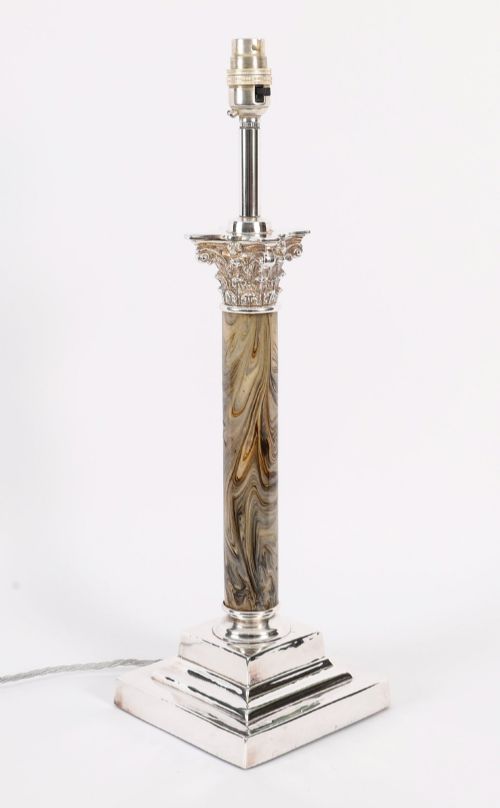
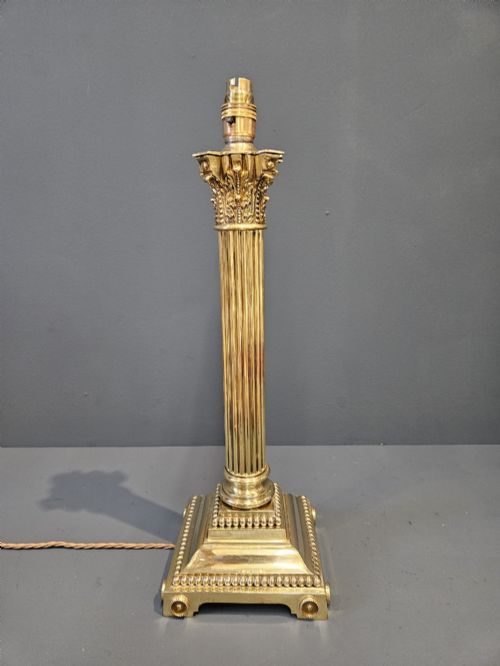
A victorian neoclassical table lamp draws directly from classical architecture, channelling columns, urns and ancient motifs into domestic lighting. These pieces take inspiration from Greek and Roman forms, reinterpreting them for nineteenth-century interiors.
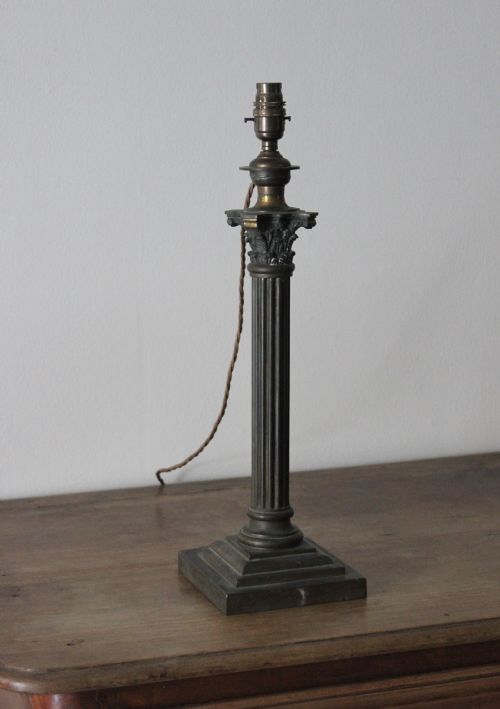
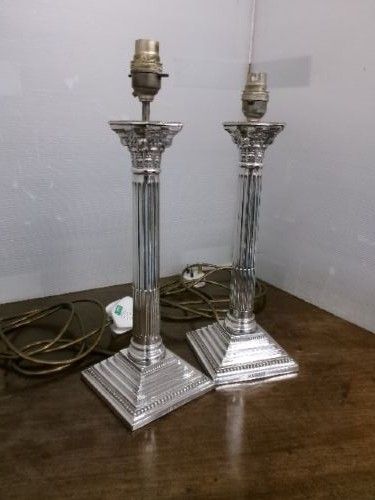
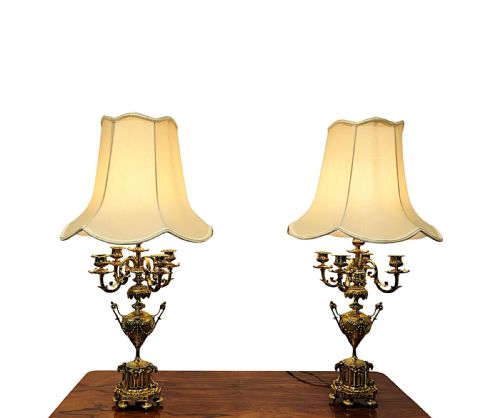
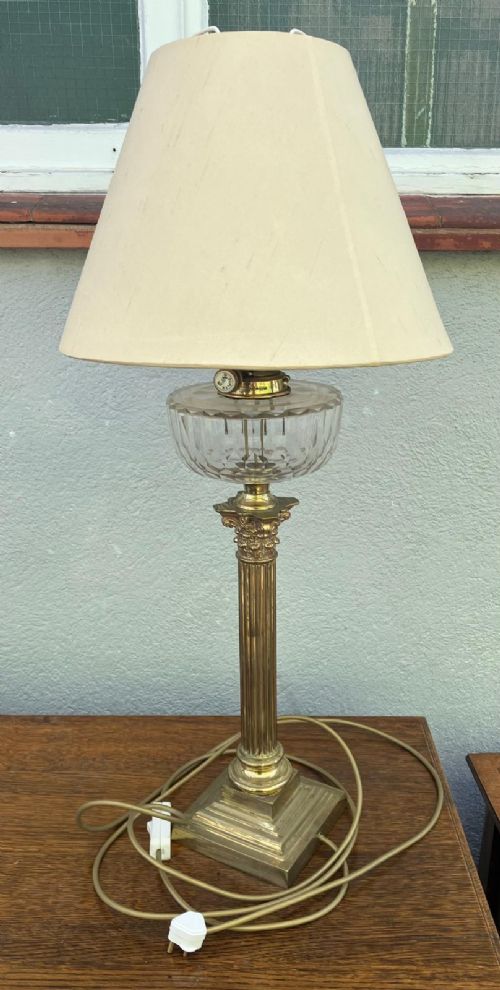
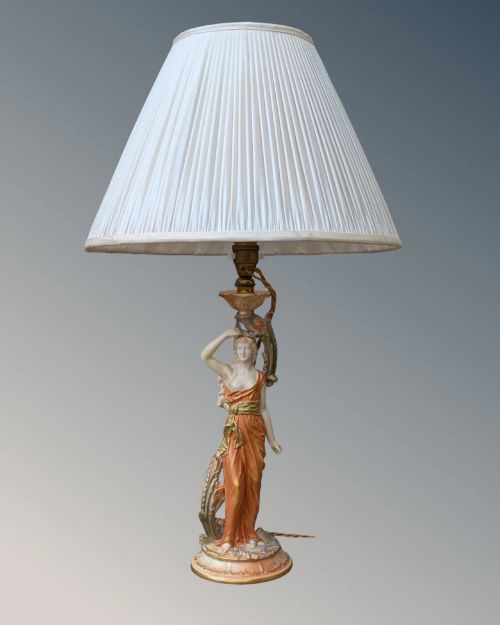
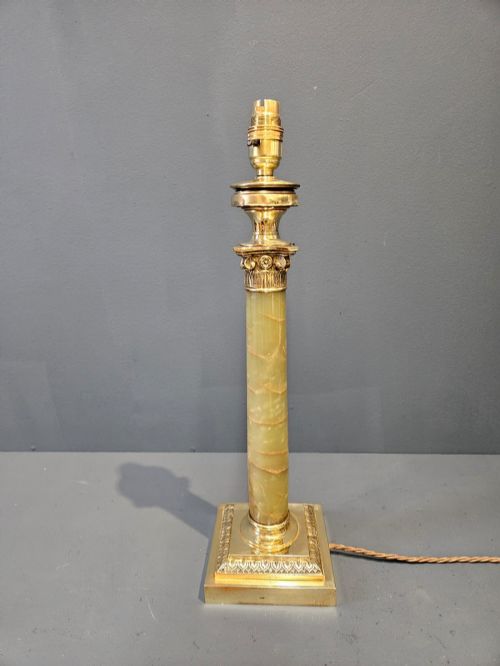
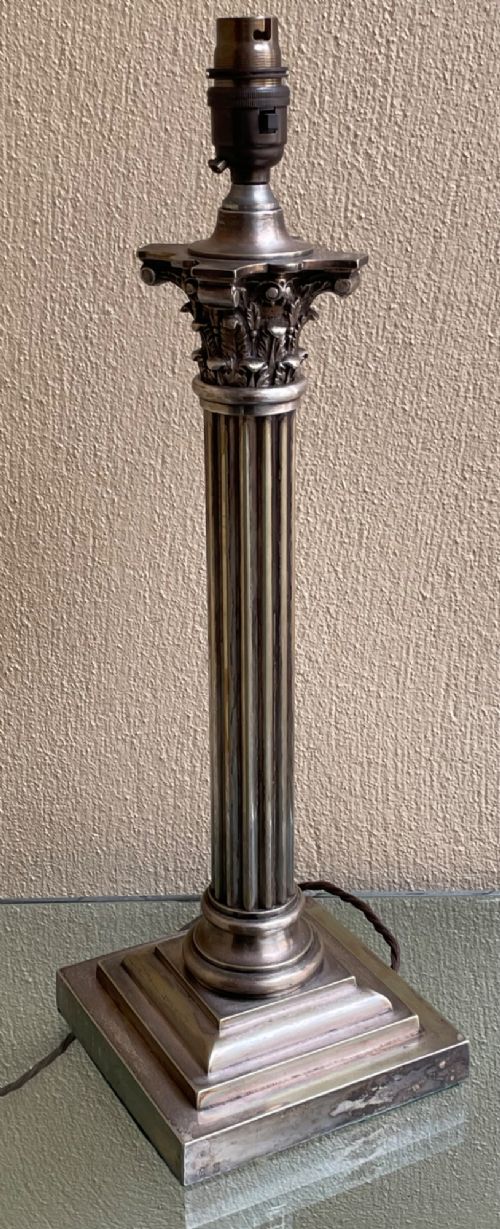
The Corinthian column stands as the most common form on this page, alongside ionic columns, ewers and figural bases. Many examples began life as oil lamps or candelabra before conversion to electricity during later adaptations.
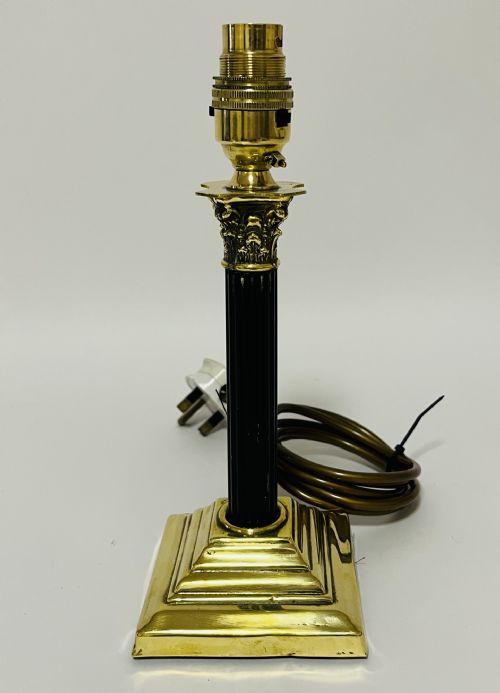
Materials lean heavily toward the durable and the lustrous, combining cast brass, silver plate and bronze with bases of marble or onyx. The resulting objects carry substantial physical presence and height.
Materials and construction
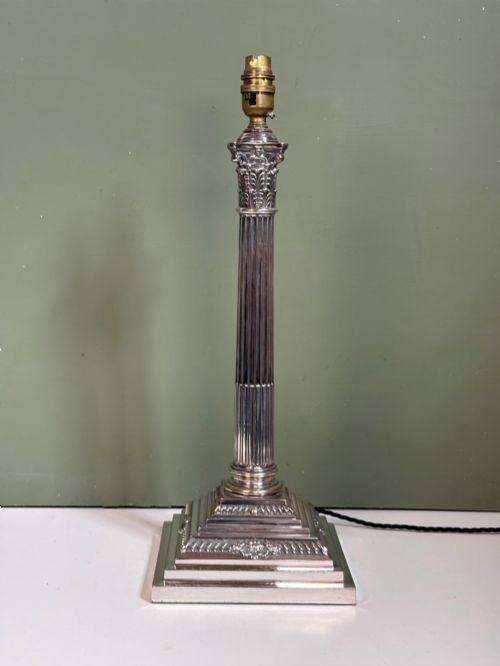
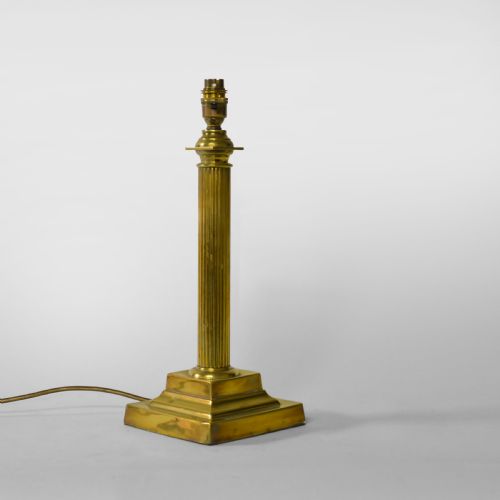
Foundries cast brass and bronze components with crisp detail, capturing acanthus leaves, fluting and stepped bases with precision. Silver plating was applied to base metals, offering the sheen of solid silver alongside the rigidity of brass.
Marble and onyx sections provide dense counterweights to the metal structures above, turned and polished to smooth cylinders or square plinths. Ormolu details add gilded contrast to darker patinated bronze elements.
Conversion work from oil lamps or candlesticks involved boring channels for wiring and securing electrical fittings to original burners or collars, preserving the historic metalwork while updating function.
Victorian Neoclassical Table Lamp Retail Price Guide 2026
Typical asking prices for victorian neoclassical table lamp among the pieces listed under this phrase on Sellingantiques today, from the lower quarter to the upper quarter. They describe what is for sale here now, not the wider market.
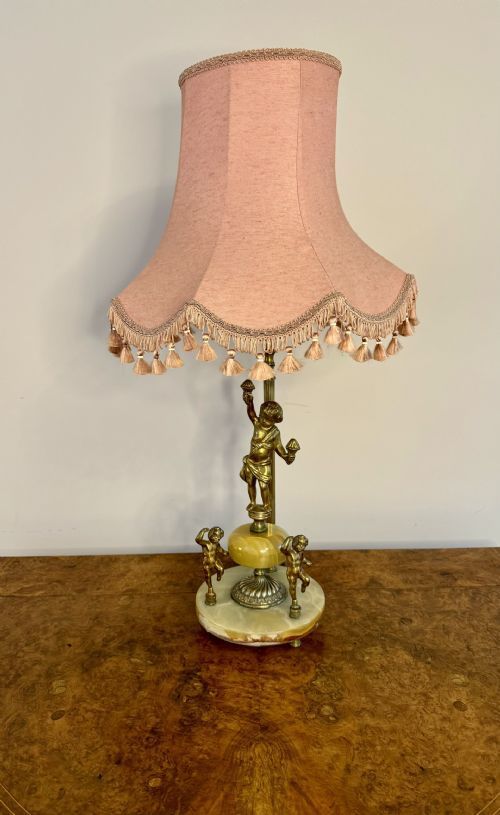
One sculptural lamp depicts peace itself, bearing the signature of a French sculptor who clearly took his columns very seriously indeed.
Evaluating the execution
Quality reveals itself in the crispness of the casting and the depth of the chasing, where sharper fluting and well-defined leaf work distinguish superior models from softer, mass-produced counterparts. Weight matters too, as thicker gauge metals and substantial stone bases ensure stability.
The integrity of the original plating or patina dictates much of the character, with even wear and warm oxidation holding greater appeal than harsh chemical stripping. Maker marks and stamps add documentary weight to the finest pieces.
Harrison Brothers & Howson·Jean-Jules Cambos·Royal Worcester·GS
The Victorian Neoclassical Table Lamp Glossary
- Corinthian column
- A classical architectural order featuring an ornate capital decorated with rows of acanthus leaves. This column style dominates the lamp bases found here.
- Ormolu
- Finely ground high-carat gold mercury-gilded to a bronze or brass object. It yields a rich, warm yellow lustre that resists tarnishing.
- Ewer
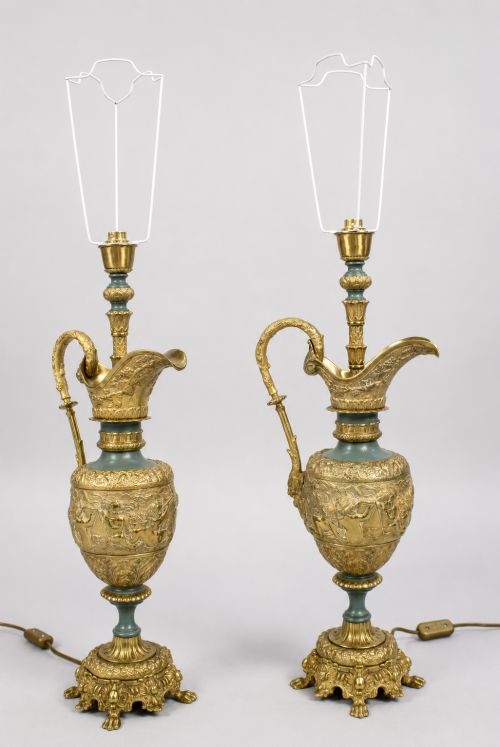
- A large jug with a wide spout and handled body, often adapted into a sculptural lamp base. These pieces lean toward decorative ornamentation rather than strict architectural symmetry.
- Silver plate
- A thin layer of silver fused or electroplated onto a base metal such as copper or brass. It provided households with the appearance of solid silver at a lower cost.
- Ionic column
- A classical column style distinguished by scroll-shaped ornaments known as volutes on its capital. It offers a slightly lighter silhouette than the Corinthian alternative.
Victorian Neoclassical Table Lamp: Frequently Asked Questions
Were these always electric lamps?
Most pieces started life as oil lamps, argand lamps or candelabra before being converted to electricity during the twentieth century. Original burners and reservoirs were adapted to house modern wiring and bulb holders.
This conversion process preserves the historic metalwork while allowing the lamps to function safely in modern homes.
How do I clean a brass or silver plated lamp?
Dust gently with a soft, dry cloth to prevent the accumulation of grime in the intricate recesses of the casting. Avoid harsh commercial dips or abrasive polishes that strip away historic patina and thin plating.
For silver plated items, a gentle cream formulated for plated antiques will maintain the shine without damaging the underlying metal.
What is the difference between brass and ormolu?
Brass is an alloy of copper and zinc used widely for its durability and warm golden tone, forming the structural core of many columns. Ormolu refers specifically to gilded bronze or brass where gold was applied using a mercury amalgamation technique.
Ormolu displays a deeper, richer yellow cast compared to standard polished brass.
How do I choose the right shade for a column lamp?
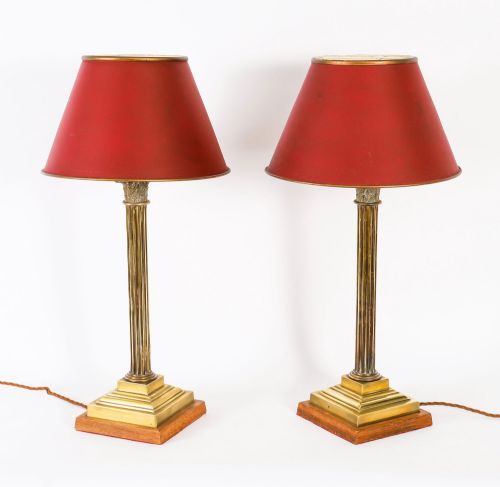
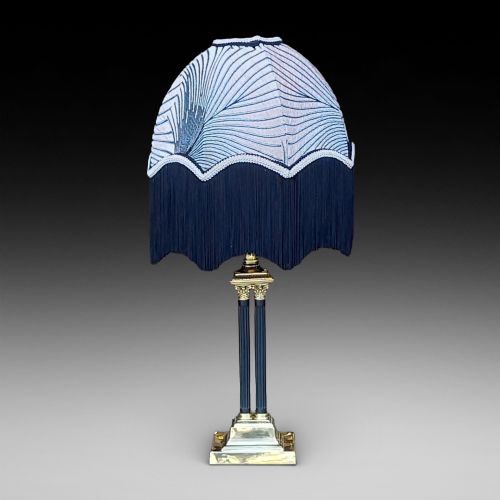
Column lamps require shades that balance the height and vertical emphasis of the heavy metal or marble base. Traditional fabric shades with simple pleats or tailored edges complement the classical proportions without overwhelming the capital.
The diameter of the shade should generally match or slightly exceed the widest part of the base.