


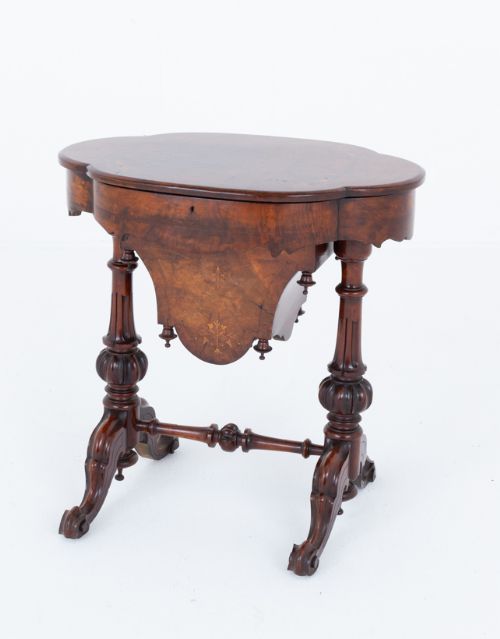


Victorian Needlework Basket
These Victorian needlework basket pieces are nineteenth-century wooden and papier-mâché tables and caskets designed for domestic handiwork and storage.
Victorian Needlework Basket
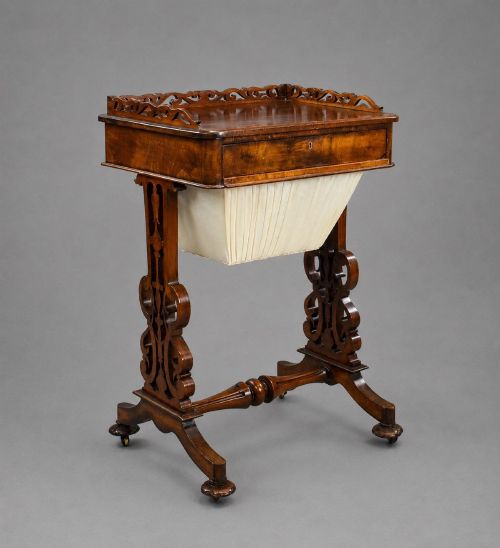
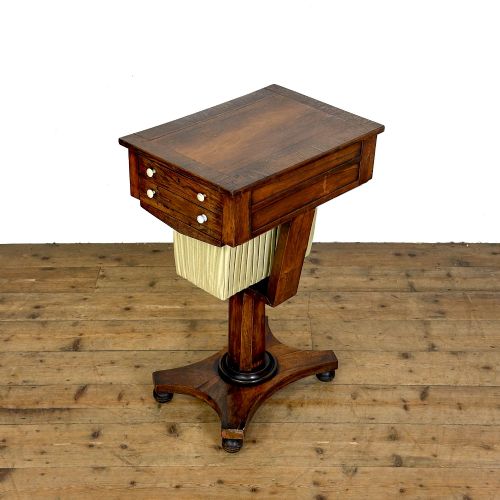
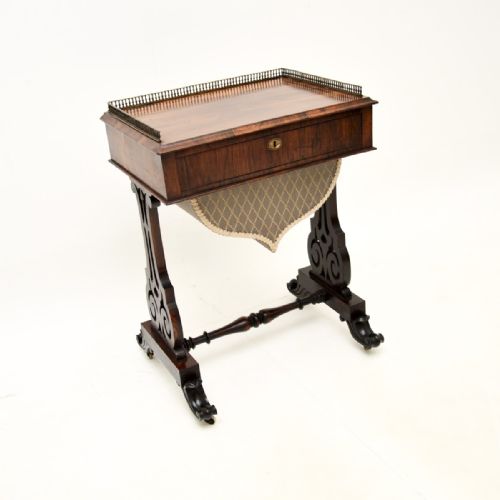
When you search for a victorian needlework basket, you encounter nineteenth-century occasional tables, sewing tables, and caskets designed for domestic handiwork. These pieces provide fitted compartments and drop-leaf surfaces intended for sewing materials and small crafts.
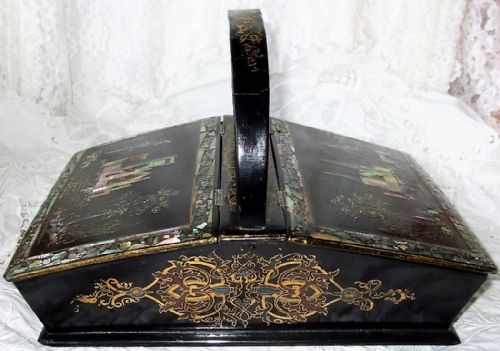
The most common forms on this page are rosewood, mahogany, and burr walnut work tables alongside papier-mâché caskets. Many examples combine storage compartments with games boards or act as versatile lamp tables within nineteenth-century interiors.
Makers utilised various regional aesthetics, ranging from English country house furniture to French restoration designs and Tunbridge ware. The forms span from compact caskets placed on surfaces to freestanding occasional tables with supporting pedestals.
What Varies in Quality
The refinement of timber selection and the complexity of internal storage compartments distinguish finer examples from standard production. Superior tables feature carefully matched burr walnut or rosewood veneers and intricate internal fittings.
Decorative embellishments such as detailed Tunbridge ware or mother-of-pearl inlay require high precision, elevating the standard of individual caskets and tables. The structural integrity of drop-leaf mechanisms and pedestal bases also determines the overall standard.
Periods represented span from the 1850s through to the 1890s, alongside William IV and Regency styles.
The Victorian Needlework Basket Glossary
- Work Table
- A freestanding table equipped with drawers or fabric bags designed to hold sewing equipment and needlework supplies.
- Tunbridge Ware
- A type of decorative woodwork characterised by tiny mosaic tiles formed from different coloured woods to create pictorial scenes.
- Papier-mâché
- A composite material made from paper pulp and binders, moulded and lacquered to form durable caskets and small boxes.
- Drop-Leaf
- A table design featuring hinged flaps on the sides that can be raised to extend the surface area.
- Games Table
- A dual-purpose table featuring an integrated board surface for chess, backgammon, or cards alongside sewing storage.
Victorian Needlework Basket: Frequently Asked Questions
What is a Victorian needlework basket?
A Victorian needlework basket refers to nineteenth-century sewing tables, occasional tables, and caskets designed to hold threads, needles, and fabric.
These pieces combine functional internal compartments with decorative wooden or papier-mâché outer cases suited for period interiors.
How were sewing tables used?
Victorians used these tables for holding sewing equipment, embroidery supplies, and small craft projects during leisure hours.
Many designs also functioned as occasional tables or games tables with integrated boards for chess and cards.
What woods are common?
Rosewood, mahogany, walnut, and burr walnut appear frequently across nineteenth-century sewing tables and caskets.
Cabinet makers selected these timbers for their decorative grain patterns and structural stability.
What is Tunbridge ware?
Tunbridge ware is a specialised form of decorative woodwork featuring mosaic designs made from numerous small wood species.
This technique creates geometric patterns and pictorial scenes on the lids of needlework caskets.
Are these tables freestanding?
Many examples are freestanding occasional tables featuring central pedestals, pillar supports, or four-legged bases.
Smaller casket versions sit upon tabletops rather than standing directly on the floor.