



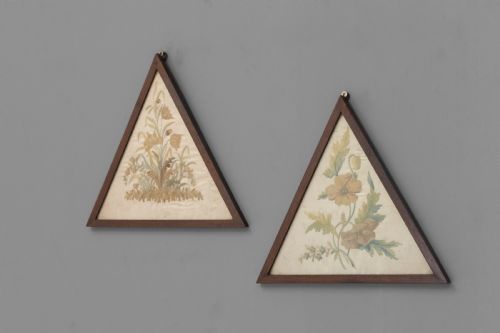
Victorian Needlepoint Picture
These Victorian needlepoint picture examples capture nineteenth-century domestic handwork through wool on canvas, framed for wall display.
Victorian Needlepoint Picture
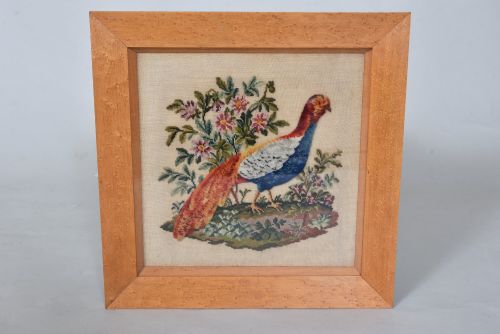
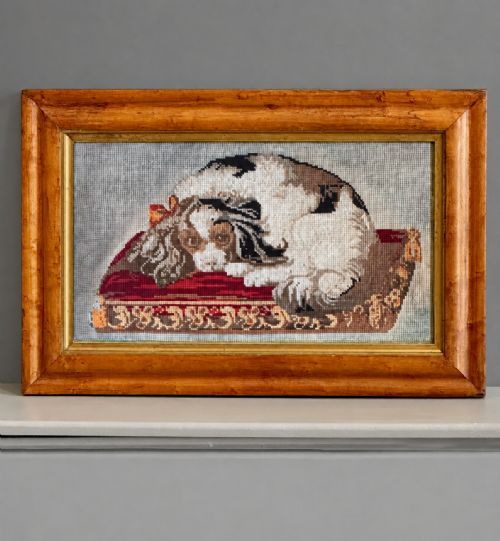
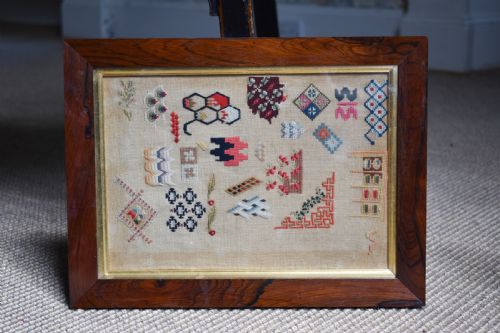
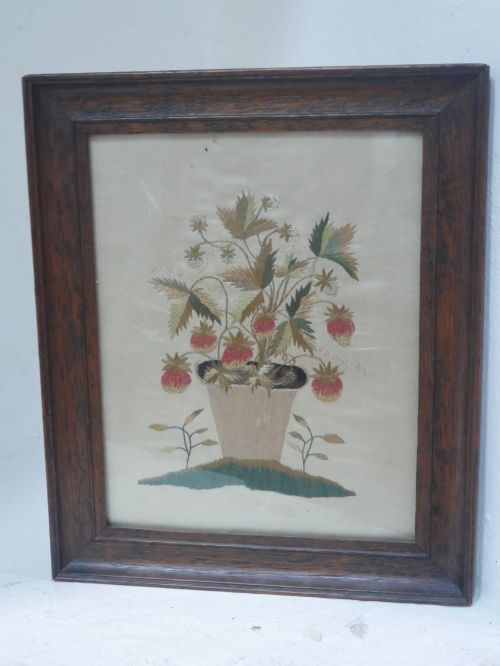
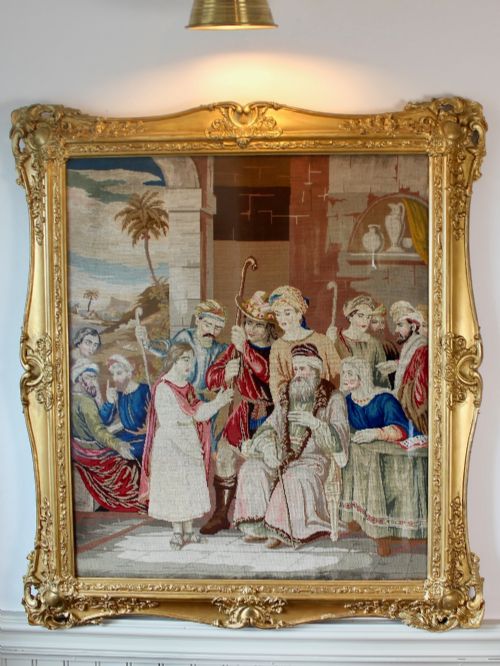
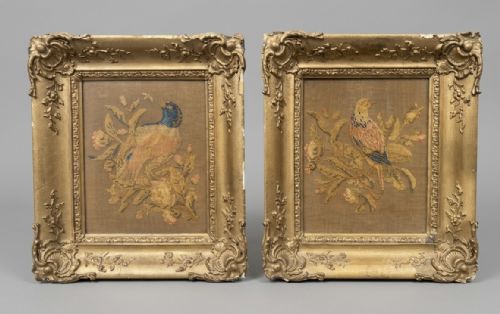
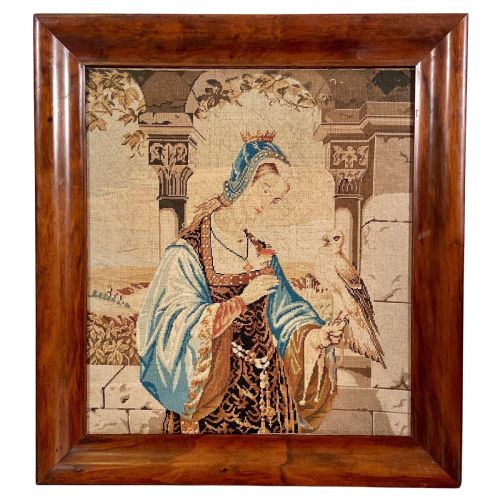
A victorian needlepoint picture comprises textile wall art worked in wool upon canvas ground, usually framed behind glass in timber. These framed works span the nineteenth century, including specific dates such as 1848, 1860, 1865, and 1890.
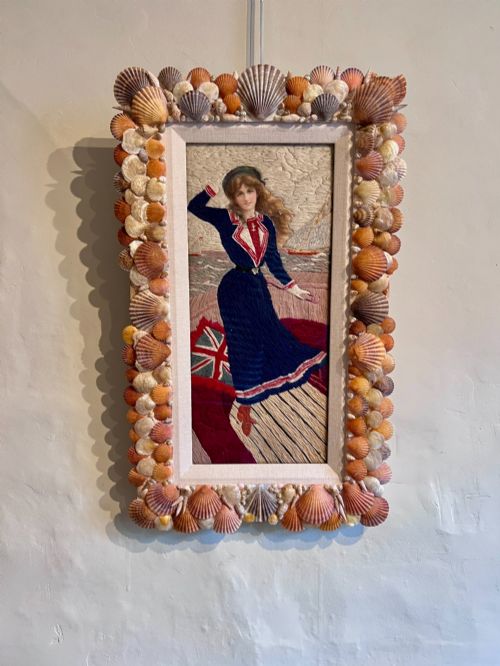
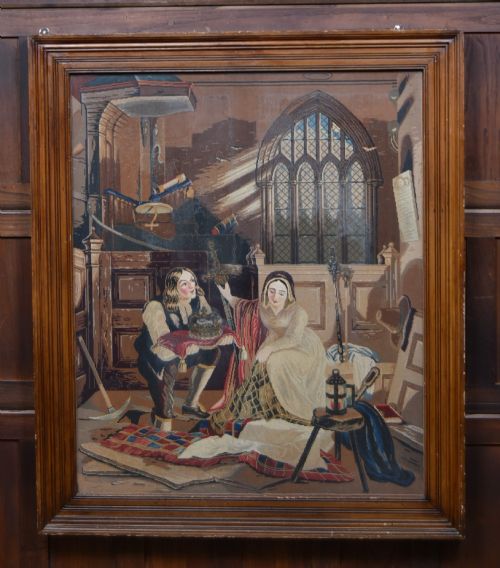
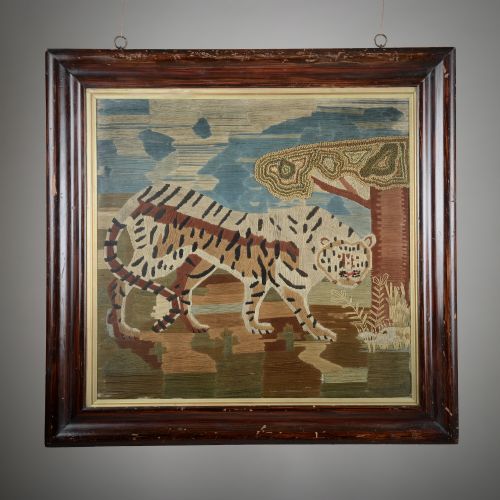
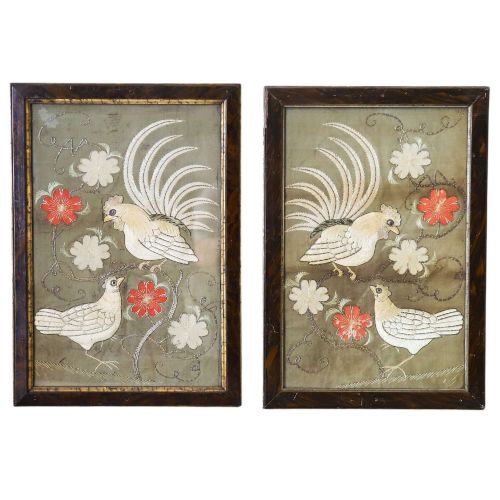
Subjects range widely across the period styles represented on this page. Examples depict narrative scenes like Little Red Riding Hood, classical female portraits, courtly maidens, hunting falconry subjects, medieval-style tapestries, and sailor girl woolies.
The dominant forms are framed wall art and textile wall art housed in materials such as rosewood and walnut frames. Pieces display Victorian, Victorian folk art, and Gothic revival stylistic influences.
How they were made
Makers stitched wool yarn through canvas mesh using specific embroidery techniques such as gros-point and general needlework. The resulting textile surface forms the visual picture.
Finished needlepoint works were mounted into wooden surrounds, occasionally utilising timber such as walnut or rosewood. Protective glass was placed over the textile to preserve the woolwork within the frame.
Victorian Needlepoint Picture Retail Price Guide 2026
Typical asking prices for victorian needlepoint picture among the pieces listed under this phrase on Sellingantiques today, from the lower quarter to the upper quarter. They describe what is for sale here now, not the wider market.
Someone spent countless winter evenings stitching a sailor girl out of pure wool, entirely unaware she would travel across the centuries to a digital screen.
What varies in quality
Quality rests upon the precision of the wool stitching and the complexity of the narrative or portrait depiction. Finer needlepoint utilises denser work to render facial expressions and details in subjects like courtly maidens or classical portraits.
The material integrity of the framing timber, such as rosewood or walnut, contributes to the overall standard of the piece. Preservation of the wool colours beneath the protective glass also distinguishes finer examples from heavily faded items.
The Victorian Needlepoint Picture Glossary
- Gros-point
- A type of needlepoint embroidery worked with a coarse yarn on a stiff canvas mesh. This technique forms the textured surface seen in nineteenth-century tapestry pictures.
- Woolie
- A form of sailor folk art embroidery created using wool yarn. These pieces frequently depict maritime subjects such as sailors and ships.
- Gothic Revival
- An architectural and decorative style drawing inspiration from medieval design. This aesthetic appears in nineteenth-century tapestry wall art with medieval motifs.
- Sampler
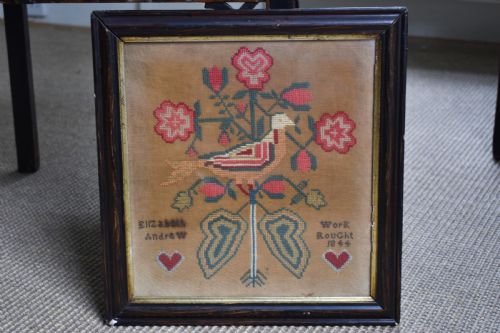
- A piece of needlework demonstrating various stitches and patterns. Nineteenth-century examples often incorporate alphabets or decorative motifs within a frame.
Victorian Needlepoint Picture: Frequently Asked Questions
How should I hang a needlepoint picture?
Protect the woolwork by avoiding direct sunlight, which fades the yarn colours over time. Hang the piece on an interior wall away from moisture sources.
Ensure the timber frame and glass are securely supported by appropriate fixings suitable for the weight of the wood and canvas.
What subjects appear in these textiles?
The needlepoint pictures depict a variety of human figures and narrative scenes. Common subjects include classical portraits, courtly maidens, falconry hunting scenes, and literary characters.
Other examples show maritime themes like sailor girls, alongside medieval-style compositions and samplers.
How do I date a nineteenth-century needlepoint?
Examine the framing materials and construction techniques alongside the style of the woolwork. Rosewood and walnut frames often align with specific decades within the nineteenth century.
Subject matter and costume details in portraits also provide clues to whether a piece originates from the 1840s, 1860s, or the 1890s.
Are these pictures always framed?
The listings on this page consist entirely of framed artwork and textile wall art. The canvas is stretched and secured within wooden frames behind glass.
This framing protects the wool embroidery from dust and physical handling while allowing the picture to be hung directly on a wall.