



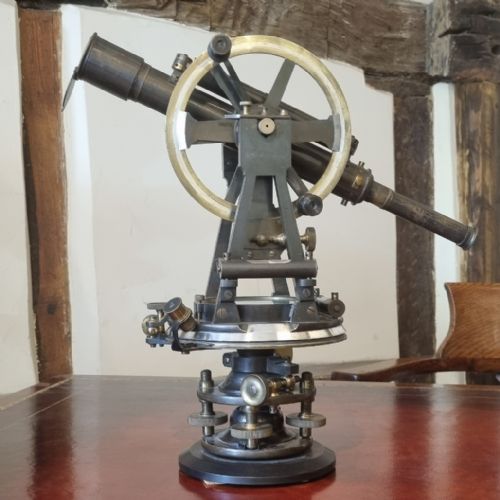

Victorian Navigational Instruments
Victorian navigational instruments are brass-bound tools of exploration and measurement that bring precision and maritime history into any room.
Victorian Navigational Instruments
Victorian navigational instruments comprise pocket compasses, tabletop telescopes, cased octants, and artificial horizon sets designed for maritime and scientific use. These pieces embody the era's reliance on precise measurement for travel and observation across land and sea.
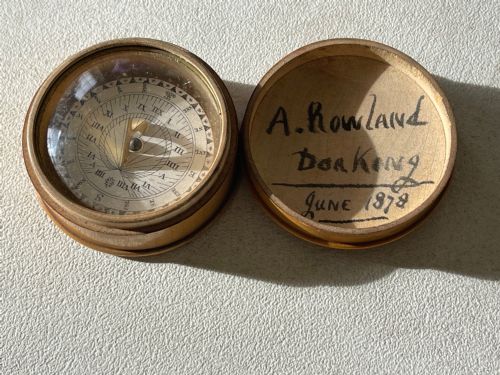
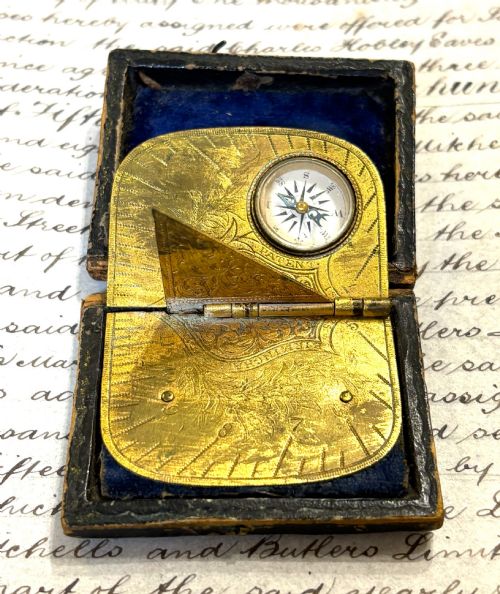
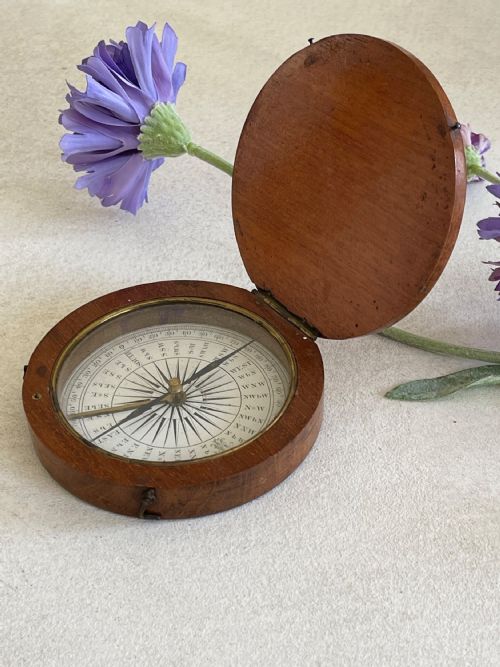
The selection on this page centres primarily on Victorian items, alongside a few pieces from the Georgian, William IV, and later nineteenth and early twentieth centuries. Forms range from small portable pocket compasses and folding sundials to larger desk compasses and extending marine telescopes.
Makers and retailers such as Hughes & Son, Elliott Bros., John Lilley & Son, and John Newman appear among the English and Scottish instruments. Their presence marks the shift from utilitarian tools to finely signed scientific objects housed in mahogany, wood, or leather cases.
Materials and construction
Housed objects rely on fitted cases made from mahogany and other woods, frequently lined with velvet and fitted with paper instruction charts or celestial details. Metalwork involves turning, engraving, and signing directly onto the brass surfaces by makers.
Victorian Navigational Instruments Retail Price Guide 2026
Typical asking prices for victorian navigational instruments among the pieces listed under this phrase on Sellingantiques today, from the lower quarter to the upper quarter. They describe what is for sale here now, not the wider market.
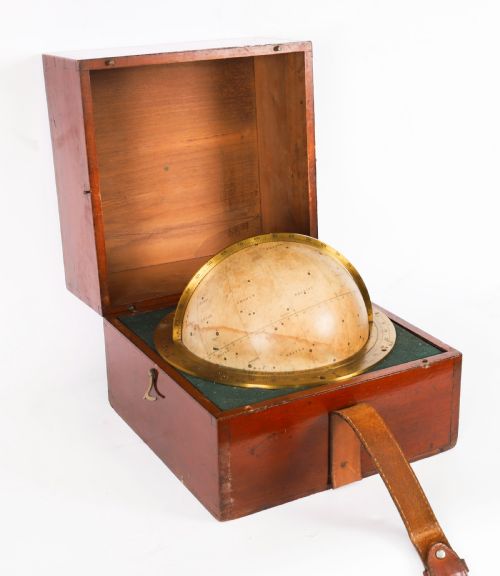
Celestial globes fold into pockets so astronomers could map the stars while walking.
Assessing quality in navigational instruments
Quality rests upon the crispness of the original maker's signature, the legibility of engraved scales, and the precision of movement in joints and compass needles. Finer instruments retain their original fitted wooden cases complete with interior velvet lining and delicate paper details.
The presence of specialised components, such as vernier scales, inclinometers, or artificial horizon sets, separates standard utilitarian pieces from more complex scientific apparatus produced by established London and provincial firms.
Hughes & Son London·Elliott Bros. of London·John Lilley & Son London·John Newman of Regent Street
The Victorian Navigational Instruments Glossary
- Octant
- An early reflecting instrument used to measure the angle between an astronomical object and the horizon for navigation. It employs mirrors and a graduated arc spanning one-eighth of a circle.
- Artificial horizon
- A device used with a sextant or octant on land to determine the altitude of a celestial body when the natural sea horizon is obscured. It often consists of a trough of dark liquid or black glass.
- Inclinometer
- An instrument used for measuring angles of slope, tilt, or elevation relative to gravity. It is frequently incorporated into desk compasses for field calculations.
Victorian Navigational Instruments: Frequently Asked Questions
What are these instruments made of?
These instruments are constructed predominantly from polished brass paired with glass lenses and dials. They are housed in fitted wooden cases made of mahogany and ebony, often featuring velvet linings and paper celestial charts.
Secondary materials include boxwood for scales and nickel plating on specific telescope components. The combination of durable metals and protective wood cases allowed these tools to withstand travel at sea.
How do I date a Victorian telescope?
Dating relies on maker signatures, address details, and construction characteristics such as the number of draw tubes. Telescopes signed by known nineteenth-century London firms often correspond to recorded operating periods of those workshops.
Pagination on accompanying paper labels and the style of the brass lettering also help narrow the timeframe. Examining the case materials and hinge types provides additional context for the production era.
Were these used at sea?
Many of these instruments served functional roles aboard ships or during land surveys. Marine telescopes, octants, and compasses were essential tools for officers calculating position and heading during voyages.
Other items, such as desk compasses and tabletop telescopes, were intended for stationary use in offices or homes. Portable pocket sundials and compasses provided travellers with reliable means of orientation on land.
How should I display a cased compass?
Cased compasses and instruments are best displayed on flat surfaces in stable environments away from direct sunlight and dampness. Keeping them in their original mahogany or wooden boxes protects the delicate brass and paper components.
Opening the cases occasionally allows the velvet linings and interiors to breathe. Positioning them on desks or tables highlights their historical function as scientific and maritime objects.