
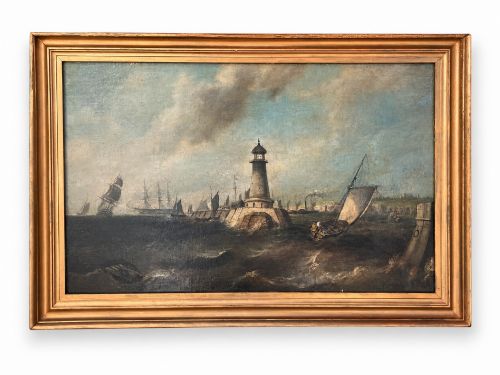


Victorian Naval Ship Painting
A victorian naval ship painting captures the power of historic fleets through detailed maritime scenes.
Victorian Naval Ship Painting
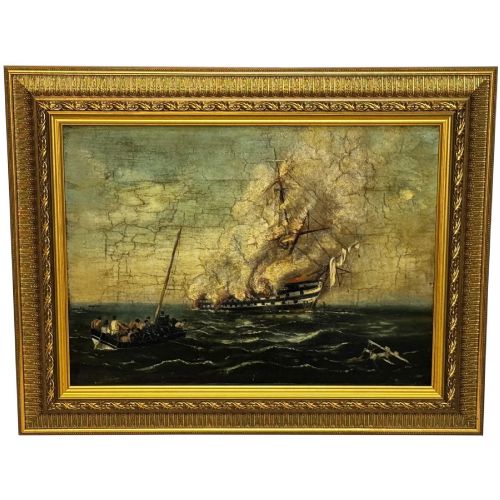
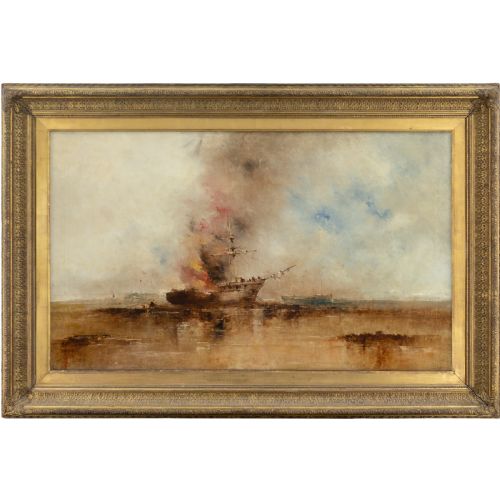
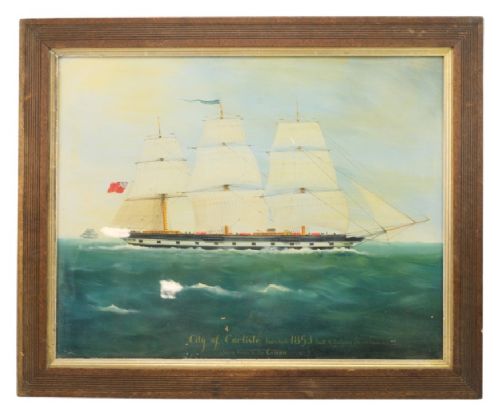
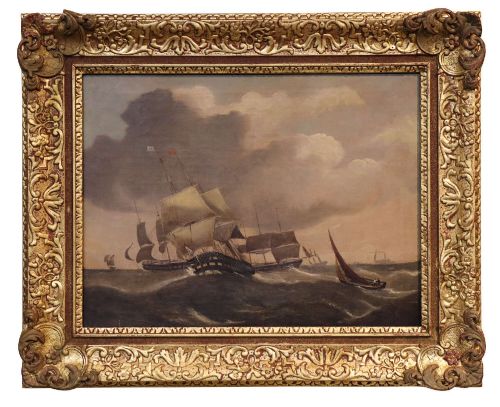
A victorian naval ship painting encompasses framed oil paintings and watercolours depicting maritime subjects from the nineteenth century.
The works record royal yachts, clippers, cruisers and merchant vessels operating in coastal waters and heavy seas.
Buyers encounter both professional studio works and pieces by named regional artists working across the Victorian and Edwardian periods.
How they were made
Artists worked primarily in oil on canvas or watercolour on paper, capturing water and vessel rigging with fine brushwork.
Many surviving pieces retain their original giltwood and gold leaf frames, often protected beneath glass for watercolours.
Some maritime items extend to functional objects, such as painted pine trunks featuring ship scenes.
One surviving pine chest brings naval art off the wall and straight into domestic storage.
What varies in quality
Quality depends upon the precision of the vessel rigging and the artist's ability to render turbulent water convincingly.
Works attributed to known circles or named painters demonstrate superior handling of light and atmospheric coastal conditions.
The preservation of the original canvas, pigment stability and the condition of the giltwood frame influence overall appeal.
William McAlpine·Nicholas Condy·Charles William Adderton·Marie-Edouard Adam·Ebeneezer Colls·Richard Brydges Beechey·William Langley·WF Mitchell·James Hardy
The Victorian Naval Ship Painting Glossary
- Marine Art
- Depictions of ships, harbours and the sea. This genre encompasses both naval engagements and coastal merchant shipping.
- Oil on Canvas
- Pigment bound in oil applied to stretched fabric. This medium allows for deep tones and rich texture in water and sky.
- Giltwood
- Wood carved and coated with gold leaf or metallic powder. It provides the traditional reflective border for nineteenth century frames.
- Watercolour
- Pigment suspended in water-based solution applied to paper. This medium suits fine maritime detail and washes of coastal light.
- Barque
- A sailing vessel with three or more masts. These commercial and naval ships feature prominently in nineteenth century maritime scenes.
Victorian Naval Ship Painting: Frequently Asked Questions
How do I date a maritime painting?
Examine the vessel types, rigging styles and uniform details depicted in the composition. Documentary titles and artist signatures often provide precise chronological markers.
Frame construction and canvas stamps offer additional physical evidence to narrow down the decade of creation.
Are watercolours as durable as oils?
Watercolours require protection behind glass to prevent fading and moisture damage on the paper support. Oils on canvas withstand environmental shifts better but remain sensitive to extreme temperature changes.
Both mediums survive well when kept away from direct sunlight and damp conditions.
What subjects appear most often?
Royal Navy warships, royal yachts, clippers and steam and sail hybrids dominate nineteenth century maritime works. Scenes range from calm anchorages to ships pounding heavy channel seas.
Local coastal landmarks and specific historical events like troop deployments also feature frequently.
How should I hang these paintings?
Display maritime works on neutral walls away from direct sunlight to protect pigments and giltwood frames. Ensure stable room humidity to prevent canvas slackening or wood warping.
Consider eye-level placement to appreciate the fine rigging and water details.