



Gold Frame Ship Portrait
These gold frame ship portrait pieces capture maritime history in oil and watercolour, bringing authentic nautical heritage straight to your walls.
Gold Frame Ship Portrait
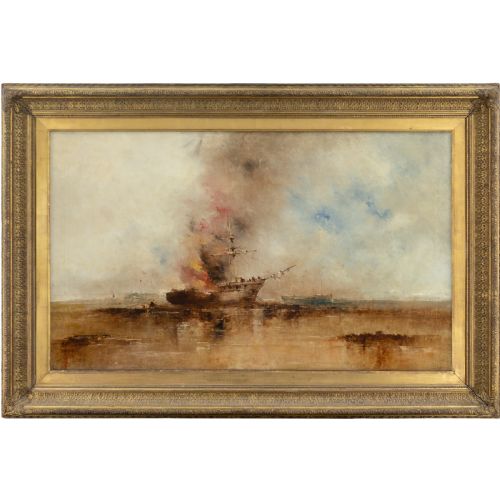
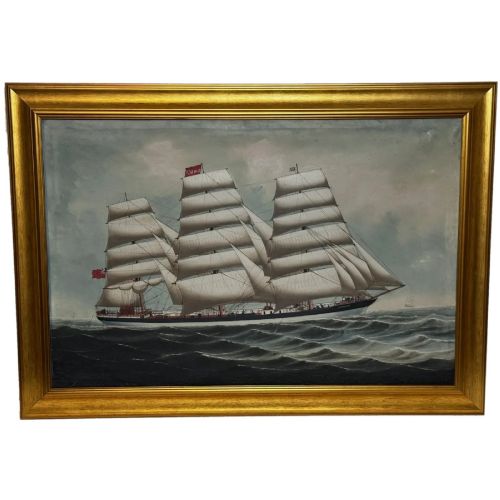
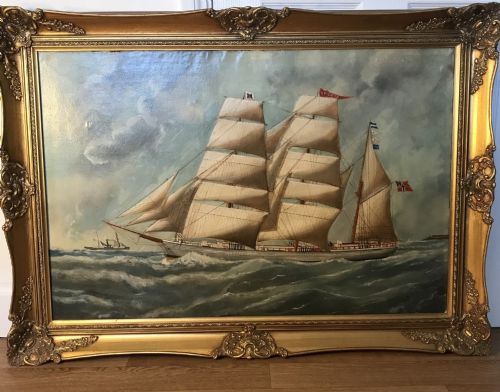
A gold frame ship portrait is a framed maritime artwork depicting vessels upon the water, rendered in oil or watercolour. These pieces span from the nineteenth century through to the mid-twentieth century, capturing historical barques, schooners, and steamships.
The selections available here include British school paintings, China Trade works, and depictions of specific vessels off locations such as Malta, Gibraltar, and the Scottish coast. Collectors encounter various formats ranging from oil paintings on panel and canvas to detailed watercolours.
Subjects frequently record named ships like HMS Alacrity and HMS Victory, alongside merchant vessels and galleons. These works reflect maritime realisms and Victorian marine styles executed across multiple decades.
Materials and construction
Paintings of this type utilise oil or watercolour applied to canvas, paper, wood panels, or card. Artists employed traditional media to capture coastal lighting, water textures, and the intricate rigging of sailing ships.
Surrounding the artwork, frames are constructed from wood finished with gilt, creating the characteristic gold frame presentation. These frames range from simple mouldings to ornate giltwood designs that complement the maritime subject matter.
Materials recorded across these listings include oil, watercolour, canvas, paper, wood, glass, and giltwood.
Assessing quality and execution
Quality rests upon the precision of the maritime draughtsmanship, particularly in the rendering of ship rigging, hull construction, and atmospheric sea conditions. Works by documented marine artists or distinct regional schools show superior handling of light and perspective.
The condition of the canvas, panel, or paper together with the preservation of the original or period gilt frame dictates the overall integrity of the piece. Finer examples display careful attention to historical detail regarding specific vessel types and coastal landmarks.
Reginald Arthur Borstel·Joseph Heard·WF Mitchell·Samuel John Milton Brown·Richard Ball Spencer
The Gold Frame Ship Portrait Glossary
- Giltwood
- Wood carved and coated with gold leaf or a gold-coloured finish. This material forms the primary structure of the decorative frames enclosing these maritime paintings.
- Barque
- A sailing vessel with three or more masts having the fore and main masts square-rigged and the mizzenmast fore-and-aft rigged. This ship type appears frequently in Victorian marine art.
- China Trade
- Paintings produced in treaty ports such as Hong Kong and Canton for Western merchants and sea captains. These works combine European perspective with local craftsmanship.
- Oil on Canvas
- Pigment mixed with drying oil applied to a stretched woven fabric support. This technique provides rich colour depth suited to turbulent seas and dramatic skies.
- Marine Realism
- An artistic style focusing on accurate, detailed representations of ships, water, and maritime weather conditions. Practitioners prioritized technical precision regarding naval architecture.
Gold Frame Ship Portrait: Frequently Asked Questions
What periods do these ship portraits cover?
The works span from the mid-nineteenth century through the Edwardian era up to the mid-twentieth century. Evidence includes dates such as eighteen fifty, eighteen eighty, and nineteen ten.
Represented movements include Victorian marine painting, China Trade production, and nineteenth-century British school artistry.
Which materials are used in these pieces?
Artworks are painted in oil or watercolour upon canvas, paper, wood, and panel supports. The surrounding frames utilise wood and gilt materials.
Compositions incorporate glass for protection on works executed on paper or delicate surfaces.
How do I identify a China Trade painting?
China Trade maritime art often depicts specific Eastern ports, rivers like the Pearl River, or merchant vessels associated with Asian trade routes. These works frequently record precise local topographies.
They reflect the collaborative production methods of nineteenth-century export studios operating in Chinese port cities.
How should I display a gilt frame painting?
Hang the artwork away from direct sunlight and sources of extreme heat to protect both the oil or watercolour medium and the gilt wood frame. Stable indoor humidity prevents wood movement and flaking of the gilt finish.
Ensure wall fixings securely support the weight of the framed panel or canvas.