



Victorian Nautical Instrument
A victorian nautical instrument is a brass telescope, barometer or compass designed for navigation at sea, combining utility with fine nineteenth-century engineering.
Victorian Nautical Instrument
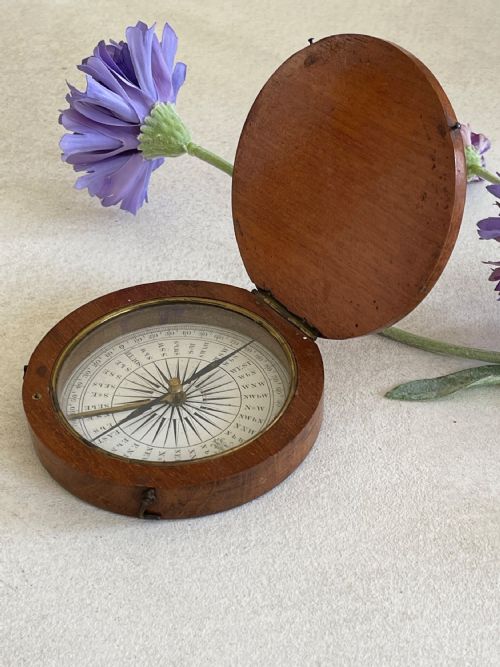
When you search for a victorian nautical instrument, you encounter objects built for maritime navigation, observation and timekeeping during the nineteenth century. These pieces range from portable brass telescopes and pocket compasses to large marine barometers housed in mahogany or oak cases.
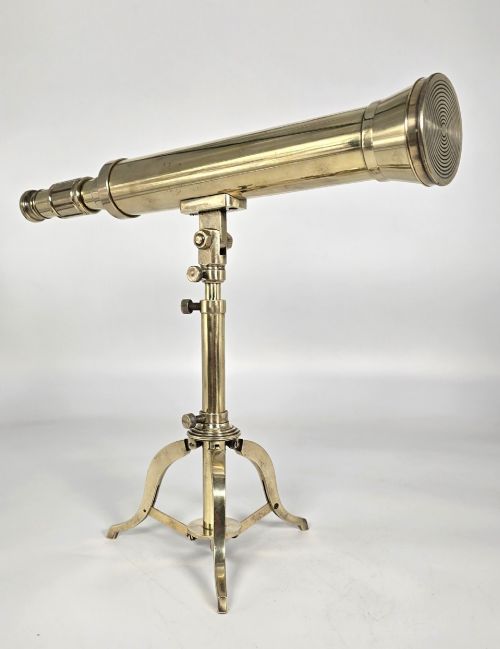
The version you are most likely to meet on this page is the multi-draw brass telescope or the aneroid barometer. Telescopes typically feature leather-wrapped barrels and draw tubes, whilst barometers appear in wall-hanging banjo formats or sturdy oak shipboard mountings.
How they were made
Makers constructed these instruments using heavy brass for optical tubes, bezels and gimbal rings, paired with seasoned hardwoods such as mahogany, oak, walnut and rosewood for cases and mountings. Leather was frequently stitched around telescope body tubes to provide a secure grip on deck.
Optics relied on hand-ground glass lenses housed within telescoping brass draws, while barometers utilised mercury columns or sensitive metal aneroid diaphragms connected to delicate mechanical linkages. Graduations and maker details were precisely engraved onto paper scales or directly onto brass dials.
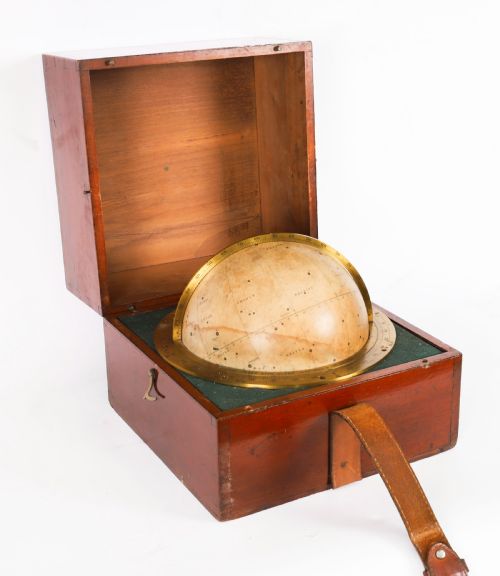
Early stargazers relied on pocket-sized celestial globes housed in miniature wooden spheres to map the night sky on the move.
What varies in quality
The standard of a victorian nautical instrument depends upon the precision of its optics and the crispness of its mechanical action. Instruments produced by established firms exhibit smoother draw movements, clearer lens alignment and superior finishing on both metal and wood surfaces.
Signatures and maker inscriptions heavily influence the standing of a piece, with named London makers commanding attention for their refined engineering. The retention of original fitted wooden cases and tripod stands also elevates the integrity of the object.
Hughes And Son·Elliott Brothers·Steward Of London·Newton And Co·Stanley London·Negretti And Zambra·L Casella London·Chadburn Brothers·James Murray·John Lilley And Son
The Victorian Nautical Instrument Glossary
- Aneroid barometer
- A device that measures atmospheric pressure using a flexible metal box rather than liquid mercury. It expands and contracts with pressure changes, moving an indicator needle.
- Draw
- A sliding tubular section of a telescope that extends to focus the instrument. Telescopes are commonly described by the number of draws they possess.
- Binnacle
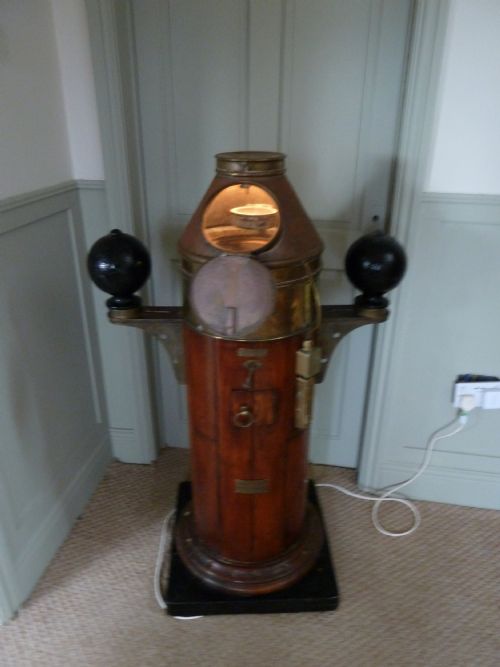
- A wooden or brass housing mounted near the steering wheel of a ship to hold the compass and its lighting. It protects the navigational instrument from the elements.
- Octant
- An early reflecting instrument used to measure angles between celestial bodies and the horizon for navigation. It employs a mirror system spanning an eighth of a circle.
Victorian Nautical Instrument: Frequently Asked Questions
How do I use a marine barometer?
Mount the barometer securely to a stable wall away from direct heat sources and drafts. Tap the glass lightly before reading to settle the mechanical linkage.
Observe whether the needle points toward rising or falling weather indicators. Compare successive readings over twenty-four hours to anticipate meteorological changes.
How do I care for brass instruments?
Dust the brass surfaces regularly with a soft, dry cloth to prevent accumulation. Avoid commercial metal polishes that remove patination and wear down engraved lettering.
Keep leather-bound sections conditioned with suitable leather balms if the material becomes dry. Store optics in dry environments to prevent internal haze on glass lenses.
How do I extend a multi-draw telescope?
Hold the widest section firmly in one hand and gently pull the smallest eyepiece tube outward until it stops. Extend each subsequent section in turn until the telescope reaches its full length.
Focus the instrument by adjusting the final small draw tube while looking at a distant terrestrial target. Collapse the tubes in reverse order when packing the telescope away.
What is an artificial horizon?
An artificial horizon is a device used with a sextant or octant on land or when the natural sea horizon is obscured. It provides a reliable horizontal plane for taking celestial sights.
Sets typically consist of a shallow trough filled with black glass or dark liquid. The observer measures the angle between the celestial body and its reflection in the surface.
How do I date a scientific instrument?
Examine the engraved signature for the maker's name and business address, as directory records reveal active working dates. Style transitions in typography and case construction also offer clues to the decade of manufacture.
Look for patent dates or exhibition medals stamped onto the metalwork. Compare the complexity of the mechanism and materials against documented examples from the period.