

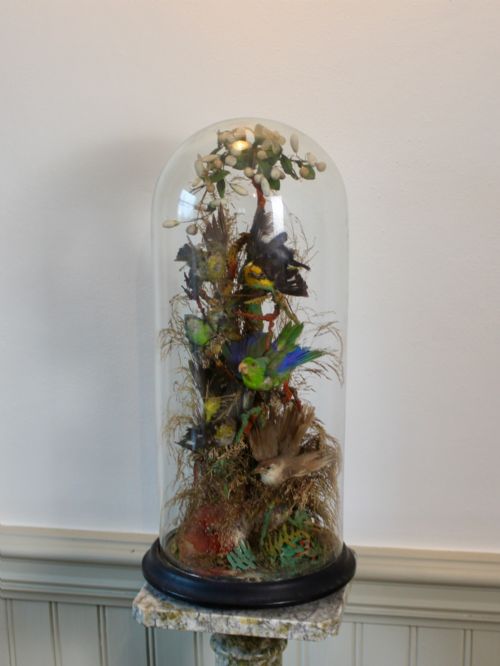


Victorian Natural History Case
A victorian natural history case brings preserved birds, fish and mammals indoors behind glass, offering a direct window into nineteenth-century domestic science and display.
Victorian Natural History Case
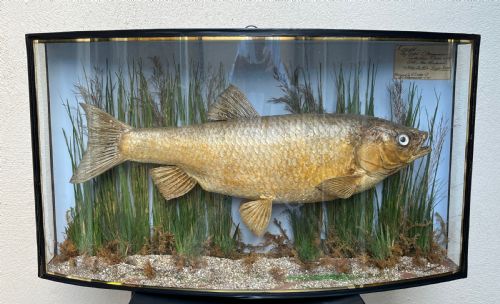
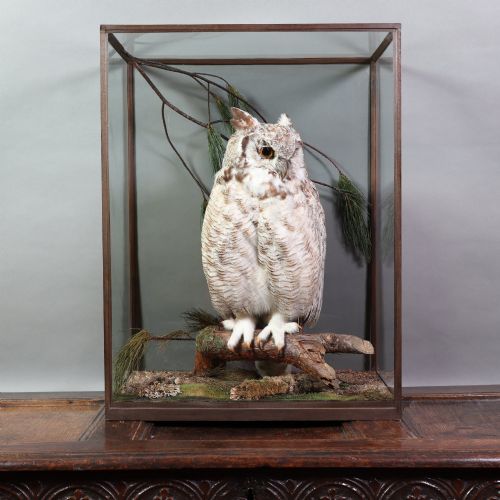
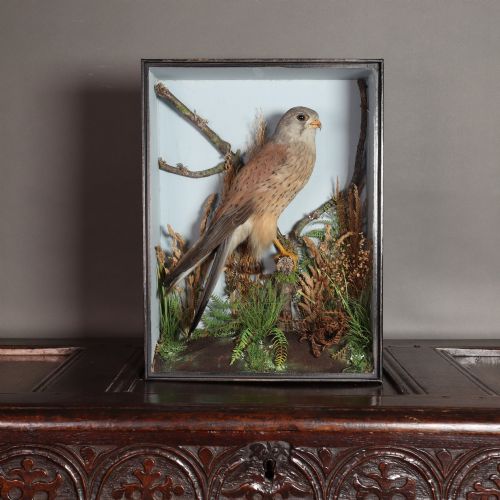
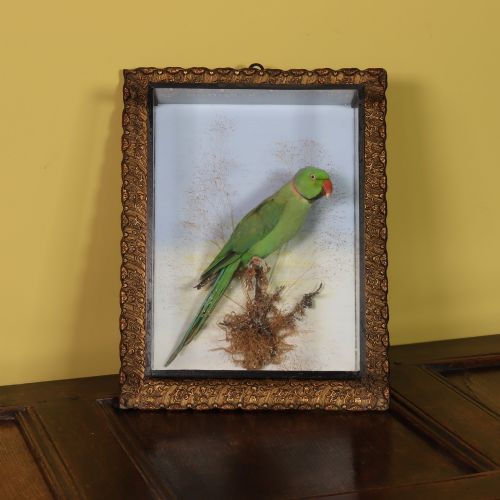
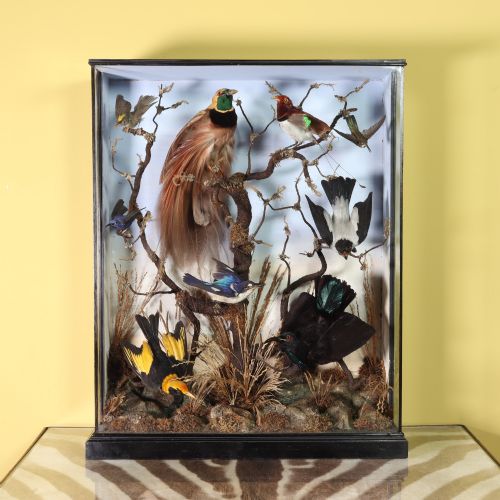
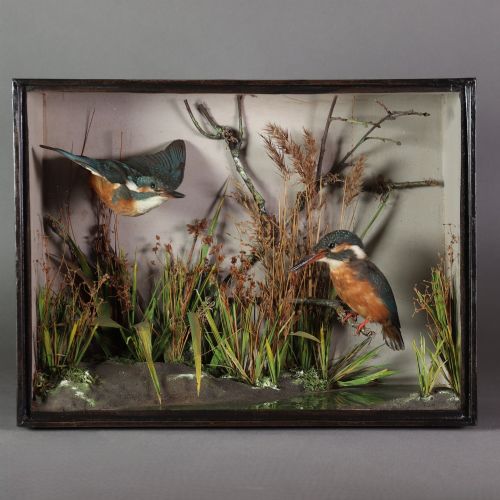
A victorian natural history case encompasses glass-fronted boxes, wall frames and glass domes framing preserved creatures in recreated habitats. The most frequent examples met on this page include birds like owls, kingfishers and exotic parrots, alongside fish such as pike, roach and carp arranged among moss and painted backgrounds.
These items span periods from the mid-nineteenth century through the Edwardian era, reflecting a period of intense public fascination with ornithology, angling and domestic collecting. Pieces take various forms, from flat-sided display frames and oak boxes to towering floor domes containing mixed specimens from around the globe.
Materials and construction
Makers housed their preserved specimens within timber frames, ebonised wood or mahogany cabinets sealed with heavy glass panels to protect the fragile contents from dust and humidity. Interiors frequently incorporate preserved moss, paper elements and painted backdrops designed to mimic natural environments like snow scenes or riverbanks.
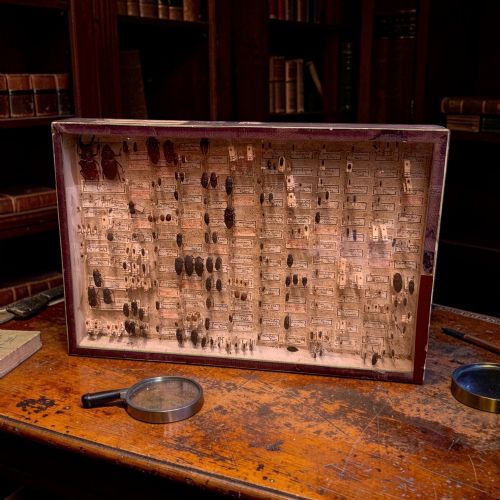
Taxidermists utilised mounting techniques over internal armatures to shape mammals, birds and fish into lifelike poses. Entomology cases and shell cabinets arranged smaller items methodically against pinned backings inside dedicated wooden display drawers.
Listings feature timber, glass, feathers, moss and ebonised wood across Victorian and Edwardian periods.
Factors influencing quality
Excellence in a victorian natural history case rests upon the realism of the taxidermy work and the artistic composition of the internal setting. Skilled practitioners maintained anatomical proportions and natural postures, whereas lesser examples display stiffness or anatomical distortion.
The sophistication of the enclosure itself elevates the piece, distinguishing standard utility boxes from grand glazed domes and signed cabinetry produced by notable regional and London practitioners. Original glass, undisturbed interior settings and well-preserved plumage or scales determine the overall integrity of the surviving object.
Little & Co·J Griffiths of Burford·Rowland Ward Ltd·T. E. Gunn·William Bazeley & Sons·S. King·Hutchings of Aberystwyth·James Jones·J. Cooper & Sons·James Gardner·W.F. Homer London·J Dobson
The Victorian Natural History Case Glossary
- Taxidermy
- The art of preparing, stuffing and mounting the skins of animals for display. This practice formed the central trade behind natural history cases.
- Dome
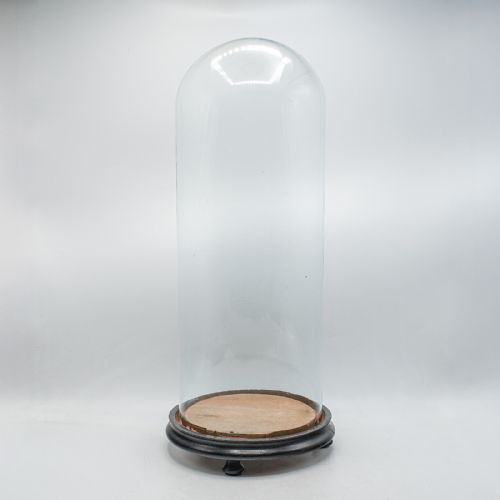
- A rounded glass cover set upon a wooden or ebonised base to protect delicate specimens. These enclosures offer a three-hundred-and-sixty-degree view of birds or fish.
- Entomology case
- A shallow wooden box fitted with a glass lid designed for housing insect collections. Specimens inside are typically pinned systematically on a paper or cork lining.
- Ebonised wood
- Timber treated with a dark finish to imitate expensive ebony. This material frequently frames nineteenth-century display cases and domes.
- Cloche
- A bell-shaped glass cover used interchangeably with domes to shelter single specimens. They provide an airtight environment for fragile feathers and mounts.
Victorian Natural History Case: Frequently Asked Questions
What is inside a victorian natural history case?
These enclosures contain preserved birds, fish, mammals or insects mounted alongside simulated natural elements like moss, painted backgrounds and branches.
Materials commonly include glass, timber, paper and preserved biological specimens arranged to mimic living creatures in their natural habitats.
How were these cases displayed in homes?
Owners typically placed glass domes and wooden display boxes on parlour tables, sideboards or mantelpieces where guests could examine the specimens closely.
Wall-mounted frames and shallow entomology cabinets were hung in studies, libraries and drawing rooms as part of a gentleman's collection.
How do I care for a glass dome?
Keep the display out of direct sunlight to prevent the fading of feathers, painted backgrounds and delicate biological materials.
Clean the exterior glass gently with a soft cloth and avoid removing the cover, as the internal environment remains sensitive to household humidity and dust.
How can I tell who made a piece?
Look for paper trade labels pasted inside the wooden backing, underneath the base or inscribed directly onto the glass or painted scenery.
Prominent taxidermists often signed their work or stamped their business names onto the wooden frames of their display cases.