


Victorian Music Lectern
A victorian music lectern brings practical elegance to a room, holding books and scores with steady poise.
Victorian Music Lectern
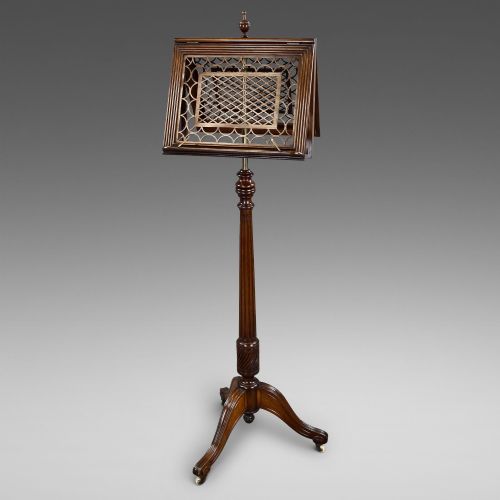
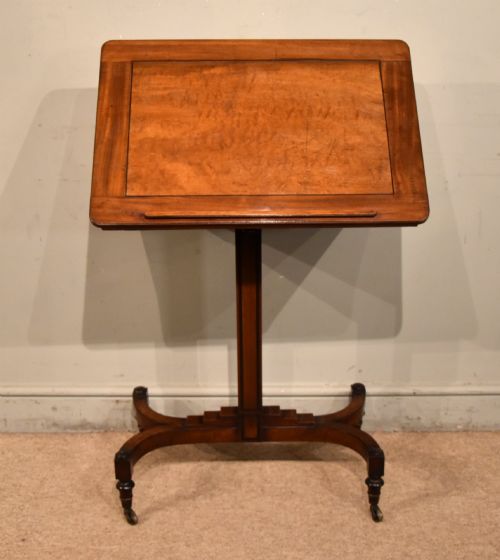
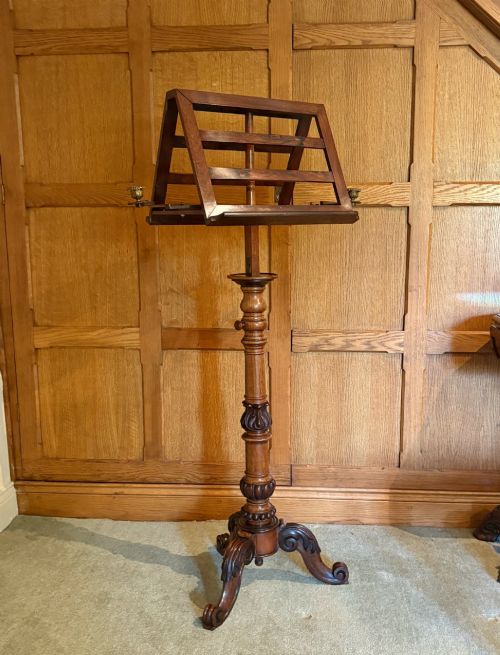
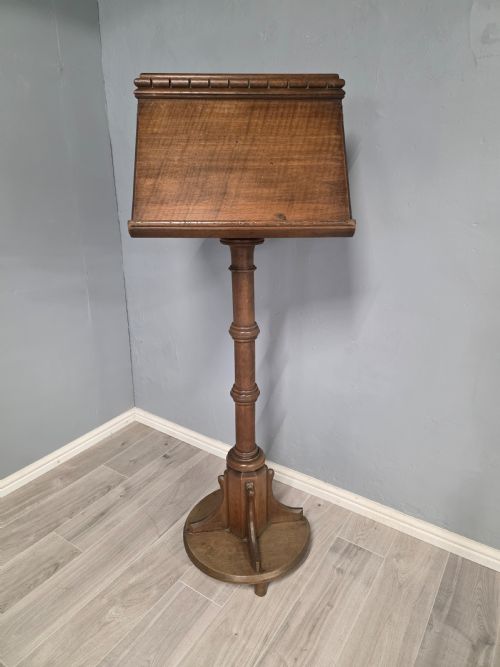
A victorian music lectern serves as both a functional music holder and a striking display piece for a study or music room. These pieces appear in forms ranging from adjustable reading stands and duet stands to heavy church lecterns and occasional reading tables.
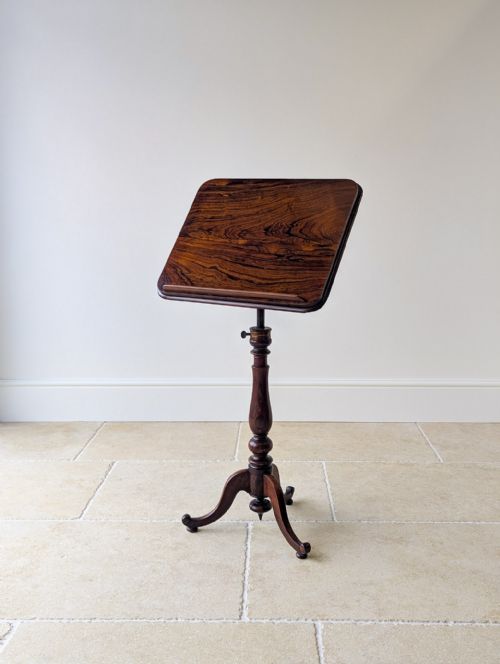
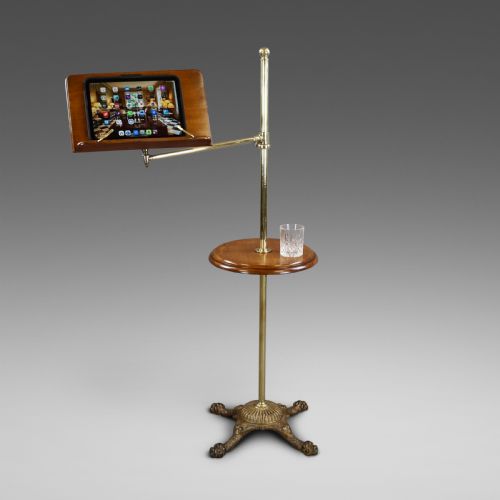
Buyers encounter numerous variations on this page, including lyre-shaped inlaid music stands, tripod bases, and metamorphic reading tables. Woods such as mahogany, walnut, rosewood, and oak dominate the selection, often accompanied by brass fittings.
Materials and construction
Cabinet makers utilised dense hardwoods like mahogany, walnut, and rosewood to build stable shafts and folding book rests. Burr walnut veneers and satinwood inlay provide decorative contrast on finer examples from the period.
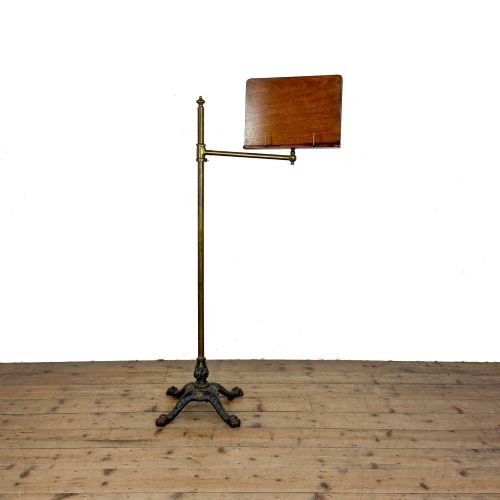
Metal components such as brass brackets and cast iron mechanisms allow for height adjustment and tilting desks. Joinery relies on traditional turning, carving, and tripod bracket construction to support heavy folios.
Eagle lecterns gaze intently across the room, holding sacred texts firmly in their carved wooden talons.
Markers of quality
The sophistication of the mechanical adjustment mechanism dictates much of the standing of an individual piece. Smooth movement in the brass screws and ratchets separates standard utility stands from workshop productions intended for formal parlours.
Carved detail and choice veneers elevate certain examples above plain timber pieces. Firm attribution to notable makers or intricate fretwork and marquetry inlay distinguishes exceptional pieces in the range.
Gillow
The Victorian Music Lectern Glossary
- Duet stand
- A music stand designed to hold two scores side by side for shared playing. These often feature wider double desks and robust pillar supports.
- Lectern
- A tall reading desk with a slanted top designed to hold books or papers for a standing speaker or musician. They frequently appear on tripod or heavy column bases.
- Gonçalo Alves
- A dense exotic hardwood sometimes utilised for nineteenth-century furniture framing. It displays distinctive contrasting dark brown grain patterns.
- Metamorphic
- Describing a piece of furniture that transforms from one form into another, such as a reading table converting into an easel or desk.
Victorian Music Lectern: Frequently Asked Questions
How do I adjust the height?
Most pieces utilise a brass thumbscrew or sliding wooden friction mechanism housed within the central pillar. Turning the key loosens the inner shaft so the desk moves freely up or down.
Once the desired height is reached, tightening the screw secures the weight of heavy books or sheet music in place.
Can these hold heavy books?
Stands built from solid mahogany, walnut, or rosewood with tripod bases provide substantial load-bearing strength. The folding ledges at the base of the desk support thick folios and bound scores securely.
Lighter reading tables and inlaid items suit moderate volumes and sheet music rather than massive folio atlases.
Where were they used?
Music rooms, libraries, and parlours housed these stands for practicing instruments or reading at a desk. Church lecterns served ecclesiastical spaces for holding large service books.
Occasional reading tables functioned beside armchairs for holding letters, newspapers, or current reading material.
How do I date a piece?
Leg style, timber selection, and mechanical fittings offer clues to the decade of manufacture. Regency and William IV pieces tend to show heavier rosewood or mahogany forms with classical brass mounts.
Victorian examples span simpler adjustable pine or oak models to ornate walnut and burr walnut creations with marquetry inlay.