


Victorian Music Canterbury Table
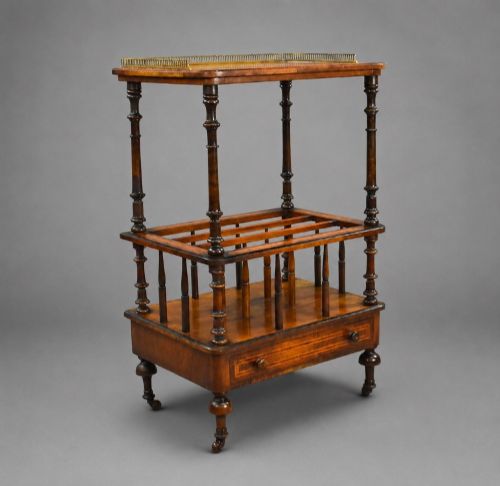
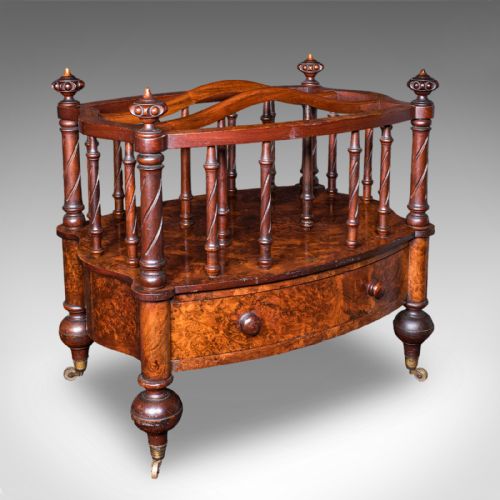
A victorian music canterbury table combines partitioned sheet storage with a display surface, built to hold scores beside the parlour piano.
Victorian Music Canterbury Table
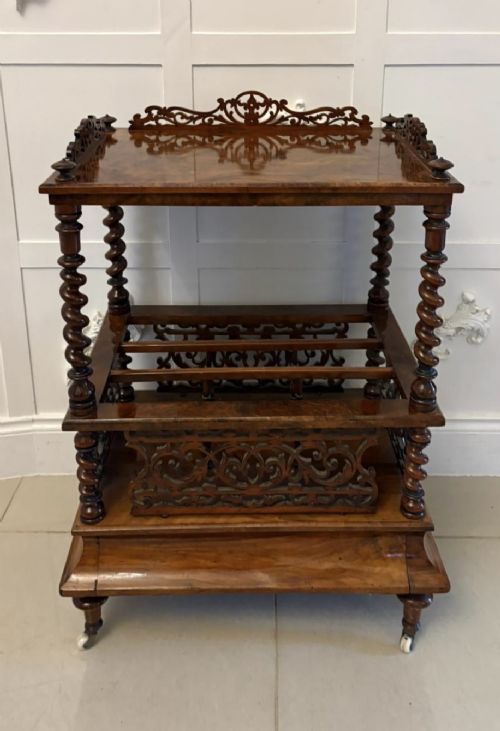
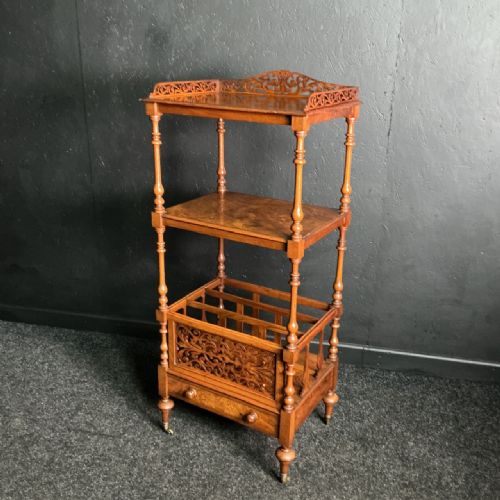
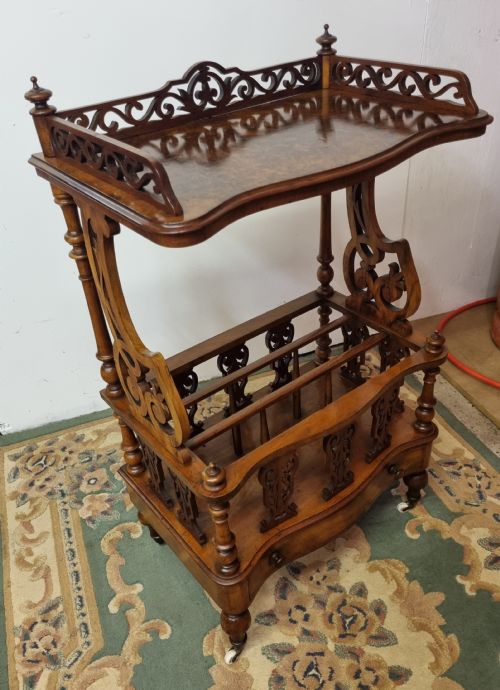
A victorian music canterbury table is primarily encountered in burr walnut and rosewood, spanning periods from the mid-nineteenth century up to eighteen ninety. These pieces frequently double as whatnots or occasional tables, merging upright slatted partitions for folios with flat display tiers above.
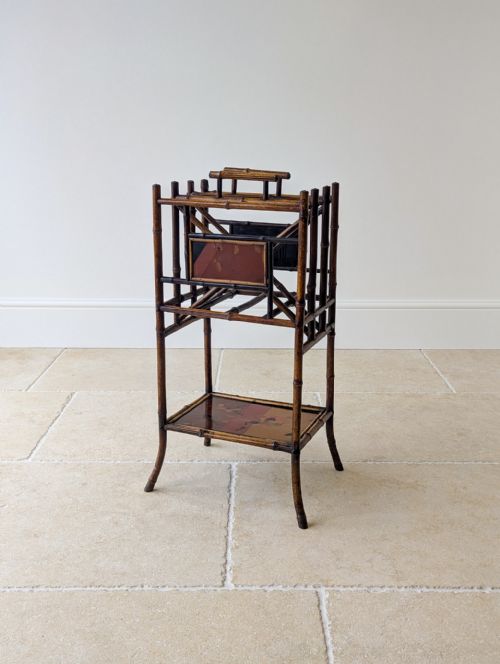
You will notice forms range from serpentine and oval shapes to simpler rectangular designs, occasionally incorporating a single drawer beneath the partitions. The evidence shows styles extending from Regency influences through to Aesthetic Movement bamboo and late nineteenth-century multi-functional cabinets.
The core function remains the storage of music and periodicals, elevated on castors for mobility within the drawing room. Most examples adhere strictly to the Victorian aesthetic of combining utility with figured timber veneers.
Judging the standard
Quality rests principally in the choice of burr walnut or rosewood veneer, where dense, lively grain patterns elevate the piece above plain timber alternatives. The crispness of inlaid motifs and the elegance of turned columns also separate finer workshops from standard production.
Structural integrity matters significantly in pieces with multiple tiers and moving parts like drawers. A well-constructed example maintains rigid joints across its partitions and retains its original brass castors without excessive play.
Burr walnut is the most frequently recorded timber across these listings, closely followed by rosewood and occasional examples in bamboo and satinwood.
The Victorian Music Canterbury Table Glossary
- Canterbury
- A low stand fitted with upright partitions for holding sheet music, folios, or newspapers, often combined with a table top. The name originates from the Archbishop of Canterbury, who supposedly commissioned the first such piece.
- Whatnot
- A set of open shelves supported by slender pillars, used for displaying ornaments and books in the Victorian parlour. It frequently forms the upper section of a combined music stand.
- Burr Walnut
- Timber taken from a tree growth or wart, producing intricate, swirling grain patterns highly prized for veneer work. It defines the surface appearance of most pieces found in this category.
- Aesthetic Movement
- A late nineteenth-century design style emphasising visual beauty over narrative content, sometimes incorporating bamboo and oriental motifs. Pieces from this movement reject heavy Victorian ornamentation in favour of simpler lines.
Victorian Music Canterbury Table: Frequently Asked Questions
What is a canterbury table used for?
These tables served primarily to hold sheet music, folios, and periodicals near a piano or seating area in the nineteenth-century parlour. The flat upper surface also allowed them to function as occasional or lamp tables.
Over time, their role expanded to general magazine storage as home entertainment evolved away from the upright piano. Today they remain practical side tables for living spaces.
How do I date a burr walnut canterbury?
Dating relies on examining the secondary timbers, the style of the turning, and the presence of specific decorative movements like Aesthetic bamboo or inlaid boxwood. Mid-Victorian pieces from eighteen sixty often display rich burr walnut veneers and serpentine shapes.
Later examples from eighteen ninety lean towards multi-functional side cabinets with rosewood or ebonised finishes. Archival pieces sometimes incorporate Regency elements while retaining standard Victorian construction methods.
Are these tables sturdy enough for daily use?
Most examples were built to hold heavy folios and sheet music, making them reasonably robust for contemporary living spaces. The tiered construction and slender columns require careful handling when moving them across rooms.
Original castors should be inspected for smooth movement to prevent straining the lower frame. Placing them out of direct sunlight preserves the delicate burr walnut veneers.
Did they only come in walnut?
While burr walnut dominates the surviving examples, rosewood and mahogany also appear frequently across the period. Satinwood and bamboo represent less common variations found in later nineteenth-century pieces.
Inlaid details often utilise boxwood and ebony to create contrast against the primary timber body. Ebonised finishes were also applied to mahogany frames for a dark, uniform appearance.