




Victorian Music Canterbury Castors
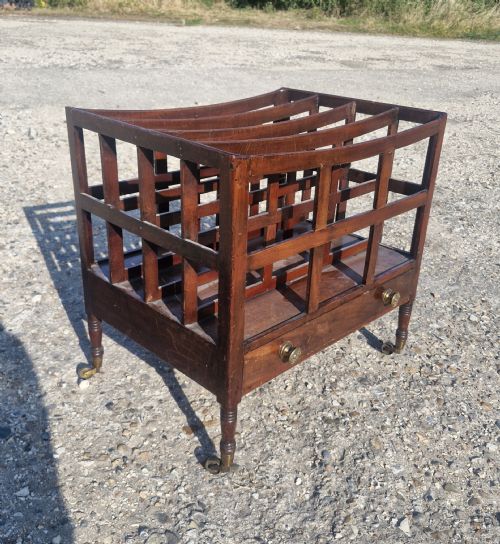
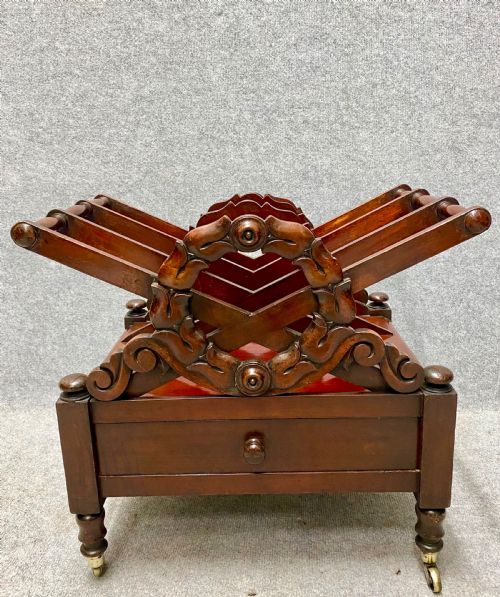
These Victorian music canterbury castors are timber floor-standing pieces built to hold folios and sheet music near the piano.
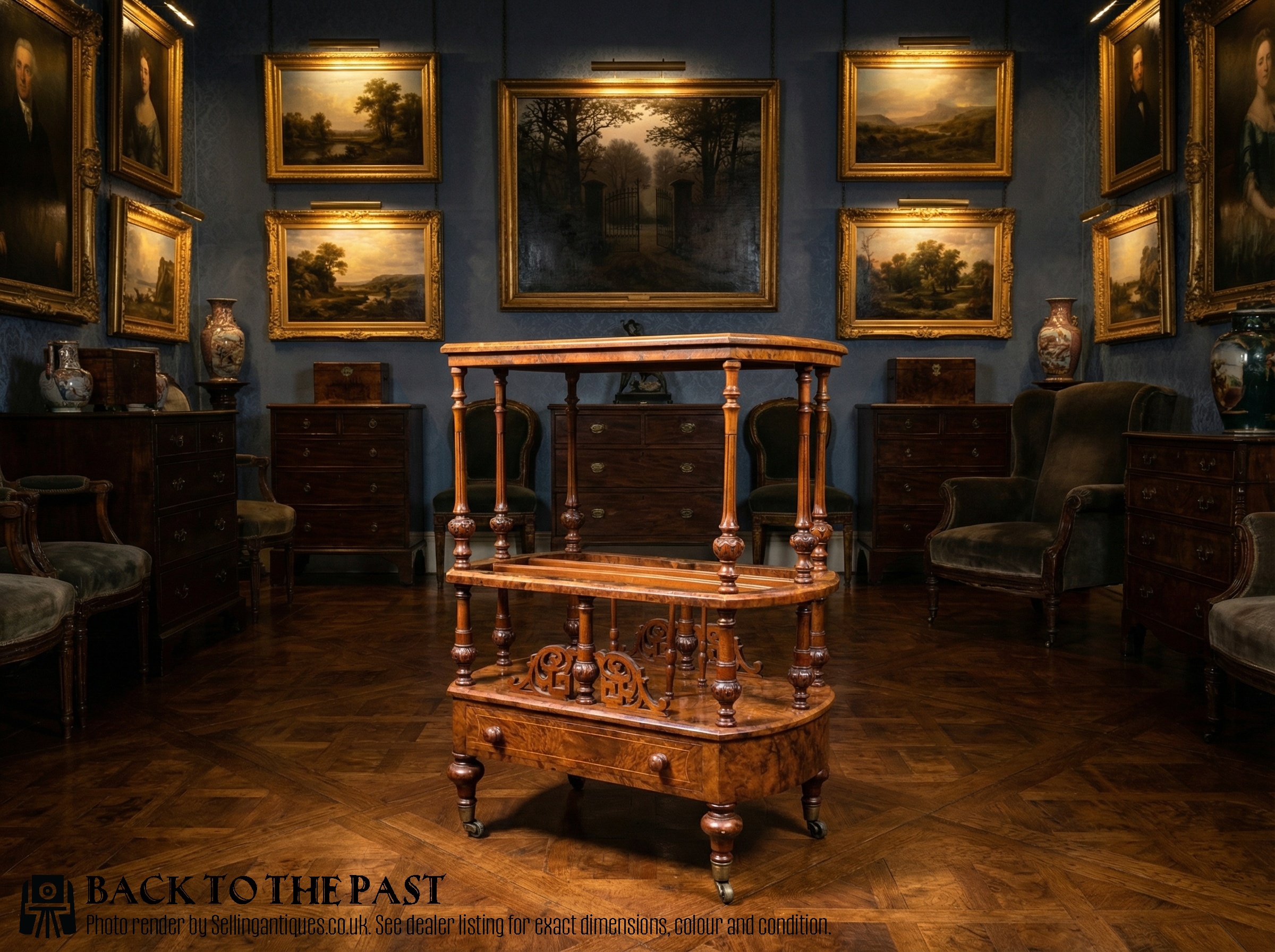
Victorian Music Canterbury Castors
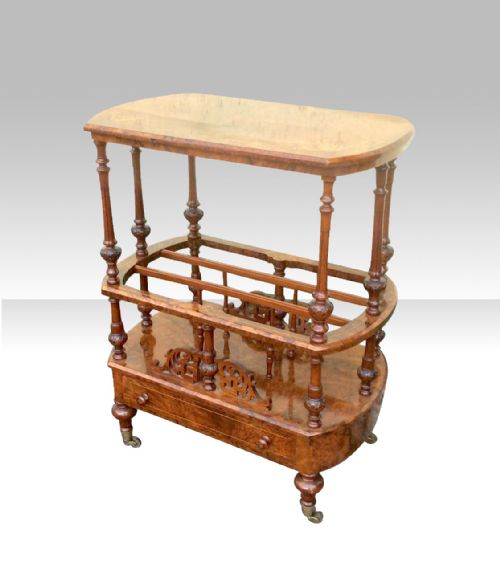
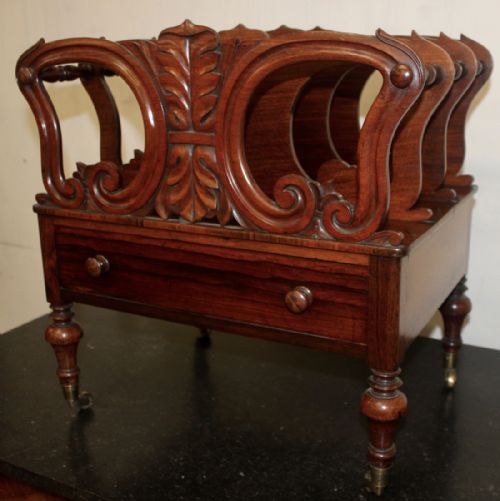
When you search for Victorian music canterbury castors, you encounter compartmented stands designed for sheet music, folios and books. The forms span open slatted racks alongside designs incorporating drawers or combined lower storage sections.
You are most likely to meet mahogany, rosewood and walnut examples dating across the nineteenth century. Certain variations emerge as music stands, magazine racks or combined what-nots fitted with small wheel castors for movement across carpet and floorboards.
Materials and Construction
Cabinet makers utilised solid and veneered timbers including mahogany, rosewood, walnut and burr walnut. Decorative execution involved marquetry inlay work to enrich the visible surfaces of the music compartments and drawers.
Makers integrated brass and ceramic components into the castors fixed beneath the legs for mobility. Secondary woods and fitted leather elements appear internally within the drawer compartments of specific pieces.
Some music stands roll on tiny ceramic wheels that have quietly carried sheet music across parlour floors since the eighteen-hundreds.
Assessing Quality
The distinction between tiers rests upon timber selection and the complexity of the cabinet work. Figured burr walnut veneers and crisp marquetry inlay separate standard production from more ambitious workshop output.
Structural refinement shows in the turning of the upright supports, the dovetailing of the drawers and the quality of the brass and ceramic castor fittings. Ebonised finishes and combined what-not tiers add architectural complexity to the form.
J.C.Loudon
The Victorian Music Canterbury Castors Glossary
- Canterbury
- A low stand with partitions for holding music sheets, folios or books. The name derives from the Archbishop of Canterbury who commissioned an early rack of this type.
- Castor
- A small wheel mounted on a swivel assembly attached to the base of each leg. This mechanism allows the piece to be repositioned easily across a room.
- Marquetry Inlay
- Decorative patterns formed by fitting contrasting veneer slices into prepared recesses. This technique creates pictorial or geometric ornamentation on the timber surfaces.
- What-Not
- A piece of furniture consisting of multiple open shelves for displaying small items. Certain canterburys integrate this shelving structure above the music compartments.
Victorian Music Canterbury Castors: Frequently Asked Questions
What is a music canterbury?
A music canterbury is a low, compartmentalised rack designed to hold sheet music, books and folios beside a piano or in a parlour.
Cabinet makers produced them throughout the nineteenth century in various timbers to keep musical scores organised and accessible.
Why do these stands have castors?
Castors were fitted to the base of the legs to allow the heavy timber stands to be rolled across carpets without scratching the floor.
This mobility meant the music rack could be moved closer to the instrument or pushed aside when not in use.
How do I date a canterbury?
Dating relies on identifying the primary timber, decorative style and construction methods used by the cabinet maker. Regency and William IV pieces display different proportions compared to later Victorian iterations.
The presence of marquetry inlay, ebonised details or specific castor materials also helps narrow down the period of manufacture.
Can these hold modern magazines?
The vertical partitions provide suitable storage for contemporary magazines, art books and large paperbacks.
Many period pieces function effectively as domestic magazine racks in modern living spaces.