




Victorian Music Cabinet Table
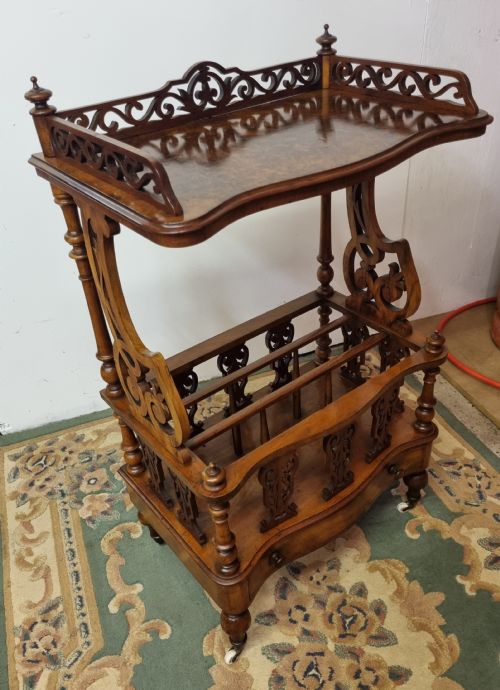
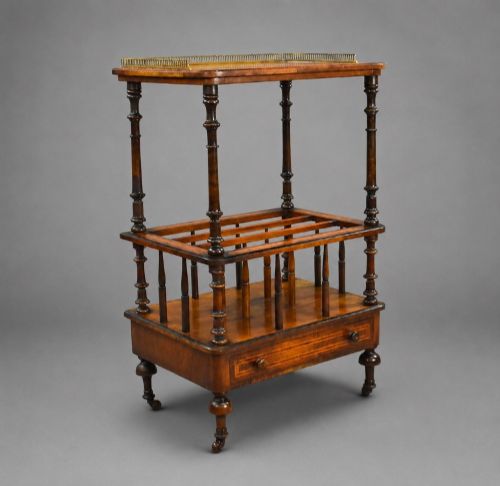
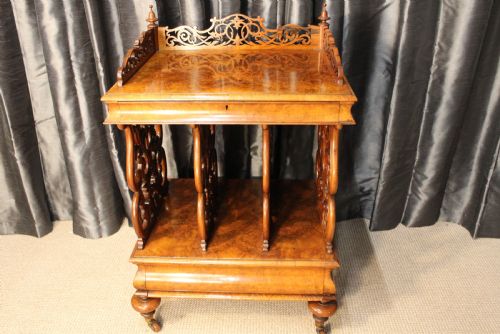
These Victorian music cabinet table pieces are refined nineteenth-century furniture items designed to hold scores and support lamps.
Victorian Music Cabinet Table
A Victorian music cabinet table combines domestic utility with the elaborate craftsmanship typical of the nineteenth century. These objects frequently take the form of canterburys, music cabinets, and versatile occasional tables intended for the Victorian parlour.
Buyers exploring this selection encounter pieces from the eighteen-fifties through to the late Victorian period. The forms range from compact canterburys with dividers for sheet music to combined lamp tables and whatnots featuring drawers and lower tiers.
Origins span standard nineteenth-century British workshops alongside French examples from the same era. The common thread is a dedicated purpose for holding musical scores, books, or small household items within a domestic setting.
How they were made
Cabinet makers utilised richly grained timbers such as burr walnut, rosewood, and mahogany as the primary structural bases. These woods were often enhanced with contrasting boxwood, ebony, and ceramic details.
Decorative techniques relied heavily on intricate inlay work to accentuate the polished timber surfaces. Brass fittings, leather inserts, and ebonised wood finishes further distinguished the construction of these cabinets and canterburys.
Some nineteenth-century tables managed to hold both your sheet music and your afternoon tea without causing a single discordant note.
What varies in quality
The sophistication of the timber figure and the precision of the inlay separate standard examples from finer works. Pieces utilising heavily figured burr walnut or select rosewood command attention for their visual depth.
Structural complexity also defines the grading of these items, moving from simple open canterburys to multi-functional side cabinets with drawers, drop leaves, and tiered whatnot shelves.
The Victorian Music Cabinet Table Glossary
- Burr Walnut
- A timber veneer taken from the burl growth of a walnut tree, prized for its swirling, knotted grain patterns. Makers utilised it on prominent surfaces to create decorative impact.
- Whatnot
- An open set of tiered shelves used for displaying ornaments or holding books. This form frequently appeared combined with music cabinets and canterburys during the nineteenth century.
- Ebonised Wood
- Timber treated with a dark finish to imitate expensive ebony. It provided stark contrast in nineteenth-century marquetry and inlay designs.
- Marquetry
- The art of applying decorative pieces of veneer to a structure to form intricate patterns. Cabinet makers employed this technique extensively on Victorian tabletops and cabinet doors.
Victorian Music Cabinet Table: Frequently Asked Questions
What is a music cabinet table?
A music cabinet table is a nineteenth-century piece of furniture designed to store sheet music while serving as a functional surface for lamps or ornaments.
These items often combine compartments or vertical partitions with drawers, shelves, and occasional table tops tailored for the Victorian parlour.
How do I date a Victorian music cabinet?
Dating relies on examining the timber species, construction methods, and stylistic details recorded across the nineteenth century. Pieces from the eighteen-fifties often display carved rosewood, while later decades frequently feature burr walnut and delicate inlay.
Reference points include specific design forms like the open canterbury or the multi-functional side cabinet associated with the late Victorian period.
Where were these pieces placed in a home?
These pieces were typically positioned in drawing rooms and music rooms to keep scores organised near a piano or seating area.
Their dual function as tables and storage units allowed them to act as central display surfaces while keeping domestic clutter concealed.
What woods were commonly used?
Cabinet makers predominantly used burr walnut, rosewood, and mahogany for the main body of these furnishings. Contrasting elements were added using boxwood, ebony, and ebonised wood.
Finishes highlight the natural grain of the timber, supplemented by polished brass fittings and ceramic accents.