
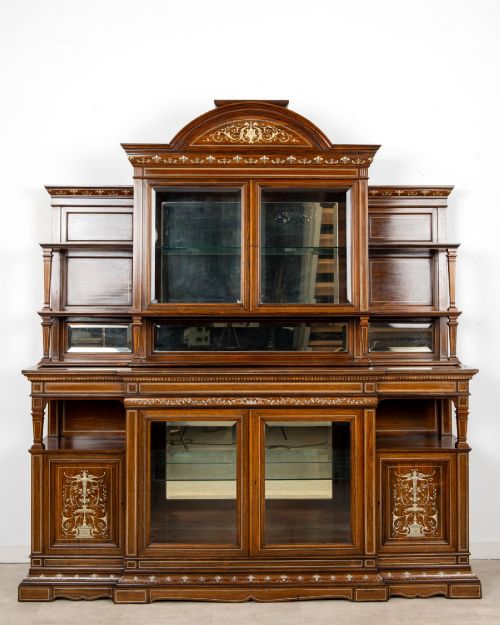
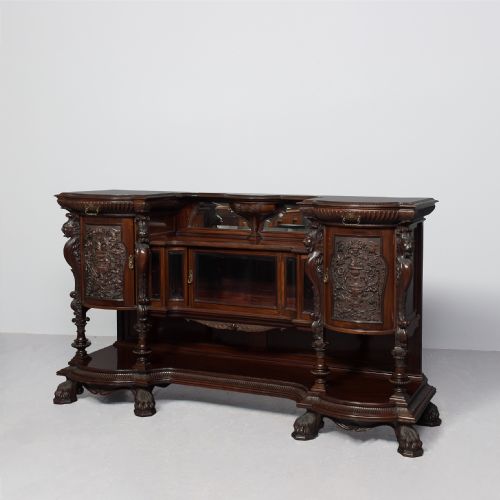
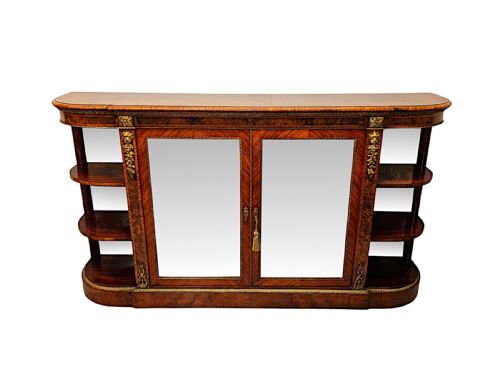
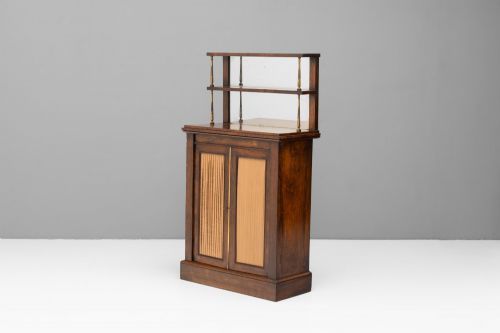



Victorian Mirrored Side Cabinet
These nineteenth-century pieces combine practical storage with reflective glass, bringing light and presence into a room.
Victorian Mirrored Side Cabinet
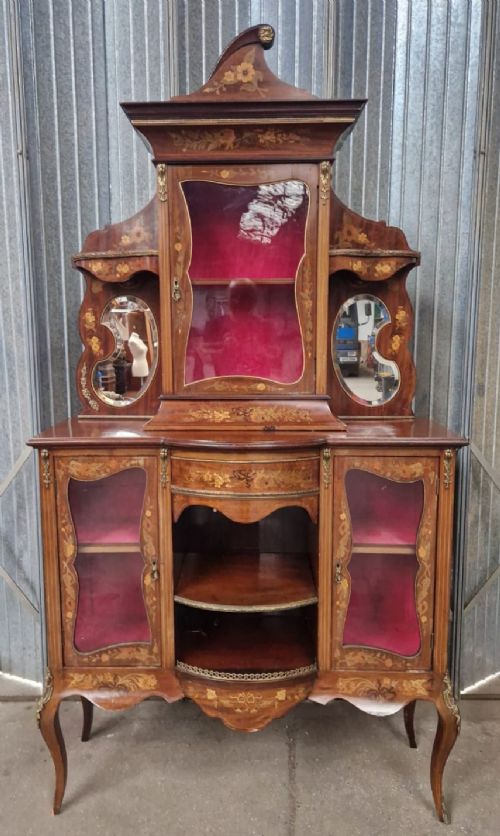
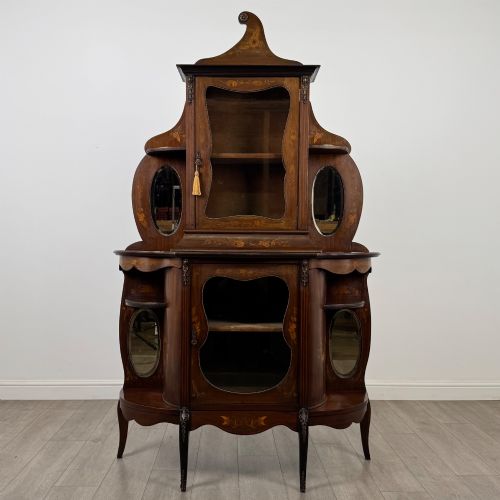
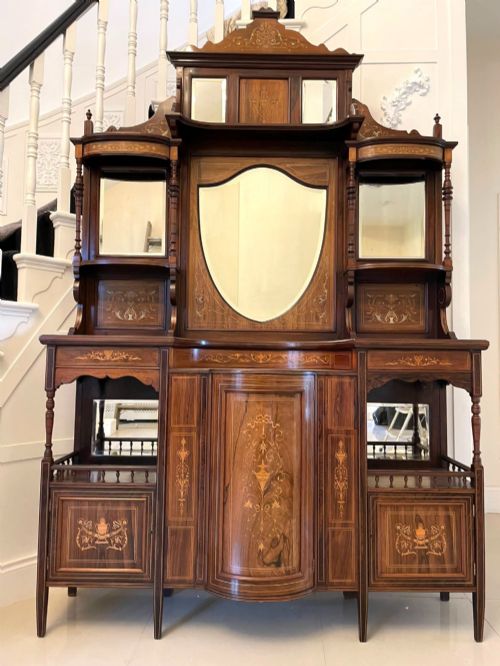
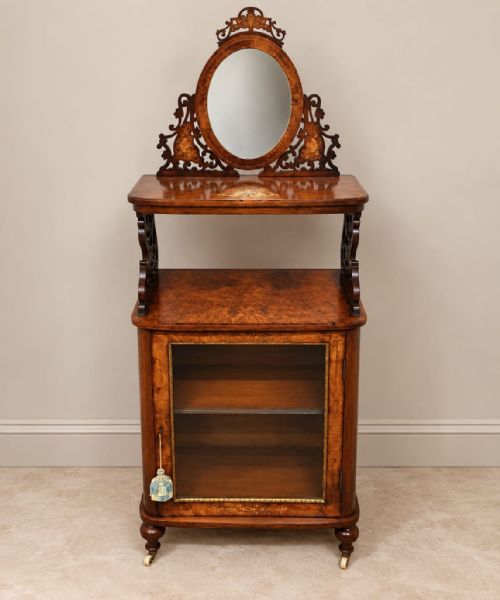
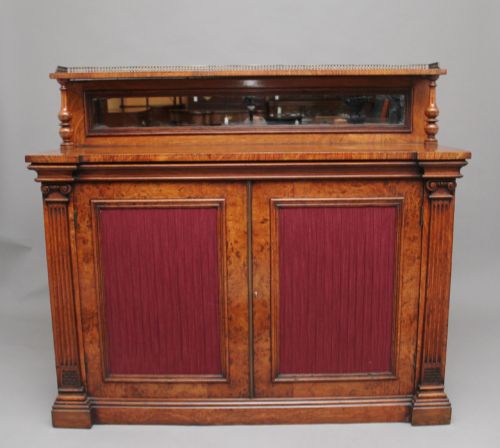
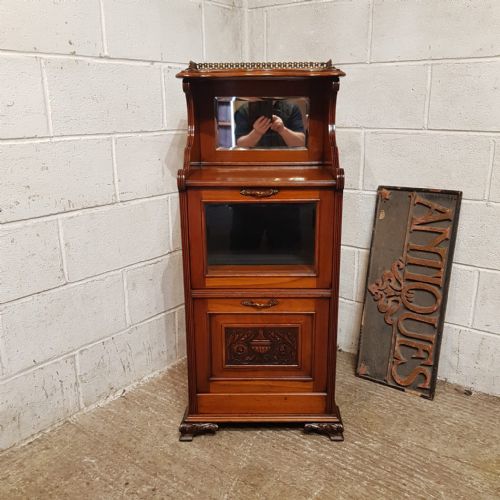
A victorian mirrored side cabinet serves as a dual-purpose room centrepiece, combining enclosed cupboard storage with an integrated mirror back that bounces natural light around the interior space. The form emerges frequently in walnut, rosewood, and mahogany, reflecting the changing tastes of nineteenth-century domestic design from early chiffoniers to late aesthetic movement statements.
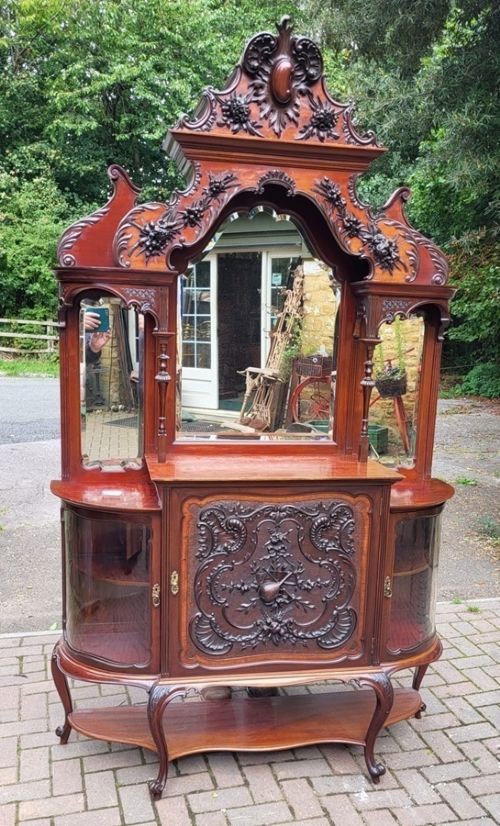
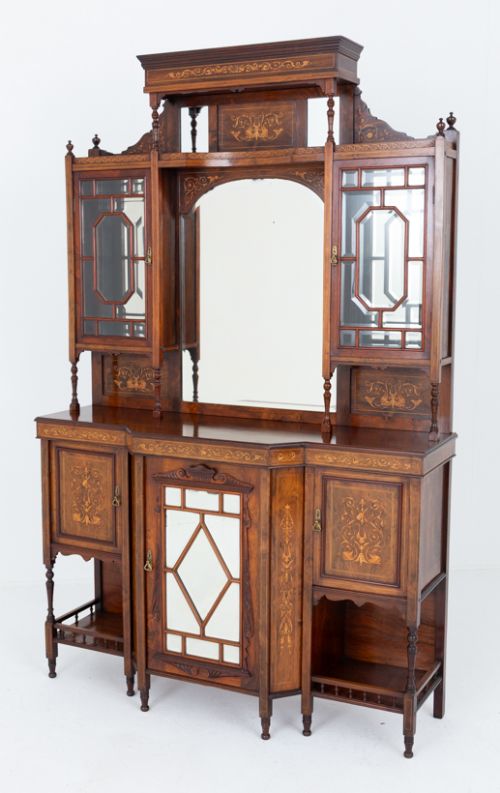
Buyers encounter numerous variations on this page, ranging from compact music cabinets and credenzas to large display pieces outfitted with glass doors. The overarching Victorian and late Victorian periods dominate the selection, often incorporating inlaid marquetry or carved woodwork alongside the defining glass components.
Materials and construction methods
Cabinet makers utilised dense native and exotic timbers such as mahogany, walnut, and rosewood, frequently cutting them into burr veneers to produce striking decorative grain patterns across the front doors and panels. Brass hardware, ormolu mounts, and gilt highlights frequently punctuate the dark wooden surfaces, adding metallic contrast to the composition.
The integration of the mirror required specialised carpentry to support the heavy glass safely above the sideboard base, often framed by carved wooden scrolls or integrated directly into elaborate back panels. Intricate marquetry and stringing inlay work display the precise hand-cutting techniques applied to contrasting light and dark woods during the period.
Listings span the nineteenth century, with walnut and rosewood appearing alongside decorative ormolu and brass mountings.
Distinguishing quality across pieces
The degree of ambition in the timber selection and decorative detailing establishes the baseline standard, separating straightforward utility furniture from exhibition-grade cabinet work. Richly figured burr walnut and profuse, precise marquetry inlay indicate higher workshop investment than plain timber surfaces.
Structural integrity depends upon the original execution of the joints and the quality of the silvering behind the mirror glass. Pieces bearing documented workshop attributions or maker stamps demonstrate superior provenance and higher standards of period craftsmanship.
Collinson & Lock·Gillows·Holland & Sons
The Victorian Mirrored Side Cabinet Glossary
- Credenza
- A grand freestanding sideboard or cabinet designed for formal reception rooms, often featuring multiple doors and delicate inlay. These large pieces command significant visual weight in a dining room or drawing room.
- Marquetry
- The art of forming decorative patterns by fitting together small pieces of tinted wood veneer. Craftsmen applied this meticulous technique to cabinet doors and friezes.
- Ormolu
- Gilded bronze ornamentation applied to furniture mounts and feet during the period. This tactile brass-like finish catches the ambient light.
- Chiffonier
- A low nineteenth-century sideboard equipped with small cupboards below and shelves or a mirror above. This versatile form predates larger credenzas.
- Pollard oak
- Timber taken from trees that have been repeatedly pruned, resulting in a dense and highly swirled grain pattern. Cabinet makers prized this unusual wood for statement panels.
Victorian Mirrored Side Cabinet: Frequently Asked Questions
Where did people place these cabinets?
Homeowners typically positioned these pieces against the main walls of drawing rooms, dining parlours, or reception rooms to display ceramics while hiding linens.
The reflective glass served to brighten darker corners before the widespread adoption of electric lighting.
How do I care for the mirror glass?
Clean the reflective surface gently with a soft cloth and mild solution, avoiding harsh chemical sprays that might seep behind the original silvering.
Keep the timber surfaces nourished with appropriate wax to maintain the historical patina.
What is an aesthetic movement cabinet?
Aesthetic movement pieces reject heavy Victorian ornamentation in favour of cleaner lines, ebonised finishes, and gilt highlights inspired by Japanese design.
These cabinets often feature simpler silhouettes paired with stylized botanical or geometric inlay.
Are these cabinets suitable for modern homes?
The compact proportions of many surviving examples allow them to function effectively as modern cocktail cabinets or hallway storage units.
Their reflective backing helps small contemporary rooms feel considerably brighter and larger.