


English Walnut Side Cabinet
An English walnut side cabinet brings distinct timber grain and storage utility to a room, spanning periods from Regency to Art Deco.
English Walnut Side Cabinet
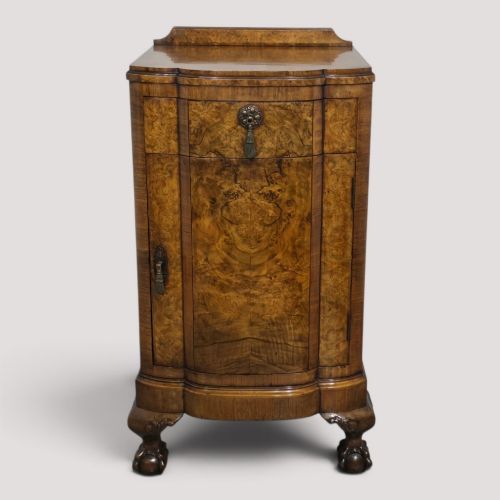
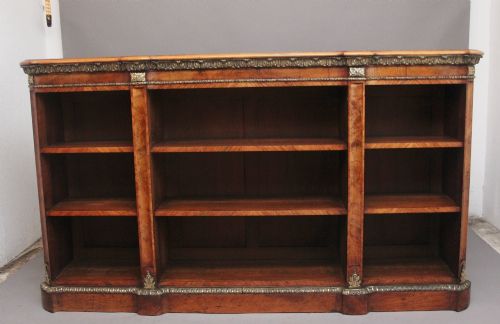
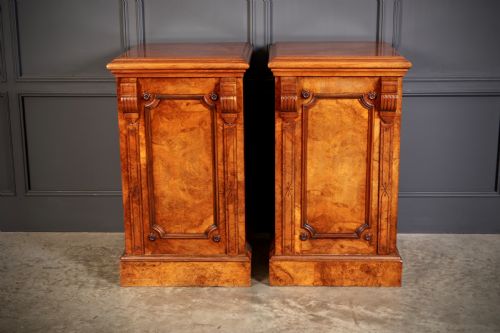
When searching for an English walnut side cabinet, collectors encounter a diverse range of forms adapted for domestic storage and display. The selection spans Victorian marquetry credenzas and pier cabinets to 1930s Art Deco bedside cupboards and cocktail units.
Victorian pieces frequently present as pedestal cabinets, music cabinets, or glazed display furniture incorporating burr or figured walnut veneers. Later Art Deco iterations favour clean lines in burr walnut, functioning as bedside tables or compact sideboards.
Earlier Regency and nineteenth-century examples often integrate boxwood inlay or ormolu mounts alongside the primary walnut timber. These pieces serve practical functions in drawing rooms and bedrooms while displaying varied cabinet-making traditions.
Materials and Construction
Makers utilise plain, figured, and burr walnut veneers to achieve striking grain patterns across flat and curved surfaces. Solid walnut provides structural integrity for frames, drawers, and turned supports.
Decorative embellishments include boxwood inlay, marquetry, and gilt bronze or ormolu mounts applied to nineteenth-century and Regency pieces. Glass panels and mirror tops appear on display cabinets and occasional tables from the Victorian era through the 1930s.
Materials recorded across the archive include solid walnut, burr walnut, glass, brass, marble, and gilt bronze.
Factors of Quality
The choice and matching of veneer dictate much of the visual merit, particularly where burr or figured walnut creates symmetrical patterns across door panels and tabletops. Superior execution shows in the precision of boxwood inlay, marquetry, and the integration of ormolu or gilt bronze mounts.
Construction standards reveal themselves in the stability of drawers, the fitting of doors, and the preservation of original glass and marble tops. Pieces bearing attribution to established workshops display refined proportions and robust internal joinery.
Johnstone and Jeanes·Waring and Gillow·Hille·Liberty·Gillow and Co·Epstein·Maple and Co
The English Walnut Side Cabinet Glossary
- Burr Walnut
- A timber derived from the irregular growths of a walnut tree, yielding highly figured, swirling veneer patterns prized for cabinet fronts.
- Credenza
- A sideboard or display cabinet originating in the nineteenth century, often featuring glass doors and marquetry details.
- Ormolu
- Gilt bronze mounts applied as decorative ornaments to furniture during the nineteenth century.
- Pedestal Cabinet
- A standalone enclosed storage piece, frequently tall and narrow, designed to house books, music, or general items.
- Marquetry
- Decorative patterns formed by the insertion of contrasting veneers into a wood background.
English Walnut Side Cabinet: Frequently Asked Questions
How do I identify a Victorian walnut cabinet?
Victorian examples often display rich figured walnut veneers, sometimes combined with boxwood inlay, marquetry, or ormolu mounts. Common forms from this era include credenzas, pier cabinets, and music cabinets with glazed or mirrored doors.
The interiors typically feature mahogany or softwood secondary timbers, and the overall construction reflects mid to late nineteenth-century cabinet-making techniques.
What distinguishes Art Deco walnut cabinets?
Art Deco pieces, largely dating around 1930, lean towards geometric silhouettes, skyscraper forms, and cloud shapes. They make extensive use of burr walnut veneer to create bold, symmetrical grain patterns without heavy surface ornamentation.
These compact bedside tables, cocktail cabinets, and occasional tables reflect modernist design principles focusing on clean lines and functional utility.
Where were these cabinets used originally?
Side cabinets served versatile roles throughout the home, from drawing rooms and libraries to bedrooms and dining spaces. Smaller pedestal and bedside cabinets housed night essentials, while larger credenzas and bookcases displayed prized possessions and china.
Music cabinets and sewing consoles accommodated specific domestic hobbies, keeping specialised equipment neatly enclosed behind doors.
How should I care for antique walnut?
Maintain walnut furniture by keeping it away from direct sunlight and heat sources that can dry out the timber and crack the veneer. Dust regularly with a soft, dry cloth and occasionally apply a suitable wax to nourish the wood surface.
Avoid using silicone-based polishes or excessive moisture, which can damage historic finishes and delicate marquetry or inlay work.