

Victorian Mirrored Armoire
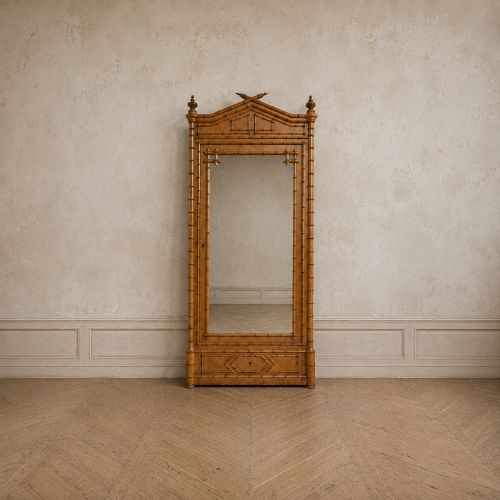
A victorian mirrored armoire is a grand bedroom storage piece bringing deep timber tones and bright reflective glass into any room.
Understanding the Victorian Mirrored Armoire
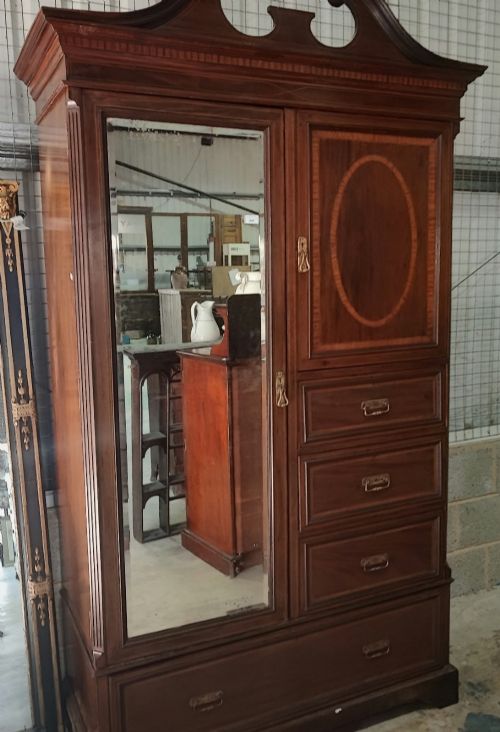
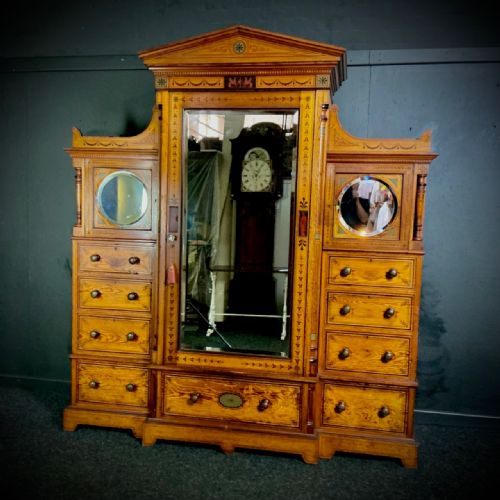
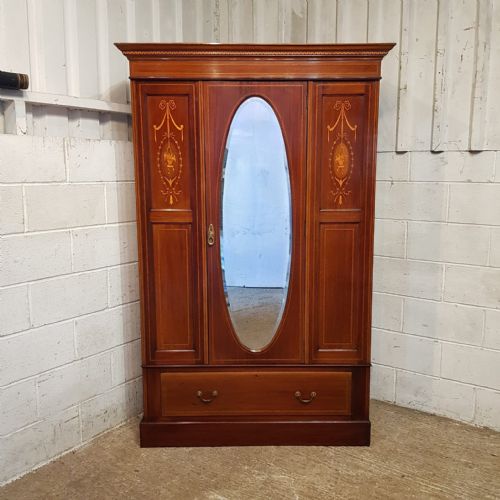
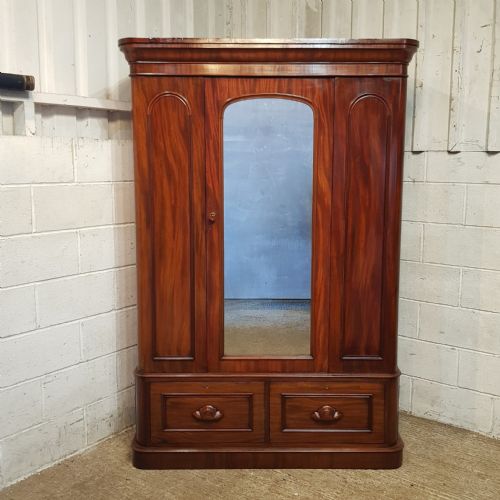
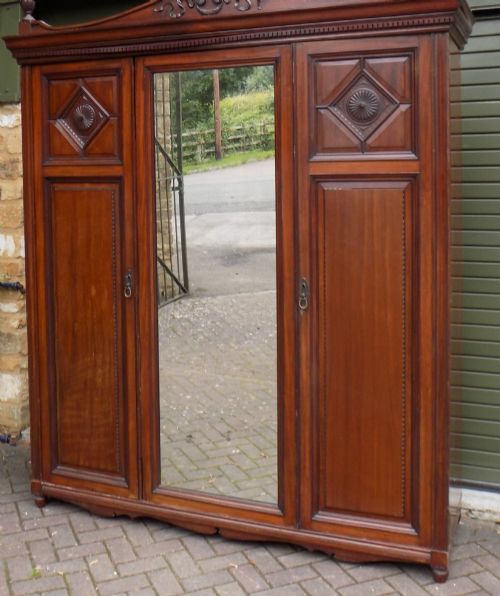
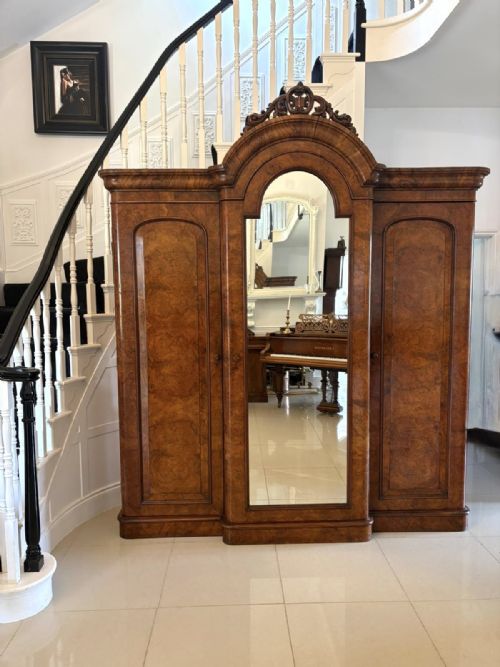
A victorian mirrored armoire is a substantial bedroom wardrobe featuring a large glass door designed to reflect light and space. These imposing pieces appear across the Victorian era, dating from the mid-nineteenth century through to the late nineteenth century.
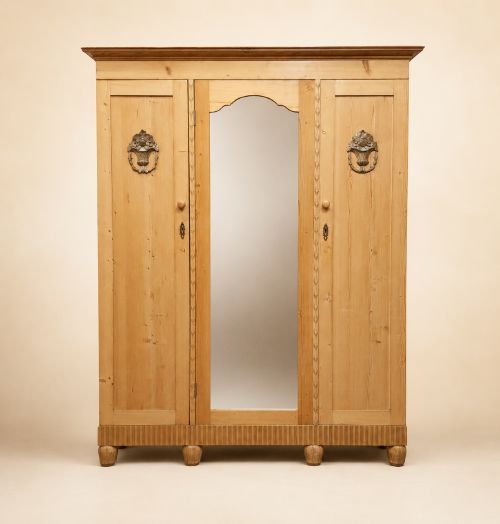
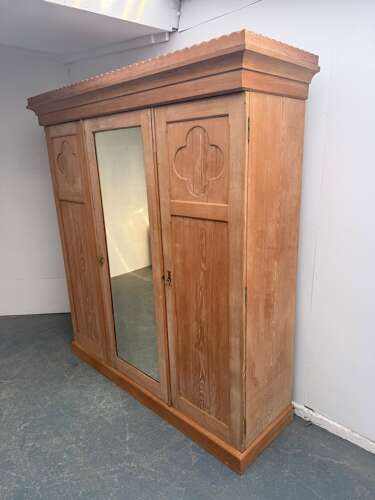
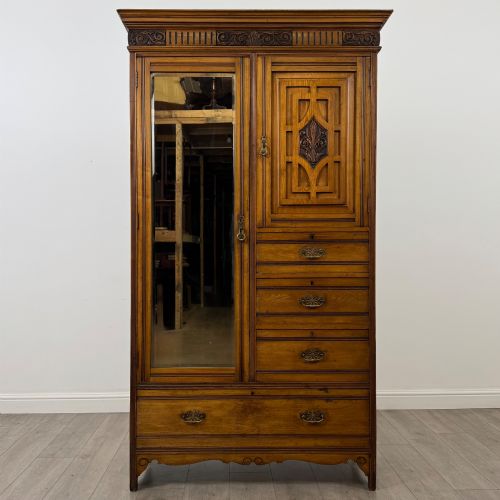
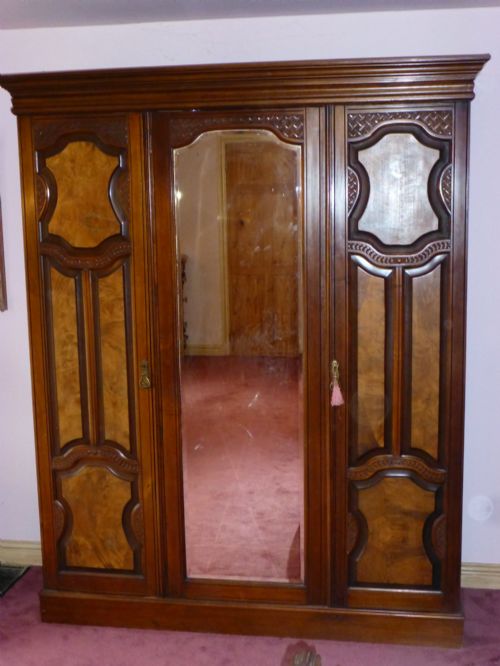
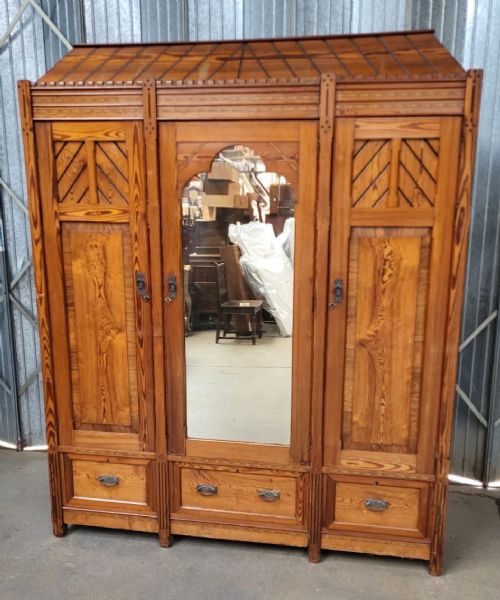
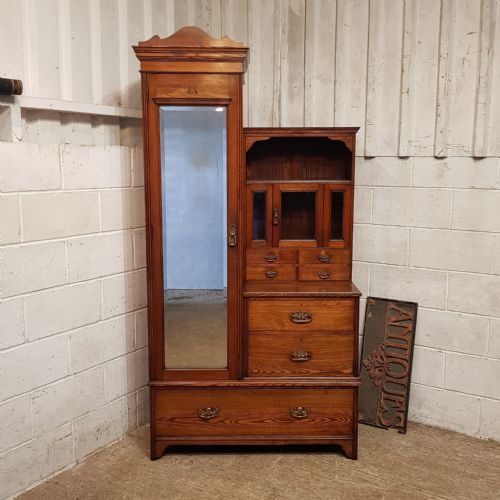
Buyers frequently encounter grand three-door configurations and large combination wardrobes alongside gentleman's wardrobes and Arts and Crafts examples. These items serve as functional clothes storage while dominating the bedroom interior with architectural presence.
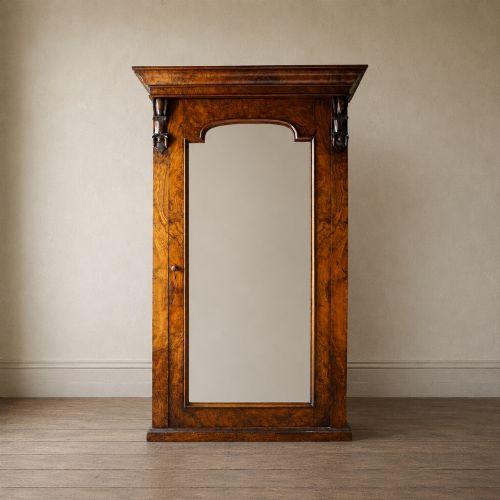
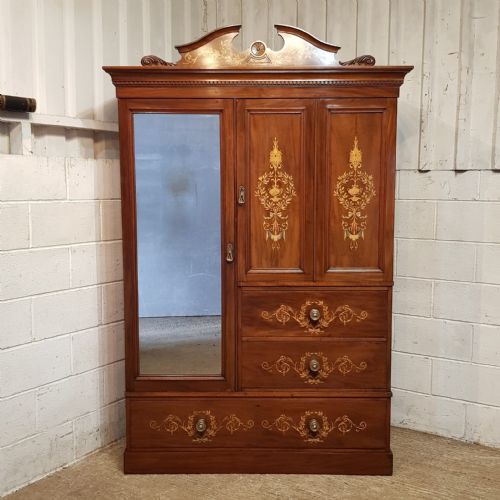
The selection ranges from burr walnut triple wardrobes to inlaid pitch pine and rich mahogany cabinets. Each piece demonstrates the heavy proportions and practical storage demands of nineteenth-century domestic life.
Construction and Materials
Cabinet makers utilised dense timbers including mahogany, pitch pine, satinwood, and burr walnut to build these large carcasses. These woods were often polished to a deep finish that highlighted the natural grain and figuring of the material.
Mirrored doors incorporated heavy bevelled or flat mirror glass held securely within wooden framing. Iron and brass hardware, including key escutcheons and hanging fittings, completed the structural assembly of the wardrobes.
Retail Price Guide 2026
Typical UK retail prices for victorian mirrored armoire, calculated from the Sellingantiques database of over a million retail prices indexed since 2003. This retail price guide relies exclusively on Sellingantiques data; no external sources or auction records are used, so the figures do not describe the wider market.
Some gentlemen's wardrobes still retain faint traces of nineteenth-century pipe smoke trapped inside the cedar-lined drawers.
Assessing Quality and Craftsmanship
Quality in a victorian mirrored armoire lies in the selection of timber veneers, such as richly figured burr walnut or carefully matched mahogany. Superior examples display meticulous attention to timber selection across large expansive surfaces.
Refined craftsmanship appears in delicate inlay work, well-fitted panel doors, and robust internal hanging space or linen presses. Lesser examples rely on plain timber framing with minimal decorative detail and simpler secondary woods.
The Victorian Mirrored Armoire Glossary
- Armoire
- A tall cupboard or wardrobe used primarily for hanging clothes. The term often denotes a grander French or continental influence within British furniture.
- Burr walnut
- A highly prized wood veneer showing swirling knot patterns. Cabinet makers used this timber on high-status Victorian statement pieces.
- Gentleman's wardrobe
- A specific wardrobe configuration featuring both hanging space and smaller drawers or trays. These compartments were designed for folded garments and accessories.
- Linen press
- A tall piece of furniture containing sliding trays or shelves traditionally used for storing linens. Lower sections frequently incorporate drawers.
Frequently Asked Questions
How do I fit one in a modern bedroom?
These wardrobes are large and heavy, requiring careful measurement of ceiling height and doorway clearance before delivery. Many examples are modular or dismantle into sections to ease transport.
Positioning the mirrored door opposite a window maximises natural light reflection, helping to brighten smaller modern spaces.
How do I care for the wood and glass?
Maintain the timber surfaces by applying a traditional beeswax polish to nourish the grain and prevent drying. Avoid placing the wardrobe in direct sunlight to protect the polish and wood colour.
Clean the mirror glass with a simple cloth and mild solution, taking care to keep moisture away from the wooden frame edges.
How are different periods identified?
Mid-Victorian pieces from around 1860 often display rich burr walnut veneers and classical proportions. Later nineteenth-century examples may incorporate lighter pitch pine and geometric Arts and Crafts inlay.
Construction methods, drawer linings, and hardware styles help confirm the approximate decade of manufacture.