
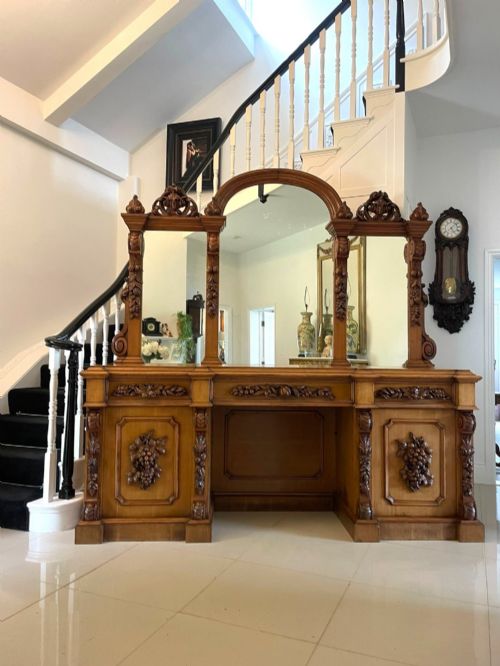
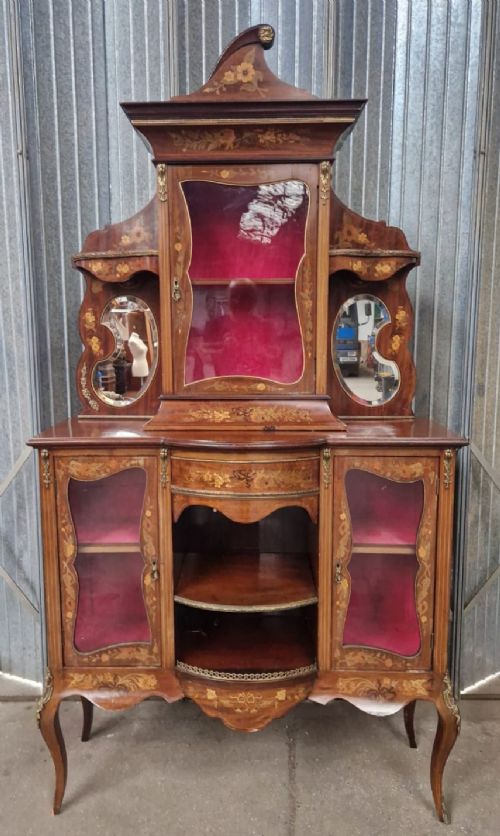
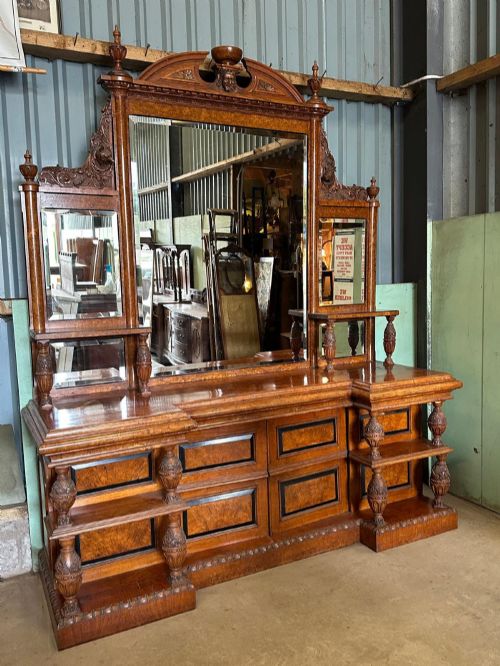
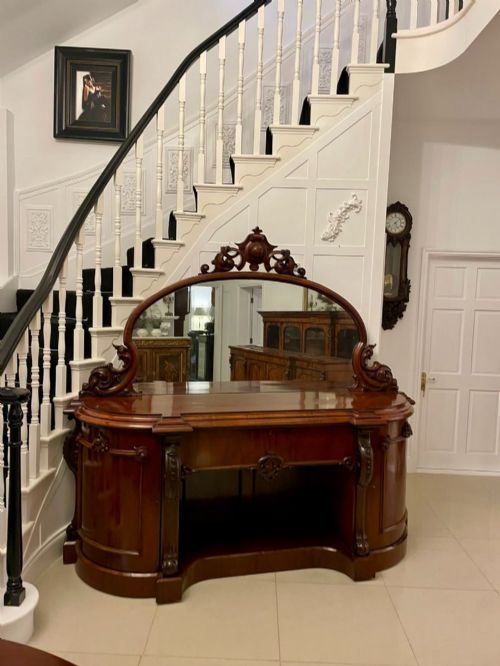
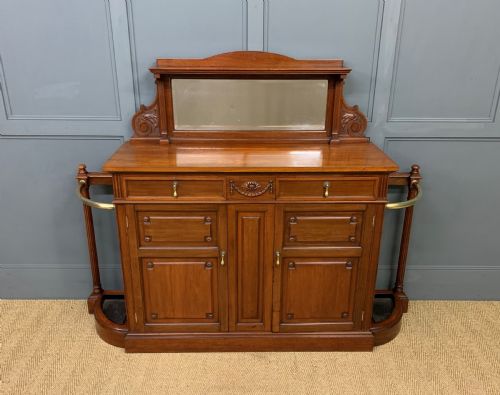
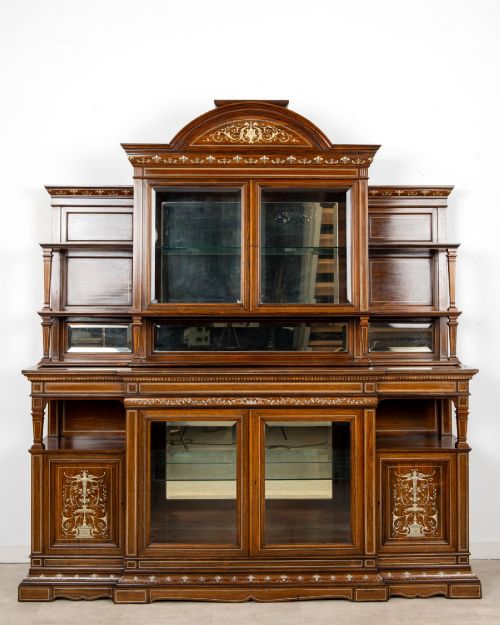
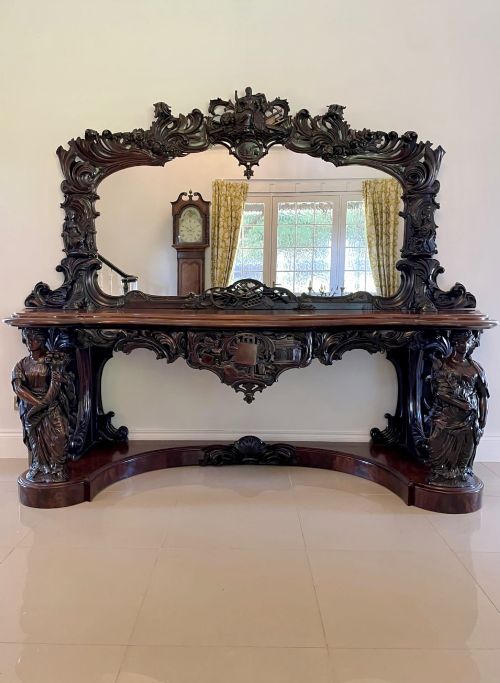
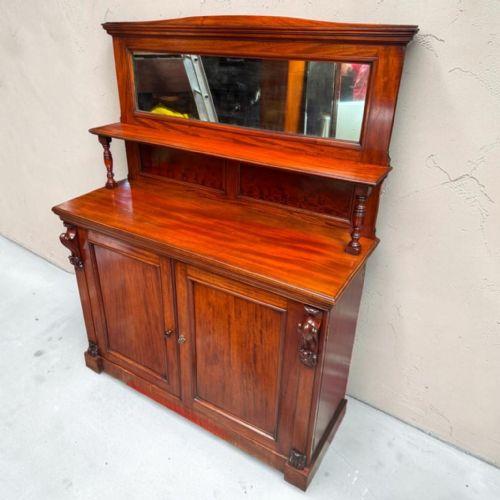
Victorian Mirror Backed Sideboard
A victorian mirror backed sideboard brings together deep timber and polished glass to anchor a formal dining room or parlour.
Victorian Mirror Backed Sideboard
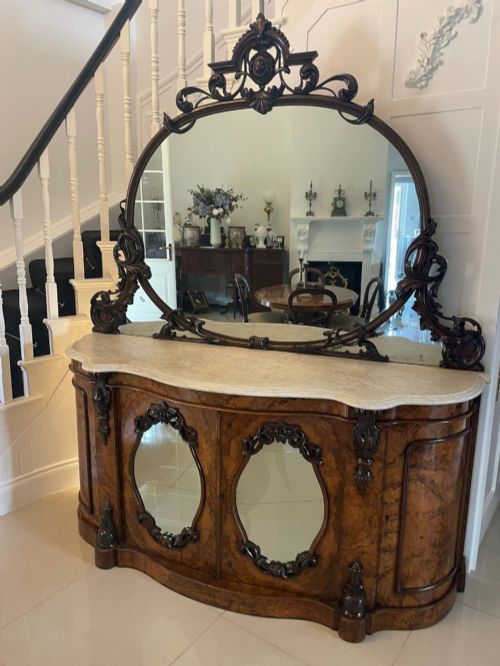
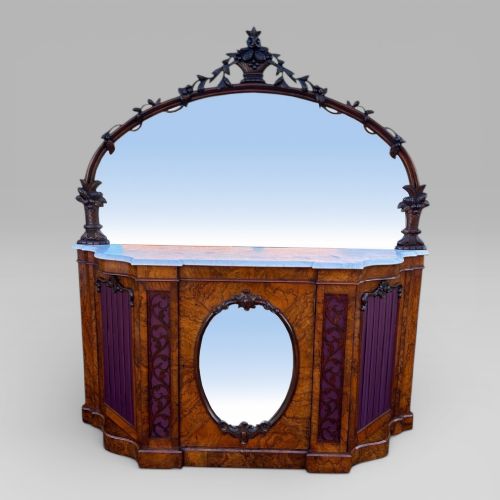
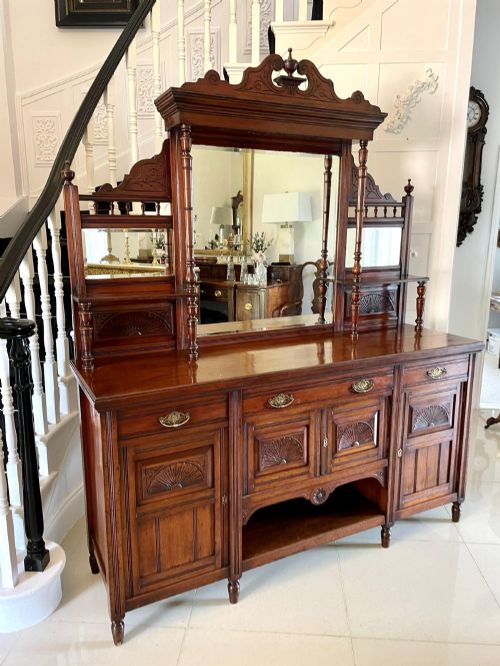
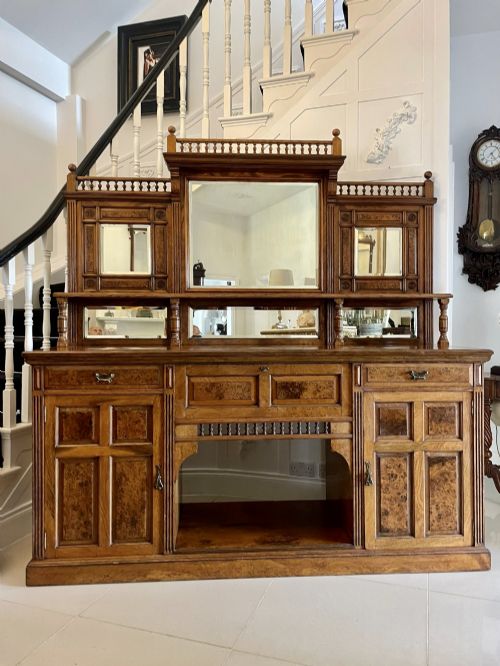
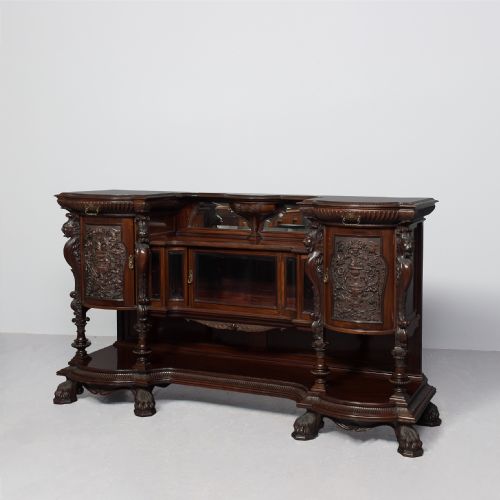
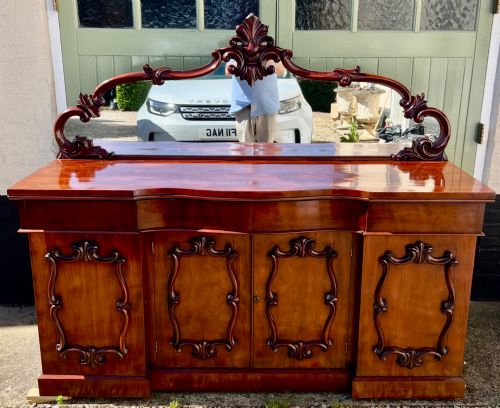
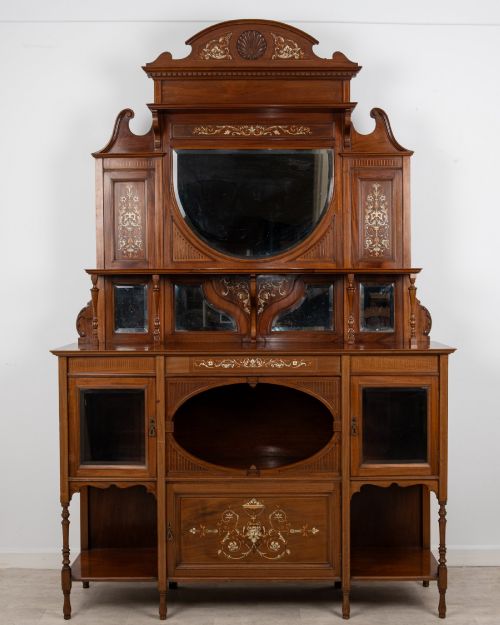
A victorian mirror backed sideboard combines a heavy timber base fitted with cupboards or drawers with an upright superstructure holding a glass mirror. These substantial pieces emerge from the nineteenth century across periods spanning early victorian decades through to late victorian workshops.
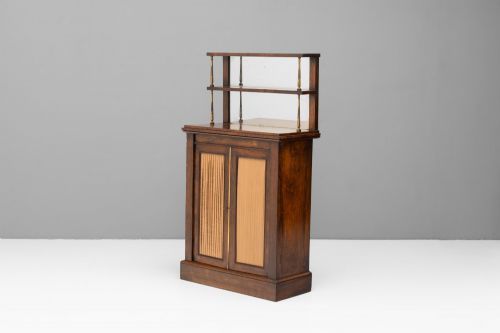
The form appears in various guises across the listings, including credenzas, chiffoniers, and console tables. Oak, mahogany, and burr walnut form the core structural timbers of these large dining room and parlour furnishings.
Materials and construction
Cabinetmakers select dense hardwoods such as mahogany, oak, and walnut, often applying decorative veneers of burr walnut, rosewood, or pollard oak to prominent surfaces. Carved ornamentation, brass mounts, and inlaid marquetry panels frequently enrich the timber frames.
The upright mirror is set into a carved or moulded wooden surround that is securely fixed to the main sideboard base. Heavy marble tops also feature on selected walnut and mahogany examples from the middle decades of the nineteenth century.
Certain heavy oak iterations feature carved green man motifs peering out from the woodwork to watch over the dining room.
Distinctions in manufacture
The calibre of a victorian mirror backed sideboard rests upon the depth of the timber carving and the selection of figured veneer figures such as burr walnut or pollard oak. Superior examples display crisp hand-carved details, heavy brass hardware, and substantial proportions.
Makers identified with exhibition quality or known cabinet-making firms demonstrate tighter joinery and more ambitious architectural framing in their mirror superstructures.
Shoolbred and Co·Collinson and Lock·Holland and Sons·T Simpson and Son
The Victorian Mirror Backed Sideboard Glossary
- Sideboard
- A large dining room piece designed for serving food and storing tableware. It usually incorporates a combination of drawers and cupboards.
- Credenza
- A low dining or drawing room cabinet, frequently featuring mirrored doors or an associated mirror back. This form emerged strongly during the mid nineteenth century.
- Chiffonier
- A compact sideboard or cabinet equipped with enclosed shelving and an upper superstructure. These pieces suit smaller parlour spaces.
- Marquetry
- The art of applying decorative veneer pieces in geometric or floral patterns onto a solid timber carcase. Walnut and rosewood pieces frequently utilise this technique.
- Pollard oak
- Timber taken from trees that have been pollarded, producing a heavily knotted and textured grain pattern. Cabinetmakers prize this wood for feature panels.
Victorian Mirror Backed Sideboard: Frequently Asked Questions
What is a victorian mirror backed sideboard used for?
These large pieces serve as both storage units and display surfaces within formal dining rooms and sitting rooms. The base cupboards hold dining silver, linens, or glassware.
The upper mirror reflects light around the room and displays decorative ceramics or glassware placed on the rear ledge.
How do I date a mirror backed sideboard?
Dating relies on observing the prevailing stylistic revival movements, timber choices, and construction methods recorded across the nineteenth century. Early victorian pieces often utilise rosewood or mahogany, while later decades favour pollard oak and burr walnut.
Attribution stamps or recorded cabinetmaker labels further assist in narrowing the decade of production.
Where should I place a heavy sideboard?
Because of their substantial timber construction and fitted mirror superstructures, these sideboards require a solid wall capable of supporting a tall, heavy furniture item. Dining rooms and spacious entrance halls provide the necessary floor space and clearance.
Positioning them away from direct sunlight protects vulnerable polished mahogany, rosewood, and walnut veneers from fading.
How do walnut and oak pieces differ?
Walnut and burr walnut pieces often display rich figured veneers, marquetry inlay, and curved rococo or renaissance revival carvings. They typically originate from mid to late nineteenth century parlours.
Oak examples, including pollard oak variants, exhibit heavier grain textures and frequently align with gothic revival or arts and crafts aesthetics.