





Victorian Milking Stool
These robust pieces of domestic and workshop utility carry the honest marks of daily labour.
Victorian Milking Stool
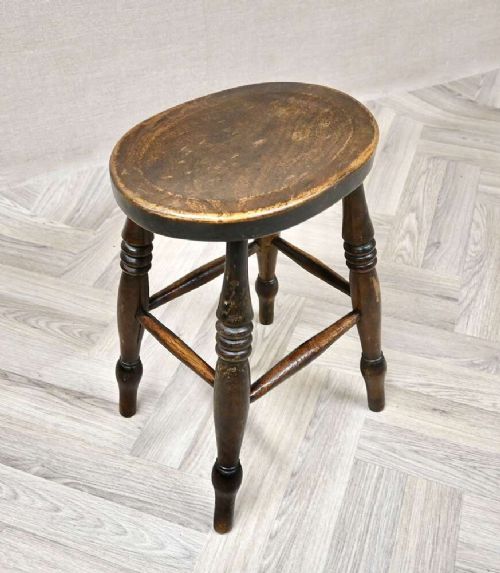
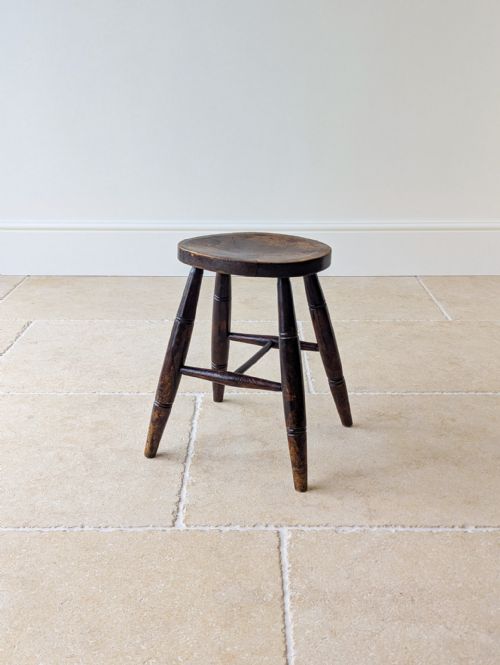
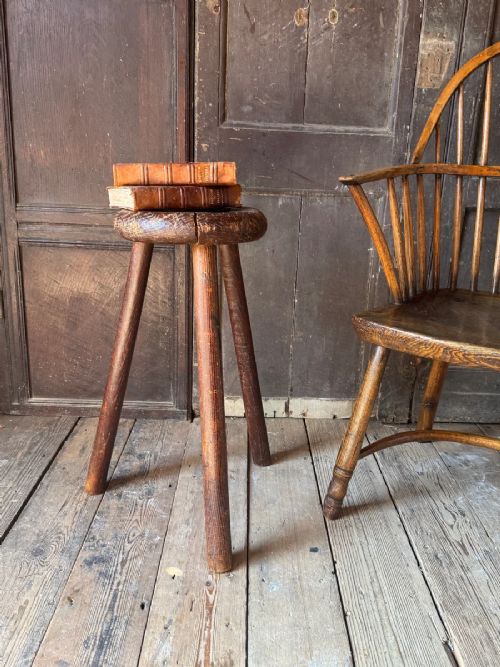
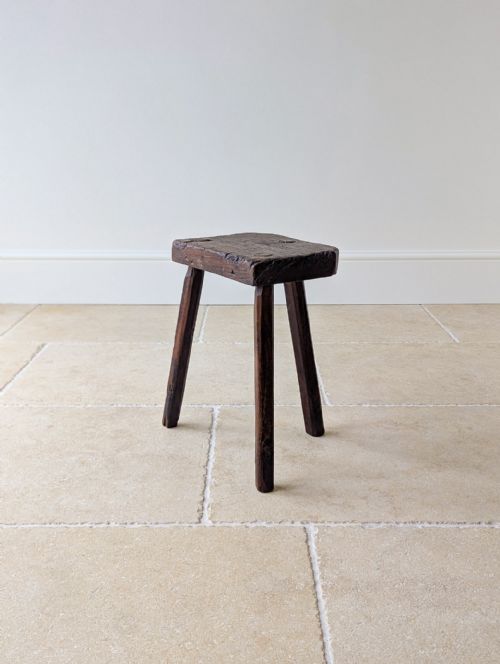
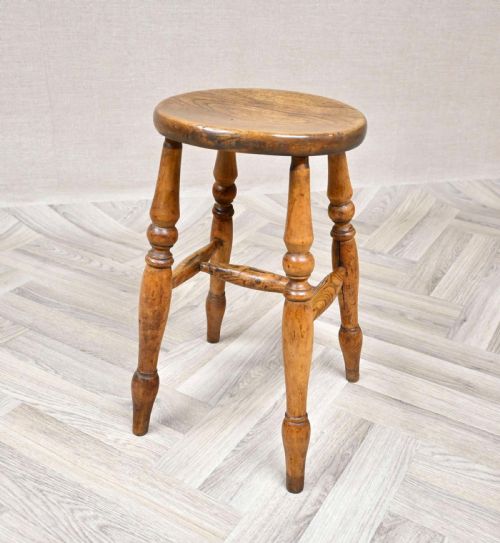
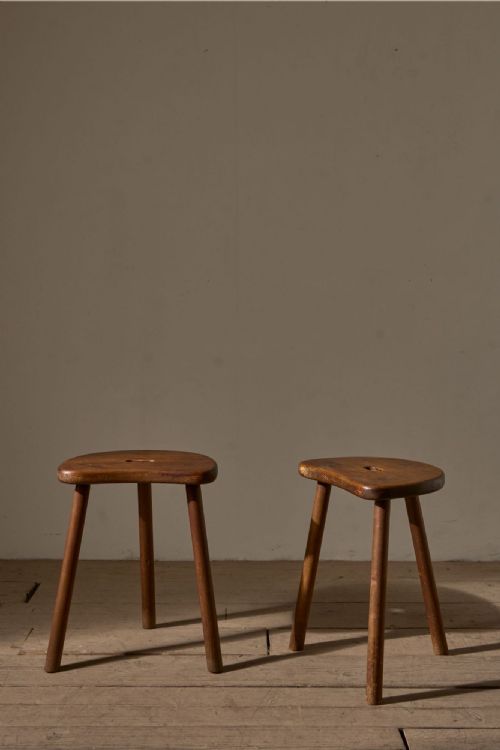
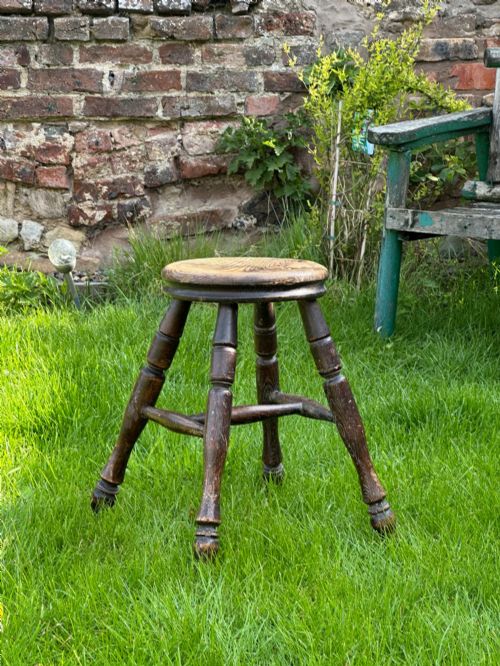
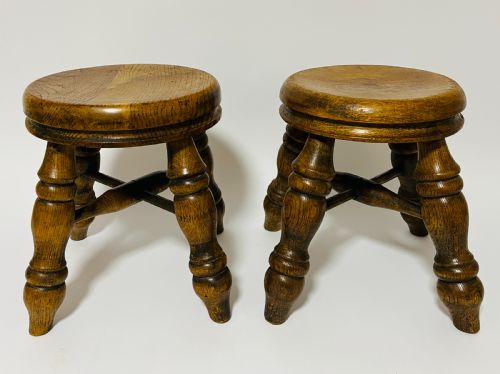
When you search for a Victorian milking stool, you find humble three-legged and four-legged seats made for practical use in dairies, homes, and trades. The pieces seen here span the nineteenth century, including vernacular country items, dairy seats, and specialist workshop stools.
Most examples rely on sturdy timber construction with simple saddle, oval, or flat seats supported by turned or peg legs. Alongside traditional dairy forms, the selection includes variants linked to trades such as jewellers, cutlers, and alehouses.
These survivors of rural and workshop life fit easily into modern interiors as side tables, footstools, or low seats. Their unpretentious forms and honest utility explain their lasting appeal to collectors of country furniture.
Materials and construction methods
Maker-craftsmen built these utilitarian items from durable native woods such as elm, oak, ash, beech, pine, and walnut. Elm frequently provided the tough, split-resistant timber needed for shaped or saddle seats.
Joints typically utilised wedged tenons or simple turned legs fitted directly into drilled seat bases. Surfaces show the marks of adzes, drawknives, and lathes, reflecting straightforward manual methods designed for strength rather than display.
The listings show a dominant use of elm, oak, and ash across nineteenth-century vernacular stools.
Assessing quality and character
Quality in these vernacular pieces rests on the integrity of the timber, the balance of the proportions, and the depth of the surface patina. Strong grain patterns and the natural wear of daily use separate exceptional examples from ordinary ones.
The sophistication of the turning on the legs and the careful shaping of the seat top distinguish finer country workshop production. Alterations, replaced legs, or excessive restoration diminish the honest character expected in these utility objects.
J. Shoolbred
The Victorian Milking Stool Glossary
- Vernacular
- Everyday objects made by local craftsmen for practical use rather than following high-style academic designs. These items reflect regional traditions and available local materials.
- Windsor stool
- A seat featuring turned legs fitted directly into a solid, often saddled wooden base. This construction method provides notable strength and stability.
- Saddle seat
- A wooden top shaped with ergonomic hollows or curves reminiscent of a riding saddle. This design offers comfort during long hours of sitting.
- Bobbin turned
- Legs or stretchers shaped on a lathe to resemble a series of wooden bobbins or spools. This decorative turning style appears on nineteenth-century frames.
- Patina
- The deep surface sheen and colour developed by wood over decades through handling, waxing, and ageing. A rich patina indicates genuine age and use.
Victorian Milking Stool: Frequently Asked Questions
What were milking stools used for?
These low seats provided a stable, portable perch for farm workers during hand milking in the dairy or pasture. Their three-legged design ensured steadiness on uneven earthen or cobbled floors.
Over time, similar sturdy forms found employment across various trades and domestic settings where a low, robust seat was required.
How do I use a milking stool at home?
Their compact size allows them to function effectively as low side tables, plant stands, or casual extra seats in tight spaces. Many collectors also place them beside armchairs to serve as low footstools.
Placing them in hallways or living rooms introduces an element of tactile rustic texture without cluttering the floor area.
Are all these stools from the dairy?
While the search term highlights dairy furniture, the category encompasses a broad range of nineteenth-century vernacular seating. The listings include workshop stools for cutlers and jewellers, alehouse seats, and general country household stools.
Each trade variation adapted the basic timber seat format to suit the specific physical demands of the worker.
How do I identify nineteenth-century timber types?
Elm frequently displays a twisted, interlocking grain pattern that resists splitting, making it the preferred choice for solid saddle seats. Oak and ash provide rigid strength for turned legs and stretchers.
Pine and beech appear regularly in simpler vernacular or painted examples intended for straightforward domestic tasks.