


Victorian Military Trunk
A victorian military trunk is a robust travelling chest built for officers on the move, offering modular storage and enduring timber construction.
Victorian Military Trunk
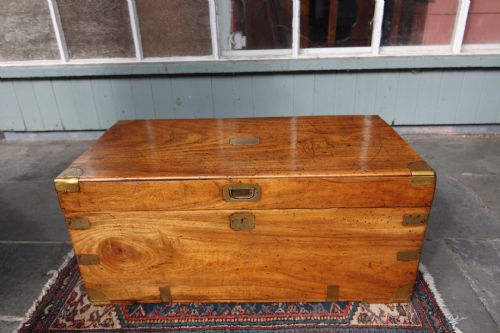
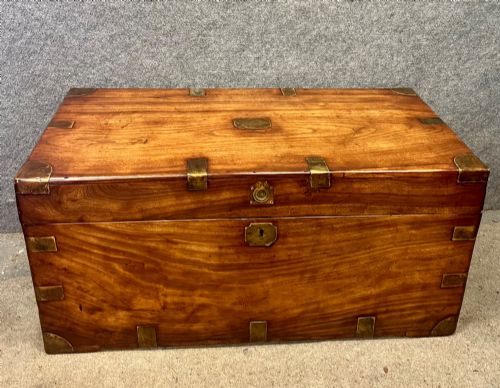
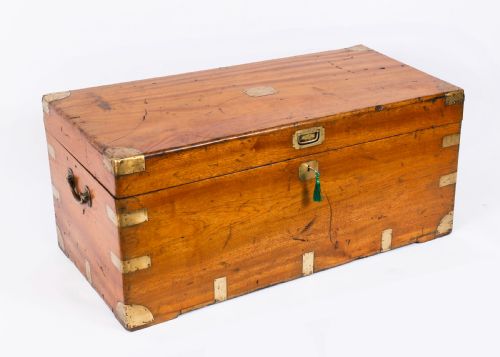
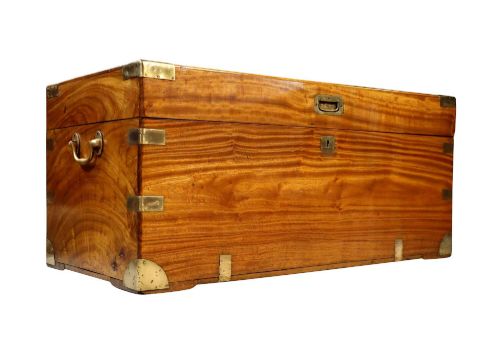
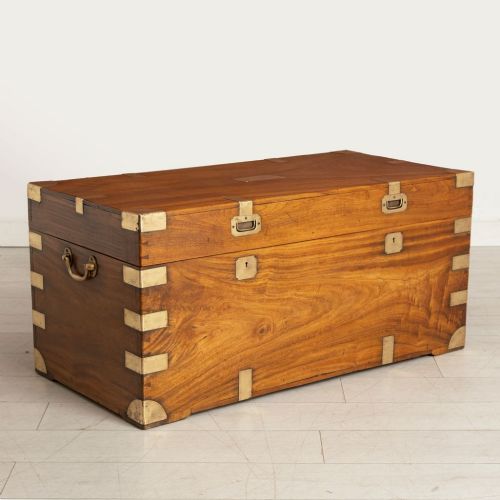
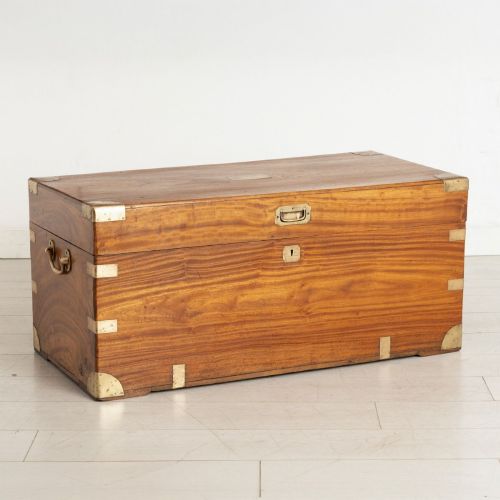
A victorian military trunk is built for colonial service and campaign travel, designed to withstand arduous transport across land and sea. These heavy-duty storage containers appear frequently as solid camphorwood, teak, or mahogany chests fitted with sturdy metal hardware.
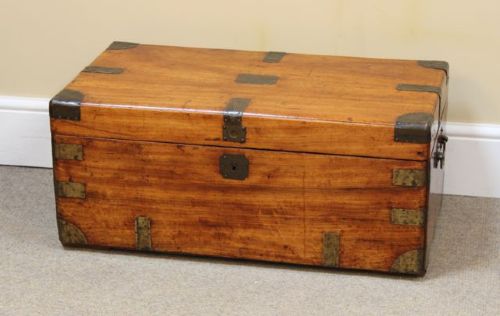
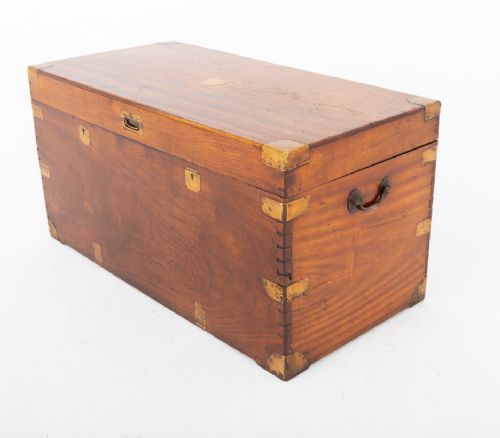
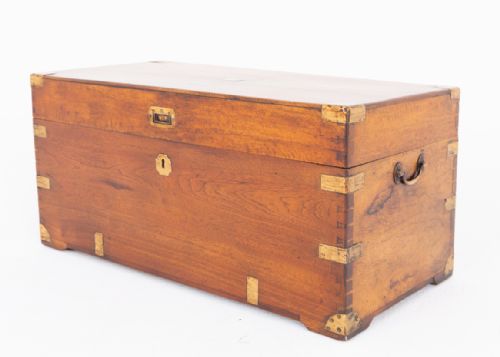
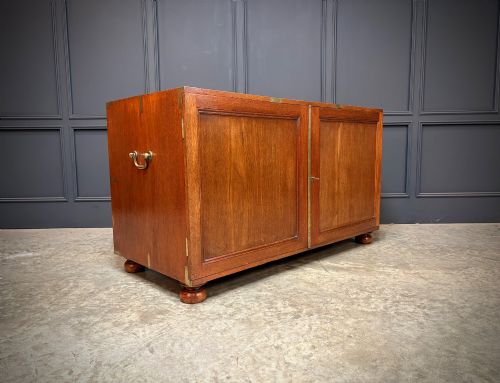
The most common examples on this page are camphor wood and teak chests dating from the nineteenth century, often featuring brass binding and recessed carrying handles. Buyers also encounter related forms such as campaign chests of drawers, hat boxes, and side cabinets designed for army and naval officers.
Materials and construction
Makers utilised dense timbers such as camphorwood and teak because these woods resisted humidity, insect attack, and warping during long sea voyages. Camphorwood also imparted a natural aroma that kept textiles safe from moths in tropical postings.
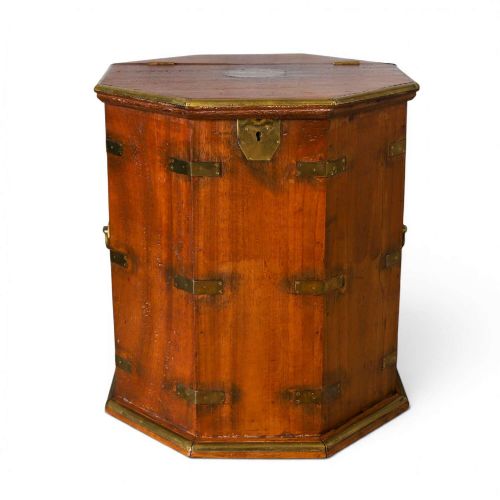
Reinforcement came from brass corners, straps, and binding screwed securely to the exterior to protect edges from rough handling during transport. Recessed flush handles allowed the chests to pack tightly into baggage wagons and ship holds without snagging.
Listings feature nineteenth-century camphor wood, teak, and mahogany chests alongside toleware hat boxes and leather travel luggage.
Quality factors in campaign furniture
Construction standards depend heavily on the integrity of the original hardware and the thickness of the timber used for the carcase. Superior pieces retain their original brass flush handles, working locks, and interior compartmentalisation rather than replacement fittings.
The sophistication of the internal layout distinguishes standard storage boxes from officer-grade pieces made for active service. Fine examples feature secret drawers, pigeonholes, or fitted writing surfaces tucked beneath the hinged lid.
Drew and Sons·JW Allen
The Victorian Military Trunk Glossary
- Campaign furniture
- Portable furnishings made for military officers on active service abroad, constructed to dismantle or pack securely into transit cases. These items prioritize modular utility and robust joinery.
- Brass bound
- Edges and corners reinforced with brass strips and corner pieces fixed with screws. This protective metalwork prevents the timber from splitting during rough transit.
- Flush handle
- A metal lifting handle inset into the surface of the trunk so it does not project outward. This design allows multiple chests to be stacked closely together without damaging adjacent pieces.
- Camphor wood
- An aromatic hardwood native to Asia, prized for its distinct scent and natural resistance to pests. It remains the most prevalent timber found in nineteenth-century campaign chests.
- Coffer
- A large heavy box used for storing valuables, linens, or equipment. In military contexts, it functioned as both a storage chest and a makeshift table.
Victorian Military Trunk: Frequently Asked Questions
What is a victorian military trunk?
A victorian military trunk is a heavy-duty storage chest constructed for British officers travelling across the empire during the nineteenth century. These pieces combine dense hardwoods with protective metal fittings to survive long journeys.
Today, they function well as decorative coffee tables or storage blanket boxes in domestic interiors. Their rugged construction allows them to endure daily use while retaining a distinct historical character.
Why are most campaign trunks made of camphor wood?
Camphor wood was chosen because its natural oils repel insects and resist the rotting effects of high humidity during tropical postings. The distinctive aroma also helped keep stored uniforms fresh.
Cabinetmakers valued the timber for its stability and grain, making it an ideal medium for transport furniture that had to endure extreme climates.
How do you date a military trunk?
Dating relies on examining the timber species, the style of the brass hardware, and construction methods such as dovetailing. Pieces from the middle of the nineteenth century often feature hand-cut joints and simple brass strapping.
Later Victorian examples may incorporate machine-made screws and standardised fittings. Maker stamps or regiment marks inside the lid also provide precise historical context.
Can you use a campaign chest as a coffee table?
These chests make exceptional coffee tables due to their flat hinged tops and substantial proportions. Their low profile sits well in front of modern sofas while providing hidden storage space inside.
Buyers should ensure the lid is stable and the wood finish can withstand everyday placement of cups and books.