



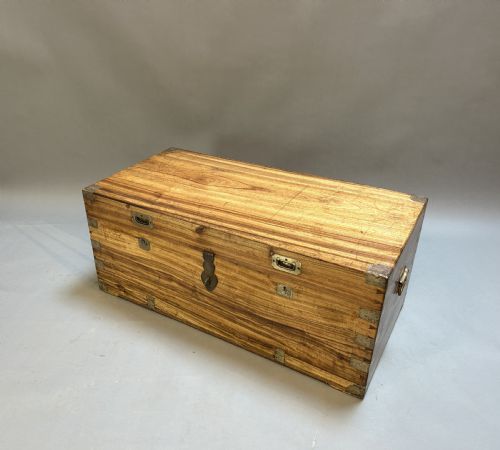
Victorian Military Campaign Trunk
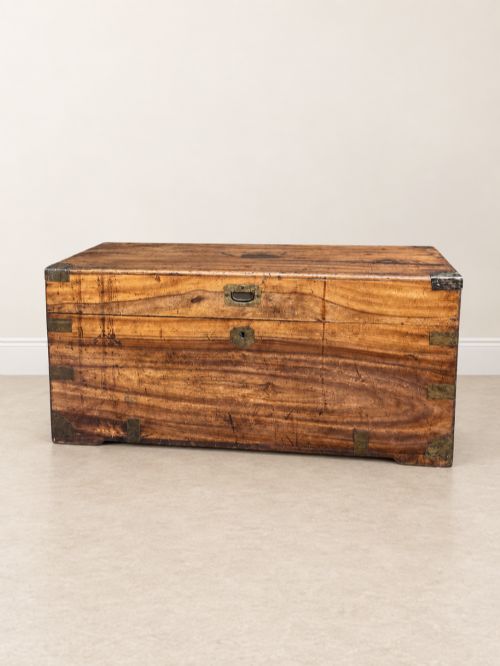
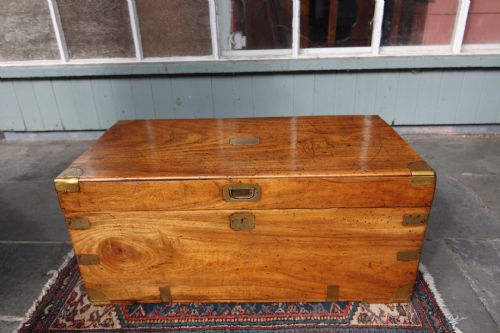
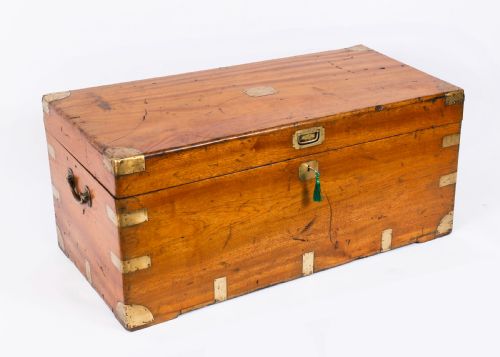
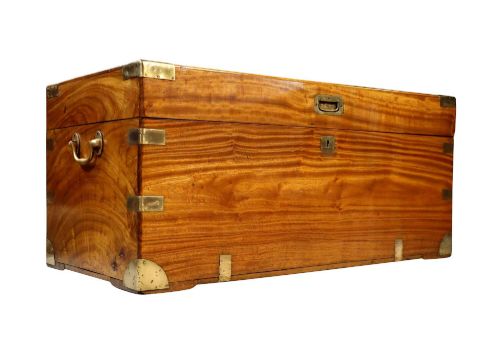
A victorian military campaign trunk provides portable storage designed for officers on the move, combining sturdy timbers with protective metal hardware.
Victorian Military Campaign Trunk
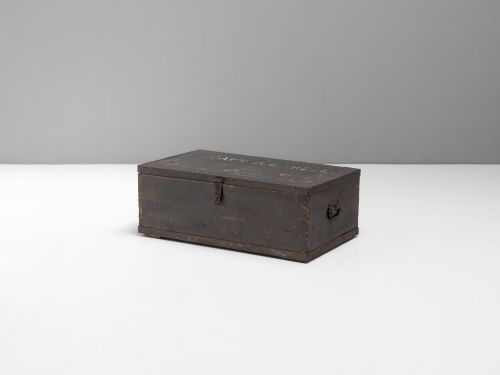
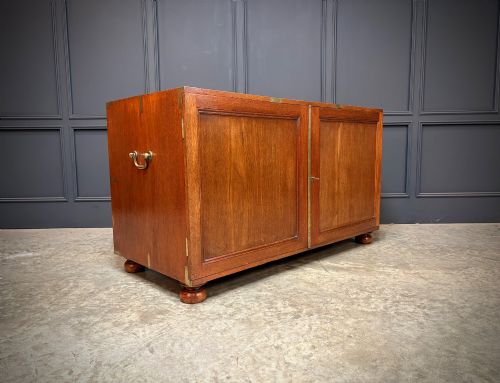
A victorian military campaign trunk is essentially a robust travelling chest built to withstand the rigours of transport across the British Empire during the nineteenth century. These pieces typically take the form of heavy wooden boxes, chests of drawers, or side cabinets designed to separate into modular sections for easier carriage by pack animal or cart.
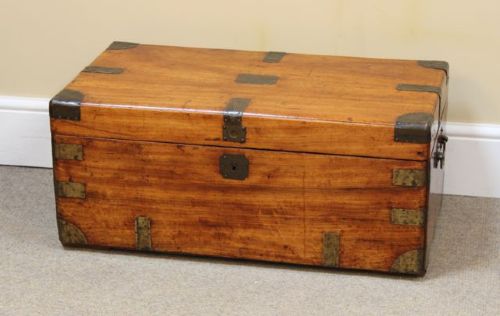
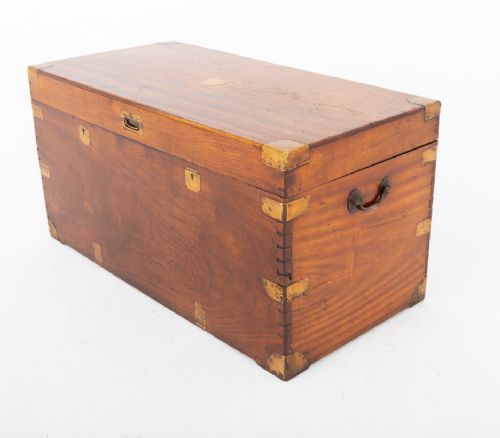
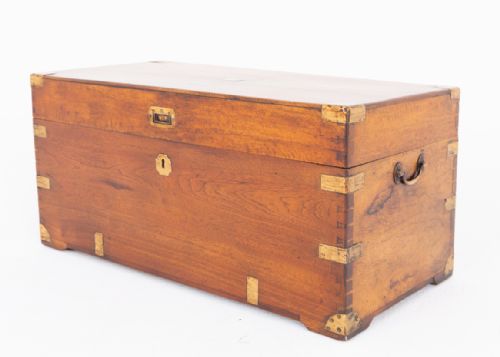
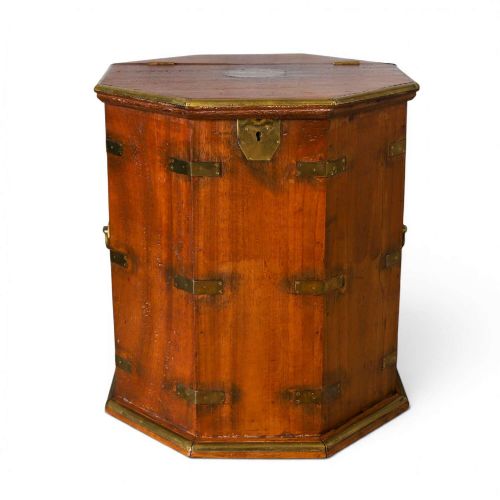
The most common examples on this page are constructed from fragrant camphor wood or teak, often reinforced with brass corners and straps to protect the edges from heavy impacts. Many retain original recessed drop handles and keyholes, which prevented the hardware from catching on ropes or canvas during transit.
Materials and Construction
Makers relied on dense, resilient hardwoods such as camphor wood, teak, and mahogany that could endure tropical humidity and constant shifting without splitting. Camphor wood was particularly favoured for its natural insect-repellent properties, protecting the uniforms and papers stored inside during long voyages.
Brass corners, straps, and flush-fitting hardware were screwed securely into the timber to reinforce the joints and protect the edges from knocks. Dovetail joints frequently secure the carcass, while internal partitions and fitted trays help organise personal belongings.
Assessing the Pieces
Quality rests heavily on the integrity of the timber, the weight of the brass fittings, and whether the hardware remains entirely original to the piece. Pieces constructed from solid camphor wood or teak with crisp, unpolished brass banding sit at a higher standard than those altered or stripped of their original mounts.
The sophistication of the internal fittings also separates standard transport boxes from bespoke officer pieces. Fitted interiors featuring secret drawers, writing slopes, or original brass locks indicate superior commission work intended for high-ranking service personnel.
JW Allen·Drew and Sons
The Victorian Military Campaign Trunk Glossary
- Campaign chest
- A modular chest of drawers designed to divide into two or more stacked sections for transport. These sections usually feature heavy carrying handles on the sides.
- Camphor wood
- An aromatic Southeast Asian timber commonly used for military trunks because its natural scent deters moths and insects. It is recognisable by its distinct herbal fragrance.
- Recessed handle
- A metal pull let into the surface of the wood so it sits completely flush. This prevented the hardware from snagging on ropes or tearing canvas covers during transit.
- Brass bound
- Reinforcement of the edges, corners, and panels with brass strips and plates. This protected the wooden joints from heavy impacts on rough journeys.
- Toleware
- Lacquered or enamelled tinplate used for protective travel containers such as hat boxes and document cases. It provided a lightweight, water-resistant alternative to heavy wooden trunks.
Victorian Military Campaign Trunk: Frequently Asked Questions
What is a campaign trunk?
A campaign trunk is a sturdy, portable chest built for military officers travelling on duty during the nineteenth century. These boxes were constructed to endure rough handling and shifting climates.
They often feature reinforced corners and flush hardware to make packing and transport straightforward for troops on the move.
Why use camphor wood?
Camphor wood was chosen for its natural resistance to insects and damp conditions encountered during colonial service. The strong scent protected uniforms and documents from moths during long sea voyages.
Today, the timber retains its characteristic aroma when the trunk lid is opened.
How were these trunks used?
Officers utilised these chests to transport uniforms, maps, books, and personal valuables across various territories. The interiors often included compartments or trays to keep equipment organised.
Many pieces were designed to double as makeshift desks or bedside tables once the owner reached camp.
How do I date a campaign trunk?
Dating relies on examining the construction methods, timber types, and the style of the brass hardware. Mid-nineteenth-century examples frequently display heavy brass binding and dovetailed joints.
Later Victorian pieces often incorporate more refined internal fittings and specific lock stamps associated with period makers.