
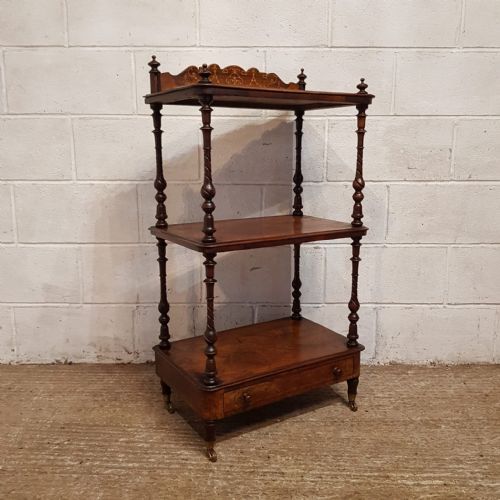


Victorian Marquetry Etagere
A victorian marquetry etagere brings layered display space and intricate floral or geometric timber inlay to a Victorian interior.
Victorian Marquetry Etagere
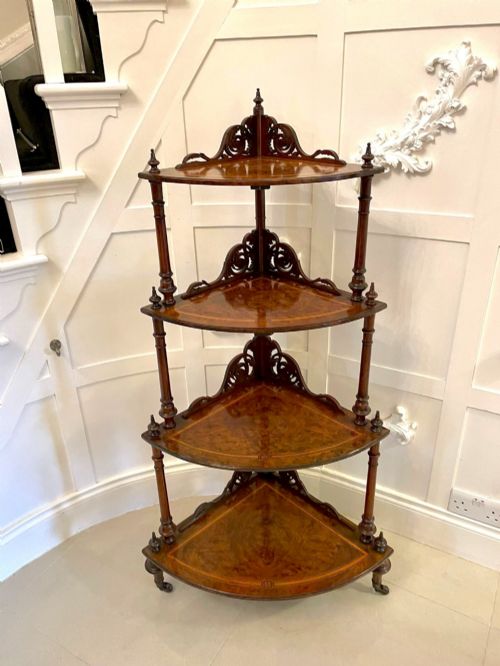
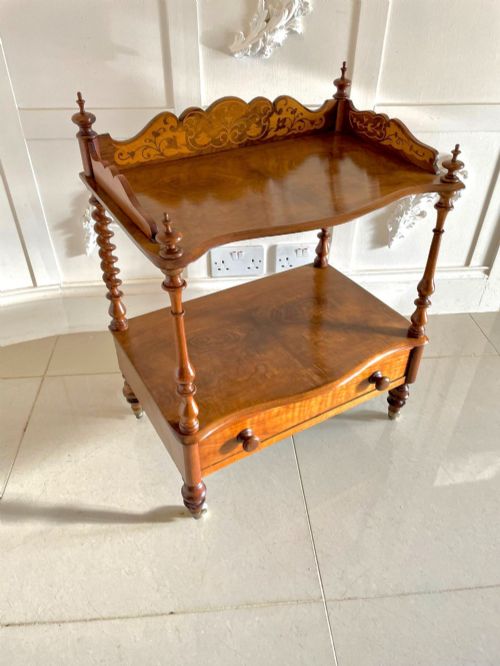
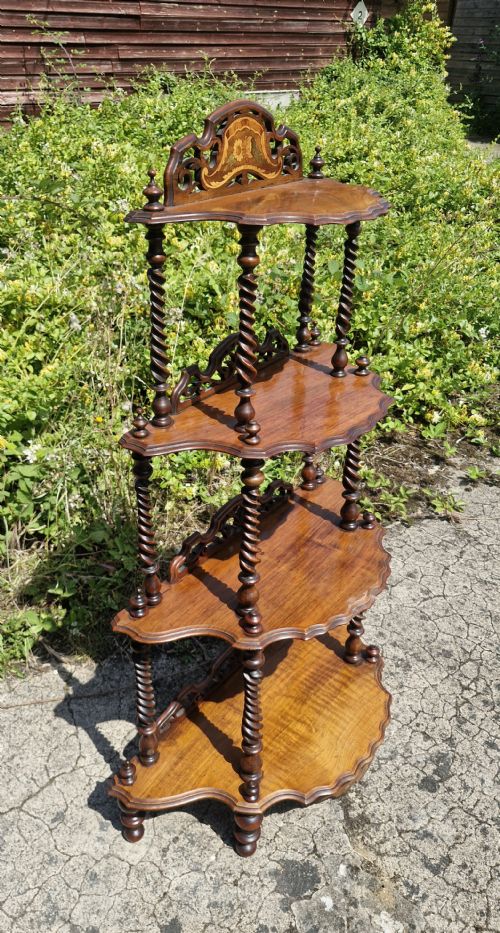
A victorian marquetry etagere is an open tiered stand or multi-level occasional table designed for displaying ornaments, ceramics, and small cabinet pieces. You will frequently encounter multi-tier standing whatnots, corner stands, and tray tables featuring distinct marquetry decoration.
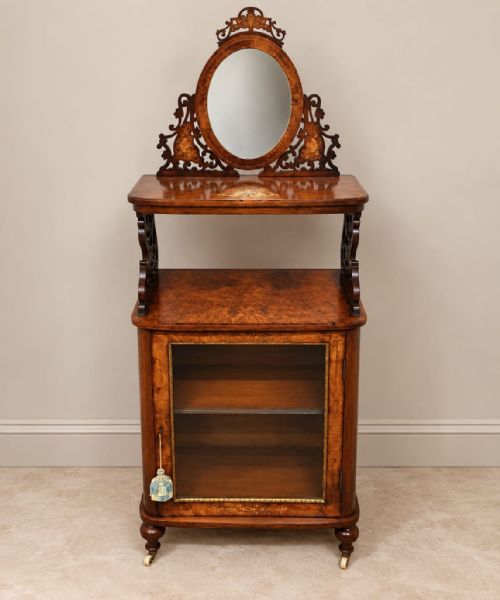
The pieces on this page span the nineteenth century, with strong representation from the Victorian period alongside Edwardian examples. Forms range from three and four tier upright shelving units to side tables, console tables, and specialised display cabinets.
Makers and designers drew upon French Revival, Sheraton Revival, and Aesthetic Movement idioms. These stylistic influences appear in serpentine outlines, brass mounts, and meticulous wood-inlaid surfaces.
Materials and Construction
Cabinet makers built these pieces primarily using walnut, burr walnut, mahogany, rosewood, and satinwood as primary timbers. Marquetry inlay employed contrasting light and dark woods to create decorative floral, scroll, or architectural motifs across the tiers and tops.
Fine examples incorporate brass mounts, gallery rails, and inset mirror glass to enhance the reflective quality of the tiered shelves. Structural support ranges from slender turned columns to four-tier corner uprights designed to fit domestic interiors.
The documented forms include corner stands, tray tables, display cabinets, and standing whatnots spanning the Victorian and Edwardian periods.
Assessing Craftsmanship
Quality rests upon the crispness of the marquetry cutting and the choice of timber veneer, particularly the grain selection in burr walnut and satinwood. Finer pieces display precise, tight inlay work where contrasting woods fit seamlessly without excessive filler.
The sophistication of the overall silhouette distinguishes standard production from exceptional examples, whether expressed through shaped tiers, brass gallery details, or signed maker attribution.
Edwards & Roberts·Donald Ross
The Victorian Marquetry Etagere Glossary
- Etagere
- A piece of furniture consisting of a set of open shelves for displaying small objects or ornaments. It often takes the form of a tiered stand or multi-level occasional table.
- Marquetry
- Decorative inlay work where small pieces of wood veneer are fitted together to form pictorial or geometric patterns. This technique covers tabletops, shelves, and cabinet doors.
- Burr Walnut
- A specialised wood grain obtained from walnut tree growths, valued for its swirling patterns. Cabinet makers prized it for creating rich decorative surfaces on Victorian furniture.
- Whatnot
- A nineteenth-century term for an open shelved cabinet or stand used for holding curiosities. It shares its primary function and tiered structure with the etagere.
- Satinwood
- A durable, yellowish timber native to India and Sri Lanka used for contrasting inlay and stringing. It provides a bright, reflective tone alongside darker woods like walnut and rosewood.
Victorian Marquetry Etagere: Frequently Asked Questions
What is a victorian marquetry etagere used for?
These tiered stands served as decorative display furniture in nineteenth-century drawing rooms and parlours. Victorians used the open shelves to exhibit porcelain, small sculptures, and prized decorative items.
Today, they function well in modern interiors as lamp tables, corner display units, or bedside surfaces. Their multiple tiers provide vertical storage and display capacity without occupying a large floor footprint.
How do I identify the period of an etagere?
Dating relies upon timber selection, construction methods, and stylistic vocabulary. Pieces from the middle and late nineteenth century frequently utilise burr walnut, rosewood, and elaborate marquetry inlay influenced by French taste.
Later items extending into the Edwardian era often show lighter satinwood applications and simpler Sheraton Revival lines. Comparing the jointing and secondary woods underneath helps confirm the nineteenth-century production date.
Where should I place an etagere at home?
Standing tiers and corner etageres suit empty wall angles, landings, or spaces beside seating furniture. Corner models maximise awkward room junctions while providing several levels of display surface.
Avoid positioning delicate veneered walnut and marquetry surfaces in direct, strong sunlight. Stable indoor humidity protects the timber veneers and prevents the inlaid elements from lifting.
How do etageres differ from standard tables?
Unlike single-surface occasional tables, etageres feature two, three, or four distinct levels stacked vertically. This stepped configuration maximises display area within a compact floor space.
Many examples incorporate raised gallery rails or delicate spindles around each tier to prevent displayed items from sliding off. Their primary purpose shifted from utility towards ornamental presentation.