


Marquetry Corner Shelving
Marquetry corner shelving brings decorative woodwork into unused domestic corners, combining fitted utility with detailed floral or geometric inlay.
Marquetry Corner Shelving
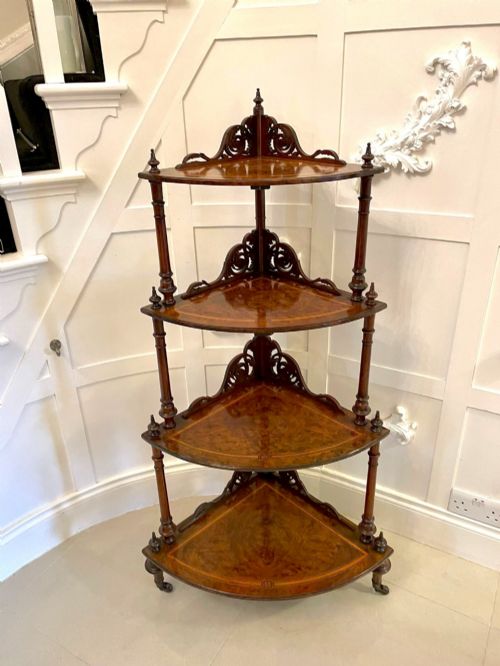
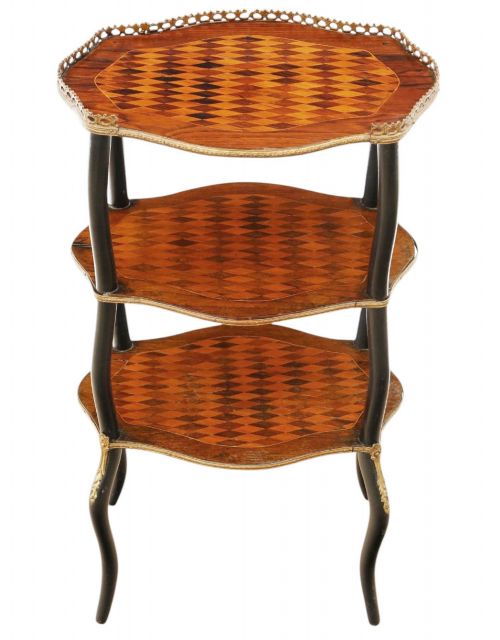
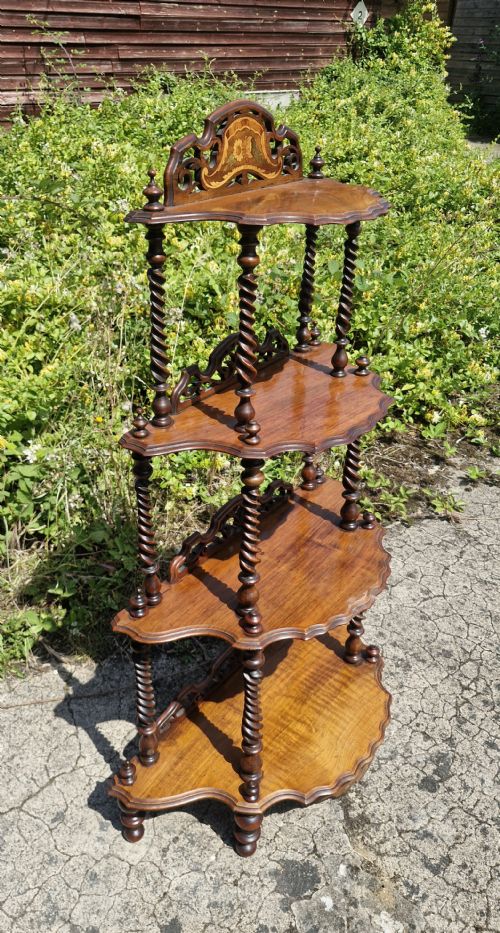
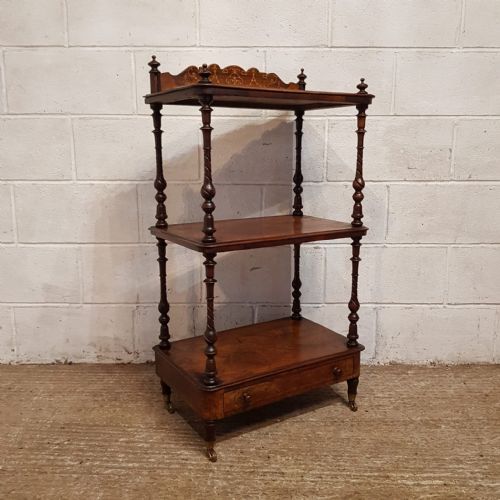
When you search for marquetry corner shelving, you are looking at tiered stands and cabinets designed to fit domestic angles, using patterned wood veneers to catch the eye. The pieces appearing here span from the mid-nineteenth century into the twentieth century, taking forms such as four-tier corner whatnots, etageres and display shelves.
The Victorian period provides the core of these listings, often executed in walnut or burr walnut with contrasting boxwood and brass details. Alongside these, you find Edwardian examples and French Revival pieces, as well as specific regional variants like Sorrento olive wood stands.
Forms range from open standing whatnots with multiple graduated tiers to enclosed corner cabinets with glazed or panelled doors. Buyers encounter both single standing pieces and matched pairs, intended to occupy the corners of a parlour, drawing room or reception space.
How they were made
Cabinetmakers built these pieces primarily using walnut, burr walnut and mahogany as the structural timbers, often applying ebonised wood for contrast and framing. Surfaces received detailed marquetry and parquetry inlay, slicing thin veneers of boxwood and other timbers to create intricate floral, foliage or geometric motifs.
Construction relied on traditional joinery methods to support stacked tiers on turned or shaped uprights, with some variants incorporating brass gallery rails or mounts. Olive wood and specialised local timbers appear in regional pieces such as Sorrento works, utilising natural grain variations alongside precision inlay.
The listings show walnut as the dominant primary timber, paired with boxwood inlay across Victorian and Edwardian periods.
What varies in quality
Quality rests primarily on the crispness and depth of the timber veneer work, distinguishing finely cut boxwood and marquetry details from simpler surface decoration. The choice of primary wood also dictates standing, with burr walnut and rich mahogany sitting above standard utility timbers.
Structural integrity through the tiered levels and uprights separates everyday examples from finer cabinetmaking. Pieces retaining original surface patination, sound structural joints and intact inlaid panels command greater appreciation among collectors.
The Marquetry Corner Shelving Glossary
- Marquetry inlay
- Decorative woodwork where small pieces of contrasting veneer are fitted into a master design. This technique creates pictorial or geometric patterns across table tops and shelf surfaces.
- Etagere
- A piece of furniture consisting of a set of open shelves for displaying small objects or ornaments. These tiered stands developed popularity in the nineteenth century for drawing rooms.
- Whatnot
- A freestanding piece of furniture with multiple tiers used for storage or display. Victorian examples often feature carved supports and corner placement.
- Parquetry
- A geometric mosaic of wood pieces used for decorative floors and furniture surfaces. It differs from marquetry by forming repeating angular patterns rather than pictorial scenes.
- Burr walnut
- Wood taken from a walnut tree growth containing distorted grain patterns. Cabinetmakers prize it for rich, swirling decorative effects on prominent surfaces.
Marquetry Corner Shelving: Frequently Asked Questions
What is marquetry corner shelving?
Marquetry corner shelving encompasses tiered wooden stands and cabinets built to utilise room angles, featuring decorative inlaid veneer patterns. These pieces function primarily as display furniture.
Originating largely in the nineteenth century, forms range from open four-tier whatnots to enclosed corner cabinets in walnut and mahogany.
How were these shelves used?
Owners placed them in corners of reception rooms and parlours to display ceramics, small ornaments and books. The vertical tiers maximised display space without blocking floor area.
Open whatnots held decorative objects, while corner cabinets offered dust-free storage behind glazed or wooden doors.
How do I date a corner whatnot?
Dating relies on timber choice, construction methods, and decorative styles visible across the piece. Victorian examples often feature walnut with boxwood inlay, while later Edwardian or twentieth-century pieces show different proportions.
Turned supports and the complexity of the marquetry inlay also help indicate the period of manufacture.
How do I care for inlaid walnut furniture?
Keep inlaid walnut furniture out of direct sunlight and away from rapid temperature shifts to protect the delicate veneer and boxwood details. Dust regularly with a soft, dry cloth.
Apply occasional appropriate wax polish to nourish the wood and maintain the surface patination without buildup.