

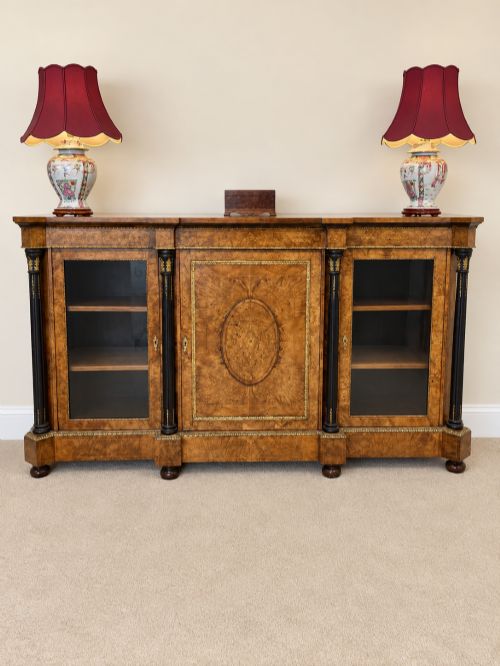
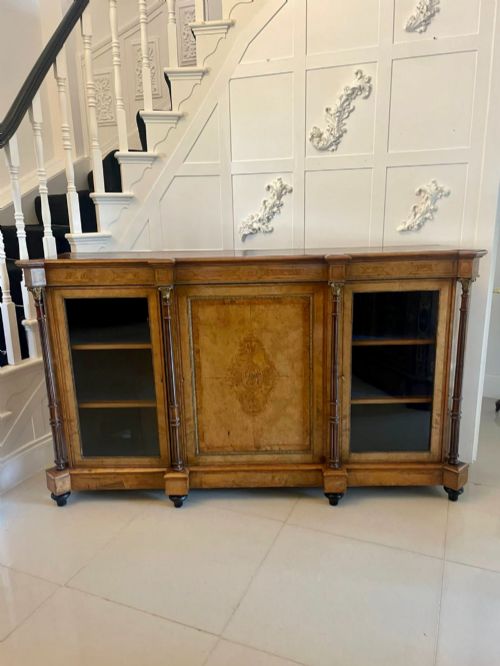
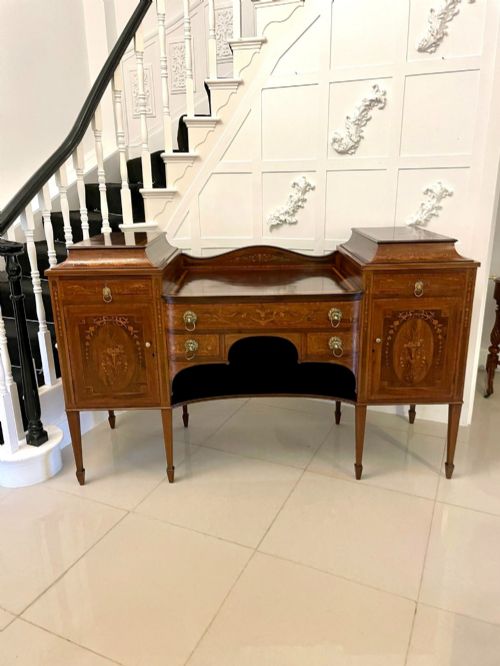
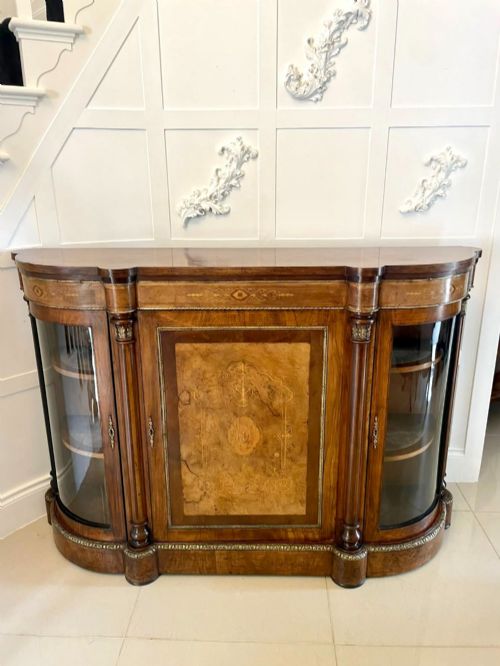
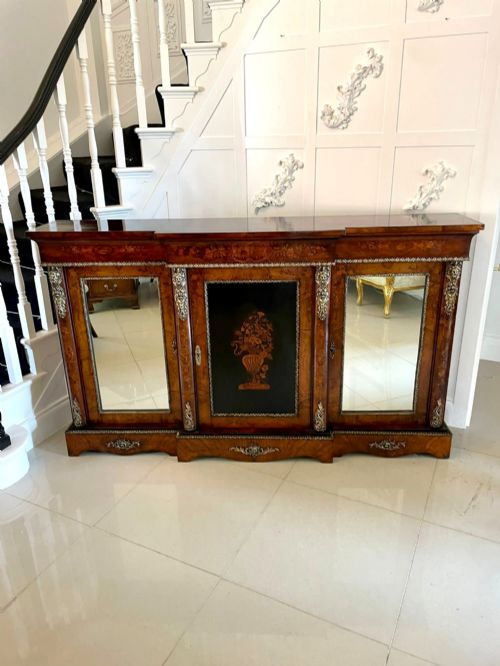
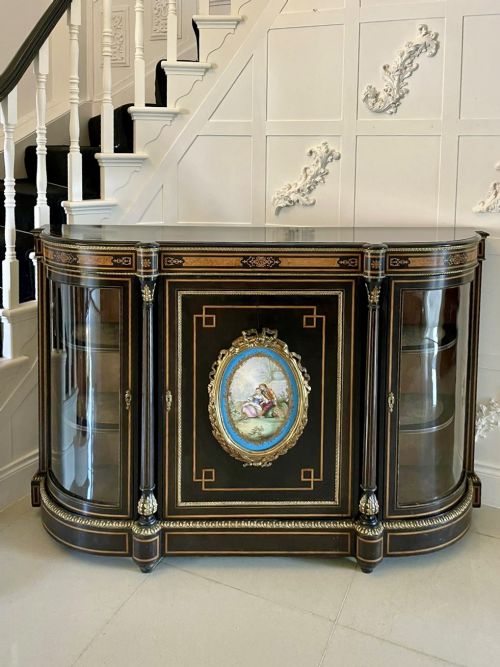
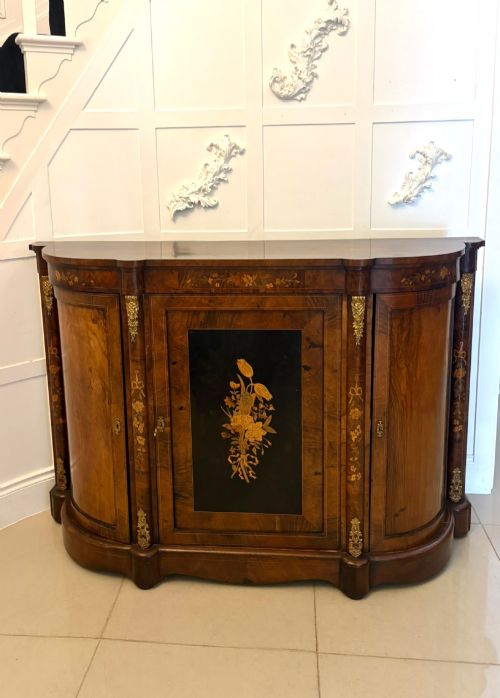
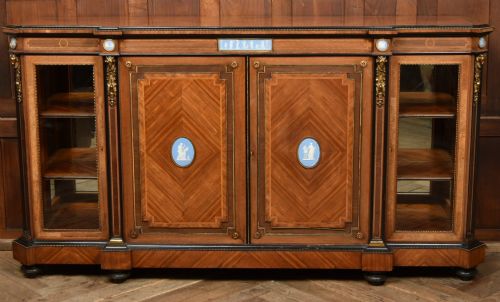


Victorian Marquetry Buffet
A victorian marquetry buffet is a grand, timber-built storage piece for the dining room or parlour, decorated with intricate wood-inlaid floral patterns that catch the light.
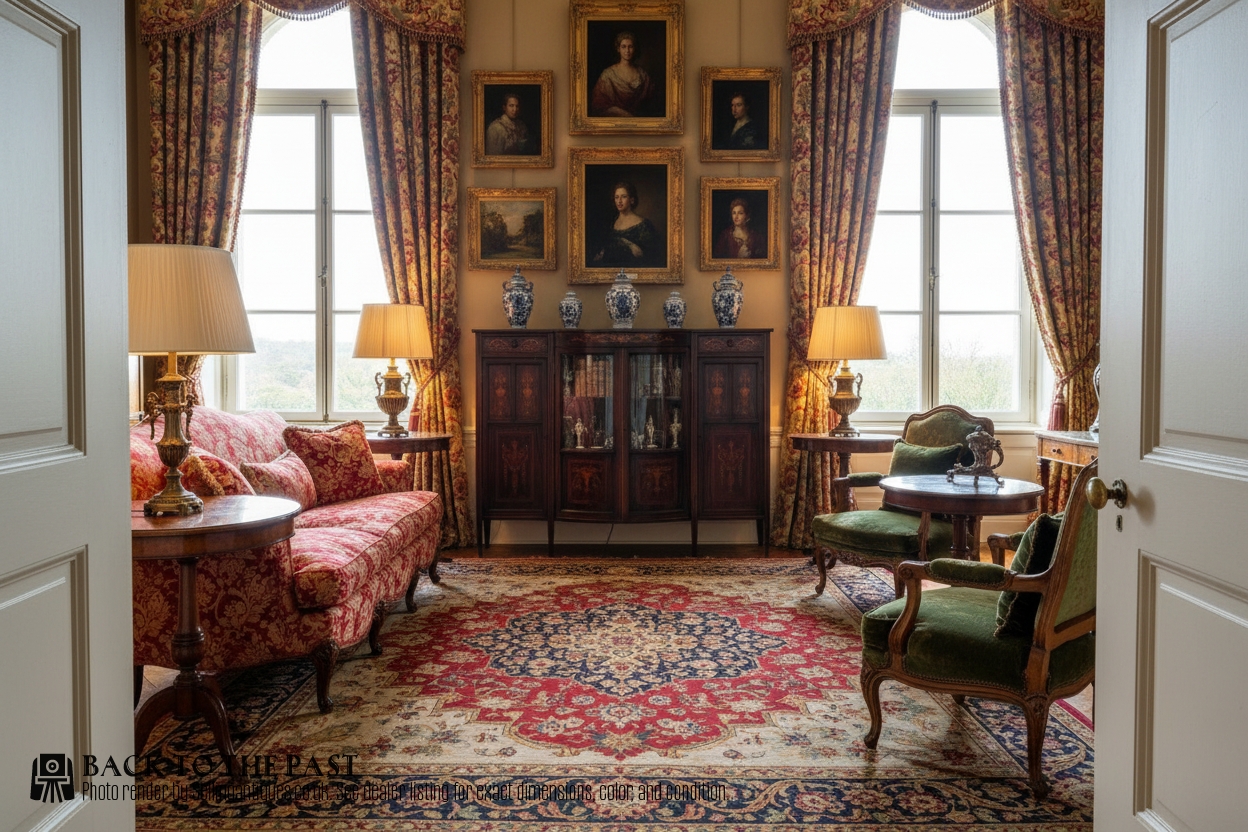
Victorian Marquetry Buffet
A victorian marquetry buffet encompasses grand credenzas, sideboards, and side cabinets built during the nineteenth century. These pieces serve as both decorative focal points and functional storage furniture within formal rooms.
The version most commonly met on this page is constructed from burr walnut or figured walnut, featuring detailed boxwood, satinwood, and floral marquetry. Many examples incorporate glazed central doors, mirrored backs, or serpentine fronts.
The overarching style spans the Victorian era, incorporating revivals such as Sheraton, Napoleon III, and French Rococo influences. Makers of the period utilised these varied stylistic idioms to produce imposing display furniture.
Distinctions in Quality
The standard of a piece is largely determined by the depth and intricacy of the marquetry and the choice of veneers. High-grade examples display tightly figured burr walnut and multi-toned floral inlays with sharp definition.
Mount quality and secondary hardware separate standard production from exhibition pieces. Heavy, crisply chased ormolu mounts and signed maker brasses indicate superior workshop origin.
Proportion and structural ambition also dictate merit. Serpentine fronts, complex curved glass doors, and integrated mirror backs require advanced carpentry skill compared to flat-fronted cabinets.
Victorian Marquetry Buffet Retail Price Guide 2026
Typical asking prices for victorian marquetry buffet among the pieces listed under this phrase on Sellingantiques today, from the lower quarter to the upper quarter. They describe what is for sale here now, not the wider market.
Secret compartments occasionally hide within credenza plinths, designed by Victorian joiners for concealed family ledgers.
Hewetsons London·Edwards and Roberts·James Plunckett·Gillow
The Victorian Marquetry Buffet Glossary
- Marquetry
- The art of forming decorative patterns by fitting together thin slices of wood veneer. This technique differs from inlay by assembling the entire design on a backing before gluing it to the surface.
- Ormolu
- Gilded bronze mounts applied to furniture for decorative effect. The technique involves treating brass or bronze with a gold amalgam.
- Burr Walnut
- Timber taken from a walnut tree growth or burl, yielding a swirling and highly decorative grain. It is sliced into fine veneers for high-status cabinets.
- Crossbanding
- A strip of veneer laid around the border of a panel with the grain running perpendicular to the centre. This frames the primary timber and adds visual contrast.
Victorian Marquetry Buffet: Frequently Asked Questions
What is a victorian marquetry buffet used for?
These large cabinets were traditionally employed in dining rooms and grand reception spaces to store glassware, silver, and table linens. The top surface and internal shelves also provided a stage to display prized porcelain and decorative objects.
Today, they function similarly in large domestic interiors, offering substantial enclosed storage while serving as a commanding focal point against a dining room or hallway wall.
How do I care for burr walnut and marquetry?
Burr walnut and delicate veneer inlays require stable environmental conditions away from direct sunlight and sudden temperature shifts. Excessive heat can cause the timber veneers to lift or split over time.
Apply a light, high-quality wax polish occasionally to nourish the wood and maintain the sheen of the French polished surface. Avoid using liquid cleaners or silicone sprays.
Are these buffets French or English?
The pieces listed encompass both British Victorian manufacture and French Napoleon III or continental revival styles. English cabinet makers frequently drew inspiration from French design vocabulary, leading to overlapping stylistic traits.
Structural markers, timber choices, and maker signatures where present help distinguish between domestic London workshops and French ateliers.
What does mirror backed mean?
A mirror-backed cabinet incorporates a framed looking glass into the superstructure above the main sideboard top. This reflective panel was designed to bounce light around gas-lit nineteenth-century rooms and visually amplify displayed ceramics.
The mirrors are often bevelled-edge plate glass fixed into carved or inlaid wooden frames.