



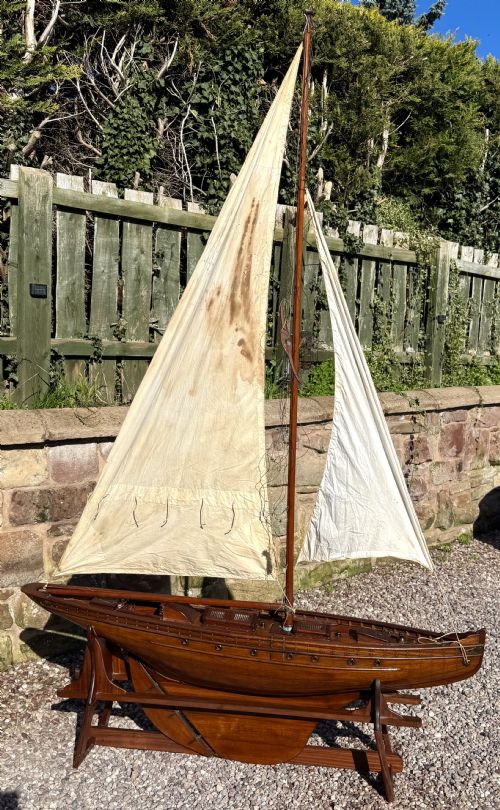


Victorian Maritime Model Ship
A victorian maritime model ship brings the intricate craftsmanship of the nineteenth-century sea directly into your home.
Victorian Maritime Model Ship
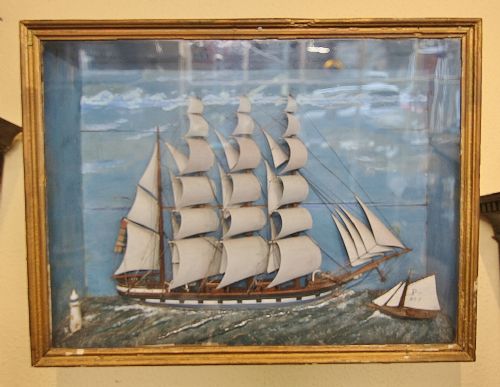
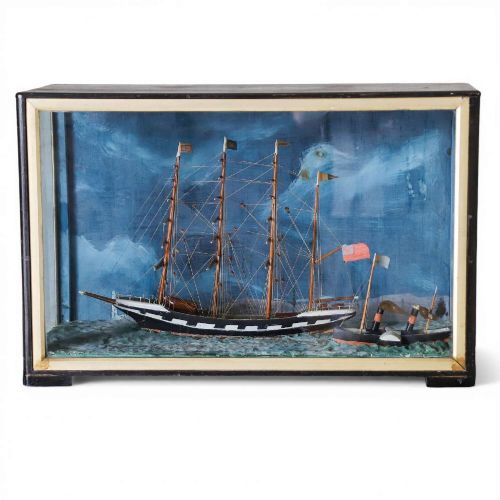
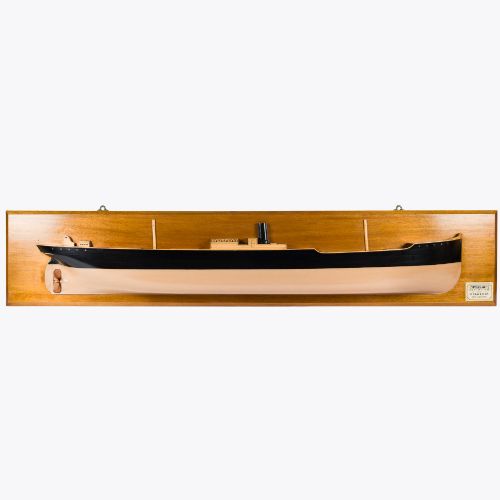
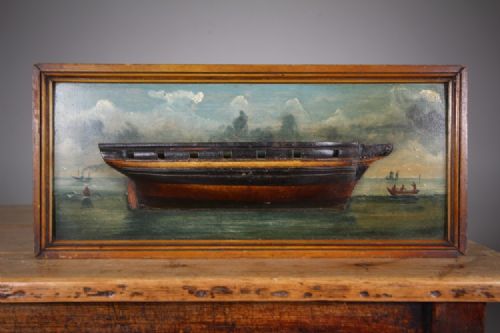
The versions most frequently met on this page include cased marine dioramas showing sailing ships racing or navigating painted seas, alongside carved wooden half-hull models. Folk art pieces also appear, ranging from straw work ship diorama creations to ships housed in glass bottles.
Makers and regional workshops produced these pieces across England, Wales, and Cornwall, often naming specific vessels like the Glynllifon, Queen Anne, or The Hippolyta. The scale and form vary from large wall art shadow boxes to freestanding pond yachts and carved yacht models on marble bases.
Materials and construction methods
Wood serves as the primary material for constructing hulls, masts, and decks, utilising pine, mahogany, and sycamore alongside carved plaster and canvas. Craftsmen shaped these elements to replicate real vessels accurately, often mounting hulls on stands or enclosing them within glazed display cases.
Paint brings the seas and backdrops to life within dioramas, paired with brass fittings and detailed rigging. Folk art examples incorporate unconventional elements such as straw work, combining traditional shipwright techniques with decorative folk traditions.
Victorian Maritime Model Ship Retail Price Guide 2026
Typical asking prices for victorian maritime model ship among the pieces listed under this phrase on Sellingantiques today, from the lower quarter to the upper quarter. They describe what is for sale here now, not the wider market.
The listings on this page span the nineteenth century, featuring materials such as pine, mahogany, brass, canvas, and glass.
Markers of quality and execution
Quality reveals itself in the precision of the rigging, the intricacy of the carved wooden hull, and the realism of the painted seascapes. Finer pieces demonstrate careful attention to scale and proportion, capturing the authentic lines of contemporary sailing vessels.
The preservation of original components, such as glazed display cases and painted backdrops, distinguishes superior examples. The skill of the maker, whether a commercial shipbuilder like W. Grey & Co or an anonymous folk artist, shapes the character and finish of each object.
W. Grey & Co·Liverpool Ship Building Co.
The Victorian Maritime Model Ship Glossary
- Maritime diorama
- A three-dimensional display featuring a model ship set against a painted background depicting the sea and sky, often enclosed in a glazed wooden case.
- Half-hull model
- A scale model representing only one side of a ship, historically used for designing hull shapes or displayed as wall art.
- Shadow box
- A deep, framed display case designed to protect and showcase a ship model or marine scene against a flat background.
- Folk art
- Objects created by self-taught or traditional craftsmen outside academic artistic traditions, frequently utilising accessible local materials.
- Barque
- A sailing vessel with three or more masts, where the fore-mast and main-mast are square-rigged and the mizzen-mast is fore-and-aft rigged.
Victorian Maritime Model Ship: Frequently Asked Questions
How were half-hull models used?
Half-hull models originated as practical tools for shipbuilders to test and visualise hull designs before commissioning full-sized vessels. Shipyards mounted these wooden sections to boards for study.
Over time, shipbuilders and owners repurposed them as decorative wall art, celebrating specific vessels launched from regional yards.
What distinguishes folk art ship models?
Folk art ship models reflect the creative efforts of sailors, shore-based craftsmen, and hobbyists rather than formal commercial shipyards. They frequently incorporate naive details and unexpected materials.
Examples include straw work dioramas, models housed inside glass bottles, and naive wooden constructions that showcase individual ingenuity over strict naval architecture.
Where were these ship models made?
These pieces originated in coastal communities, shipyards, and inland workshops across Britain during the nineteenth century. Regional centres in England, Wales, and Cornwall produced distinct styles.
Local shipbuilding companies and independent folk artists documented the vessels of their era, ranging from working barques to luxury yachts and racing clippers.